



How ‘immoral policing’ incidents chipping away at social harmony in Mangaluru

News Network
February 25, 2023

Park.jpg

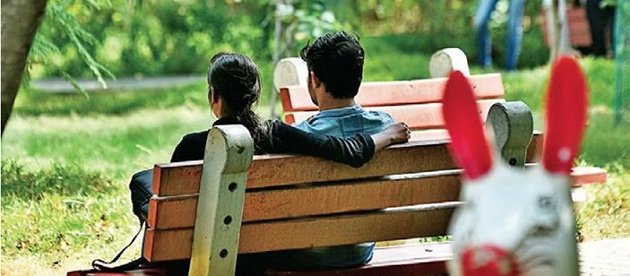
The rising incidents of moral policing in coastal Karnataka, especially in Mangaluru, in the last few years have cast a shadow over the port city, once known as a liberal society with a cosmopolitan culture. Social activists in the region reason that the deterioration in the social harmony happened after the growth of right-wing organisations, which have gained ground in the coastal belt.

They attribute the recurrence of such incidents as a result of the impunity granted to moral policing, political support to the outfits and a passive approach of the ruling BJP. Moral policing occurs mostly where the Hindutva outfits like Bajrang Dal are strong, which has affected the psyche of the young generation including students. The most glaring incident in the recent past was reported on July 25 last year when Bajrang Dal activists barged into a pub in the city protesting against women partying at the venue. Students were abused and chased away by the protestors. The attack reminded everyone of the notorious assault on girls at another pub by Sri Rama Sene members in 2009.

Observers say in most of the cases registered by the police, the accused go unpunished due to lack of evidence provided by law enforcement agencies. A top police official, on condition of anonymity, told PTI they intervene only when complaints are raised about illegal activities in pubs and public places. Right-wing organisations, including the Vishwa Hindu Parishad (VHP) and its youth wing Bajrang Dal, claim that their workers are only trying to protect the culture and tradition of the country and reminding the young generation about dignified behaviour in public spaces. "The activists carry out such protests only to protect the culture and dignity of the nation," says VHP leader Sharan Pumpwell.

He claims that people belonging to different religions partying and drinking are against the basic tenets of our culture and the activists react only when complaints are received from the public. Police said arrests are being made in many cases when a complaint is lodged. On several occasions, the victims do not wish to proceed with the cases, they contended. In 2022, there were 41 moral policing cases in Dakshina Kannada and Udupi districts, according to Suresh B Bhat, activist and member of the Karnataka Communal Harmony Forum and People's Union for Civil Liberties (PUCL), as detailed in a report titled 'Chronicle of communal incidents in coastal districts of Karnataka'.

Of the incidents, 37 were by Hindu vigilantes while four were by fringe groups of Muslim vigilantes. There was an increase in the number of instances of moral policing too, as in 2021, a total of 37 incidents were reported, while in 2020, only nine such cases were reported. In such instances of moral policing, couples who belonged to different faiths were either assaulted or handed over to the police by the vigilante groups, even if both the parties had been together wilfully. Police pointed out that the act of moral policing does not fall under any specific section of the Indian Penal Code (IPC).

However, their actions can attract charges under certain IPC sections. According to police, on moral policing incidents, they have been registering cases under IPC Sections 354 (outraging modesty of woman), 342 (wrongful confinement), 354 (molestation), 323 (voluntarily causing hurt) and 149 (unlawful assembly). DYFI leader Muneer Katipalla claims frequent incidents of moral policing occur with the tacit support of the ruling BJP in the state who prefer to remain mute spectators to such activities. These incidents are reflections of the agenda of polarisation, he asserted. Karnataka Chief Minister Basavaraj Bommai had last year stirred a controversy by his comment on moral policing. "When sentiments are hurt, there will be action and reaction," he said, inviting sharp criticism from the Opposition and social activists. 

Last year, several cases of moral policing were reported in the city including the attack on the pub. Right-wing activists had assaulted a Muslim youth for travelling with a girl of a different faith in the city on March 5. Again, on August 30, a 19-year-old Muslim student was beaten up and threatened by his college mates for befriending a Hindu girl. A 27-year-old Muslim youth was dragged out of a private bus at Naguri in the city on October 21 and beaten up for travelling with a Hindu woman. Bajrang Dal district leader Puneet Attavar had openly stated in December last that their activists will confront Muslim youth in the company of Hindu girls during New Year parties.

Police said activists of Hindutva outfits were behind the majority of attacks, while a section of Muslims were also involved in certain cases. After the infamous attack on party-goers at the pub by Sri Rama Sene activists in 2009, the court which heard the case had opined that the investigating officer had not provided sufficient evidence in the moral policing case. While acquitting the accused in the assault case in 2018, the court had observed that the officer failed to produce videos of the incident, which was shown by television channels. An indirect attempt was made by the officer to protect the real culprits, the court had remarked.

Activists in the city and the public in general feel the ugly behaviour exhibited by vigilantes must be prevented at any cost to ensure a dignified social atmosphere prevails in the city and the wider coastal region of the state. 

Comments

Add new comment

  • Coastaldigest.com reserves the right to delete or block any comments.
  • Coastaldigset.com is not responsible for its readers’ comments.
  • Comments that are abusive, incendiary or irrelevant are strictly prohibited.
  • Please use a genuine email ID and provide your name to avoid reject.
News Network
February 1,2026

Bengaluru: Karnataka Deputy Chief Minister D K Shivakumar on Sunday criticised the Union Budget presented by Finance Minister Nirmala Sitharaman, claiming it offered no tangible benefit to the state.

Though he said he was yet to study the budget in detail, Shivakumar asserted that Karnataka had gained little from it. “There is no benefit for our state from the central budget. I was observing it. They have now named a programme after Mahatma Gandhi, after repealing the MGNREGA Act that was named after him,” he said.

Speaking to reporters here, the Deputy Chief Minister demanded the restoration of MGNREGA, and made it clear that the newly enacted rural employment scheme — VB-G RAM G — which proposes a 60:40 fund-sharing formula between the Centre and the states, would not be implemented in Karnataka.

“I don’t see any major share for our state in this budget,” he added.

Shivakumar, who also holds charge of Bengaluru development, said there were high expectations for the city from the Union Budget. “The Prime Minister calls Bengaluru a ‘global city’, but what has the Centre done for it?” he asked.

He also drew attention to the problems faced by sugar factories, particularly those in the cooperative sector, alleging a lack of timely decisions and support from the central government.

Noting that the Centre has the authority to fix the minimum support price (MSP) for agricultural produce, Shivakumar said the Union government must take concrete steps to protect farmers’ interests.

Comments

Add new comment

  • Coastaldigest.com reserves the right to delete or block any comments.
  • Coastaldigset.com is not responsible for its readers’ comments.
  • Comments that are abusive, incendiary or irrelevant are strictly prohibited.
  • Please use a genuine email ID and provide your name to avoid reject.
News Network
February 1,2026

Bengaluru: Karnataka Deputy Chief Minister D K Shivakumar on Sunday criticised the Union Budget presented by Finance Minister Nirmala Sitharaman, claiming it offered no tangible benefit to the state.

Though he said he was yet to study the budget in detail, Shivakumar asserted that Karnataka had gained little from it. “There is no benefit for our state from the central budget. I was observing it. They have now named a programme after Mahatma Gandhi, after repealing the MGNREGA Act that was named after him,” he said.

Speaking to reporters here, the Deputy Chief Minister demanded the restoration of MGNREGA, and made it clear that the newly enacted rural employment scheme — VB-G RAM G — which proposes a 60:40 fund-sharing formula between the Centre and the states, would not be implemented in Karnataka.

“I don’t see any major share for our state in this budget,” he added.

Shivakumar, who also holds charge of Bengaluru development, said there were high expectations for the city from the Union Budget. “The Prime Minister calls Bengaluru a ‘global city’, but what has the Centre done for it?” he asked.

He also drew attention to the problems faced by sugar factories, particularly those in the cooperative sector, alleging a lack of timely decisions and support from the central government.

Noting that the Centre has the authority to fix the minimum support price (MSP) for agricultural produce, Shivakumar said the Union government must take concrete steps to protect farmers’ interests.

Comments

Add new comment

  • Coastaldigest.com reserves the right to delete or block any comments.
  • Coastaldigset.com is not responsible for its readers’ comments.
  • Comments that are abusive, incendiary or irrelevant are strictly prohibited.
  • Please use a genuine email ID and provide your name to avoid reject.
News Network
January 23,2026

Mangaluru: The Karnataka Government Polytechnic (KPT), Mangaluru, has achieved autonomous status from the All India Council for Technical Education (AICTE), becoming the first government polytechnic in the country to receive such recognition in its 78-year history. The status was granted by AICTE, New Delhi, and subsequently approved by the Karnataka Board of Technical Education in October last year.

Officials said the autonomy was conferred a few months ago. Until recently, AICTE extended autonomous status only to engineering colleges, excluding diploma institutions. However, with a renewed national focus on skill development, several government polytechnics across India have now been granted autonomy.

KPT, the second-largest polytechnic in Karnataka, was established in 1946 with four branches and has since expanded to offer eight diploma programmes, including computer science and polymer technology. The institution is spread across a 19-acre campus.

Ravindra M Keni, the first dean of the institution, told The Times of India that AICTE had proposed autonomous status for polytechnic institutions that are over 25 years old. “Many colleges applied. In the first round, 100 institutions were shortlisted, which was further narrowed down to 15 in the second round. We have already completed one semester after becoming an autonomous institution,” he said. He added that nearly 500 students are admitted annually across eight three-year diploma courses.

Explaining the factors that helped KPT secure autonomy, Keni said the institution has consistently recorded 100 per cent admissions and placements for its graduates. He also noted its strong performance in sports, with the college emerging champions for 12 consecutive years, along with active student participation in NCC and NSS activities.

Autonomous status allows KPT to design industry-oriented curricula, conduct examinations, prepare question papers, and manage academic documentation independently. The institution can also directly collaborate with industries and receive priority funding from AICTE or the Ministry of Education. While academic autonomy has been granted, financial control will continue to rest with the state government.

“There will be separate committees for examinations, question paper setting, boards of studies, and boards of examiners. The institution will now have the freedom to conduct admissions without government notifications and issue its own marks cards,” Keni said, adding that new academic initiatives would be planned after a year of functioning under the autonomous framework.

Comments

Add new comment

  • Coastaldigest.com reserves the right to delete or block any comments.
  • Coastaldigset.com is not responsible for its readers’ comments.
  • Comments that are abusive, incendiary or irrelevant are strictly prohibited.
  • Please use a genuine email ID and provide your name to avoid reject.