India’s GDP contracts by record 23.9% in first quarter of FY2020

News Network
August 31, 2020

gdp.jpg

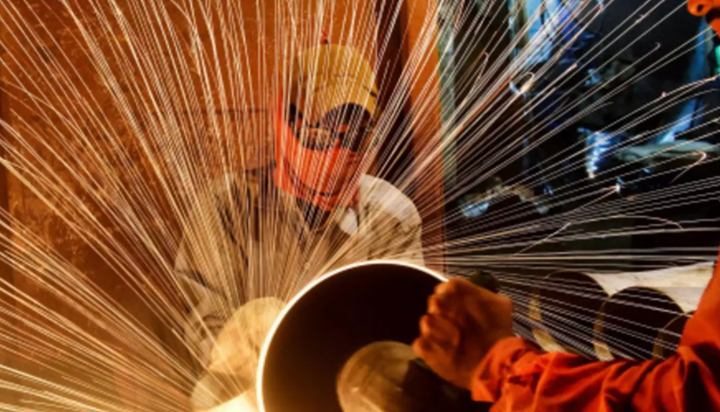
Bengaluru, Aug 31: India’s economy contracted at its steepest pace of 23.9% in the June quarter as the pandemic lockdown dented consumer and business spending, putting pressure on the government and central bank for further stimulus and a rate cut.

The gross domestic product (GDP) data released on Monday showed consumer spending, private investments and exports all collapsed during the world’s strictest lockdown imposed in late March to combat the COVID-19 pandemic.

A Reuters poll of economists had forecast that GDP in the world’s fifth-largest economy will contract by 18.3% in the June quarter, compared with 3.1% growth in the previous quarter, the worst performance in at least eight years.

COMMENTARY

PRITHVIRAJ SRINIVAS, CHIEF ECONOMIST, AXIS CAPITAL, MUMBAI

“The June-quarter GDP growth number confirms that India’s national lockdown was the most severe and the deepest GDP decline among large countries.

“The gradual reversal of the lockdown since mid-April is likely to reduce the severity of GDP contraction in coming quarters. However, to erase the contraction fully we need to see an improved consumer sentiment.”

SHASHANK MENDIRATTA, ECONOMIST, IBM, NEW DELHI

“As expected, growth contracted sharply in the June quarter. Investment demand recorded a 47% decline, while private consumption recorded a contraction of nearly 20%. With a contraction of 20.6% y/y, service sector was a key drag on the growth.

“While the overall growth print witnessed the weakest decline on record, this also marks a bottom in our view. Our assessment is that investment will likely stay weak, while consumption activity is likely to improve in subsequent quarters. For a broader recovery, however, supportive policy will need to provide a push.”

ADITI NAYAR, PRINCIPAL ECONOMIST, ICRA, GURUGRAM

“The GDP and GVA plunged precipitously in the lockdown-ridden Q1 of FY2021, both printing similar to our forecast of a 25% contraction. Moreover, incoming data on the MSME and less-formal sectors could manifest in a deeper contraction when revised data is released subsequently. We maintain our forecast that the Indian economy will contract by 9.5% in FY2021.

“The wide discrepancy between the double-digit growth of the government’s final consumption expenditure and the contraction in public administration, defence and other services on the production side, is rather incongruous.”

SUVODEEP RAKSHIT, SENIOR ECONOMIST, KOTAK INSTITUTIONAL EQUITIES, MUMBAI

“Real GDP growth at (-)23.9% in 1QFY21 was much lower than what the markets were expecting. The choice for the government will be on whether the consumption or the investment side needs to be pushed. Given the limited fiscal space and the need to stimulate a more durable growth, the growth recovery will be gradual and is likely to continue into 1HFY22.”

MADHAVI ARORA, LEAD ECONOMIST, FX AND RATES, EDELWEISS SECURITIES, MUMBAI

“The Q1 GDP growth print came in worse than our expectations of -18%. The surprise take-away elements were the better-than-expected performance of finance and real-estate sectors, and more pertinently, a sharp contraction in public administration (proxy for government spending) data. Nonetheless, it does little to change the broad contours of the growth trajectory.

“The sub-optimal policy response would only mean the downward cycle could stretch further, while structural constraints limit sustained secular growth pick-up ahead. We think the government will have to loosen its fiscal strings further in 2HFY21 if growth prospects remain weak.” SAKSHI GUPTA, SENIOR ECONOMIST, HDFC BANK, GURUGRAM”Given the lack of reporting due to the lockdown in Q1 (especially for the informal sector), we expect the GDP numbers to be revised down further in subsequent releases.

“Hopes of an economic recovery in the second half of the year have been pinned on a rural sector revival. However, with the virus spreading to the hinterland, the rural support might be lower than expected.

“In terms of the growth prints, Q1 is likely to be the worst print and it will be a very slow grind up from this bottom going forward. We continue to expect a -7.5% growth print for the year with a downward bias to our forecast.”

RAJANI SINHA, CHIEF ECONOMIST, KNIGHT FRANK INDIA, MUMBAI

“The sharp fall in the first-quarter GDP is on expected lines, given that around 70-80% of the economy was on a standstill in the first two months of this quarter.

“With the economy unlocking in the last few months, most economic parameters have improved to 70-90% level of the corresponding period of last year. However, a sustainable recovery would depend on the time taken to contain the spread of virus. Increased infrastructure investment by the government and demand-boosting measures are much required for the economy to recover.”

SUJAN HAJRA, CHIEF ECONOMIST, ANAND RATHI SECURITIES, MUMBAI

“This kind of a decline was expected as there was a lockdown for roughly half of the quarter. The infrastructure data showed the decline was less than 10%, and with the exception of cement and steel, all other sectors have done reasonably well. “The Reserve Bank of India (RBI) won’t lose too much sleep on this number as it was expected. The RBI still has its focus on growth. This (GDP number) slightly improves chances of a rate cut in October. Unless the inflation comes below 5% in the next reading, the RBI still might postpone the rate cut to December.”

RUPA REGE NITSURE, GROUP CHIEF ECONOMIST, L&T FINANCIAL HOLDINGS, MUMBAI

“Contraction of real GDP at 23.9% appears to be underestimated, as data collection efforts were hit by the pandemic.

“The NSO had to use substitutes and proxies to estimate the losses of informal sector. So there is a very high probability that this data will undergo several revisions in the future. But broader trends are clearly visible.

“Unless the central and state governments focus on re-starting the economic machine completely, the real process of repair and reconstruction will not gain momentum. Unless this is given the top-most priority, India will get trapped with the unsustainable debt burden.”

UPASNA BHARDWAJ, SENIOR ECONOMIST, KOTAK MAHINDRA BANK, MUMBAI

“After a record contraction in Q1, we expect the following quarters to normalise registering a much slower fall. The high-frequency data since June has been suggesting a significant pickup in activity. Nonetheless, the weakness in demand is expected to weigh across all sectors and some policy support will be necessary to cushion any further deterioration.

“We expect some kind of stimulus from the government in the coming few months. The recent policy measures from the RBI will help cap any sharp upside risks to bond yields in case of any incremental supply.”

SIDDHARTHA SANYAL, CHIEF ECONOMIST AND HEAD OF RESEARCH, BANDHAN BANK, KOLKATA

“The GDP contraction of nearly 24% y/y during Q1 FY21 was clearly sharper than expected. Also, given the lack of clarity about whether the disruption in informal sector activities were captured adequately, the possibility of further worsening of Q1 FY21 GDP estimate during subsequent rounds of revisions cannot be ruled out. Overall, GDP looks set to record near double-digit contraction during FY21.

“However, rural activities seem to be relatively more resilient at the moment and might benefit from the government’s rural-focused employment schemes. Given the recent uptick in CPI prints, it seems that the RBI may not be in a position to cut rates in the near-future.”

Comments

Add new comment

  • Coastaldigest.com reserves the right to delete or block any comments.
  • Coastaldigset.com is not responsible for its readers’ comments.
  • Comments that are abusive, incendiary or irrelevant are strictly prohibited.
  • Please use a genuine email ID and provide your name to avoid reject.
News Network
December 7,2025

envoy.jpg

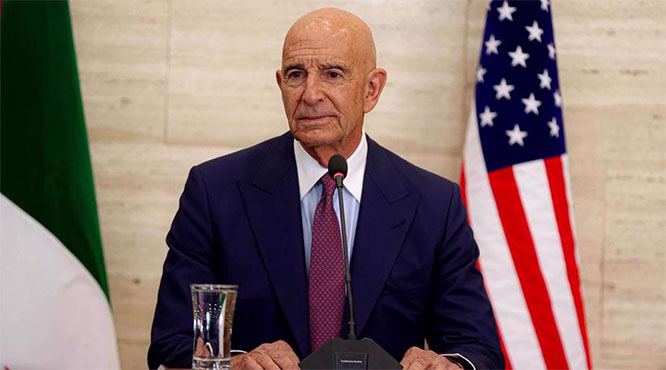
Since 1946, the United States has attempted 93 coups or “regime change” operations across the world — including two in Iran, US Special Envoy for Syria Tom Barrack has admitted.

Speaking to the UAE-based IMI Media Group, in remarks published by The National, Barrack said Washington tried twice to overthrow the Iranian government but failed both times. 

“For (Trump) then to be imputed with regime change — we had two regime changes in Iran already. Neither one worked. So I think wisely leave it to the region to solve,” said Barrack, who also serves as the US ambassador to Turkey.

His comments come six months after the US joined Israel in airstrikes against Iran during ongoing indirect nuclear negotiations between Tehran and Washington.

On June 13, Israel launched an attack on Iran that killed at least 1,064 people and hit civilian infrastructure. Days later, the United States targeted three nuclear facilities — Fordow, Natanz and Isfahan — in what Iran called a clear violation of international law. Iranian retaliation eventually forced a halt to the assault on June 24.

Barrack further claimed that US President Donald Trump and Foreign Secretary Marco Rubio are “not into regime change” and prefer a regional approach driven by Middle Eastern countries themselves. According to him, regional dialogue and non-interference by outside powers offer a more durable path forward.

He added that Washington is still open to an agreement with Tehran if Iranian authorities show “seriousness” and willingness to engage constructively.

However, Iran maintains the US has not shown readiness for meaningful talks. In an interview with Japan’s Kyodo News, Iranian Foreign Minister Abbas Araghchi said negotiations could advance only if Washington acknowledges Iran’s right to peaceful nuclear energy and lifts unilateral sanctions.

Comments

Add new comment

  • Coastaldigest.com reserves the right to delete or block any comments.
  • Coastaldigset.com is not responsible for its readers’ comments.
  • Comments that are abusive, incendiary or irrelevant are strictly prohibited.
  • Please use a genuine email ID and provide your name to avoid reject.
coastaldigest.com news network
December 2,2025

karkala.jpg

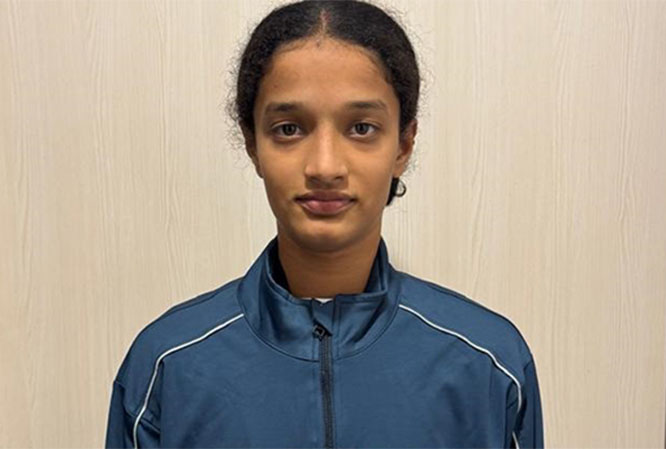
Udupi, Dec 2: A wave of regional pride is sweeping through Udupi district as Shagun S Verma Hegde, a talented Class 9 student from Christ King English Medium High School, Karkala, has been named the captain of the Indian National Team for the Under-15 Girls’ Volleyball Championship.

Shagun holds the unique distinction of being the sole player from Karnataka selected to represent the country in the prestigious international tournament. The championship, organized by the School Games Federation, is scheduled to take place in Shangluo, China, from December 3 to 13, where Shagun will lead the national squad.

A Remarkable Journey to the Top

Shagun’s selection is a testament to her dedication and exceptional skill on the court. Her journey included several rigorous rounds of selection:

•    She was the only player from Udupi district to qualify for the state-level selection camp.

•    Out of eight players from Karnataka who advanced to the national selection camp in Pune, Maharashtra, Shagun was the only one to secure a place in the final national squad.

•    The national camp saw participation from approximately 200 players, which was shortlisted to 23. Shagun not only made the final cut but was also ranked as the second-best player overall, solidifying her leadership role.

Shagun, who is the daughter of Sandesh Verma and Shruthiraj of Kallotte, Karkala, has trained under experienced coaches Santosh D’Souza, Jeevan D’Silva, Jairaj Poojary, and Ramesh. Her selection as the team captain has brought profound honour to her family, school, the Udupi district, and the entire state of Karnataka.

Comments

Add new comment

  • Coastaldigest.com reserves the right to delete or block any comments.
  • Coastaldigset.com is not responsible for its readers’ comments.
  • Comments that are abusive, incendiary or irrelevant are strictly prohibited.
  • Please use a genuine email ID and provide your name to avoid reject.
News Network
December 16,2025

Mangaluru, Dec 16: The Mangaluru City police have significantly escalated their campaign against drug trafficking, arresting 25 individuals and booking 12 cases under the Narcotic Drugs and Psychotropic Substances (NDPS) Act between November 30 and December 13. The crackdown resulted in the seizure of a substantial quantity of illicit substances, including 685.6 grams of MDMA and 1.5 kg of ganja.

The success of this recent drive has been significantly boosted by the city’s innovative, QR code-based anonymous reporting system.

"The anonymous reporting system has received an encouraging response. Several recent arrests were made based on inputs received through this system, helping police tighten the noose around drug peddlers," said the City Police Commissioner.

The latest arrests contribute to a robust year-to-date record, underscoring the police's relentless commitment to combating the drug menace.

Up to December 14 this year, the police have registered a total of 107 cases of drug peddling, leading to the arrest of 219 peddlers. Furthermore, they have booked 562 cases of drug consumption, resulting in the arrest of 671 individuals.

The scale of the seizure for the year reflects the magnitude of the problem being tackled: police have seized 320.6 kg of ganja worth ₹88.7 lakh and 1.4 kg of MDMA valued at ₹1.2 crore. Other significant seizures include hydro-weed ganja worth ₹94.7 lakh and cocaine worth ₹1.9 lakh, among others.

The Commissioner emphasized a policy of rigorous enforcement: "We ensure that peddlers are caught red-handed so that they cannot later dispute the case or claim innocence."

To counter the rising trend of substance abuse among youth, the Mangaluru City police have rolled out uniform guidelines for random drug testing across educational institutions.

As part of the drive, tests were conducted in approximately 100 institutions, screening an estimated 5,500 to 6,000 students in the first phase. 20 students tested positive for drug consumption during the initial screening.

Students who tested positive have been provided counselling and are scheduled for re-testing in the second quarter. The testing will also be expanded to students not covered in the first phase. In a move to ensure strict implementation, police personnel were deployed in mufti in some institutions. Reiterating a zero-tolerance stance, the Commissioner confirmed that random testing will continue, and colleges have also been instructed to conduct drug tests at the time of admission to deter substance abuse from an early stage.

Comments

Add new comment

  • Coastaldigest.com reserves the right to delete or block any comments.
  • Coastaldigset.com is not responsible for its readers’ comments.
  • Comments that are abusive, incendiary or irrelevant are strictly prohibited.
  • Please use a genuine email ID and provide your name to avoid reject.