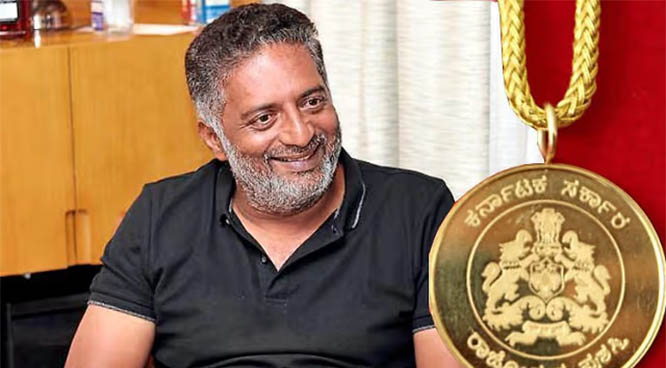
Karnataka announces 2025 Rajyotsava Awards — here’s the complete list of 70 recipients

News Network
October 30, 2025

rajprakash.jpg

Bengaluru: The Karnataka government has released the official list of recipients for the 2025 Karnataka Rajyotsava Awards, honouring 70 individuals across diverse fields — including actor Prakash Raj — for their outstanding contributions to society.

For the first time, the awards were finalised without an open call for applications. Recipients were chosen on the basis of district representation and social contribution, said Minister Shivraj Tangadagi at a press briefing held at Vidhana Soudha on Thursday.

“The selection was made based on district-wise and social parameters. Most of those recommended by the advisory committee were approved. The committee met four to five times to finalise the deserving candidates,” the minister said.

In a first, two achievers from the Samagara Haralayya community have been recognised this year. Following a prior decision, no organisations were considered for the award in this edition.

A total of 12 women are among this year’s honourees. Minister Tangadagi noted that some had submitted self-nominations, which were accepted as they were found deserving.

Each award carries a 25-gram gold medal and a cash prize of ₹5 lakh. The felicitation ceremony will be held on 1 November at Ravindra Kalakshetra, Bengaluru, at 6 pm.

List of Awardees 2025

Literature

•    Prof. Rajendra Chenni – Shivamogga
•    Thumbadi Ramayya – Tumakuru
•    Prof. R. Sunandamma – Chikkaballapur
•    Dr. H. L. Pushpa – Tumakuru
•    Rahamat Tarikere – Chikkamagaluru
•    H. M. Poojar – Vijayapura

Folklore

•    Basappa Bharamappa Choudki – Koppal
•    B. Thakappa Kannur – Shivamogga
•    Sanningappa Satteppa Mushennagol – Belagavi
•    Hanumantappa, Marappa, Chilangi – Chitradurga
•    M. Thopanna – Kolar
•    Somanna Dundappa Dhanagonda – Vijayapura
•    Sindhu Gujaran – Dakshina Kannada
•    L. Mahadevappa Udigal – Mysuru

Music / Dance

•    Devendrakuamr Pattar – Koppal
•    Madivalayya Sali – Bidar
•    Prof. K. Ramamurthy Rao – Mysuru

Cinema / Television

•    Prakash Raj – Dakshina Kannada
•    Vijayalakshmi Singh – Kodagu

Administration / Medical

•    H. Siddayya, IAS (Retd.) – Bengaluru South (Ramanagara)
•    Dr. Aalamma Maranna – Tumakuru
•    Dr. Jayaranganath – Bengaluru Rural

Social Service

•    Sulagitti Eeramma – Vijayanagar
•    Fakkeeri – Bengaluru Rural
•    Corine Antoinette Rasquinha – Dakshina Kannada
•    Dr. N. Sitarama Shetty – Udupi
•    Konandur Lingappa – Shivamogga

Sculpture / Crafts / Visual Art

•    Umesh Pambada – Dakshina Kannada
•    Dr. Ravindra Korishetti – Dharwad
•    K. Dinesh – Bengaluru
•    Shantaraju – Tumakuru
•    Jaffer Mohiyuddin – Raichur
•    Penna Obalappa – Bengaluru Rural
•    Shanti Bai – Ballari
•    Pundalik Shastri (Budabudake) – Belagavi

Kannadigas Abroad / Outside State

•    Zakariya Bajpe (Saudi Arabia)
•    P. V. Shetty (Mumbai)

Environment

•    Ramegowda – Chamarajanagar
•    Mallikarjun Ningappa – Yadgir

Agriculture

•    Dr. S. V. Hittalamani – Haveri
•    M. C. Rangaswamy – Hassan

Media

•    K. Subramanya – Bengaluru
•    Amshi Prasanna Kumar – Mysuru
•    B. M. Haneef – Dakshina Kannada
•    M. Siddharaju – Mandya

Science & Technology

•    Ramayya – Chikkaballapur
•    Air Marshal Philip Rajkumar – Davanagere
•    Dr. R. V. Nadagouda – Gadag

Cooperation

•    Shekharagouda V. Malipatil – Koppal

Yakshagana / Theatre / Performing Arts

•    Kota Suresh Bangera – Udupi
•    Airbail Anand Shetty – Udupi
•    Krishna Parameshwara Hegde (K. P. Hegde) – Uttara Kannada
•    Gunduraj – Hassan
•    H. M. Paramashivayya – Bengaluru South (Ramanagara)
•    L. B. Sheikh (Master) – Vijayapura
•    Bangarappa Khudanpur – Bengaluru
•    Mime Ramesh – Dakshina Kannada
•    D. Ratnamma Desai – Raichur

Education

•    Dr. M. R. Jayaram – Bengaluru
•    Dr. N. S. Ramegowda – Mysuru
•    S. B. Hosamani – Kalaburagi
•    Nagaraju – Belagavi

Sports

•    Ashish Kumar Ballal – Bengaluru
•    M. Yogendra – Mysuru
•    Dr. Babina N. M. (Yoga) – Kodagu

Judiciary

•    Justice P. B. Bhajantri (Pavankumar Bhajantri) – Bagalkote

Sculpture / Painting / Handicraft
•    Basanna Monappa Badiger – Yadgir
•    Nagalingappa G. Gangur – Bagalkote
•    B. Maruti – Vijayanagar
•    L. Hemashekar – Mysuru

Comments

Add new comment

  • Coastaldigest.com reserves the right to delete or block any comments.
  • Coastaldigset.com is not responsible for its readers’ comments.
  • Comments that are abusive, incendiary or irrelevant are strictly prohibited.
  • Please use a genuine email ID and provide your name to avoid reject.
News Network
December 13,2025

New Delhi: School-going children are picking up drug and smoking habits and engaging in consumption of alcohol, with the average age of introduction to such harmful substances found to be around 13 years, suggesting a need for earlier interventions as early as primary school, a multi-city survey by AIIMS-Delhi said.

The findings also showed substance use increased in higher grades, with grade XI/XII students two times more likely to report use of substances when compared with grade VIII students. This emphasised the importance of continued prevention and intervention through middle and high school.

The study led by Dr Anju Dhawan of AIIMS's National Drug Dependence Treatment Centre, published in the National Medical Journal of India this month, looks at adolescent substance use across diverse regions.

The survey included 5,920 students from classes 8, 9, 11 and 12 in urban government, private and rural schools across 10 cities -- Bengaluru, Chandigarh, Delhi, Dibrugarh, Hyderabad, Imphal, Jammu, Lucknow, Mumbai, and Ranchi. The data were collected between May 2018 and June 2019.

The average age of initiation for any substance was 12.9 (2.8) years. It was lowest for inhalants (11.3 years) followed by heroin (12.3 years) and opioid pharmaceuticals (without prescription; 12.5 years).

Overall, 15.1 per cent of participants reported lifetime use, 10.3 per cent reported past year use, and 7.2 per cent reported use in the past month of any substance, the study found.

The most common substances used in the past year, after tobacco (4 per cent) and alcohol (3.8 per cent), were opioids (2.8 per cent), followed by cannabis (2 per cent) and inhalants (1.9 per cent). Use of non-prescribed pharmaceutical opioids was most common among opioid users (90.2 per cent).

On being asked, 'Do you think this substance is easily available for a person of your age' separately for each substance category, nearly half the students (46.3 per cent) endorsed that tobacco products and more than one-third of the students (36.5 per cent) agreed that a person of their age can easily procure alcohol products.

Similarly, for Bhang (21.9 per cent), ganja/charas (16.1 per cent), inhalants (15.2 per cent), sedatives (13.7 per cent), opium and heroin (10 per cent each), the students endorsed that these can be easily procured.

About 95 per cent of the children, irrespective of their grade, agreed with the statement that 'drug use is harmful'.

The rates of substance use (any) among boys were significantly higher than those of girls for substance use (ever), use in the past year and use in the past 30 days. Compared to grade VIII students, grade IX students were more likely, and grade XI/XII students were twice as likely to have used any substance (ever).

The likelihood of past-year use of any substance was also higher for grade IX students and for grade XI/XII students as compared to grade VIII students.

About 40 per cent of students mentioned that they had a family member who used tobacco or alcohol each. The use of cannabis (any product) and opioid (any product) by a family member was reported by 8.2 per cent and 3.9 per cent of students, respectively, while the use of other substances, such as inhalants/sedatives by family was 2-3 per cent, the study found.

A relatively smaller percentage of students reported use of tobacco or alcohol among peers as compared to among family members, while a higher percentage reported inhalants, sedatives, cannabis or opioid use among peers.

Children using substances (past year) compared to non-users reported significantly higher any substance use by their family members and peers.

There were 25.7 per cent students who replied 'yes' to the question 'conflicts/fights often occur in your family'. Most students also replied affirmatively to 'family members are aware of how their time is being spent' and 'damily members are aware of with whom they spend their time'.

Comments

Add new comment

  • Coastaldigest.com reserves the right to delete or block any comments.
  • Coastaldigset.com is not responsible for its readers’ comments.
  • Comments that are abusive, incendiary or irrelevant are strictly prohibited.
  • Please use a genuine email ID and provide your name to avoid reject.
News Network
December 16,2025

SMR1.jpg

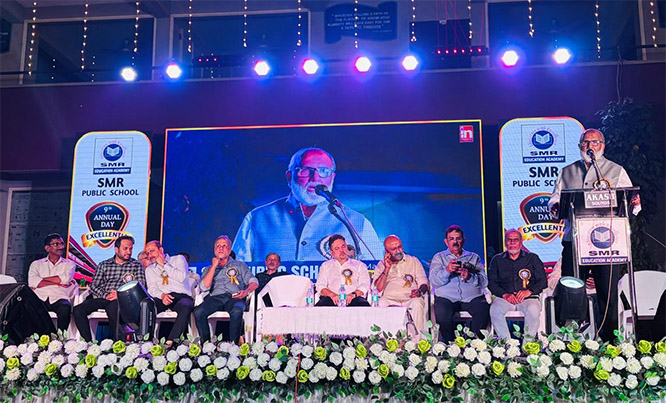
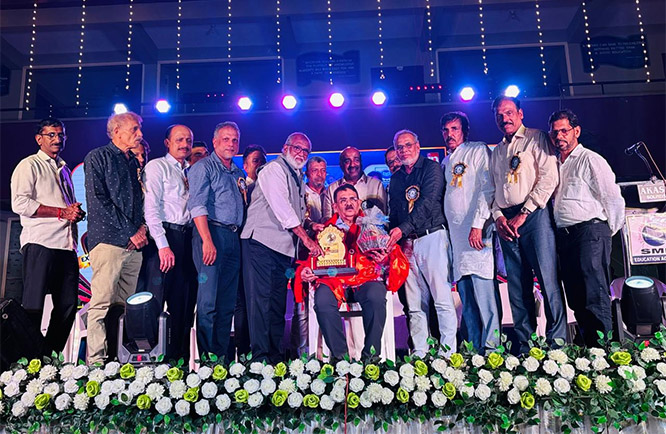
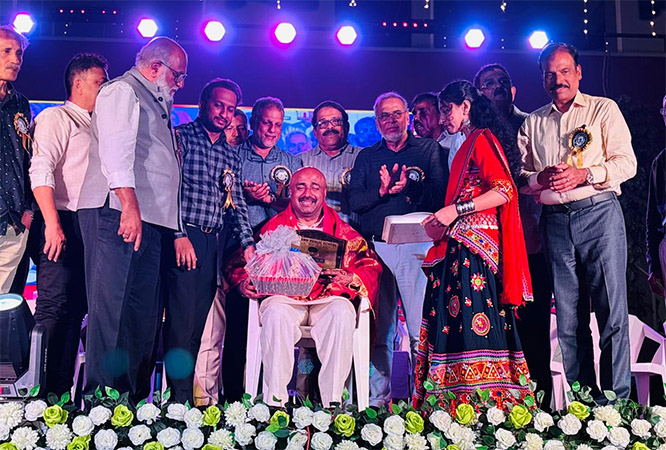
Melkar (Bantwal): The 9th Annual Day celebration of SMR Public School, titled “EXCELLENTIA”, was held on December 15 with great enthusiasm and dignity, marking a significant milestone in the institution’s journey towards academic excellence and holistic development.

The programme was inaugurated by Dr. U. T. Iftikar Ali. The chief guests were Dr. Akhtar Hussain, Mr. P. Moosabba Beary, Mr. Zakaria Jokattre, and Dr. T. M. Abdul Rahuf—whose inspiring addresses motivated the students and appreciated the school’s contributions to education.

Mr. Abdul Nasir, Mr. Ibrahim Gadiyar, Mr. Razak Golthamajal, Mr. Sali Koya, Mr. Arshad Hussain, Mr. Ismail Balanoor, Mr. Feroz Bawa, Mr. Sahul Hameed, Mr. Abubakkar, Mr. Hameed K. Mani, Mr. Abdul Majeed (Principal, Melkar Women’s College), and Mr. Abdul Lathief (Former Principal, Melkar Women’s College) were the guests of honour.

The Annual Report was presented by the Headmistress, Ms. Fathimathul Zaheera, highlighting the school’s achievements and progress during the academic year. The Presidential Address was delivered by the Chairman of SMR Public School, Dr. Haji S. M. Rasheed, who emphasised the vital role of education in shaping students’ futures and stressed the importance of discipline, dedication, and consistent effort in achieving 100 per cent academic results.

Secretary of SMR Public School, Mr. Rifath Ahmed, and PTA President, Mr. Sandeep Kumar, were also present on the occasion.

The Annual Day celebration showcased the collective efforts of students and teachers and reaffirmed the school’s commitment to quality education and all-round development. The programme concluded with a vote of thanks, expressing gratitude to all dignitaries, parents, and well-wishers for their support. The 9th Annual Day—EXCELLENTIA—was a memorable and successful event, leaving a lasting impression on everyone present. 

SMR3.jpg

SMR2.jpg

Comments

Add new comment

  • Coastaldigest.com reserves the right to delete or block any comments.
  • Coastaldigset.com is not responsible for its readers’ comments.
  • Comments that are abusive, incendiary or irrelevant are strictly prohibited.
  • Please use a genuine email ID and provide your name to avoid reject.
News Network
December 2,2025

DKSsiddu.jpg

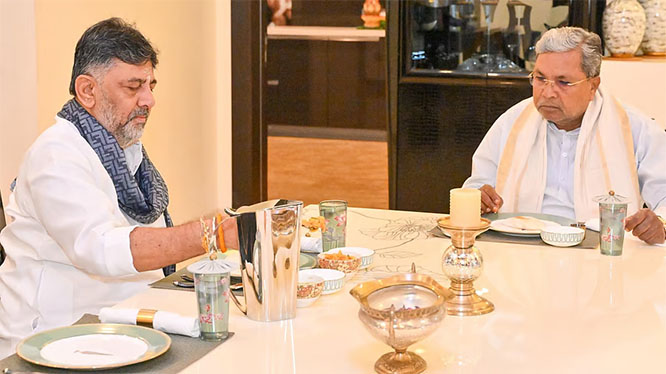
Bengaluru: 'Nati koli saaru' (country chicken curry) considered one of Chief Minister Siddaramaiah’s favourites along with steaming hot idlis was on the breakfast menu at Deputy CM D K Shivakumar’s residence on Tuesday, according to official sources.

The spread also included 'nati koli' fry, vada and pongal, among other items, they said.

In an apparent show of unity, Siddaramaiah visited Shivakumar’s residence for breakfast, just days after the two leaders shared a meal amid a simmering power tussle in the state Congress.

Siddaramaiah drove to the Deputy CM’s residence in Sadashivanagar, where he was received by Shivakumar and his brother D K Suresh, who is a former Congress MP.

Suresh and Kunigal MLA H D Ranganath, a relative of Shivakumar, joined them for breakfast, which featured a mix of vegetarian and non-vegetarian dishes.

Speaking to reporters later, Siddaramaiah said Shivakumar had invited him during his visit to the CM’s residence for breakfast on Saturday.

Asked about the difference between the two meals, the chief minister said, "At his (Shivakumar’s) house it was non-veg, while at my house it was veg. He is a vegetarian, I am a non-vegetarian. I had not prepared non-veg. I told DK to get chicken from the village as you won’t get the original in Bengaluru."

Shivakumar said he had initially invited Siddaramaiah to his residence, but the CM had suggested visiting his place first and reciprocating later. "It was a vegetarian breakfast at the CM’s house on Saturday," he noted.

"Today, I invited him (the CM) to my house. He enjoyed the breakfast, which had his Mysuru taste," Shivakumar added. At this point, Siddaramaiah remarked that Shivakumar’s wife is also from Mysuru.

Saturday’s breakfast at Siddaramaiah’s official residence, held as part of efforts by the Congress high command to ease tensions in the leadership dispute between the two, reportedly included idlis and sambar, according to official sources.

Comments

Add new comment

  • Coastaldigest.com reserves the right to delete or block any comments.
  • Coastaldigset.com is not responsible for its readers’ comments.
  • Comments that are abusive, incendiary or irrelevant are strictly prohibited.
  • Please use a genuine email ID and provide your name to avoid reject.