



Karnataka budget 2024-25 lists out steps to implement Yettihanole, Mekedatu other irrigation projects

News Network
February 16, 2024

CMsiddu.jpg

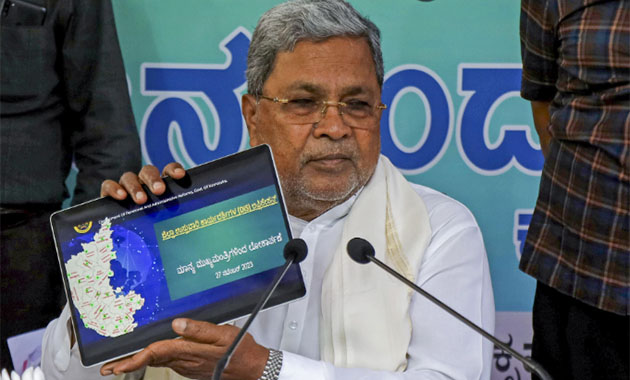
Bengaluru: Asserting his government's commitment to implement various irrigation and drinking water projects related to inter-state rivers including Mekedatu over Cauvery, Karnataka Chief Minister Siddaramaiah on Friday in the state Assembly detailed clearances and approvals pending with the Central government.

Presenting the 2024-25 budget in the Assembly, he listed out steps to implement various projects such as Mekedatu, Kalasa-Banduri, Upper Krishna, Upper Bhadra and Yettihanole, among others.

A separate project division and two sub-divisions have already been set up to implement the ambitious Mekedatu Balancing Reservoir and drinking water project of Cauvery river valley, Siddaramaiah said, adding that a survey to identify land that will be submerged under this project and the counting process of trees have already been initiated.

He also said action will be taken on priority to commence work early after obtaining remaining necessary clearances from the competent authorities.

The Chief Minister said that the Central Water Commission has given clearance to the Detailed Project Report for utilising 3.9 TMC water under Kalasa-Banduri Nala Diversion Project and the state government has begun the tender process anticipating forest clearance from National Board for Wildlife.

"However, in the meeting of the National Board for Wildlife headed by the Union Minister for Environment, Forest and Climate Change, the forest clearance has been deferred," he noted.

He also said that priority will be given to land acquisition and resettlement and rehabilitation as well as to complete sub-schemes under North Karnataka's ambitious Upper Krishna Phase-III Project, and that all necessary legal measures will be taken up along with pursuing the Central government to notify the final award of Krishna Tribunal-II.

Pointing out that the Central Government had announced grants of Rs 5,300 crore for implementation of Upper Bhadra Project in its 2023-24 Budget, Siddaramaiah said that no grant has been released so far.

The previous state government congratulated the Prime Minister in its Budget for declaring Bhadra Project as a National Project, he said.

"However, this has been proved false as the Central Government has not yet declared the project as a national project. Under this project, the State Government is planning to bring about 75,000 acres of land in Chitradurga district under irrigation and pursue with the Central Government to release the grants as announced in its budget to provide benefits to farmers."

To address the problem of reduction in water storage capacity of Tungabhadra reservoir due to silt accumulation, and to also fulfil a long-standing demand of farmers of the area, a detailed project report has been prepared for constructing a balancing reservoir near Navali in Koppal district at a cost of Rs 15,600 crore, Siddaramaiah said.

Consultation with Andhra Pradesh and Telangana regarding implementation of the project has been started, he said, adding that priority will be given for execution of the project.

Further, a pre-commissioning test has been conducted by discharging water to a delivery chamber near Doddanagara under Yettihanole Integrated Drinking Water Project, he said. Balancing reservoir work will be taken up in the current year along with completing all the lift components under the scheme as well as discharging water into the gravity canal.

The Chief Minister also said a plan to make Brindavan Gardens at the prestigious Krishnarajasagar dam a world-class tourist attraction will be taken up under public-private partnership.

A scheme will be implemented under public-private partnership for installing solar parks in back waters and lands owned by the Water Resources Department on the lines of Pavagada Solar Parks.

Several lift irrigation projects will be implemented at an estimated cost of Rs 7,280 crore in the current year. Irrigation potential of 97,698 hectares will be created from these projects.

In the current year, 115 works of lake development, check dam and bridge-cum-barrage at an estimated cost of Rs 200 crore will be taken up to ensure adequate supply of water for drinking purposes, agriculture and industry.

The ongoing 272 tank filling scheme under KC Valley-2nd Phase will be completed in the current year at an estimated cost of Rs 455 crore, Siddaramaiah added.

Comments

Add new comment

  • Coastaldigest.com reserves the right to delete or block any comments.
  • Coastaldigset.com is not responsible for its readers’ comments.
  • Comments that are abusive, incendiary or irrelevant are strictly prohibited.
  • Please use a genuine email ID and provide your name to avoid reject.
News Network
December 2,2025

A major upgrade in safety and monitoring is planned for Haj 2026, with every Indian pilgrim set to receive a Haj Suvidha smart wristband linked to the official Haj Suvidha mobile app. The initiative aims to support pilgrims—especially senior citizens—who may struggle with smartphones during the 45-day journey.

What the Smart Wristband Will Do

Officials said the device will come with:
•    Location tracking
•    Pedometer
•    SOS emergency button
•    Qibla compass
•    Prayer timings
•    Basic health monitoring

SP Tiwari, secretary of the UP State Haj Committee, said the goal is to make the pilgrimage safer and more comfortable.

“Most Hajis are elderly and not comfortable with mobile apps,” he said. “The smartwatch will help locate pilgrims who forget their way or cannot communicate their location.”

The wristbands will be monitored by the Consulate General of India in Saudi Arabia, similar to mobile tracking via the Haj Suvidha App.

Free Distribution and Training

•    Smart wristbands will be given free of cost.
•    Training for pilgrims will be conducted between January and February 2026.
•    Sample units will reach state Haj committees soon.
•    Final devices will be distributed as pilgrims begin their journey.

New Rules for Accommodation

Two major decisions have also been finalised for Haj 2026:
1.    Separate rooms for men and women – including married couples. They may stay on the same floor but must occupy different rooms, following stricter Saudi guidelines.
2.    Cooking banned – gas cylinders will not be allowed; all meals will be provided through official catering services arranged by the Haj Committee of India.

These decisions were finalised during a meeting of the Haj Committee of India and state representatives in Mumbai.

Haj Suvidha App Launched Earlier

The government launched the Haj Suvidha App in 2024, offering:

•    Training modules
•    Accommodation and flight details
•    Baggage information
•    SOS and translation tools
•    Grievance redressal

Haj 2026 Quota and Key States

•    India’s total Haj quota for 2026: 1,75,025 pilgrims
•    70% (1,25,000) allotted to the Haj Committee of India
•    30% (around 50,000) reserved for Haj Group Organisers

Uttar Pradesh has the largest allocation (around 30,000 seats), though approximately 18,000 pilgrims are expected to go this year. States with high pilgrim numbers include Kerala, Maharashtra and Gujarat.

Dates of Haj 2026

The pilgrimage is scheduled to take place from 24 May to 29 May, 2026 (tentative).
Haj is one of the five pillars of Islam and is mandatory for Muslims who meet the required conditions.

Comments

Add new comment

  • Coastaldigest.com reserves the right to delete or block any comments.
  • Coastaldigset.com is not responsible for its readers’ comments.
  • Comments that are abusive, incendiary or irrelevant are strictly prohibited.
  • Please use a genuine email ID and provide your name to avoid reject.
News Network
November 22,2025

gaza.jpg

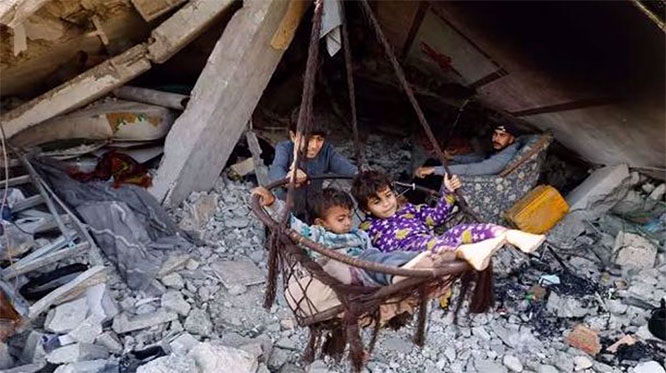
The Israeli regime’s forces have killed two Palestinian children in the Gaza Strip every day since the ceasefire began in early October, UNICEF has warned.

The UN children’s agency said on Friday that Israeli forces continue to attack Palestinians in Gaza even though the agreement was meant to stop the killing.

“Since 11 October, while the ceasefire has been in effect, at least 67 children have been killed in conflict-related incidents in the Gaza Strip. Dozens more have been injured. That is an average of almost two children killed every day since the ceasefire took effect,” UNICEF spokesperson Ricardo Pires said in Geneva, reminding that each number in the statistics represents a child whose life had ended violently.

“These are not statistics,” he said. “Each child had a story, a family, and a future that was stolen from them.”

Data from Palestinian factions, human rights groups, and government bodies recorded since the US-brokered ceasefire deal went into effect on October 10 show that Israeli forces have carried out numerous attacks, each constituting a separate ceasefire violation.

UNICEF teams say they repeatedly continue to witness heart-wrenching scenes of fearful Palestinian children sleeping outdoors with amputated limbs, while others live as orphans in flooded, makeshift shelters.

“I saw this myself in August. There is no safe place for them. The world cannot normalize their suffering,” Pires said, lamenting that the UN could “do a lot more if the aid that is really needed was entering faster.”

The UNICEF spokesperson warned that with the advent of winter, the risks for hundreds of thousands of displaced children will increase.

He warned, “The stakes are incredibly high” for children as winter acts as a threat multiplier, where children have no heating, no insulation, and few blankets. He said respiratory infections rise.

“Too many children have already paid the highest price,” Pires said. “Too many are still paying it, even under a ceasefire. The world promised them it would stop and that we would protect them.”

“Now we must act like it,” the UNICEF spokesperson added.

Since the Israeli regime launched its genocidal war against Palestinians in Gaza in October 2023, it has killed nearly 70,000 people in the territory, most of them women and children, and injured over 170,000 more, while reducing most of the structures in the enclave to rubble.

Comments

Add new comment

  • Coastaldigest.com reserves the right to delete or block any comments.
  • Coastaldigset.com is not responsible for its readers’ comments.
  • Comments that are abusive, incendiary or irrelevant are strictly prohibited.
  • Please use a genuine email ID and provide your name to avoid reject.
News Network
November 21,2025

Bengaluru, Nov 21: The Karnataka government is facing pressure to overhaul its employment system after a high-level Cabinet sub-committee recommended the complete phase-out of job outsourcing in government offices, boards, and corporations by March 2028. The move is aimed at tackling a systemic issue that has led to the potential violation of constitutional reservation policies and the exploitation of workers.

The Call for Systemic Change

With over three lakh vacant posts currently being filled through private agencies on an outsource, insource, or daily wage basis, the sub-committee highlighted a significant lapse. "As a result, reservations are not being followed as per the Constitution and state laws. It’s an urgent need to take serious steps to change the system. It has been recommended to completely stop the system of outsourcing by March 2028," the panel stated in a document.

The practice of outsourcing involves private companies hiring workers to perform duties for a government agency. Critics argue this model results in lesser salaries, a lack of social security benefits (otherwise available to permanent government employees), and a failure to adhere to the provisions of Articles 14 and 15 of the Constitution, which guarantee equality before the law and prohibit discrimination.

The 'Bidar Model' as a Stop-Gap Solution

To regulate the current mode of employment and reduce worker exploitation until the 2028 deadline, the government plans to establish workers’ services multi-purpose cooperative societies across all districts, following the successful "Bidar Model."

The Bidar District Services of Labour Multi-purpose Cooperative Society Ltd., which operates under the District Commissioner, is cited as a successful example of providing a measure of social security to outsourced staff. Labour Department officials argue this society ensures workers receive their due wages and statutory facilities like ESI (Employees' State Insurance) and PF (Provident Fund), in exchange for a 1% service fee collected from the employees.

legislative push and Priority Insourcing

The recommendations, led by the sub-committee headed by Law and Parliamentary Affairs Minister H K Patil, are set to be discussed at the next Cabinet meeting. The committee has proposed the introduction of the Karnataka Outsourced Employees (Regulation, Placement and Welfare) Bill 2025.

In a move addressing immediate concerns, Labour Minister Santosh Lad, a member of the sub-committee, has reportedly assured that steps will be taken over the next 2-3 years to insource workers in "life-threatening services" on a priority basis. This includes essential personnel like pourakarmikas (sanitation workers), drivers, electrical staff in the Energy Department, and Health Department staff handling contagious diseases. The transition aims to grant these workers the long-term security and benefits they currently lack under the outsourcing system. 

Comments

Add new comment

  • Coastaldigest.com reserves the right to delete or block any comments.
  • Coastaldigset.com is not responsible for its readers’ comments.
  • Comments that are abusive, incendiary or irrelevant are strictly prohibited.
  • Please use a genuine email ID and provide your name to avoid reject.