Karnataka tops states, UTs in providing access to justice: IJR 2022

News Network
April 4, 2023

Bengaluru, Apr 4: Karnataka tops the list of states and Union Territories in providing access to justice and three other southern states figure among the best five, according to the India Justice Report 2022.

The IJR, which was released here on Tuesday, said except for Delhi and Chandigarh, no state or union territory spends more than one per cent of its total annual expenditure on judiciary where the vacancy of judges in high courts stands at 30 per cent.

The IJR, an initiative of the Tata Trusts launched in 2019, said as of December 2022, the country had 19 judges for every 10 lakh people and a backlog of 4.8 crore cases. The Law Commission had suggested, as early as in 1987, that there should be 50 judges for every 10 lakh people in a decade’s time.

The statistics were shared in IJR which ranked states and UTs on various parameters like vacancies in judiciary, budgetary allocations, infrastructure, human resources, legal aid, condition of prisons, functioning of police and state human rights commissions.

The Tata Trusts website describes IJR as a "unique initiative" that "ranks individual Indian states in relation to their capacity to deliver access to justice".

While Karnataka topped the chart among 18 large and mid-size states having a population of over 1 crore each, it was followed by Tamil Nadu, Telangana, Gujarat and Andhra Pradesh.

The list of seven small states, having a population of less than one crore each, was headed by Sikkim, followed by Arunachal Pradesh and Tripura.

“The justice system as a whole remains affected by low budgets. Except for two union territories, Delhi and Chandigarh, no state spends more than 1 per cent of its total annual expenditure on the judiciary.

“Vacancy is an issue across the police, prison staff, legal aid, and judiciary. For 1.4 billion (140 crore) people, India has about 20,076 judges with about 22 per cent sanctioned posts vacant. Vacancy among high court judges is at 30 per cent.

“In the police, women are only about 11.75 per cent, despite their numbers doubling in the last decade. About 29 per cent of the officer positions are vacant. The police to population ratio is 152.8 per lakh. The international standard is 222,” the report said.

It said prisons are over-occupied at over 130 per cent and more than two-thirds of the prisoners (77.1 per cent) are awaiting the completion of investigation or trial.

The IJR said most of the states have not fully utilised funds given to them by the Centre and their own increase in spending on the police, prisons, and judiciary has not kept pace with overall increase in state expenditure.

Retired Supreme Court judge Justice Madan B Lokur said, “The third IJR shows that states are making a substantive improvement over the last two ones in terms of adding new dimensions on diversity, training, and infrastructure. Some states have dramatically improved their performance but there is a lot that needs to be done on the whole.”

“So far as the police is concerned there does appear to be a shortage of women officers in police. Legal aid is doing better but still a lot of people need to be provided quality free legal aid, we need to increase the confidence that people have in our services,” he said.

Maja Daruwala, Chief Editor of IJR 2022, said as a member of the comity of nations and, more importantly, as a commitment to itself, India has promised that by 2030 it will have ensured access to justice for all and built effective, accountable, and inclusive institutions at all levels.

“But the official statistics brought together in the IJR this year show that we still have a long way to go. I would again urge that the provision of affordable, efficient and accessible justice services to each one of us be treated as necessary as food, education, or health.

"For this to happen more resources need to be ploughed into it, much more capacity built and much more attention paid to curing long standing deficiencies,” she said.

The report said Karnataka remains the only state to have consistently met its quota for SC, ST and OBC positions, both among police officers and the constabulary.

“In the judiciary, at the subordinate/ district court level, no state met all the three quotas. Only Gujarat and Chhattisgarh met their respective SC quotas. Arunachal Pradesh, Telangana, and Uttarakhand met their respective ST quotas. Kerala, Sikkim, Andhra Pradesh, Maharashtra, Tamil Nadu, Chhattisgarh, and Telangana met OBC quotas,” it said.

Regarding the share of women in key positions across the justice system, which includes police, prisons, judiciary and legal aid, the report states that one out of 10 is a woman.

“While the overall share of women in the police force is about 11.75 per cent, in the officer ranks it is still lower at 8 per cent. Only 13 per cent of high court judges and 35 per cent of subordinate court judges are women. Among prison staff, they are 13 per cent. A majority of states has increased the share of women panel lawyers. Nationally, the share has increased from 18 per cent to 25 per cent,” it said.

It said one in four police stations does not have a single CCTV and nearly three in 10 police stations do not have women help desks.

The report said about 30 per cent (391) of prisons record occupancy rates of above 150 per cent and 54 per cent (709) run above 100 per cent capacity.

“With the exception of Andaman and Nicobar Islands, Arunachal Pradesh, Mizoram, Tripura, and Madhya Pradesh, the undertrial population of all states and Union Territories exceeds 60 per cent," it said.

On the aspect of workload in judiciary, the report said in 28 states/ Union Territories, one in every four high court cases is pending for more than five years. In district courts of 11 states/UTs, one in every four cases is pending for more than five years,” the report said.

The IJR said the population per subordinate court judge and high court judge is 71,224 persons and 17,65,760 persons respectively.

With regard to budgets, it found the national per capita spend on legal aid, including the expenditure of the National Legal Services Authority (NALSA) and the state/ UT governments themselves, is a meagre Rs 4.57 per annum.

Excluding NALSA, this figure drops to Rs 3.87 and, if only NALSA’s budget (2021-22) is considered, the per capita spend is Rs 1.06 only, it said.

It said the national per capita spend on prisons is Rs 43. Nationally, the annual average spend per prisoner has gone down to Rs 38,028 from Rs 43,062. Andhra Pradesh records the highest annual spend on a prisoner at Rs 2,11,157.

“The national per capita spend on judiciary stands at Rs. 146,” it said, adding the national per capita spend on police is at Rs 1151.

“IJR 2022 has reiterated both immediate and foundational corrections. It has flagged urgent filling of vacancies and increased representation. To effect an irreversible change, it has exhorted that Justice delivery be designated as an essential service,” it concluded.

The third IJR also assessed the capacity of the 25 State Human Rights Commissions (SHRC) and found that there are 33,312 pending cases before these panels in March 2021 and the national average vacancy across 25 SHRCs is at 44 per cent.

The statistics show nine states have been working with 50 per cent or more vacancies among members in SHRCs and only six states have women in their executive staff.


Comments

Add new comment

  • Coastaldigest.com reserves the right to delete or block any comments.
  • Coastaldigset.com is not responsible for its readers’ comments.
  • Comments that are abusive, incendiary or irrelevant are strictly prohibited.
  • Please use a genuine email ID and provide your name to avoid reject.
News Network
January 20,2026

Mangaluru: In a major step towards strengthening rural innovation, the Office of the Principal Scientific Adviser (PSA) to the Government of India is supporting the establishment of RuTAGe Smart Village Centres (RSVCs) across the country through collaborations with academic institutions, civil society organisations and philanthropic partners.

As part of this national initiative, Nitte (Deemed to be University) will set up the first RSVCs in the region at Nitte GP in Udupi district and at the Nitte Health Centre, Sevanjali Trust, Farangipete, in Dakshina Kannada district. The centres will be inaugurated on January 21. In South India, the programme is being implemented by the Section Infin-8 Foundation (SI-8).

Speaking to reporters on Monday, SI-8 founder-director Vishwas US said experts from Nitte University and SI-8 would work closely with farmers, students, youth and local entrepreneurs to adapt and deploy technologies tailored to local needs.

Project head Prof Iddya Karunasagar, representing Nitte DU, said the RSVCs at Nitte and Farangipete would serve as demonstration hubs for a wide range of agriculture, energy, skill-development and assistive technologies. These include solar dryers for fruits, vegetables and crops; soil-testing solutions; power weeders and women-friendly farm tools; wind-powered devices for rural artisans; grain storage systems; grass-cutting and tree-climbing equipment; and liquid fertiliser production using cowshed waste.

SI-8 CEO Aravind C Kumar said the centres would also provide access to digital and knowledge-based platforms such as ISRO applications, government scheme portals, market linkage tools and gamified learning resources, along with assistive technologies for persons with visual impairments.

Highlighting the broader impact of the initiative, Principal Scientific Adviser Prof Ajay Kumar Sood said it demonstrated how applied research could bridge the rural–urban divide and help create self-reliant, technology-enabled villages.

The initiative has been made possible through philanthropic support from Dr NC Murthy of ACM Business Solutions, LLC, USA. Dr Sapna Poti, Director (Strategic Alliances) at the Office of the Principal Scientific Adviser, said the long-term objective is to build self-sufficient, technology-driven communities capable of generating sustainable livelihoods on their own.

Comments

Add new comment

  • Coastaldigest.com reserves the right to delete or block any comments.
  • Coastaldigset.com is not responsible for its readers’ comments.
  • Comments that are abusive, incendiary or irrelevant are strictly prohibited.
  • Please use a genuine email ID and provide your name to avoid reject.
News Network
February 1,2026

Golf.jpg

The coastal city of Mangaluru is gearing up for a major sporting milestone with the launch of a Golf Excellence Academy at the Pilikula Golf Club (PGC), scheduled to open on May 31. The initiative aims to position Mangaluru firmly on India’s national golfing map.

Speaking to reporters on Saturday during PGC’s first-ever floodlit Pro-Am tournament, club captain Manoj Kumar Shetty said the project is being funded by UAE-based philanthropist Michael D’Souza and is currently in the design phase. Experts from leading golf academies across the country are expected to visit Mangaluru to help shape the training programme and infrastructure.

The academy will train 20 young golfers at a time, with a long-term vision of producing national-level players from the region. Until now, PGC relied on an in-house coach, but the recent renovation of the course and the introduction of floodlights have opened new possibilities for expanding the sport.

Shetty said discussions are underway with two reputed coaching academies, whose heads are expected to visit PGC shortly. “A dormitory for trainers is already under construction. We are inviting academies to assess the facilities and suggest changes so we can build a truly world-class Golf Excellence Academy,” he said.

Professional golfer Aryan Roopa Anand noted that the floodlit course would be a game-changer for young players. “Students can now practise after school hours, even up to 8 or 9 pm, without compromising on academics,” he said.

Comments

Add new comment

  • Coastaldigest.com reserves the right to delete or block any comments.
  • Coastaldigset.com is not responsible for its readers’ comments.
  • Comments that are abusive, incendiary or irrelevant are strictly prohibited.
  • Please use a genuine email ID and provide your name to avoid reject.
News Network
January 31,2026

files.jpg

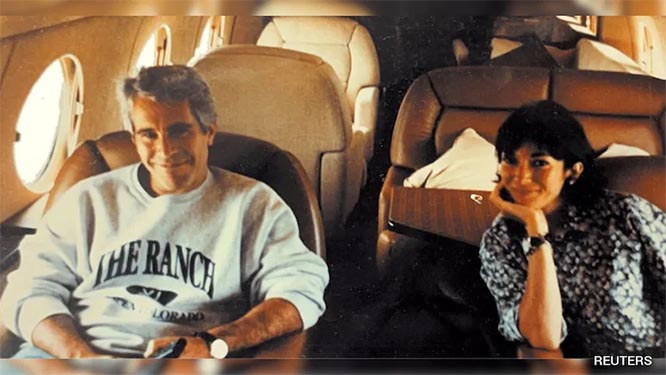
A fresh cache of files related to the investigation into the late convicted sex offender Jeffrey Epstein contains documents that reference President Donald Trump and other high-profile figures including Microsoft co-founder Bill Gates, Commerce Secretary Howard Lutnick and British billionaire Richard Branson.

Here are key details about mentions of the celebrities, none of whom have been accused of wrongdoing:

Donald Trump

The files included an FBI-compiled list of sexual assault allegations related to President Donald Trump -- many of them involving anonymous callers and unverified tips.

The allegations -- some secondhand -- were sent to the FBI's National Threat Operations Center which receives information by phone and electronically.

The document suggests that investigators followed up on a number of the tips. Some were deemed to lack credibility.

Trump has long denied any wrongdoing related to Epstein.

In a statement accompanying Friday's file dump, the Justice Department said: "Some of the documents contain untrue and sensationalist claims against President Trump that were submitted to the FBI right before the 2020 election. To be clear, the claims are unfounded and false."

Bill Gates

In a draft email among the documents, Epstein alleged Gates had engaged in extramarital affairs.

In the mail, Epstein wrote that his relationship with Gates had ranged from "helping Bill to get drugs, in order to deal with consequences of sex with russian girls, to facilitating his illicit trysts, with married women."

Richard Branson

Files show friendly relations between the two billionaires.

In an email sent to Epstein on Sept 11, 2013, Branson wrote "It was really nice seeing you yesterday. The boys in Watersports can't stop speaking about it! Any time you're in the area would love to see you. As long as you bring your harem!"

Elon Musk

The files contain numerous mail exchanges between Epstein and billionaire entrepreneur Elon Musk.

In November 2012, Epstein sent Musk an email asking "how many people will you be for the heli to island."

"Probably just Talulah and me. What day/night will be the wildest party on your island?" Musk replied.

Andrew Mountbatten-Windsor

The disgraced former prince invited Epstein to visit him at Buckingham Palace in September 2010 while the financier was making a trip to London.

An email exchange shows Epstein contacting Andrew to ask: "What time would you like me... we will also need... private time."

Andrew replied: "we could have dinner at Buckingham Palace and lots of privacy."

Howard Lutnick

Emails show that Epstein and businessman Lutnick -- currently Trump's commerce secretary -- made plans in December 2012 to lunch on Epstein's Caribbean island.

"We are heading towards you from St. Thomas" Lutnick's wife wrote to Epstein's secretary, asking where they should anchor.

Steve Tisch

Several mails suggested Epstein connected Steve Tisch, 76, producer of the movies "Forrest Gump" and "Risky Business" and the co-owner of the New York Giants football team, with multiple women.

In one exchange with Tisch, Epstein describes a woman as "russian, and rarely tells the full truth, but fun."

Zohran Mamdani's Mother, Filmmaker Mira Nair 

New York City Mayor Zohran Mamdani's mother, Mira Nair, attended an afterparty at convicted sex trafficker Ghislaine Maxwell's house for her 2009 film "Amelia", reveals a new set of Epstein files.

An email dated October 21, 2009, sent by publicist Peggy Siegal to Jeffrey Epstein, also surfaced in documents. The email, sent in the early hours, right after Siegal left the gathering, gives an insight into the afterparty. 

The party was also attended by former President Bill Clinton and Amazon CEO Jeff Bezos.

"Just left Ghislaine's townhouse...after party for film. Bill Clinton and Jeff Bezos were there...Jean Pigoni, director Mira Nair....etc," the email read.

The email described the reaction of guests to Nair's film as "tepid."

"Film received tepid reaction although women like it much more...Hillary Swank and Gen: at stupid party in Bloomingdales cheap sportwear department....very weird. Studio went for free party from store and windows for a month....Going to be in Wall Street 2 tomorrow ....more to come. xoxo Peg," the email read.

Comments

Add new comment

  • Coastaldigest.com reserves the right to delete or block any comments.
  • Coastaldigset.com is not responsible for its readers’ comments.
  • Comments that are abusive, incendiary or irrelevant are strictly prohibited.
  • Please use a genuine email ID and provide your name to avoid reject.