Mangaluru: Ward Committee training workshop held to strengthen civic participation

News Network
January 6, 2022

wardcommittee.jpg

Mangaluru, Jan 6: To strengthen civic participation and facilitate ward committee meetings with citizens in Mangaluru, Mangaluru City Corporation and Janaagraha Centre for Citizenship and Democracy organised a Ward Committee training workshop for the newly appointed Ward Committee members on Thursday at Kundmul Rangarao Townhall.

Inaugurating the programme, Mangaluru Mayor Premanand Shetty said that Ward Committees act as link between the ward residents and Corporators who represent the Mangaluru City Corporation. 

“Mangaluru is the second city in the state to implement Ward Committees. The members have many responsibilities. They need to assess the facilities and infrastructure in the ward, ensure Solid Waste Management happens effectively, ensure timely collection of taxes, prepare and submit ward development scheme to the Corporation among others. Hence, it is important that Ward Committees meet every month to enhance transparency, accountability and smooth functioning,” the Mayor said.

“There are a few criteria for one to become a ward committee member. In some wards, we could not find eligible applicants. We will be taking steps in the future days to invite applicants in these wards and hence strengthen the ward committees to function in its full capacity,” the Mayor added.

“Ward Committees are a constitutional mandate. There were some challenges in forming Ward Committees in Mangaluru. But this was because we wanted to ensure it happens in a proper and transparent manner. We invited applications, objections and even assessed every objection we received. We worked with the Police Commissioner to verify the profiles of the Ward Committee applicants and then the final list was released. We are open to changes if any issues, even in the future. We want citizens to have confidence in this decentralized process,” said Mangaluru City Commissioner Akshy Sridhar.

“To ensure Ward Committees function smoothly, we need to have a collaborative approach and not a conflict approach. Ward Committees need to work as a consulting body where problems can be discussed and solutions can be thought about and implemented,” Sridhar added.

Speaking on the commencement of Ward Committees, the dates and venues will be announced at the earliest, Sridhar said.

Sapna Karim, Head, Civic Participation, Janaagraha, resource person for the Workshop, explained functions of Ward Committees, responsibilities of the Ward Committee members as well as the process on how Ward Committees meetings need to be held.

“Ward Committees are a starting point of governance that a citizen can engage with. It empowers citizens to vote on local decisions. Helps implement ''bottom-up" approach in planning and budgeting. Ward Committees play a key role in planning, prioritizing, supervising & validating civic works,” Sapna added.

Dr Shikaripura Krishnamurthy, Director, Abhiyanam, Organisation for Research and Training in HRD said that Ward Committees play a key role in deciding the development of the Ward. He said that every member needs to assess the facilities in the ward and grade the ward. Only then, one can get a clear idea on what the ward lacks and how it can be developed. Each ward member should inculcate a competitive spirit to make their ward the best, he added.

Ward Committee Training Workshop for Councillors and Nodal Officers

A Ward Committee Training Workshop was held for Councillors and Nodal Officers at MCC Council Hall on Wednesday.

The workshop was taken up by Sapna Karim, Head, Civic Participation, Janaagraha and Dr Shikaripura Krishnamurthy, Director, Abhiyanam, Organisation for Research and Training in HRD.

workshop.jpg

About Janaagraha 

Janaagraha is a non-profit trust, working towards the mission of transforming the quality of life in India’s cities and towns. Founded in 2001 by Ramesh Ramanathan and Swati Ramanathan, it started as a movement to include people’s participation in public governance and has now evolved into a robust institution for citizenship and democracy. The core idea of Janaagraha’s work does not revolve around fixing problems but instead seeking to fix the system that can solve the problems. To achieve this objective, Janaagraha works with citizens to catalyse active citizenship in city neighbourhoods and with governments to institute reforms to city governance (what we call “City-Systems”). 

We believe that improved quality of life is directly linked to improved quality of infrastructure, services, and citizenship. Janaagraha hence works at intersections to fix the city systems across law, policy, institutions with a specific focus on sectors such as Climate Change, Gender Equality & Public Safety, Water and Sanitation, Education, and Public Health using tools and activities like Civic Participation, Municipal Finance, Advocacy and instilling 21st Century skills among youth to empower them to become active citizens. By strengthening urban capacities and resources, Janaagraha aims to achieve its mission of improving City Systems and Quality of life.

In January 2021, Janaagraha had organized participatory budgeting initiative MyCityMyBudget in Mangaluru. Over 1000 Mangaluru citizens submitted inputs how Mangaluru budget needs to be spent, which was later made into a report and submitted to the MCC.


Comments

Add new comment

  • Coastaldigest.com reserves the right to delete or block any comments.
  • Coastaldigset.com is not responsible for its readers’ comments.
  • Comments that are abusive, incendiary or irrelevant are strictly prohibited.
  • Please use a genuine email ID and provide your name to avoid reject.
News Network
December 6,2025

pilot.jpg

New Delhi: IndiGo, India’s largest airline, faced major operational turbulence this week after failing to prepare for new pilot-fatigue regulations issued by the Directorate General of Civil Aviation (DGCA). The stricter rules—designed to improve flight safety—took effect in phases through 2024, with the latest implementation on November 1. IndiGo has acknowledged that inadequate roster planning led to widespread cancellations and delays.

Below are the key DGCA rules that affected IndiGo’s operations:

1. Longer Mandatory Weekly Rest

Weekly rest for pilots has been increased from 36 hours to 48 hours.

The government says the extended break is essential to curb cumulative fatigue. This rule remains in force despite the current crisis.

2. Cap on Night Landings

Pilots can now perform only two night landings per week—a steep reduction from the earlier limit of six.

Night hours, defined as midnight to early morning, are considered the least alert period for pilots.

Given the disruptions, this rule has been temporarily relaxed for IndiGo until February 10.

3. Reduced Maximum Night Flight Duty

Flight duty that stretches into the night is now capped at 10 hours.

This measure has also been kept on hold for IndiGo until February 10 to stabilize operations.

4. Weekly Rest Cannot Be Replaced With Personal Leave

Airlines can no longer count a pilot’s personal leave as part of the mandatory 48-hour rest.

Pilots say this closes a loophole that previously reduced actual rest time.

Currently, all airlines are exempt from this rule to normalise travel.

5. Mandatory Fatigue Monitoring

Airlines must submit quarterly fatigue reports along with corrective actions to DGCA.

This system aims to create a transparent fatigue-tracking framework across the industry.

The DGCA has stressed that these rules were crafted to strengthen flight safety and align India with global fatigue-management standards. The temporary relaxations are expected to remain until February 2025, giving IndiGo time to stabilise its schedules and restore normal air travel.

Comments

Add new comment

  • Coastaldigest.com reserves the right to delete or block any comments.
  • Coastaldigset.com is not responsible for its readers’ comments.
  • Comments that are abusive, incendiary or irrelevant are strictly prohibited.
  • Please use a genuine email ID and provide your name to avoid reject.
News Network
November 24,2025

israelsyra.jpg

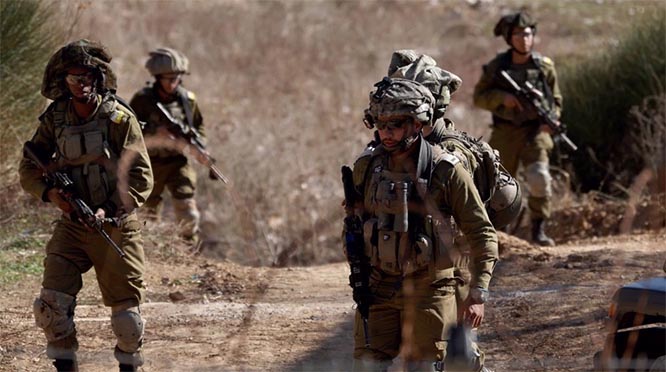
Israeli forces have pushed over the Syrian frontier, erecting a checkpoint and stopping vehicles in the southwestern city of Quneitra, in yet another breach of the Arab country’s sovereignty.

The violation took place on Sunday, when the troops made their way across the border, setting up the outpost near the Ain al-Bayda junction in northern Quneitra, Syrian outlets reported.

According to the al-Ikhbariya paper, an Israeli detachment positioned itself at the junction, halting cars and conducting searches.

The Syrian Arab News Agency (SANA) reported that three Israeli military vehicles then moved further into the northern countryside, deploying between the town of Jubata al-Khashab and the villages of Ofaniya and Ain al-Bayda. The agency added that a separate Israeli unit mounted a new incursion in the central region, approaching the villages of Umm Batina and al-Ajraf.

Residents said such activities have surged in recent months, pointing to Israeli advances onto farmland, leveling of extensive forested areas, arrests, and spread of mobile checkpoints.

The Israeli regime began markedly increasing its military aggression against Syria last year.

The escalation coincided with increasingly ferocious onslaughts throughout the country by the so-called Hay'at Tahrir al-Sham (HTS) Takfiri terrorist group, which the government of President Bashar al-Assad had confined to northwestern Syria. The HTS, however, managed to overthrow the government as the Israeli attacks would pummel the country’s civilian and defensive infrastructure.

Various reports have shown that, during the escalation, the regime conducted more than 1,000 airstrikes on the Syrian territory and over 400 ground raids into the south.

Following the collapse of the Assad government, Tel Aviv also widened its grip over the occupied Golan Heights by taking control of a demilitarized buffer zone, in defiance of a 1974 Disengagement Agreement. Earlier this month, senior Israeli officials, including Prime Minister Benjamin Netanyahu, visited the buffer zone, prompting expressions of alarm on the part of the United Nations.

The United States, the regime’s biggest ally, has, meanwhile, been fraternizing the HTS head Abu Mohammed al-Jolani amid the widely reported prospect of rapprochement with Tel Aviv.

Comments

Add new comment

  • Coastaldigest.com reserves the right to delete or block any comments.
  • Coastaldigset.com is not responsible for its readers’ comments.
  • Comments that are abusive, incendiary or irrelevant are strictly prohibited.
  • Please use a genuine email ID and provide your name to avoid reject.
Agencies
November 22,2025

indiapak.jpg

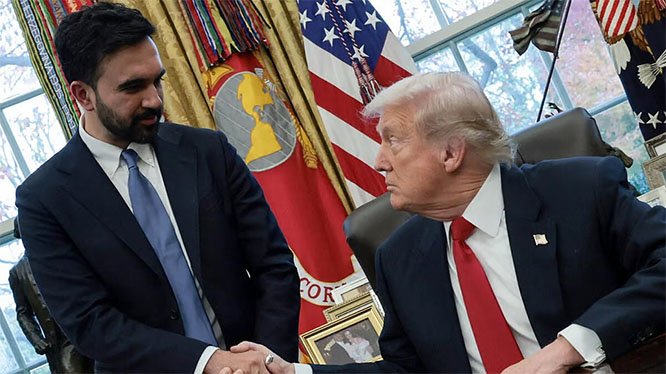
New York/Washington: US President Donald Trump has again claimed to have solved the conflict between India and Pakistan, repeating his assertion during a meeting with New York City Mayor-elect Zohran Mamdani in the Oval Office.

Mamdani flew to Washington DC for his first meeting with Trump in the White House on Friday. Trump said he “enjoyed” the meeting, which he described as “great.”

During remarks in the Oval Office, with Mamdani standing next to him, Trump repeated his claim that he solved the May conflict between India and Pakistan.

"I did eight peace deals of countries, including India and Pakistan,” he said.

On Wednesday, Trump had said he threatened to put 350 per cent tariffs on India and Pakistan if they did not end their conflict, repeating his claim that he solved the fighting between the nuclear-armed neighbours and that Prime Minister Narendra Modi had called him to say “we're not going to go to war.”

Since May 10, when Trump announced on social media that India and Pakistan had agreed to a “full and immediate” ceasefire after a “long night” of talks mediated by Washington, he has repeated his claim over 60 times that he “helped settle” the tensions between India and Pakistan.

India has consistently denied any third-party intervention. India launched Operation Sindoor on May 7, targeting terror infrastructure in Pakistan and Pakistan-occupied Kashmir in retaliation for the April 22 Pahalgam attack that killed 26 civilians. India and Pakistan reached an understanding on May 10 to end the conflict after four days of intense cross-border drone and missile strikes.

Mamdani emerged victorious in the closely-watched battle for New York City Mayor, becoming the first South Asian and Muslim to be elected to sit at the helm of the largest city in the US.

He had been the front-runner in the NYC Mayoral election for months and defeated Republican nominee Curtis Sliwa and political heavyweight former New York State Governor Andrew Cuomo, who ran as an independent candidate and was officially endorsed by Trump just hours before the elections.

Indian-descent Mamdani is the son of renowned filmmaker Mira Nair and Columbia University professor Mahmood Mamdani. He was born and raised in Kampala, Uganda and moved to New York City with his family when he was 7. Mamdani became a naturalised US citizen only recently, in 2018.

Comments

Add new comment

  • Coastaldigest.com reserves the right to delete or block any comments.
  • Coastaldigset.com is not responsible for its readers’ comments.
  • Comments that are abusive, incendiary or irrelevant are strictly prohibited.
  • Please use a genuine email ID and provide your name to avoid reject.