Probe ordered into voter data theft after apprehension of impersonation: Karnataka Chief Electoral Officer

News Network
November 20, 2022

CEO.jpg

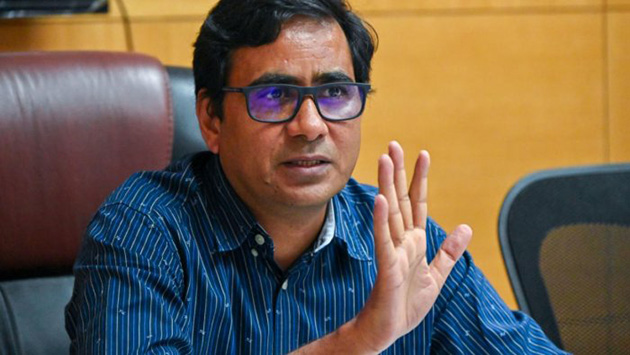
Bengaluru, Nov 20: In the midst of the Congress’s allegations of voter data theft, Chief Electoral Officer of Karnataka Manoj Kumar Meena said the inquiry was ordered following the apprehension of impersonation by an NGO during the ‘voter awareness drive’.

“The Bruhat Bengaluru Mahanagara Palike (BBMP) commissioner had some information. We have the apprehension that there is impersonation and it has to be inquired. Ultimately, after the police investigation and our Divisional Commissioner inquiry, we will come to know what is there in it,” Meena told PTI.

The Congress in Karnataka has alleged that the Chilume Educational Cultural and Rural Development Institute (‘Chilume Trust’) hired many private people who were given fake identity cards impersonating Booth Level Officers (BLOs) of BBMP.

The opposition party alleged that the private trust, which was assigned by the Bengaluru civic agency to spread awareness among voters, collected details of the voters such as name, mother tongue, gender, religion, caste, voter ID number, and the Aadhaar number.

Meena declined to comment on the complaint by Congress with the State Election Commission regarding voter data theft. He said the reason behind the suspected impersonation will come out only after the probe.

“Let’s wait for the inquiry. If I comment on anything, it will compromise the inquiry. We will not say about the merit of the complaint. The regional commissioner is entrusted with the inquiry. Let the truth come out. Then we will take action as per the recommendation,” the CEO said.

The Congress alleged that the Chilume Trust also fed the information collected from voters into its private app. To a question whether his office would revisit the deletion of 6.73 lakh names from the electoral roll in Bengaluru following the "revelation", he said addition and deletion are a regular process and there was no need to revisit it again.

According to Meena, in the city, 6.73 lakh names were deleted and about three lakh new names added to the electoral roll. He added that the Election Commission of India carried out a major exercise to find out "photo-similar" entries in the electoral roll using software in the country. Using the software, 16 lakh entries were deleted from the electoral roll from across Karnataka including 6.73 lakh from Bengaluru after the verification by the BLOs.

According to him, about one crore such entries were deleted including around 15 lakh in Tamil Nadu and 14 lakh in Maharashtra. On the Congress' charge that the directors of the Chilume trust, which is in the middle of the controversy, have not been named in the FIR, Meena said the NGO has been mentioned in it, which itself means that those heading the organisations have been named.

The BBMP had given permission to the Chilume Trust to conduct 'Systematic Voters Education and Electoral Participation (SVEEP), a voter awareness drive by the Election Commission, in Karnataka, where Assembly elections are due next year.

BBMP said last week that the Trust violated the conditions of the permission and asked the public not to share any voter details with representatives of the NGO. 

Comments

Add new comment

  • Coastaldigest.com reserves the right to delete or block any comments.
  • Coastaldigset.com is not responsible for its readers’ comments.
  • Comments that are abusive, incendiary or irrelevant are strictly prohibited.
  • Please use a genuine email ID and provide your name to avoid reject.
News Network
January 23,2026

Mangaluru: The Karnataka Government Polytechnic (KPT), Mangaluru, has achieved autonomous status from the All India Council for Technical Education (AICTE), becoming the first government polytechnic in the country to receive such recognition in its 78-year history. The status was granted by AICTE, New Delhi, and subsequently approved by the Karnataka Board of Technical Education in October last year.

Officials said the autonomy was conferred a few months ago. Until recently, AICTE extended autonomous status only to engineering colleges, excluding diploma institutions. However, with a renewed national focus on skill development, several government polytechnics across India have now been granted autonomy.

KPT, the second-largest polytechnic in Karnataka, was established in 1946 with four branches and has since expanded to offer eight diploma programmes, including computer science and polymer technology. The institution is spread across a 19-acre campus.

Ravindra M Keni, the first dean of the institution, told The Times of India that AICTE had proposed autonomous status for polytechnic institutions that are over 25 years old. “Many colleges applied. In the first round, 100 institutions were shortlisted, which was further narrowed down to 15 in the second round. We have already completed one semester after becoming an autonomous institution,” he said. He added that nearly 500 students are admitted annually across eight three-year diploma courses.

Explaining the factors that helped KPT secure autonomy, Keni said the institution has consistently recorded 100 per cent admissions and placements for its graduates. He also noted its strong performance in sports, with the college emerging champions for 12 consecutive years, along with active student participation in NCC and NSS activities.

Autonomous status allows KPT to design industry-oriented curricula, conduct examinations, prepare question papers, and manage academic documentation independently. The institution can also directly collaborate with industries and receive priority funding from AICTE or the Ministry of Education. While academic autonomy has been granted, financial control will continue to rest with the state government.

“There will be separate committees for examinations, question paper setting, boards of studies, and boards of examiners. The institution will now have the freedom to conduct admissions without government notifications and issue its own marks cards,” Keni said, adding that new academic initiatives would be planned after a year of functioning under the autonomous framework.

Comments

Add new comment

  • Coastaldigest.com reserves the right to delete or block any comments.
  • Coastaldigset.com is not responsible for its readers’ comments.
  • Comments that are abusive, incendiary or irrelevant are strictly prohibited.
  • Please use a genuine email ID and provide your name to avoid reject.
News Network
February 1,2026

Golf.jpg

The coastal city of Mangaluru is gearing up for a major sporting milestone with the launch of a Golf Excellence Academy at the Pilikula Golf Club (PGC), scheduled to open on May 31. The initiative aims to position Mangaluru firmly on India’s national golfing map.

Speaking to reporters on Saturday during PGC’s first-ever floodlit Pro-Am tournament, club captain Manoj Kumar Shetty said the project is being funded by UAE-based philanthropist Michael D’Souza and is currently in the design phase. Experts from leading golf academies across the country are expected to visit Mangaluru to help shape the training programme and infrastructure.

The academy will train 20 young golfers at a time, with a long-term vision of producing national-level players from the region. Until now, PGC relied on an in-house coach, but the recent renovation of the course and the introduction of floodlights have opened new possibilities for expanding the sport.

Shetty said discussions are underway with two reputed coaching academies, whose heads are expected to visit PGC shortly. “A dormitory for trainers is already under construction. We are inviting academies to assess the facilities and suggest changes so we can build a truly world-class Golf Excellence Academy,” he said.

Professional golfer Aryan Roopa Anand noted that the floodlit course would be a game-changer for young players. “Students can now practise after school hours, even up to 8 or 9 pm, without compromising on academics,” he said.

Comments

Add new comment

  • Coastaldigest.com reserves the right to delete or block any comments.
  • Coastaldigset.com is not responsible for its readers’ comments.
  • Comments that are abusive, incendiary or irrelevant are strictly prohibited.
  • Please use a genuine email ID and provide your name to avoid reject.
News Network
January 23,2026

Mangaluru: The Karnataka Government Polytechnic (KPT), Mangaluru, has achieved autonomous status from the All India Council for Technical Education (AICTE), becoming the first government polytechnic in the country to receive such recognition in its 78-year history. The status was granted by AICTE, New Delhi, and subsequently approved by the Karnataka Board of Technical Education in October last year.

Officials said the autonomy was conferred a few months ago. Until recently, AICTE extended autonomous status only to engineering colleges, excluding diploma institutions. However, with a renewed national focus on skill development, several government polytechnics across India have now been granted autonomy.

KPT, the second-largest polytechnic in Karnataka, was established in 1946 with four branches and has since expanded to offer eight diploma programmes, including computer science and polymer technology. The institution is spread across a 19-acre campus.

Ravindra M Keni, the first dean of the institution, told The Times of India that AICTE had proposed autonomous status for polytechnic institutions that are over 25 years old. “Many colleges applied. In the first round, 100 institutions were shortlisted, which was further narrowed down to 15 in the second round. We have already completed one semester after becoming an autonomous institution,” he said. He added that nearly 500 students are admitted annually across eight three-year diploma courses.

Explaining the factors that helped KPT secure autonomy, Keni said the institution has consistently recorded 100 per cent admissions and placements for its graduates. He also noted its strong performance in sports, with the college emerging champions for 12 consecutive years, along with active student participation in NCC and NSS activities.

Autonomous status allows KPT to design industry-oriented curricula, conduct examinations, prepare question papers, and manage academic documentation independently. The institution can also directly collaborate with industries and receive priority funding from AICTE or the Ministry of Education. While academic autonomy has been granted, financial control will continue to rest with the state government.

“There will be separate committees for examinations, question paper setting, boards of studies, and boards of examiners. The institution will now have the freedom to conduct admissions without government notifications and issue its own marks cards,” Keni said, adding that new academic initiatives would be planned after a year of functioning under the autonomous framework.

Comments

Add new comment

  • Coastaldigest.com reserves the right to delete or block any comments.
  • Coastaldigset.com is not responsible for its readers’ comments.
  • Comments that are abusive, incendiary or irrelevant are strictly prohibited.
  • Please use a genuine email ID and provide your name to avoid reject.