Proportion of child covid cases rising in Karnataka

News Network
July 26, 2021

Bengaluru, July 26: The second wave of covid-19 may have officially decreased, but Karnataka has witnessed an increase in the percentage of child covid-19 cases. 

As per official data, pre-teens (children aged 0-9) represented an average of 3.5% of daily cases in the state in May. It rose to 4% in June and has now jumped to 4.4% in July. Among teenagers (aged 0-17), the proportion has remained a constant 8% to 9% statewide.

Paediatricians on the ground have also observed the increase. “In the last couple of weeks, we have started to see more children coming to the hospital with Covid-19,” said Dr Srikanta J T, Pediatric Pulmonologist, Aster CMI Hospital, and a member of the Third Wave Committee.

He added that all evidence so far seemed to suggest that parents were passing on the infection to children. “There are a lot of factors to account for this: notably ‘revenge tourism,’ a delay in the arrival of testing results, and increased general mobility of the adult population,” he said, clarifying, however, that it was too early to tell if this represents the early beginnings of the third wave.

But why hasn’t there been a commensurate increase of infections among teens? Dr Bhaskar Shenoy, Head of Paediatrics at Manipal Hospitals (Old Airport Road), pointed out this is because traditionally pre-teens are more prone to infections than teens. “The immune response in children aged 10 and above is generally more robust,” he explained.

The issue has come at a time when the state’s genomic surveillance machinery is preparing to scale up sequencing of samples from children with Covid-19, even as medical professionals express concern that a new mutation of the novel coronavirus could be responsible for the increase in percentages.

“By all indications so far, it is still the baseline Delta variant which is causing infections in children,” said Dr Vishal Rao, a member of the state’s Genomic Surveillance Committee.

He added that this variant is still a concern because studies have not been conducted determining how it affects certain age groups, notably children. “We, therefore, need to closely monitor people aged below 18,” he added.

The committee has been issued directions by the Indian SARS-CoV-2 Consortium on Genomics (INSACOG) to focus on paediatrics.

Meanwhile, Dr Srikanta pointed to the results of the fourth national sero-survey to suggest that not all was doom and gloom. The sero-survey has established that more than half or 59.4% of children in India had been infected with the virus and recovered (57.2% of pre-teens and 61.6% of teens).

“The third wave predictions are likely more prosaic than they need to be,” he added.

Comments

Add new comment

  • Coastaldigest.com reserves the right to delete or block any comments.
  • Coastaldigset.com is not responsible for its readers’ comments.
  • Comments that are abusive, incendiary or irrelevant are strictly prohibited.
  • Please use a genuine email ID and provide your name to avoid reject.
News Network
December 7,2025

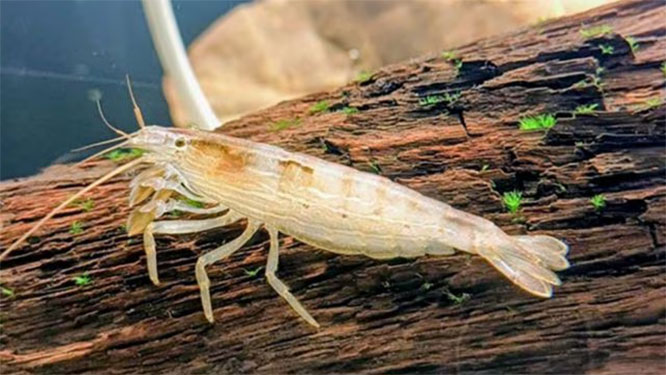
SHRIMP.jpg

Mangaluru, Dec 7: A rare bamboo shrimp has been rediscovered on mainland India more than 70 years after it was last reported, confirming for the first time the presence of Atyopsis spinipes in the country. The find was made by researchers from the Centre for Climate Change Studies at Sathyabama Institute of Science and Technology, Chennai, during surveys in Karnataka and Odisha.

The team — shrimp expert Dr S Prakash, PhD scholar K Kunjulakshmi, and Mangaluru-based researcher Maclean Antony Santos — combined field surveys, ecological assessments and DNA analysis to identify the elusive species. Their findings, published in Zootaxa, resolve decades of taxonomic confusion stemming from a 1951 report that misidentified the species as Atyopsis moluccensis without strong evidence.

The shrimp has now been confirmed at two locations: the Mulki–Pavanje estuary near Mangaluru and the Kuakhai River in Bhubaneswar. Historical specimens from the Andaman Islands, previously labelled as A. moluccensis, were also found to be misidentified and actually belong to A. spinipes.

The rediscovery began after an aquarium hobbyist in Odisha spotted a shrimp in 2022, prompting systematic surveys across Udupi, Karwar and Mangaluru. Four female specimens were collected in Mulki and one in Odisha, all genetically matching.

Researchers warn the species may exist in very small, vulnerable populations as freshwater habitats face increasing pressure from pollution, sand mining and infrastructure development. All verified specimens have been deposited with the Zoological Survey of India for future reference.

Comments

Add new comment

  • Coastaldigest.com reserves the right to delete or block any comments.
  • Coastaldigset.com is not responsible for its readers’ comments.
  • Comments that are abusive, incendiary or irrelevant are strictly prohibited.
  • Please use a genuine email ID and provide your name to avoid reject.
News Network
December 19,2025

Mangaluru: Public transport in Mangaluru is set for a state-led transformation as the government moves to deploy 100 new electric govt buses to replace unreliable private services. The initiative aims to provide a dependable alternative to private operators who have been frequently "cutting trips," leaving thousands of commuters stranded.

The announcement was made by Deputy Commissioner and MCC Administrator Darshan HV during a public phone-in session. The move specifically targets routes where private bus service has become erratic, ensuring that citizens no longer have to rely on a fluctuating private sector for their daily commute.

Restoring the Govt Presence

The transport crisis was brought to the forefront by Ramayya, a resident of Bajal, who highlighted a growing trend of private buses skipping morning and night trips. With the previous KSRTC (govt) services discontinued, residents have been left without a fallback option.

To fix this, the DC confirmed that the PM-eBus Sewa Scheme will bring 100 government-owned electric buses to the city:

•    Phased Deployment: The first 50 of the new 100 government buses are scheduled to arrive by March 2026.

•    State Infrastructure: Two new government depots, including one at Mudipu, are being prepared for operations.

•    Recruitment: The state has already begun training a new batch of government bus drivers to ensure the fleet is operational the moment it arrives.

Comments

Add new comment

  • Coastaldigest.com reserves the right to delete or block any comments.
  • Coastaldigset.com is not responsible for its readers’ comments.
  • Comments that are abusive, incendiary or irrelevant are strictly prohibited.
  • Please use a genuine email ID and provide your name to avoid reject.
News Network
December 19,2025

Saudi Arabia has abolished fees on expatriate workers employed in licensed industrial establishments, signaling a strong push to empower national factories and enhance the Kingdom’s global industrial competitiveness. The move reflects the leadership’s commitment to building a sustainable and resilient industrial economy under Saudi Vision 2030.

The decision was approved by the Council of Ministers, chaired by Crown Prince and Prime Minister Mohammed bin Salman, following a recommendation from the Council of Economic and Development Affairs (CEDA). It forms part of a broader strategy to support, modernize, and strengthen the industrial sector.

By removing fees on foreign workers, industrial establishments gain greater operational flexibility and relief from financial pressures. This is expected to help factories expand production, improve efficiency, and compete more effectively in international markets, while reinforcing long-term sustainability.

The initiative aligns closely with Saudi Vision 2030, which identifies industry as a key pillar of economic diversification. A competitive and resilient industrial base is viewed as essential for driving innovation, attracting investment, and sustaining long-term economic growth.

Overall, the fee exemption underscores the Kingdom’s commitment to creating a supportive environment for industrial development and ensuring that Saudi factories remain globally competitive and capable of leading the nation’s economic transformation.

Comments

Add new comment

  • Coastaldigest.com reserves the right to delete or block any comments.
  • Coastaldigset.com is not responsible for its readers’ comments.
  • Comments that are abusive, incendiary or irrelevant are strictly prohibited.
  • Please use a genuine email ID and provide your name to avoid reject.