



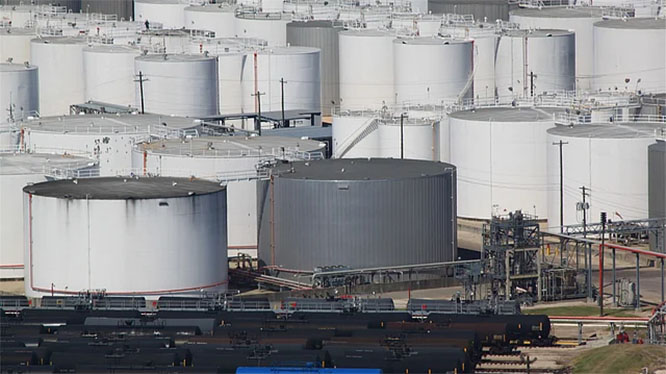
Udupi: The coastal district is set to make history as Padur in Udupi will soon house India’s first private strategic petroleum reserve (SPR). Hyderabad-based Megha Engineering & Infrastructures Ltd (MEIL) has won the government bid to design, build, and operate the massive underground oil storage facility with a capacity of 2.5 million metric tonnes (MMT).
The project, estimated at ₹5,700 crore, will be developed on a 214-acre site in Padur, where a government-run SPR of equal size already exists. Once operational, the reserve will be capable of storing enough crude oil to help strengthen India’s energy security and reduce its dependence on volatile global markets.
How the Project Was Awarded
The Indian Strategic Petroleum Reserves Ltd (ISPRL), a government-owned body, floated the tender in December 2024. Megha Engineering reportedly outbid two competitors by seeking viability gap funding (VGF) slightly below the ceiling of ₹3,420 crore (60% of the project cost).
The winning bidder will not only construct the underground cavern but also finance, develop, operate, and manage the facility under a long-term concession agreement. ISPRL is expected to sign the deal soon and formally hand over the land for construction.
A Boost to India’s Oil Security
At present, India’s total strategic oil storage stands at 5.33 MMT, spread across Visakhapatnam (1.33 MMT), Mangalore (1.5 MMT), and Padur (2.5 MMT). These facilities together provide just 8–9 days of crude import cover—far less than the reserves held by the United States (727 million barrels) and China (1,200 million barrels).
The new Padur project will add significantly to India’s capacity, bringing the total closer to meeting long-term targets. Once complete, the facility will be operated by Megha Engineering for 60 years.
Dual Role: Business and National Safeguard
Under the terms of the agreement, Megha Engineering will be able to lease storage capacity to oil companies or the government and also trade crude oil stored in the reserve. While leasing offers steady revenue, trading carries greater financial risk.
However, the government will retain first rights over the stored oil during emergencies, ensuring the facility doubles as both a commercial asset and a national safeguard.
The project also includes construction of pipeline and port-linked infrastructure to enable crude loading and unloading. Filling the reserve with crude oil is expected to cost around ₹11,020 crore ($1.25 billion) at current global prices.
A Long-Term Vision
The Union Cabinet had approved private participation in SPRs back in 2018, paving the way for the Padur project in Udupi and another planned reserve at Chandikhol in Odisha.
With a five-year timeline, the Udupi facility is poised to play a key role in India’s energy resilience strategy, placing the coastal Karnataka district at the center of a critical national security project.



Comments
Add new comment