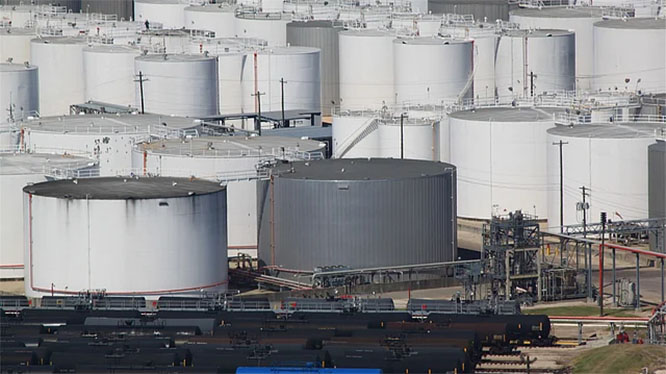
Udupi to host India’s first private strategic oil reserve; ₹5,700-crore project in Padur

News Network
September 17, 2025

padur.jpg

Udupi: The coastal district is set to make history as Padur in Udupi will soon house India’s first private strategic petroleum reserve (SPR). Hyderabad-based Megha Engineering & Infrastructures Ltd (MEIL) has won the government bid to design, build, and operate the massive underground oil storage facility with a capacity of 2.5 million metric tonnes (MMT).

The project, estimated at ₹5,700 crore, will be developed on a 214-acre site in Padur, where a government-run SPR of equal size already exists. Once operational, the reserve will be capable of storing enough crude oil to help strengthen India’s energy security and reduce its dependence on volatile global markets.

How the Project Was Awarded

The Indian Strategic Petroleum Reserves Ltd (ISPRL), a government-owned body, floated the tender in December 2024. Megha Engineering reportedly outbid two competitors by seeking viability gap funding (VGF) slightly below the ceiling of ₹3,420 crore (60% of the project cost).

The winning bidder will not only construct the underground cavern but also finance, develop, operate, and manage the facility under a long-term concession agreement. ISPRL is expected to sign the deal soon and formally hand over the land for construction.

A Boost to India’s Oil Security

At present, India’s total strategic oil storage stands at 5.33 MMT, spread across Visakhapatnam (1.33 MMT), Mangalore (1.5 MMT), and Padur (2.5 MMT). These facilities together provide just 8–9 days of crude import cover—far less than the reserves held by the United States (727 million barrels) and China (1,200 million barrels).

The new Padur project will add significantly to India’s capacity, bringing the total closer to meeting long-term targets. Once complete, the facility will be operated by Megha Engineering for 60 years.

Dual Role: Business and National Safeguard

Under the terms of the agreement, Megha Engineering will be able to lease storage capacity to oil companies or the government and also trade crude oil stored in the reserve. While leasing offers steady revenue, trading carries greater financial risk.

However, the government will retain first rights over the stored oil during emergencies, ensuring the facility doubles as both a commercial asset and a national safeguard.

The project also includes construction of pipeline and port-linked infrastructure to enable crude loading and unloading. Filling the reserve with crude oil is expected to cost around ₹11,020 crore ($1.25 billion) at current global prices.

A Long-Term Vision

The Union Cabinet had approved private participation in SPRs back in 2018, paving the way for the Padur project in Udupi and another planned reserve at Chandikhol in Odisha.

With a five-year timeline, the Udupi facility is poised to play a key role in India’s energy resilience strategy, placing the coastal Karnataka district at the center of a critical national security project.


Comments

Add new comment

  • Coastaldigest.com reserves the right to delete or block any comments.
  • Coastaldigset.com is not responsible for its readers’ comments.
  • Comments that are abusive, incendiary or irrelevant are strictly prohibited.
  • Please use a genuine email ID and provide your name to avoid reject.
News Network
November 26,2025

Mangaluru, Nov 26: Mangaluru East police have registered a case following a sophisticated online fraud where a 57-year-old local resident was allegedly cheated out of ₹13.4 lakh after being targeted on Facebook.

The scam began in February when the complainant, while browsing Facebook reels, was contacted by a woman identifying herself as "Lillian Mary George" from London. After establishing a chat relationship, the woman claimed she would visit India in November and bring a significant sum of money.

The trap was sprung on November 15, when the victim received a call from a woman named "Sonali Gupta," who claimed Lillian had arrived at Mumbai International Airport but was detained by customs. The fraudsters convinced the man that Lillian was carrying £25,000 (about ₹26 lakh) in traveller’s cheques and 1 kg of gold (valued at around ₹30 lakh).

Under the pretense of clearing these items, the victim was asked to make numerous online transfers between November 15 and 18 for various bogus charges, including:

•    "Pounds exchange registration"
•    "Customs declaration issues"
•    "Discount charges"
•    "Money-laundering charges"

Believing the fictitious story, the complainant transferred the cumulative sum of ₹13.4 lakh to various bank accounts provided by the fraudsters. He realised he was cheated when the culprits later promised a refund within two days but stopped answering his calls. The Mangaluru East police are now investigating the case, which highlights the continuing threat of transnational cyber fraud using social engineering and promises of fictitious wealth.

Comments

Add new comment

  • Coastaldigest.com reserves the right to delete or block any comments.
  • Coastaldigset.com is not responsible for its readers’ comments.
  • Comments that are abusive, incendiary or irrelevant are strictly prohibited.
  • Please use a genuine email ID and provide your name to avoid reject.
News Network
December 3,2025

arrival.jpg

Mangaluru, Dec 3: A group of Congress workers gathered at the Mangaluru International Airport on Wednesday to welcome AICC general secretary K C Venugopal, but the reception quickly turned into a display of support for Deputy Chief Minister D K Shivakumar.

Venugopal arrived in the city to participate in the centenary commemoration of the historic dialogue between Mahatma Gandhi and Narayana Guru. The event, organised by the Sivagiri Mutt, Varkala, in association with the Mangalore University Sri Narayana Guru Study Chair, is being held on the university’s Konaje campus.

KPCC general secretary Mithun Rai and several party workers had assembled at the airport to receive Venugopal. However, the moment he stepped out, workers began raising slogans backing Shivakumar.

The university programme will be inaugurated by Chief Minister Siddaramaiah.

This show of support comes just a day after Siddaramaiah remarked that Shivakumar would lead the government “when the high command decides.” The chief minister made the comment after a breakfast meeting at Shivakumar’s residence—another public display of camaraderie between the two leaders amid ongoing attempts by the party high command to downplay their leadership rivalry.

Comments

Add new comment

  • Coastaldigest.com reserves the right to delete or block any comments.
  • Coastaldigset.com is not responsible for its readers’ comments.
  • Comments that are abusive, incendiary or irrelevant are strictly prohibited.
  • Please use a genuine email ID and provide your name to avoid reject.
News Network
November 26,2025

students.jpg

Bengaluru, Nov 26: Karnataka is taking its first concrete steps towards lifting a three-decade-old ban on student elections in colleges and universities. Deputy Chief Minister D.K. Shivakumar announced Wednesday that the state government will form a small committee to study the reintroduction of campus polls, a practice halted in 1989 following incidents of violence.

Speaking at a 'Constitution Day' event organised by the Karnataka Congress, Mr. Shivakumar underscored the move's aim: nurturing new political leadership from the grassroots.

"Recently, (Leader of the Opposition in Lok Sabha) Rahul Gandhi wrote a letter to me and Chief Minister (Siddaramaiah) asking us to think about restarting student elections," Shivakumar stated. "I'm announcing today that we'll form a small committee and seek a report on this."

Student elections were banned in Karnataka in 1989, largely due to concerns over violence and the infiltration of political party affiliates into campus life. The ban effectively extinguished vibrant student bodies and the pipeline of young leaders they often produced.

Mr. Shivakumar, who also serves as the Karnataka Congress president, said that former student leaders will be consulted to "study the pros and cons" of the re-introduction.

Acknowledging the history of the ban, he added, "There were many criminal activities taking place back then. We’ll see how we can conduct (student) elections by regulating such criminal activities."

The Deputy CM reminisced about his own journey, which began on campus. He recalled his political activism at Sri Jagadguru Renukacharya College leading to his first Assembly ticket in 1985 at the age of 23. "That's how student leadership was at the time. Such leadership has gone today. College elections have stopped," he lamented, adding that for many, college elections were "like a big movement" where leaders were forged.

The move, driven by the Congress high command's push to cultivate young talent, will face scrutiny from academics and university authorities who have, in the past, expressed concern that the return of polls could disrupt the peaceful academic environment and turn campuses into political battlegrounds.

Comments

Add new comment

  • Coastaldigest.com reserves the right to delete or block any comments.
  • Coastaldigset.com is not responsible for its readers’ comments.
  • Comments that are abusive, incendiary or irrelevant are strictly prohibited.
  • Please use a genuine email ID and provide your name to avoid reject.