Feast Infant Jesus celebrated at Bikarnakatte Church

[email protected] (CD Network, Photos by Stanley Bantwal)
January 15, 2012

INJ_14jan1

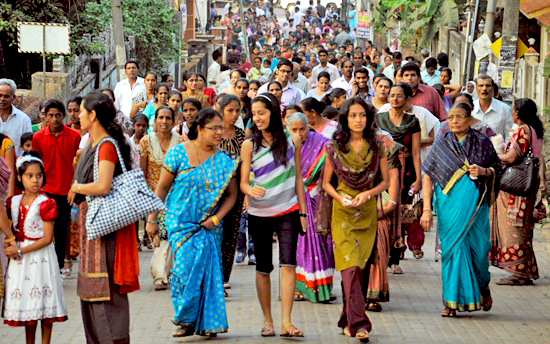
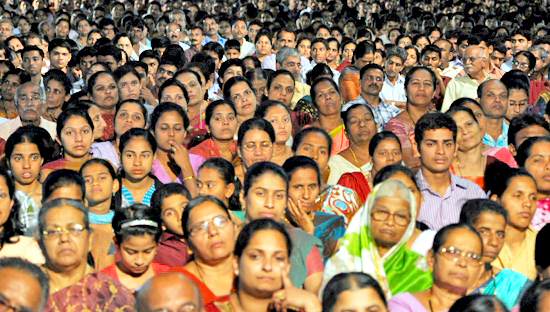
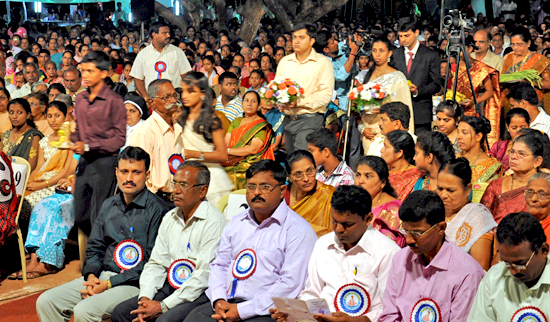
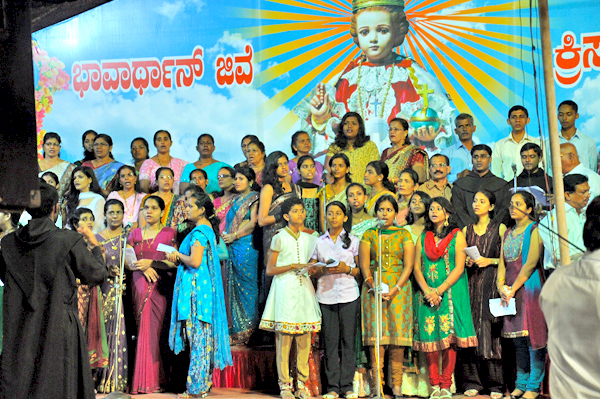
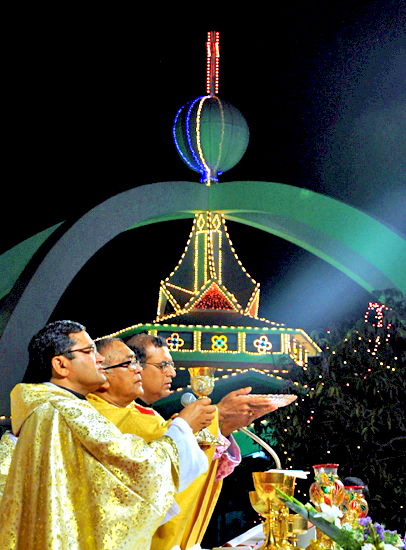
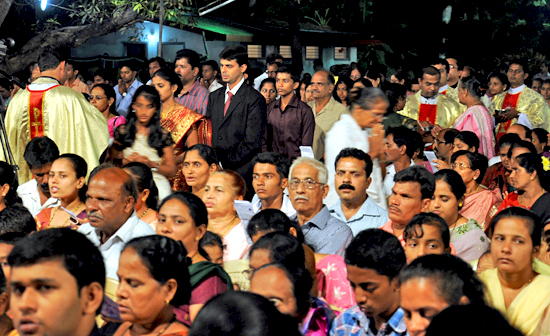
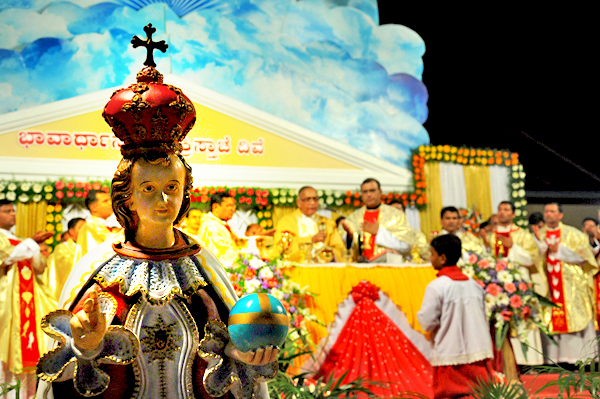
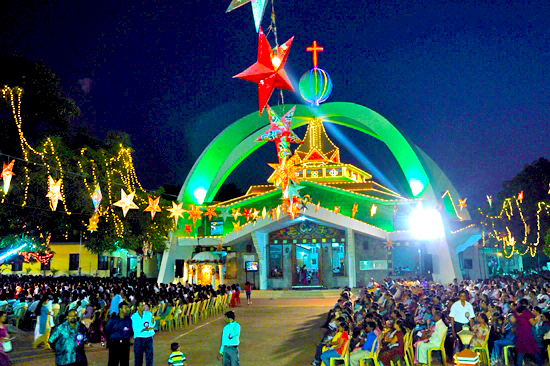
Mangalore, January 15: The annual feast of the Infant Jesus was celebrated on Saturday at Carmelite Fathers, Infant Jesus Shrine, Carmel Hill, Bikarnakatte, here, with religious fervor and devotion. Thousands of devotees irrespective of caste, creed and religion thronged the shrine of Infant Jesus and offered prayers to seek his divine intervention.

Though the festive mass was celebrated in the evening, devotees started pouring in the morning itself.

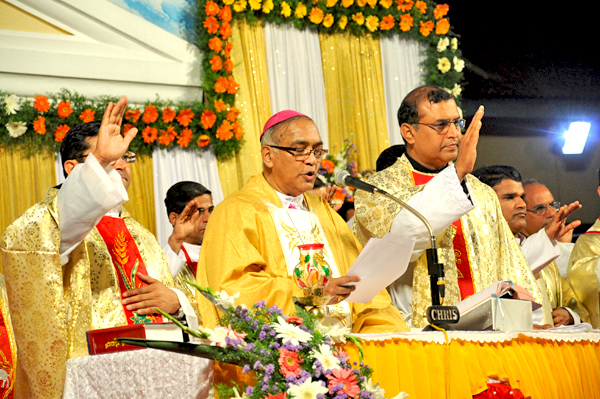
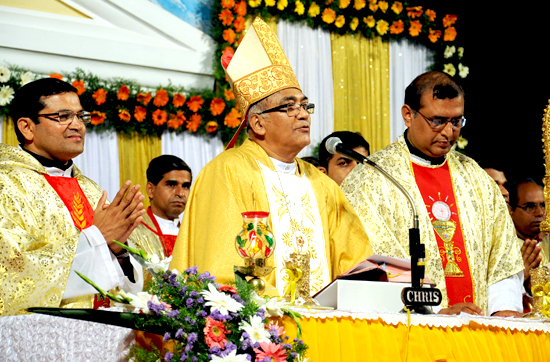
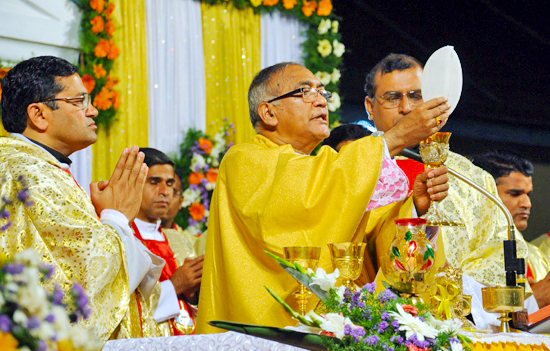
The first Eucharistic celebration of the feast day was offered at 6 a.m in Konkani. Dr Aloysius Paul D'Souza, the bishop of Mangalore, presided over the solemn Eucharistic celebration. The preacher was Fr Praveen Leo of St Joseph's Seminary.


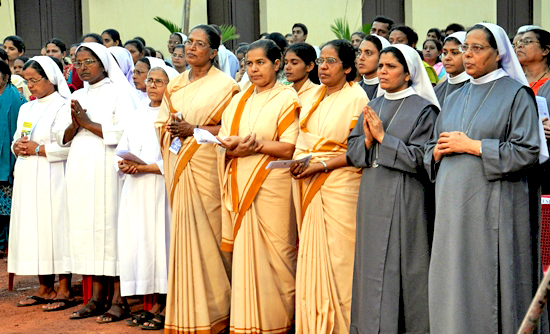
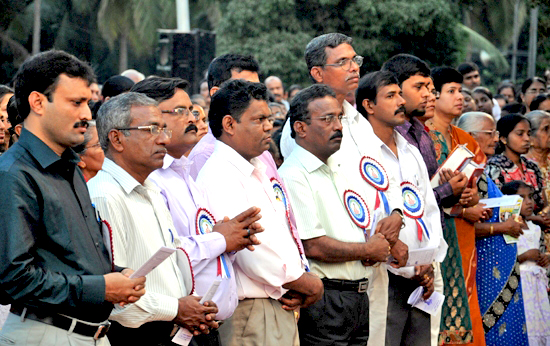
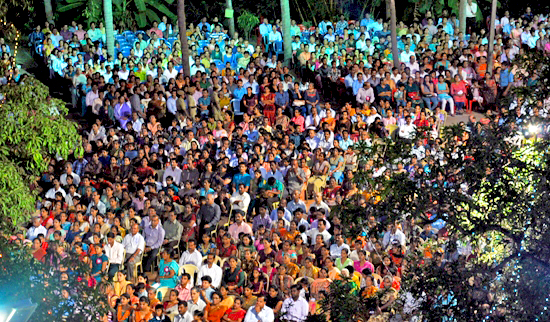
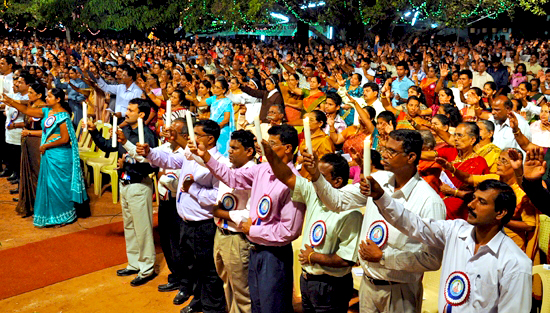
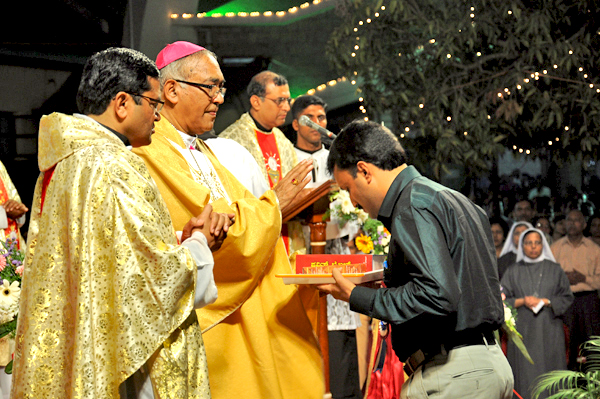
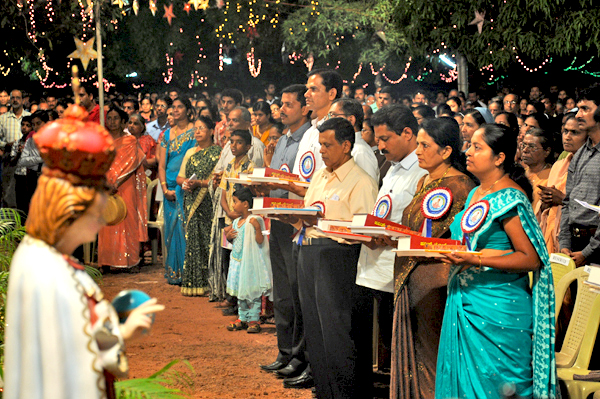
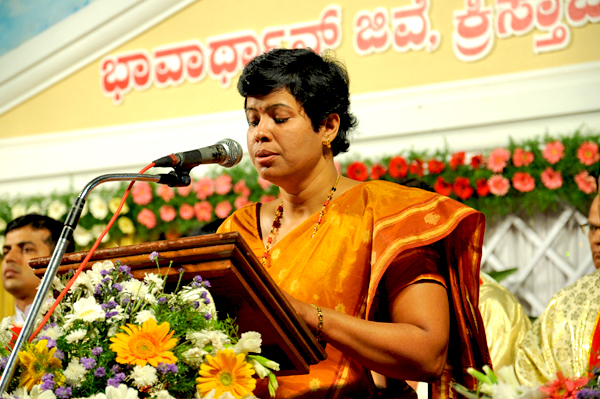
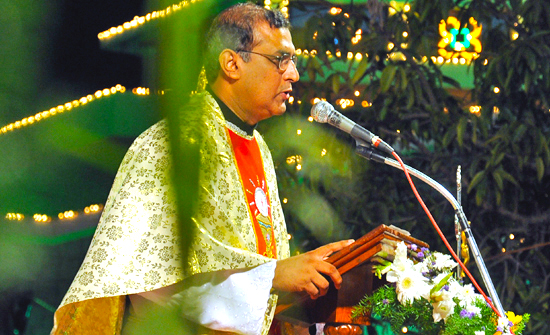
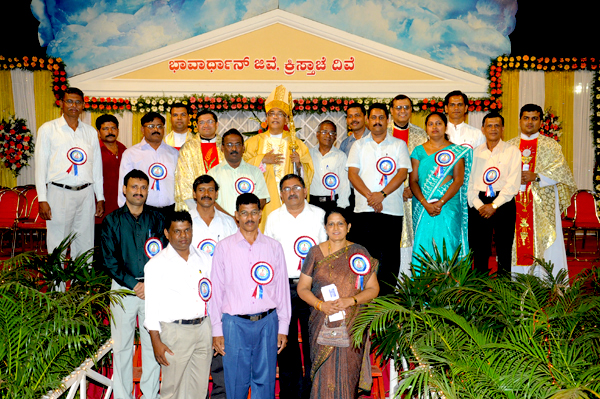
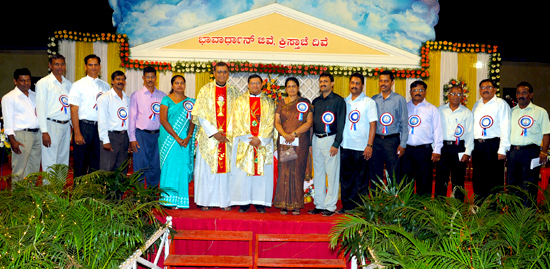
There were at least 15,000 people for the evening mass alone. The preacher was Rev. Fr. Praveen Leo Lasrado (St. Joseph's Seminary). He preached an inspiring sermon on the theme 'Glowing with faith, lamps of Christ.' He spoke of faith as turning to God in sickness and in health, in suffering and happiness, in joy and in sorrow. “Our faith must become 'fresh',” he said, giving examples of how the Biblical figures from Abraham right down to our forefathers became fresh in their faith in God and became ever more committed to Him. He said that we must be Christians not my chance, but by choice. When our faith becomes fresh it glows, and then alone can we become Lamps of Christ. Since the feast was also commemorating the 125th anniversary of the Diocese of Mangalore, representatives from the 15 deaneries were present at the Mass. During the profession of faith, they renewed their baptismal vows holding high a lit candle given to them by the Bishop as a sign of their faith. They were then given a cross, Bible, rosary, scapular and the statue of the Infant Jesus as symbols of the faith.

Leading to the feast was the Novena, with masses being celebrated and special prayers offered for various intentions each of the nine days beginning on January 5th. Devotees of all faiths thronged at the Shrine and received many blessings.

The Diocese of Mangalore this year is celebrating the 125th year of its foundation. In thanksgiving to God for the gift of faith that He has given us and in view of reinvigorating our commitment to Christ, the theme chosen for the Feast was “Glowing with Faith, Lamps of Light”. On each novena day, a theme based on faith was reflected upon, taking as an example and model one of God's Chosen in the Bible, beginning from Abraham: Father of Faith to our Forefathers who professed their faith even during the time of Tippu's persecution. There were also special prayers offered for a special intention.


There were seven masses on each day of the novena, 4 in the morning and 3 in the evening. The evening masses were telecast live on T.V. and the internet. Devotees came in large numbers for all the masses on all days. The largest crowds were present for the 6 pm open-air Konkani mass. Especially on days when there were special prayers conducted for Children (day 3) and for the Sick (day 10) the faithful came in great numbers and placed themselves at the feet of the Infant Jesus, trusting completely in His mercy and generosity. May He look kindly on their faith and grant them their intentions.

In the celebration of this Feast, apart from looking after the spiritual needs of the people, the Carmelite Community (OCD Fathers) took a step in promoting the social cause of caring for the sick by organizing a Blood Donation Camp on January 12th. The response of the people was tremendous. In thanksgiving to Infant Jesus for the gift of life, many came forward to donate their blood that they may help another to live. The Infant Jesus will surely look upon their charity and reward them.

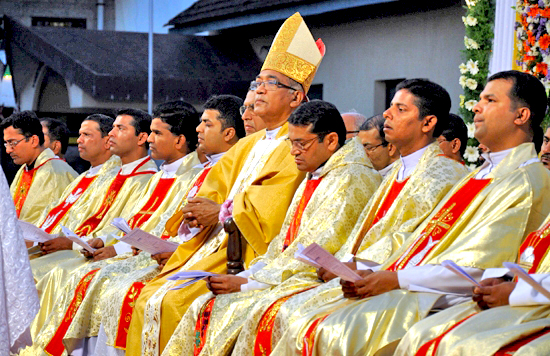
In order to cater to the needs of the faithful on the Feast Day there were seven masses celebrated in the morning. Four of them were in Konkani and one each in English, Kannada and Malayalam. The 10:15 am mass was particularly celebrated for the sick, and there were special prayers for them. At 1:30 pm, an inter-religious prayer service was conducted in Kannada by Fr. Vijay Kumar OCD. The celebrants were Rev. Frs. Nelson OCD, Joy Painandath (St. Joseph's seminary) and Biju (Betharam Fathers), Abraham SVD (Mulki), John Sequeira OCD, Andrew D'Souza (Bondel), Maxim Noronha (Bishop's House) and Vijay Kumar OCD. From the first mass itself, devotees came in large numbers so that there was an average of about 2000 people at every mass. Let us thank God for such a gift of faith to the people staying in Mangalore.

INJ_14jan8
The history of devotion in Infant Jesus takes us back to the 17th century where the Carmelites in Prague had to stand hostility of the Lutherance. It was then that providence came to their rescue. It was in the year 1628 the Princess of Spain, Polixena, a great benefactor of the Friars, presented her wedding gift-a beautiful statue of the Infant Jesus to the Prior. However, in the year 1631, the Carmelite monastery was plundered and the statue of the Infant Jesus was cast upon a heap of rubble. Strange but true, years later, a Carmelite priest, Fr. Cyril discovered the statue in a heap of trash. He placed it at a respected place and began to pray. He dedicated a room in the Monastery to the Infant Jesus and allowed the faithful to come and worship Jesus. Many faithful were healed. This was the humble beginning of the devotion.

The devotion that began in a small way has spread rapidly throughout the world. The genesis of the devotion to the Infant Jesus at Carmel Hill, Mangalore takes us back to some 50 years. The Belgian Carmelite missionaries, who were in Mangalore, began the novena prayer to the Infant Jesus in the small chapel on Thursday. The present Shrine was inaugurated and blessed on 11th January 2006 to accommodate the increasing number of devotees.

Many devotees regularly visit the Infant Jesus Shrine. Every Thursday thousands of devotees participate in the Eucharistic celebration and novena services held throughout the day. The Shrine fathers are also available for confessions and counseling to cater the spiritual needs of the devotees.
INJ_14jan_7

INJ_14jan0

INJ_14jan2

INJ_14jan3

INJ_14jan4

INJ_14jan5

INJ_14jan6

INJ_14jan7

INJ_14jan_1

INJ_14jan_2

INJ_14jan_3

INJ_14jan_4

INJ_14jan_5

INJ_14jan_6

INJ_14jan_8

INJ_14jan_9

INJ_14jan_10

INJ_14jan_11

INJ_14jan_12

INJ_14jan_13

Comments

Add new comment

  • Coastaldigest.com reserves the right to delete or block any comments.
  • Coastaldigset.com is not responsible for its readers’ comments.
  • Comments that are abusive, incendiary or irrelevant are strictly prohibited.
  • Please use a genuine email ID and provide your name to avoid reject.
News Network
February 3,2026

wind.jpg

Dakshina Kannada MP Capt Brijesh Chowta has urged the Centre to give high priority to offshore wind energy generation along the Mangaluru coast, citing its strategic importance to India’s green energy and port-led development goals.

Raising the issue in the Lok Sabha under Rule 377, Chowta said studies by the National Institute of Oceanography have identified the Mangaluru coastline as part of India’s promising offshore wind ‘Zone-2’, covering nearly 6,490 sq km. He noted that the region’s relatively low exposure to cyclones and earthquakes makes it suitable for long-term offshore wind projects and called for its development as a dedicated offshore wind energy zone.

Highlighting the role of New Mangalore Port, Chowta said its modern infrastructure, multiple berths and heavy cargo-handling capacity position it well as a logistics hub for transporting and assembling large wind energy equipment.

He also pointed to the presence of major industrial units such as MRPL, OMPL, UPCL and the Mangaluru SEZ, which could serve as direct buyers of green power through power purchase agreements, improving project viability and speeding up execution.

With Karnataka’s peak power demand crossing 18,000 MW in early 2025, Chowta stressed the need to diversify renewable energy sources. He added that offshore wind projects in the Arabian Sea are strategically safer compared to the cyclone-prone Bay of Bengal.

Calling the project vital to India’s target of 500 GW of renewable energy by 2030, Chowta urged the Ministry of New and Renewable Energy to initiate resource assessments, pilot projects and stakeholder consultations at the earliest.

Comments

Add new comment

  • Coastaldigest.com reserves the right to delete or block any comments.
  • Coastaldigset.com is not responsible for its readers’ comments.
  • Comments that are abusive, incendiary or irrelevant are strictly prohibited.
  • Please use a genuine email ID and provide your name to avoid reject.
News Network
February 1,2026

Bengaluru: Karnataka Deputy Chief Minister D K Shivakumar on Sunday criticised the Union Budget presented by Finance Minister Nirmala Sitharaman, claiming it offered no tangible benefit to the state.

Though he said he was yet to study the budget in detail, Shivakumar asserted that Karnataka had gained little from it. “There is no benefit for our state from the central budget. I was observing it. They have now named a programme after Mahatma Gandhi, after repealing the MGNREGA Act that was named after him,” he said.

Speaking to reporters here, the Deputy Chief Minister demanded the restoration of MGNREGA, and made it clear that the newly enacted rural employment scheme — VB-G RAM G — which proposes a 60:40 fund-sharing formula between the Centre and the states, would not be implemented in Karnataka.

“I don’t see any major share for our state in this budget,” he added.

Shivakumar, who also holds charge of Bengaluru development, said there were high expectations for the city from the Union Budget. “The Prime Minister calls Bengaluru a ‘global city’, but what has the Centre done for it?” he asked.

He also drew attention to the problems faced by sugar factories, particularly those in the cooperative sector, alleging a lack of timely decisions and support from the central government.

Noting that the Centre has the authority to fix the minimum support price (MSP) for agricultural produce, Shivakumar said the Union government must take concrete steps to protect farmers’ interests.

Comments

Add new comment

  • Coastaldigest.com reserves the right to delete or block any comments.
  • Coastaldigset.com is not responsible for its readers’ comments.
  • Comments that are abusive, incendiary or irrelevant are strictly prohibited.
  • Please use a genuine email ID and provide your name to avoid reject.
News Network
February 3,2026

Bengaluru: Following reports of fresh Nipah virus (NiV) cases in West Bengal and heightened vigilance across parts of Southeast Asia, the Karnataka Health Department has placed the state on high alert and activated emergency preparedness protocols.

Health officials said enhanced surveillance measures have been initiated after two healthcare workers in Barasat, West Bengal, tested positive for the virus earlier this month. While no cases have been reported in Karnataka so far, authorities said the state’s past exposure to Nipah outbreaks and high inter-state mobility warranted preventive action.

Officials have directed district health teams to intensify monitoring, particularly at hospitals and points of entry, and to ensure early detection and isolation of suspected cases.

High Mortality Virus with Multiple Transmission Routes

Nipah virus is a zoonotic disease that can spread from animals to humans and has a reported fatality rate ranging between 60 and 75 per cent. Fruit bats, also known as flying foxes, are the natural reservoirs of the virus and can transmit it by contaminating food sources with saliva or urine.

Known modes of transmission include:

•    Contaminated food: Consumption of fruits partially eaten by bats or raw date-palm sap
•    Animal contact: Exposure to infected pigs or other animals
•    Human-to-human transmission: Close contact with body fluids of infected persons, particularly in healthcare settings

Symptoms and Disease Progression

The incubation period typically ranges from 4 to 14 days, though delayed onset has also been reported. Early symptoms often resemble common viral infections, making prompt clinical suspicion critical.

•    Initial symptoms: Fever, headache, body aches, fatigue, sore throat
•    Progressive symptoms: Drowsiness, disorientation, altered mental state
•    Severe stage: Seizures, neck stiffness and acute encephalitis, which can rapidly progress to coma

Public Health Advisory

The Health Department has issued precautionary guidelines urging the public to adopt risk-avoidance practices to prevent any local spillover.

Do’s
•    Wash fruits thoroughly before consumption
•    Drink boiled and cooled water
•    Use protective equipment while handling livestock
•    Maintain strict hand hygiene

Don’ts
•    Avoid fruits found on the ground or showing bite marks
•    Do not consume beverages made from raw tree sap, including toddy
•    Avoid areas with dense bat populations
•    Do not handle sick or dead animals

Preparedness Measures

Officials confirmed that isolation wards are being readied in major government hospitals and that medical staff are being sensitised to identify early warning signs.

“There is no cause for panic, but there is a need for heightened vigilance,” a senior health official said, adding that there is currently no approved vaccine or specific antiviral treatment for Nipah, and care remains largely supportive.

Comments

Add new comment

  • Coastaldigest.com reserves the right to delete or block any comments.
  • Coastaldigset.com is not responsible for its readers’ comments.
  • Comments that are abusive, incendiary or irrelevant are strictly prohibited.
  • Please use a genuine email ID and provide your name to avoid reject.