New norms for schools as SC backs Right to Education

April 13, 2012

SC

New Delhi, April 13: With the Supreme Court throwing its full weight behind the Right of Children to Free and Compulsory Education Act, 2009, (better known as the Right to Education Act or RTE Act) on Thursday, the composition of students in schools as well as the economics of running schools will undergo dramatic changes.

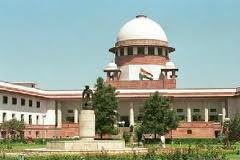
The apex court upheld the constitutional validity of the Act and directed all schools, including privately-run schools, irrespective of the board they are affiliated to, to admit from this academic year (2012-13) at least 25% students from socially and economically backward families. These students will be guaranteed free education from class I till they reach the age of 14.

This means the nature of the classroom will change. Until now, several schools were holding a separate shift for students from poor families after the main school was over. Under the RTE Act, they will have to induct these students in the main class - in other words, 25% of every class will have students from socially and economically disadvantaged families.

While many educationists feel the resultant social integration will make education more meaningful, the reaction of some expensive schools as well as of some parents hasn't been positive. Also, the need to give free education to 25% students is expected to increase the expenditure of schools, which is likely to lead to another round of fee hikes.

The schools will get a subsidy from the government for giving free education (65% of the subsidy will come from the Centre and 35% from states), but the subsidy is not expected to meet the full cost. The government subsidy will be based on the expenditure per student in government schools or Kendriya Vidyalayas, while many private schools spend (or at least, charge as fee) much more.

According to estimates, the government spends Rs 3,000 per child per year for primary education. The Centre has given states the freedom to implement its own grants and aids, but many states are financially broke and the grants vary from state to state. For instance, Delhi gives about Rs 1,200 per child per month, while Haryana doesn't give any aid to schools. Some educationists said that now private schools would have to hike fees as 75% of the class would have to pay for the 25% students admitted under the RTE Act.

Reacting to the Supreme Court order, HRD minister Kapil Sibal said, "I am very happy that the court has set all controversies at rest. One of the biggest controversies was on whether the 25% reservation applies to private schools or not... that controversy has been set to rest."

The court has, however, sought a clarification from the government on applicability of RTE Act to boarding schools and orphanages as the legislation applied only to day scholars. "To put the matter beyond doubt, we recommend that appropriate guidelines be issued under Section 35 of the 2009 Act clarifying the above position," the bench headed by Chief Justice S H Kapadia said.

According to 2007-08 statistics quoted by the Supreme Court, out of the 12,50,755 schools imparting elementary education in India, 80.2% were government run, 5.8% private aided and 13.1% private unaided. Of these, 87.2% of the schools were located in rural areas.

According to RTE activist Kiran Bhatty, former national coordinator for the monitoring of the RTE, several violations had cropped up recently, including non-compliance of the 25% quota for economically weaker sections. Other violations included running two shifts instead of integrating students in the class and conducting admission tests.

While National University of Planning and Administration's vice chancellor R Govinda did not rule out initial "turmoil", he said some "restructuring" on the part of government and private schools was necessary. He added that there was an increasing "ghettoisation of schools" that will now be discouraged. "The full impact will be seen in 7-8 years when the composition of the student community will change," he said.

Madarsas and institutions of vedic learning will continue to be outside the ambit of the Act as the HRD ministry has declared them as institutions of religious instruction rather than educational institutions as described under the RTE.

WILL FEES RISE?

What is RTE?

Free school education up to age of 14 for students from socially & economically backward families

Does RTE apply to all schools?

Yes, even private, convent schools, irrespective of the board. Only madrasas & Vedic schools exempt

What age group does RTE apply to?

To children from age 6 to 14, or from Class 1 to 8

Will there be a fee hike?

Most probably as govt subsidy won't meet full cost of providing free education to 25% students

Will students from poor families be in same classroom?

Yes. RTE says these students must be integrated in the main classroom

Can teachers hold private tuitions?

RTE says that no teacher can take private tuitions

Comments

Add new comment

  • Coastaldigest.com reserves the right to delete or block any comments.
  • Coastaldigset.com is not responsible for its readers’ comments.
  • Comments that are abusive, incendiary or irrelevant are strictly prohibited.
  • Please use a genuine email ID and provide your name to avoid reject.
News Network
December 2,2025

A major upgrade in safety and monitoring is planned for Haj 2026, with every Indian pilgrim set to receive a Haj Suvidha smart wristband linked to the official Haj Suvidha mobile app. The initiative aims to support pilgrims—especially senior citizens—who may struggle with smartphones during the 45-day journey.

What the Smart Wristband Will Do

Officials said the device will come with:
•    Location tracking
•    Pedometer
•    SOS emergency button
•    Qibla compass
•    Prayer timings
•    Basic health monitoring

SP Tiwari, secretary of the UP State Haj Committee, said the goal is to make the pilgrimage safer and more comfortable.

“Most Hajis are elderly and not comfortable with mobile apps,” he said. “The smartwatch will help locate pilgrims who forget their way or cannot communicate their location.”

The wristbands will be monitored by the Consulate General of India in Saudi Arabia, similar to mobile tracking via the Haj Suvidha App.

Free Distribution and Training

•    Smart wristbands will be given free of cost.
•    Training for pilgrims will be conducted between January and February 2026.
•    Sample units will reach state Haj committees soon.
•    Final devices will be distributed as pilgrims begin their journey.

New Rules for Accommodation

Two major decisions have also been finalised for Haj 2026:
1.    Separate rooms for men and women – including married couples. They may stay on the same floor but must occupy different rooms, following stricter Saudi guidelines.
2.    Cooking banned – gas cylinders will not be allowed; all meals will be provided through official catering services arranged by the Haj Committee of India.

These decisions were finalised during a meeting of the Haj Committee of India and state representatives in Mumbai.

Haj Suvidha App Launched Earlier

The government launched the Haj Suvidha App in 2024, offering:

•    Training modules
•    Accommodation and flight details
•    Baggage information
•    SOS and translation tools
•    Grievance redressal

Haj 2026 Quota and Key States

•    India’s total Haj quota for 2026: 1,75,025 pilgrims
•    70% (1,25,000) allotted to the Haj Committee of India
•    30% (around 50,000) reserved for Haj Group Organisers

Uttar Pradesh has the largest allocation (around 30,000 seats), though approximately 18,000 pilgrims are expected to go this year. States with high pilgrim numbers include Kerala, Maharashtra and Gujarat.

Dates of Haj 2026

The pilgrimage is scheduled to take place from 24 May to 29 May, 2026 (tentative).
Haj is one of the five pillars of Islam and is mandatory for Muslims who meet the required conditions.

Comments

Add new comment

  • Coastaldigest.com reserves the right to delete or block any comments.
  • Coastaldigset.com is not responsible for its readers’ comments.
  • Comments that are abusive, incendiary or irrelevant are strictly prohibited.
  • Please use a genuine email ID and provide your name to avoid reject.
News Network
December 4,2025

indigoflight.jpg

Domestic carrier IndiGo has cancelled over 180 flights from three major airports — Mumbai, Delhi and Bengaluru — on Thursday, December 4, as the airline struggles to secure the required crew to operate its flights in the wake of new flight-duty and rest-period norms for pilots.

While the number of cancellations at Mumbai airport stands at 86 (41 arrivals and 45 departures) for the day, at Bengaluru, 73 flights have been cancelled, including 41 arrivals, according to a PTI report that quoted sources.

"IndiGo cancelled over 180 flights on Thursday at three airports-Mumbai, Delhi and Bengaluru," the source told the news agency.

Besides, it had cancelled as many as 33 flights at Delhi airport for Thursday, the source said, adding, "The number of cancellations is expected to be higher by the end of the day."

The Gurugram-based airline's On-Time Performance (OTP) nosedived to 19.7 per cent at six key airports — Delhi, Mumbai, Chennai, Kolkata, Bengaluru and Hyderabad — on December 3, as it struggled to get the required crew to operate its services, down from almost half of December 2, when it was 35 per cent.

"IndiGo has been facing acute crew shortage since the implementation of the second phase of the FDTL (Flight Duty Time Limitations) norms, leading to cancellations and huge delays in its operations across the airports," a source had told PTI on Wednesday.

Chaos continued at several major airports for the third day on Thursday because of the cancellations.

A spokesperson for the Kempegowda International Airport (KIA) in Bengaluru said that 73 IndiGo flights had been cancelled on Thursday.

At least 150 flights were cancelled and dozens of others delayed on Wednesday, airport sources said, leaving thousands of travellers stranded, according to news agency Reuters.

The Directorate General of Civil Aviation (DGCA) has said it is investigating IndiGo flight disruptions and has asked the airline to submit the reasons for the current situation, as well as its plans to reduce flight cancellations and delays.

It may be mentioned here that the pilots' body, Federation of Indian Pilots (FIP), has alleged that IndiGo, despite getting a two-year preparatory window before the full implementation of new flight duty and rest period norms for cockpit crew, "inexplicably" adopted a "hiring freeze".

The FIP said it has urged the safety regulator, the DGCA, not to approve airlines' seasonal flight schedules unless they have adequate staff to operate their services "safely and reliably" in accordance with the New Flight Duty Time Limitations (FDTL) norms.

In a letter to the DGCA late on Wednesday, the FIP urged the DGCA to consider re-evaluating and reallocating slots to other airlines, which have the capacity to operate them without disruption during the peak holiday and fog season if IndiGo continues to "fail in delivering on its commitments to passengers due to its own avoidable staffing shortages."

Comments

Add new comment

  • Coastaldigest.com reserves the right to delete or block any comments.
  • Coastaldigset.com is not responsible for its readers’ comments.
  • Comments that are abusive, incendiary or irrelevant are strictly prohibited.
  • Please use a genuine email ID and provide your name to avoid reject.
News Network
November 21,2025

Tejas.jpg

An Indian Air Force (IAF) Tejas fighter jet crashed on Friday, November 21, afternoon during its aerial demonstration at the Dubai Air Show, plunging to the ground at around 2:10 pm local time while performing a manoeuvre before thousands of spectators.

The IAF confirmed the incident, stating that a Tejas aircraft participating in the show had crashed and that further details were being gathered. An Air Force spokesperson said more information would be shared after initial assessments.

The crash sent thick black smoke billowing into the sky near the airport, causing panic among visitors, including families and children who had gathered to watch the display. Authorities have not yet confirmed whether the pilot managed to eject before the aircraft went down. Emergency response teams rushed to the scene, and officials have not released information on casualties or damage so far.

The Tejas is a 4.5-generation, multi-role fighter aircraft developed indigenously by Hindustan Aeronautics Limited (HAL). Designed for versatility, it is capable of offensive air support, close combat, ground attack missions and maritime operations. The aircraft family includes single-seat fighters and twin-seat trainers for both the Air Force and Navy.

HAL describes the latest version, the LCA Mk1A, as the most advanced in the series, featuring an AESA radar, an upgraded electronic warfare suite with radar-warning and self-protection jamming, smart multifunction displays, a digital map generator, a combined interrogator–transponder system and a modern radio altimeter. These enhancements significantly improve the aircraft’s combat capability and survivability.

Further updates from IAF and UAE authorities are awaited.

Comments

Add new comment

  • Coastaldigest.com reserves the right to delete or block any comments.
  • Coastaldigset.com is not responsible for its readers’ comments.
  • Comments that are abusive, incendiary or irrelevant are strictly prohibited.
  • Please use a genuine email ID and provide your name to avoid reject.