India pitches for membership of global non-proliferation regimes

April 19, 2012

Global

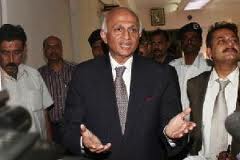
New Delhi, April 19: India on Wednesday made the most persuasive case for India's "full membership" of the global non-proliferation regimes. In a major policy statement, foreign secretary Ranjan Mathai told a gathering of nuclear experts that "the logical conclusion of partnership with India is its full membership of the four multilateral regimes."

Mathai, unusually, gave a detailed exposition of India's own strategic export control regime, national laws governing trade in sensitive items and its enforcement mechanisms. The aim, said officials, was to be more open about India's own efforts and systems while making a more compelling case for New Delhi's membership to the non-proliferation regimes. India's efforts to join the four top non-proliferation regimes - Nuclear Suppliers Group (NSG), Missile Technology Control regime (MTCR), Australia Group and Wassenaar Arrangement - started out in November 2010, but the campaign is yet to acquire critical mass.

While India is yet to make a formal application to join the regimes, its proposed membership has started a debate in these clubs. Over the next few months, all four clubs will be holding their plenary sessions where the Indian case will figure prominently. The government believes the top diplomat's statement today will provide an impetus to India's case and stir the debate. Another complaint has been about India's almost brahminical approach to what its doing in the non-proliferation field. Thus far, there has been little attempt by the Indian government to explain its non-proliferation objectives, systems and mechanisms to the world. With Mathai's speech, the government is also trying to clear the cobwebs about itself to the world.

In the months since November 2010, when India made a bid to join these groups, India has held several "outreach" sessions with all four. Mathai said he was in Vienna in March for the NSG outreach, while he expected to conduct an Australia Group outreach within the next few weeks. But its now being felt in the government that the Indian campaign has to move into higher gear. Today was a sort of opening salvo. Mathai clarified India has placed 12 out of 14 of its nuclear reactors under international safeguards, which puts India well within the deadline for compliance with its separation plan. He also reiterated India's commitment to ratify the additional protocol which envisages more intrusive checks into India's civilian nuclear sector.

India's membership is not an easy decision. First, there is an NPT adherence that is seen as crucial criteria. India has not signed the NPT and is not likely to do so, as a non-nuclear weapons state. So India's membership into these groups would have to take this refusal into account. Trying to transcend this hurdle, Mathai suggested they look at the bigger picture. "There are underlying objectives and principles that are common to all the regimes to which India subscribes to fully as it has demonstrated responsible non-proliferation and export control practices and has shown the ability and willingness to contribute substantially to global non-proliferation objectives." Whether this is acceptable is not yet clear. Although India wants to join with the four regimes in tandem, the NSG is believed to be the more important one. This year, India believes that with the US at the helm of NSG, its case might be easier.

Mathai said India, has the ability to produce and manufacture a large portion of the products that are controlled by these regimes. "As India's integration with the global supply chains moves forward, it would be in the interest of the four regimes that India's exports are subject to the same framework as other major supplier countries." It effectively puts the onus elsewhere - that outside the club, India can still manufacture sensitive items and they would be unregulated by the non-proliferation regimes. This should be a powerful argument for India being inside the tent. Of course, he left unsaid the fact that China's decision to supply nuclear reactors to Pakistan without the NSG waiver, has actually emasculated the global body.

Instead, Mathai interestingly placed India's actions and objectives of strong export control systems within India's development matrix. "As India's integration with global trade patterns and supply chains deepens, it would increasingly become an important hub of manufacturing and export of high technology items. Foreign investment including through offsets for governmental procurement will strengthen our global links. Our export control system would add to the reliability and credibility of Indian companies in the global market and thus increase their competitive edge."

The foreign secretary added, "India has continued with its policy of refraining from transfer of enrichment and reprocessing technologies (ENR) to states that do not possess them and supporting international efforts to limit their spread." While India might be fully in compliance, the NSG has adopted a guideline that prevents ENR technologies from going to non-NPT states. This would put India out of the box. The current negotiations are trying to square that circle. Mathai said India supports the IAEA's fuel-bank resolution and pitched to become a supplier state. Obviously, India cannot be a full supplier if it cannot access latest ENR technologies.

India, he said, not only had a series of legislative tools to control sensitive trade - from Atomic Energy Act, Customs Act of 1962 to the WMD Act of 2005 - to a robust enforcement mechanism. Mathai said, "DGFT is in the process of introducing by June this year an online application system that would not only further ease the application process but also facilitate implementation." He added, "We view a strong and effective national export control system as an essential link between our broader national security goals and our wider foreign policy objectives."

Comments

Add new comment

  • Coastaldigest.com reserves the right to delete or block any comments.
  • Coastaldigset.com is not responsible for its readers’ comments.
  • Comments that are abusive, incendiary or irrelevant are strictly prohibited.
  • Please use a genuine email ID and provide your name to avoid reject.
News Network
December 2,2025

A major upgrade in safety and monitoring is planned for Haj 2026, with every Indian pilgrim set to receive a Haj Suvidha smart wristband linked to the official Haj Suvidha mobile app. The initiative aims to support pilgrims—especially senior citizens—who may struggle with smartphones during the 45-day journey.

What the Smart Wristband Will Do

Officials said the device will come with:
•    Location tracking
•    Pedometer
•    SOS emergency button
•    Qibla compass
•    Prayer timings
•    Basic health monitoring

SP Tiwari, secretary of the UP State Haj Committee, said the goal is to make the pilgrimage safer and more comfortable.

“Most Hajis are elderly and not comfortable with mobile apps,” he said. “The smartwatch will help locate pilgrims who forget their way or cannot communicate their location.”

The wristbands will be monitored by the Consulate General of India in Saudi Arabia, similar to mobile tracking via the Haj Suvidha App.

Free Distribution and Training

•    Smart wristbands will be given free of cost.
•    Training for pilgrims will be conducted between January and February 2026.
•    Sample units will reach state Haj committees soon.
•    Final devices will be distributed as pilgrims begin their journey.

New Rules for Accommodation

Two major decisions have also been finalised for Haj 2026:
1.    Separate rooms for men and women – including married couples. They may stay on the same floor but must occupy different rooms, following stricter Saudi guidelines.
2.    Cooking banned – gas cylinders will not be allowed; all meals will be provided through official catering services arranged by the Haj Committee of India.

These decisions were finalised during a meeting of the Haj Committee of India and state representatives in Mumbai.

Haj Suvidha App Launched Earlier

The government launched the Haj Suvidha App in 2024, offering:

•    Training modules
•    Accommodation and flight details
•    Baggage information
•    SOS and translation tools
•    Grievance redressal

Haj 2026 Quota and Key States

•    India’s total Haj quota for 2026: 1,75,025 pilgrims
•    70% (1,25,000) allotted to the Haj Committee of India
•    30% (around 50,000) reserved for Haj Group Organisers

Uttar Pradesh has the largest allocation (around 30,000 seats), though approximately 18,000 pilgrims are expected to go this year. States with high pilgrim numbers include Kerala, Maharashtra and Gujarat.

Dates of Haj 2026

The pilgrimage is scheduled to take place from 24 May to 29 May, 2026 (tentative).
Haj is one of the five pillars of Islam and is mandatory for Muslims who meet the required conditions.

Comments

Add new comment

  • Coastaldigest.com reserves the right to delete or block any comments.
  • Coastaldigset.com is not responsible for its readers’ comments.
  • Comments that are abusive, incendiary or irrelevant are strictly prohibited.
  • Please use a genuine email ID and provide your name to avoid reject.
News Network
December 4,2025

indigoflight.jpg

Domestic carrier IndiGo has cancelled over 180 flights from three major airports — Mumbai, Delhi and Bengaluru — on Thursday, December 4, as the airline struggles to secure the required crew to operate its flights in the wake of new flight-duty and rest-period norms for pilots.

While the number of cancellations at Mumbai airport stands at 86 (41 arrivals and 45 departures) for the day, at Bengaluru, 73 flights have been cancelled, including 41 arrivals, according to a PTI report that quoted sources.

"IndiGo cancelled over 180 flights on Thursday at three airports-Mumbai, Delhi and Bengaluru," the source told the news agency.

Besides, it had cancelled as many as 33 flights at Delhi airport for Thursday, the source said, adding, "The number of cancellations is expected to be higher by the end of the day."

The Gurugram-based airline's On-Time Performance (OTP) nosedived to 19.7 per cent at six key airports — Delhi, Mumbai, Chennai, Kolkata, Bengaluru and Hyderabad — on December 3, as it struggled to get the required crew to operate its services, down from almost half of December 2, when it was 35 per cent.

"IndiGo has been facing acute crew shortage since the implementation of the second phase of the FDTL (Flight Duty Time Limitations) norms, leading to cancellations and huge delays in its operations across the airports," a source had told PTI on Wednesday.

Chaos continued at several major airports for the third day on Thursday because of the cancellations.

A spokesperson for the Kempegowda International Airport (KIA) in Bengaluru said that 73 IndiGo flights had been cancelled on Thursday.

At least 150 flights were cancelled and dozens of others delayed on Wednesday, airport sources said, leaving thousands of travellers stranded, according to news agency Reuters.

The Directorate General of Civil Aviation (DGCA) has said it is investigating IndiGo flight disruptions and has asked the airline to submit the reasons for the current situation, as well as its plans to reduce flight cancellations and delays.

It may be mentioned here that the pilots' body, Federation of Indian Pilots (FIP), has alleged that IndiGo, despite getting a two-year preparatory window before the full implementation of new flight duty and rest period norms for cockpit crew, "inexplicably" adopted a "hiring freeze".

The FIP said it has urged the safety regulator, the DGCA, not to approve airlines' seasonal flight schedules unless they have adequate staff to operate their services "safely and reliably" in accordance with the New Flight Duty Time Limitations (FDTL) norms.

In a letter to the DGCA late on Wednesday, the FIP urged the DGCA to consider re-evaluating and reallocating slots to other airlines, which have the capacity to operate them without disruption during the peak holiday and fog season if IndiGo continues to "fail in delivering on its commitments to passengers due to its own avoidable staffing shortages."

Comments

Add new comment

  • Coastaldigest.com reserves the right to delete or block any comments.
  • Coastaldigset.com is not responsible for its readers’ comments.
  • Comments that are abusive, incendiary or irrelevant are strictly prohibited.
  • Please use a genuine email ID and provide your name to avoid reject.
News Network
December 3,2025

indigo.jpg

IndiGo, India’s largest airline, is battling one of its worst operational disruptions in recent years, with hundreds of delays and cancellations throwing domestic travel into chaos.

Government data on Tuesday showed its on-time performance plunging to 35%, an unusual dip for a carrier long associated with punctuality.

By Wednesday afternoon, airports in Delhi, Mumbai, Bengaluru and Hyderabad had collectively reported close to 200 cancellations, stranding travellers across the country.

Crew Shortage After New Duty Norms

A major trigger behind the meltdown is a severe crew shortage, especially among pilots, following the rollout of revised Flight Duty Time Limitation (FDTL) norms last month.

The rules mandate longer rest hours and more humane rosters — a shift IndiGo has struggled to incorporate across its vast network.

Sources said several flights were grounded due to lack of cabin crew, while some delays stretched upwards of eight hours.

With IndiGo controlling over 60% of India’s domestic aviation market, the ripple effect has impacted airports nationwide.

IndiGo Issues Apology, Lists “Compounding Factors”

In a statement, IndiGo acknowledged the large-scale disruption:

“We sincerely apologise to customers. A series of unforeseen operational challenges — technology glitches, winter schedule changes, adverse weather, system congestion and updated FDTL norms — created a compounding impact that could not have been anticipated.”

To stabilise operations, the airline has begun calibrated schedule adjustments for the next 48 hours, aiming to restore punctuality. Affected passengers are being offered refunds or alternate travel arrangements, IndiGo said.

What the FDTL Rules Require

The FDTL norms, designed to reduce pilot fatigue, cap duty and flying hours as follows:
•    Maximum 8 hours of flying per day
•    35 hours per week
•    125 hours per month
•    1,000 hours per year

Crew must also receive rest equalling twice the flight duration, with a minimum 10-hour rest period in any 24-hour window.

The DGCA introduced these limits to enhance flight safety.

Hyderabad: 33 Flights Cancelled, Long Queues Reported

Hyderabad’s Rajiv Gandhi International Airport saw heavy early-morning crowds as 33 IndiGo flights (arrivals and departures) were cancelled.

The airport clarified on X that operations were normal, advising passengers to contact IndiGo directly for latest flight status.

Cancellations included flights to and from Visakhapatnam, Goa, Ahmedabad, Delhi, Bengaluru, Chennai, Madurai, Hubli, Bhopal and Bhubaneswar.

Bengaluru: 42 Flights Disrupted

Bengaluru’s Kempegowda International Airport recorded 42 cancellations — 22 arrivals and 20 departures — affecting routes to Delhi, Mumbai, Chennai, Hyderabad, Goa, Kolkata and Lucknow.

Passengers Vent on Social Media

Irate travellers took to X to share their experiences. One passenger stranded in Hyderabad wrote: “I have been here since 3 a.m. and missed an important meeting.”

Another said: “My flight was pushed from 1:55 PM to 2:55 PM and now 4:35 PM. I was informed only three minutes before entering the airport.”

Delhi Airport Hit by Tech Glitch

At Delhi Airport, the disruption deepened due to a slowdown in the Amadeus system — used for reservations, check-ins and departure control.

The technical issue led to longer queues and sluggish processing, adding to delays already worsened by staff shortages.

Comments

Add new comment

  • Coastaldigest.com reserves the right to delete or block any comments.
  • Coastaldigset.com is not responsible for its readers’ comments.
  • Comments that are abusive, incendiary or irrelevant are strictly prohibited.
  • Please use a genuine email ID and provide your name to avoid reject.