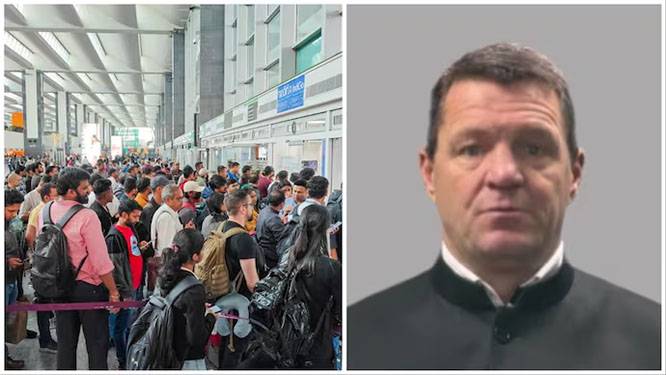
Babri Masjid ghosts emerge from tale of Bolton terror suspect to be extradited to India

May 5, 2012

New Delhi, May 5: Early in 2010, detectives walked into a grocer's store in Bolton, 16 km from Manchester, looking for a man his closest friends called “Tiger.” For 17 years, police in Gujarat had been hunting for Muhammad Hanif Patel, wanted for his alleged role in a 1993 grenade attack on a train which left an eight-year-old girl dead and 12 people injured.

This week, the greying 54-year-old businessman lost a desperate legal battle to avoid extradition to India. His trial, when it begins later this summer, will exhume some of India's most painful post-independence history.

In December 1992 when Hindutva groups demolished the Babri Masjid sparking off murderous communal violence nationwide, Mr. Patel was a successful construction magnate. His United Kingdom-based father, Umarji Patel, belonged to an influential Muslim family, part of Surat's well-heeled business élite. Mr. Patel busied himself organising relief camps for the thousands of Muslims displaced in the violence, often carried out by police-backed mobs.

He also, police claim, participated in a plan to kill.

Babri Masjid to Black Friday

From evidence produced during the trials of several men already convicted for the bombing, at least some of Surat's besieged Muslims felt the need for more muscular kinds of assistance. The former State Minister and Fisheries Board Chairman Mohammad Surti — who received a 20-year sentence for his role in the bombing last year — called top ganglord Abdul Latif for help. In April 1993, Mr. Latif is alleged to have met with Mr. Surti, his son Farooq Surti, local Congress politician Iqbal Wadiwala, Husain Ghadiyali, Salim Chawal and Mr. Patel himself.

Later that month, Mr. Ghadiyali drove a Maruti van, with a dozen hand-grenades, two Kalashnikov rifles, and a hundred rounds of ammunition to Surat. The grenade thrown at the Gujarat Express on April 22, 1993 was intended to have demonstrated that killing Muslims would not be cost-free.

Nothing in the Gujarat Police's files, or the trial records, suggests Mr. Patel had a direct role in the bombing. Mr. Ghadiyali, whose wife tied a rakhi on the ganglord's wrist each year in a ritual gesture of brotherhood, was the central actor.

Mr. Latif — later to die in a controversial encounter — was no jihadist. Long, a key figure in Gujarat's lucrative bootleg racket, he had clawed his way into the State's élite by ruthlessly eliminating his rivals. He won support by acting as a source of patronage and protection — and bought impunity by building a close relationship with the local Congress. In 1987, then in jail facing trial on murder charges, he fought and won elections from five Ahmedabad municipal wards.

In the wake of the 1992-1993 carnage, ganglords like Mr. Latif came under pressure from communities torn apart by communal violence — and turned to Pakistan's Inter-Services Intelligence Directorate for help. In February 1993, Karachi-based ganglord Dawood Ibrahim Kaskar ordered networks to stage reprisal attacks. From a confessional statement made by Dawood Ibrahim's lieutenant Usman Gani Merchant, we have some idea of what was discussed at the meeting, where the decision for ‘revenge' was taken.

Mr. Kaskar's operatives set off 13 improvised explosive devices in Mumbai on March 12, 1993, killing more than 250 people — the largest terrorist attack in India's history, known popularly as the Black Friday bombings. The explosives, grenades and assault rifles used in the course of the revenge operation were provided by the ISI, which hoped to set off a communal war in India.

The weapons used in Surat, investigators later discovered, were part of a larger consignment of 57 Kalashnikov assault rifles, several dozen grenades given to Mr. Latif by Mr. Kaskar, with instructions to carry out similar operations in Gujarat.

Led by a Latif gang member called Rasool Khan ‘Party,' his nickname derived from slang for businessman, the crime syndicate carried out strikes in a Surat marketplace, and at eight locations in Ahmedabad — killing 10.

Mr. Latif fled India for a time, dumping his remaining cache of 30 assault rifles and grenades in Jharnea, in Madhya Pradesh. Police allege the weapons were transported there by Sohrabuddin Sheikh, who was killed in a 2005 shootout with the Gujarat Police, now known to have been staged to settle a business-related feud. In 1995, Mr. Latif returned to India after a falling-out with Dawood Ibrahim, and was killed in a controversial encounter.

Following the murderous 2002 communal riots in Gujarat, elements of the group built alliances with jihadist groups, laying the foundations for a new phase of retaliatory violence. Rasool Khan ‘Party' hid out in Hyderabad, where he made contact with controversial Islamist cleric Maulana Mohammad Naseeruddin. Following the murderous 2002 communal riots in Gujarat, Rasool Khan is alleged to have funded the travel of jihad recruits to training camps in Pakistan. Mr. Khan, like other key figures in these networks, is thought to be in Pakistan.

Mr. Patel, though, appeared to want no part in the war he had been dragged into in the summer of 1993. He jumped bail, fled to the U.K., where his father has construction interests. Mr. Surti's son Farooq Surti, Salim Lala and Farooq Gajnabi, are also believed to be overseas.
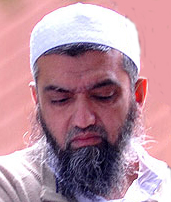
Tiger_Hanif_copy

Tiger Hanif


Comments

Add new comment

  • Coastaldigest.com reserves the right to delete or block any comments.
  • Coastaldigset.com is not responsible for its readers’ comments.
  • Comments that are abusive, incendiary or irrelevant are strictly prohibited.
  • Please use a genuine email ID and provide your name to avoid reject.
News Network
November 21,2025

Tejas.jpg

An Indian Air Force (IAF) Tejas fighter jet crashed on Friday, November 21, afternoon during its aerial demonstration at the Dubai Air Show, plunging to the ground at around 2:10 pm local time while performing a manoeuvre before thousands of spectators.

The IAF confirmed the incident, stating that a Tejas aircraft participating in the show had crashed and that further details were being gathered. An Air Force spokesperson said more information would be shared after initial assessments.

The crash sent thick black smoke billowing into the sky near the airport, causing panic among visitors, including families and children who had gathered to watch the display. Authorities have not yet confirmed whether the pilot managed to eject before the aircraft went down. Emergency response teams rushed to the scene, and officials have not released information on casualties or damage so far.

The Tejas is a 4.5-generation, multi-role fighter aircraft developed indigenously by Hindustan Aeronautics Limited (HAL). Designed for versatility, it is capable of offensive air support, close combat, ground attack missions and maritime operations. The aircraft family includes single-seat fighters and twin-seat trainers for both the Air Force and Navy.

HAL describes the latest version, the LCA Mk1A, as the most advanced in the series, featuring an AESA radar, an upgraded electronic warfare suite with radar-warning and self-protection jamming, smart multifunction displays, a digital map generator, a combined interrogator–transponder system and a modern radio altimeter. These enhancements significantly improve the aircraft’s combat capability and survivability.

Further updates from IAF and UAE authorities are awaited.

Comments

Add new comment

  • Coastaldigest.com reserves the right to delete or block any comments.
  • Coastaldigset.com is not responsible for its readers’ comments.
  • Comments that are abusive, incendiary or irrelevant are strictly prohibited.
  • Please use a genuine email ID and provide your name to avoid reject.
News Network
December 3,2025

indigo.jpg

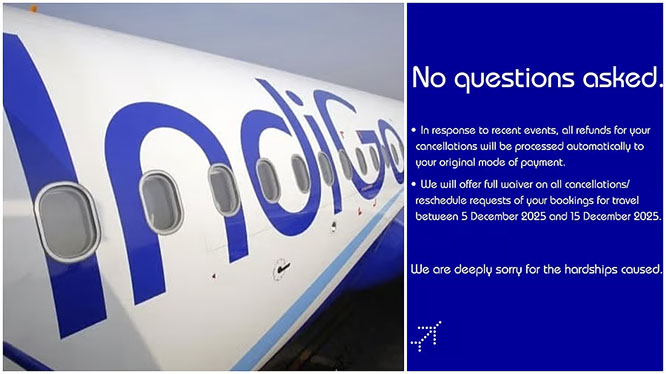
IndiGo, India’s largest airline, is battling one of its worst operational disruptions in recent years, with hundreds of delays and cancellations throwing domestic travel into chaos.

Government data on Tuesday showed its on-time performance plunging to 35%, an unusual dip for a carrier long associated with punctuality.

By Wednesday afternoon, airports in Delhi, Mumbai, Bengaluru and Hyderabad had collectively reported close to 200 cancellations, stranding travellers across the country.

Crew Shortage After New Duty Norms

A major trigger behind the meltdown is a severe crew shortage, especially among pilots, following the rollout of revised Flight Duty Time Limitation (FDTL) norms last month.

The rules mandate longer rest hours and more humane rosters — a shift IndiGo has struggled to incorporate across its vast network.

Sources said several flights were grounded due to lack of cabin crew, while some delays stretched upwards of eight hours.

With IndiGo controlling over 60% of India’s domestic aviation market, the ripple effect has impacted airports nationwide.

IndiGo Issues Apology, Lists “Compounding Factors”

In a statement, IndiGo acknowledged the large-scale disruption:

“We sincerely apologise to customers. A series of unforeseen operational challenges — technology glitches, winter schedule changes, adverse weather, system congestion and updated FDTL norms — created a compounding impact that could not have been anticipated.”

To stabilise operations, the airline has begun calibrated schedule adjustments for the next 48 hours, aiming to restore punctuality. Affected passengers are being offered refunds or alternate travel arrangements, IndiGo said.

What the FDTL Rules Require

The FDTL norms, designed to reduce pilot fatigue, cap duty and flying hours as follows:
•    Maximum 8 hours of flying per day
•    35 hours per week
•    125 hours per month
•    1,000 hours per year

Crew must also receive rest equalling twice the flight duration, with a minimum 10-hour rest period in any 24-hour window.

The DGCA introduced these limits to enhance flight safety.

Hyderabad: 33 Flights Cancelled, Long Queues Reported

Hyderabad’s Rajiv Gandhi International Airport saw heavy early-morning crowds as 33 IndiGo flights (arrivals and departures) were cancelled.

The airport clarified on X that operations were normal, advising passengers to contact IndiGo directly for latest flight status.

Cancellations included flights to and from Visakhapatnam, Goa, Ahmedabad, Delhi, Bengaluru, Chennai, Madurai, Hubli, Bhopal and Bhubaneswar.

Bengaluru: 42 Flights Disrupted

Bengaluru’s Kempegowda International Airport recorded 42 cancellations — 22 arrivals and 20 departures — affecting routes to Delhi, Mumbai, Chennai, Hyderabad, Goa, Kolkata and Lucknow.

Passengers Vent on Social Media

Irate travellers took to X to share their experiences. One passenger stranded in Hyderabad wrote: “I have been here since 3 a.m. and missed an important meeting.”

Another said: “My flight was pushed from 1:55 PM to 2:55 PM and now 4:35 PM. I was informed only three minutes before entering the airport.”

Delhi Airport Hit by Tech Glitch

At Delhi Airport, the disruption deepened due to a slowdown in the Amadeus system — used for reservations, check-ins and departure control.

The technical issue led to longer queues and sluggish processing, adding to delays already worsened by staff shortages.

Comments

Add new comment

  • Coastaldigest.com reserves the right to delete or block any comments.
  • Coastaldigset.com is not responsible for its readers’ comments.
  • Comments that are abusive, incendiary or irrelevant are strictly prohibited.
  • Please use a genuine email ID and provide your name to avoid reject.
News Network
December 4,2025

indigoflight.jpg

Domestic carrier IndiGo has cancelled over 180 flights from three major airports — Mumbai, Delhi and Bengaluru — on Thursday, December 4, as the airline struggles to secure the required crew to operate its flights in the wake of new flight-duty and rest-period norms for pilots.

While the number of cancellations at Mumbai airport stands at 86 (41 arrivals and 45 departures) for the day, at Bengaluru, 73 flights have been cancelled, including 41 arrivals, according to a PTI report that quoted sources.

"IndiGo cancelled over 180 flights on Thursday at three airports-Mumbai, Delhi and Bengaluru," the source told the news agency.

Besides, it had cancelled as many as 33 flights at Delhi airport for Thursday, the source said, adding, "The number of cancellations is expected to be higher by the end of the day."

The Gurugram-based airline's On-Time Performance (OTP) nosedived to 19.7 per cent at six key airports — Delhi, Mumbai, Chennai, Kolkata, Bengaluru and Hyderabad — on December 3, as it struggled to get the required crew to operate its services, down from almost half of December 2, when it was 35 per cent.

"IndiGo has been facing acute crew shortage since the implementation of the second phase of the FDTL (Flight Duty Time Limitations) norms, leading to cancellations and huge delays in its operations across the airports," a source had told PTI on Wednesday.

Chaos continued at several major airports for the third day on Thursday because of the cancellations.

A spokesperson for the Kempegowda International Airport (KIA) in Bengaluru said that 73 IndiGo flights had been cancelled on Thursday.

At least 150 flights were cancelled and dozens of others delayed on Wednesday, airport sources said, leaving thousands of travellers stranded, according to news agency Reuters.

The Directorate General of Civil Aviation (DGCA) has said it is investigating IndiGo flight disruptions and has asked the airline to submit the reasons for the current situation, as well as its plans to reduce flight cancellations and delays.

It may be mentioned here that the pilots' body, Federation of Indian Pilots (FIP), has alleged that IndiGo, despite getting a two-year preparatory window before the full implementation of new flight duty and rest period norms for cockpit crew, "inexplicably" adopted a "hiring freeze".

The FIP said it has urged the safety regulator, the DGCA, not to approve airlines' seasonal flight schedules unless they have adequate staff to operate their services "safely and reliably" in accordance with the New Flight Duty Time Limitations (FDTL) norms.

In a letter to the DGCA late on Wednesday, the FIP urged the DGCA to consider re-evaluating and reallocating slots to other airlines, which have the capacity to operate them without disruption during the peak holiday and fog season if IndiGo continues to "fail in delivering on its commitments to passengers due to its own avoidable staffing shortages."

Comments

Add new comment

  • Coastaldigest.com reserves the right to delete or block any comments.
  • Coastaldigset.com is not responsible for its readers’ comments.
  • Comments that are abusive, incendiary or irrelevant are strictly prohibited.
  • Please use a genuine email ID and provide your name to avoid reject.