SIT rejects amicus curiae's observations against Modi

May 10, 2012

09_modi_muslim_1078437f

Ahmedabad, May 10: The Supreme Court-appointed Special Investigation Team has totally disagreed with the observations of amicus curiae Raju Ramachandran, and said no case can be made out against Gujarat Chief Minister Narendra Modi in connection with the 2002 communal riots under any of the Sections of the Indian Penal Code mentioned by him.

Mr. Ramachandran, in his report, which formed part of the SIT closure report submitted in the Ahmedabad metropolitan court, observed that prima facie offences under Sections 153 A (1)(a) and (b), 153 B (1)(c), 166 and 505 (2) of the IPC could be made out against Mr. Modi for his alleged “instructions” to police officers to “go soft on the Hindu rioters” and his subsequent role in handling the riots and alleged offensive media statements that could have contributed to instigating violence.

Giving point-by-point answers to all observations made by the amicus curiae after investigating the charges, as directed by the Supreme Court, the SIT said: “The offences under the aforesaid sections of law are not made out against Mr. Modi.” The report signed by the investigation officer in the Zakia Jafri petition case, Deputy Commissioner of Police Himanshu Shukla, said, “in the light of the aforesaid facts, a closure report in being submitted for favour of perusal and orders.”

(Ms. Jafri, wife of the slain former Congress MP Ahesan Jafri, levelled serious charges against Mr. Modi and 62 others in connection with the communal riots.)

The SIT dismissed as “false and fabricated documents” two “fax messages” claimed to have been sent by the suspended IPS officer Sanjiv Bhatt, who was then Deputy Commissioner in the State intelligence branch, to the Chief Minister and Minister of State for Home Gordhan Jhadafiya, with copies to the Ahmedabad Police Commissioner, the State police control room and others, alerting them about the developing communal situation.

The “fax messages,” which claimed that the Chief Minister was informed in advance of the tension building up in Gulberg Society and that the city Police Commissioner was informed of the need for advanced preparations for possible communal repercussions in view of the government's decision to bring the bodies of the victims of the Godhra train carnage to Ahmedabad, were cited as examples of “dereliction of duty” on the part of the Chief Minister, his Cabinet colleagues and the senior police officers.

Concocted fax messages

The SIT found that no such fax messages ever existed and that these were concocted by Mr. Bhatt at a much later stage and the signatures of his superior officers were forged. Neither those claimed to be recipients nor the purported senders in the State or city police control rooms or the control room of the Home Ministry remembered anything about receiving or sending any such message. Office records did not show the existence of any such message and there also was no mention of the numbering of these messages in the subsequent official messages, which normally was the practice.

The SIT report pointed out that Mr. Bhatt himself did not mention about the existence of these messages in any of the affidavits or statements he had filed before numerous authorities all these years. For the first time, he produced a “copy” of the messages before the G. T. Nanavati-Akshay Mehta Judicial Enquiry Commission in December last and subsequently before the SIT in January this year.

Pointing out that Mr. Bhatt did not mention about the fax messages when SIT official A. K. Malhotra questioned him in connection with the Zakia Jafri petition in 2009, nor during the investigation by Mr Shukla in 2010, the SIT report said: “The oral and documentary evidence available on record would therefore conclusively prove that these fax messages now produced by Mr. Bhatt have been fabricated subsequently with an ulterior motive. No reliance can, therefore, be placed upon both these fax messages.” The SIT virtually exonerated the then Police Commissioner, P. C. Pande, his deputies M. K. Tandon and P. B. Gondia and some other police officers of the charge of dereliction of duty, and said the investigation proved that they had tried to curb the riots to the best of their ability given the limited resources available at their command to deal with the rapidly deteriorating situation. When the police arrived at any scene of riot, “the violent mobs hid themselves in lanes and bylanes and regrouped and resumed violence” as soon as the police left to attend another complaint. The SIT said it was not possible to withdraw the entire police force from the known communally sensitive areas for deployment in areas like Gulberg Society or Naroda-Patiya which had no communal history in the past.

Appreciation for Pande's role

The SIT appreciated the role played by Mr. Pande in dismissing a mob which was attempting to set fire to a dargah adjacent to the Police Commissioner's office. It pointed out that Mr. Pande heard some noise when he was in the office in the afternoon of February 28, 2002, and came to know that a mob was trying to vandalise the dargah. With the available police force by then dispatched to Gulberg Society, he took only an armed guard and succeeded in chasing away the violent mob and saved the dargah.

The SIT report, giving details of the roles played by different police officers and how they attempted to handle the situation, said there was no indication that the police were given any instruction from the higher-ups not to act or leave the affected areas to the mercy of the riotous mobs.

About the observation by the amicus curiae that the then Vishwa Hindu Parishad State general secretary Jaideep Patel being “handed over” bodies of the train carnage victims for transport to Ahmedabad was indicative of an instruction having come from “somebody very high,” the SIT pointed out that all through the journey by road from Godhra the five trucks which carried the bodies were accompanied by the police officers concerned and handed over to the police officers in charge at the Sola civil hospital in Ahmedabad. As the bodies were those of VHP kar sevaks, Mr Patel was allowed to accompany the police during the journey. The then Godhra mamlatdar and executive magistrate, M. L. Nalvaya, “erroneously” prepared the handing over papers in the name of Mr. Patel, for which the SIT recommended departmental action against him. But there was nothing to show that Mr. Modi had ordered the “handing over” of the bodies to Mr. Patel.

The SIT also dismissed Mr. Ramachandran's observations about “positioning of the two Cabinet Ministers at the instruction of Mr. Modi” in the State and the city police control rooms with the intention of interfering with the police functioning, and said its investigation proved that late Ashok Bhatt did not visit the city police control room except briefly on March 1 to pick up the then Defence Minister, George Fernandes, who was discussing with the City Police Commissioner deployment of the Army. The then Urban Development Minister did visit the State police headquarters in Gandhinagar for about a couple of hours on February 28, but was made to sit in an empty cabin and he never entered the control room. “There is no proof that they were either acting at the instruction of the Chief Minister or had even once interfered with the police functioning.”

Charges not substantiated

The report said the allegations of Mr. Modi making provocative statements over the media could not be substantiated. The allegation of his having told Zee TV in an interview that the Gulberg Society massacre was the “result of the provocative firing from inside” by Ahesan Jafri could not be established as the channel, despite several reminders, did not produce the CD of the recording. The second instance of The Times of India quoting him on Newton's theory of action and reaction to justify the riots as a reaction to the Godhra train carnage was also found baseless. The State Information Department promptly issued a denial that Mr. Modi did not speak to The Times of India at all and the newspaper was forced to carry the denial, though deliberately in an obscure corner, the SIT said.

It also dealt with the alleged “shoddy” handling of the post-riot situation by the government under Mr. Modi, and said action was recommended against the officers responsible for inaccurate police investigations or the alleged “political appointments” of special public prosecutors to handle the riot-related cases.

Comments

Add new comment

  • Coastaldigest.com reserves the right to delete or block any comments.
  • Coastaldigset.com is not responsible for its readers’ comments.
  • Comments that are abusive, incendiary or irrelevant are strictly prohibited.
  • Please use a genuine email ID and provide your name to avoid reject.
News Network
December 4,2025

indigoflight.jpg

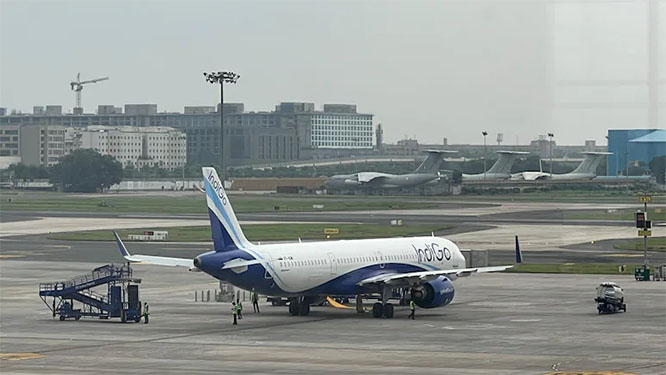
Domestic carrier IndiGo has cancelled over 180 flights from three major airports — Mumbai, Delhi and Bengaluru — on Thursday, December 4, as the airline struggles to secure the required crew to operate its flights in the wake of new flight-duty and rest-period norms for pilots.

While the number of cancellations at Mumbai airport stands at 86 (41 arrivals and 45 departures) for the day, at Bengaluru, 73 flights have been cancelled, including 41 arrivals, according to a PTI report that quoted sources.

"IndiGo cancelled over 180 flights on Thursday at three airports-Mumbai, Delhi and Bengaluru," the source told the news agency.

Besides, it had cancelled as many as 33 flights at Delhi airport for Thursday, the source said, adding, "The number of cancellations is expected to be higher by the end of the day."

The Gurugram-based airline's On-Time Performance (OTP) nosedived to 19.7 per cent at six key airports — Delhi, Mumbai, Chennai, Kolkata, Bengaluru and Hyderabad — on December 3, as it struggled to get the required crew to operate its services, down from almost half of December 2, when it was 35 per cent.

"IndiGo has been facing acute crew shortage since the implementation of the second phase of the FDTL (Flight Duty Time Limitations) norms, leading to cancellations and huge delays in its operations across the airports," a source had told PTI on Wednesday.

Chaos continued at several major airports for the third day on Thursday because of the cancellations.

A spokesperson for the Kempegowda International Airport (KIA) in Bengaluru said that 73 IndiGo flights had been cancelled on Thursday.

At least 150 flights were cancelled and dozens of others delayed on Wednesday, airport sources said, leaving thousands of travellers stranded, according to news agency Reuters.

The Directorate General of Civil Aviation (DGCA) has said it is investigating IndiGo flight disruptions and has asked the airline to submit the reasons for the current situation, as well as its plans to reduce flight cancellations and delays.

It may be mentioned here that the pilots' body, Federation of Indian Pilots (FIP), has alleged that IndiGo, despite getting a two-year preparatory window before the full implementation of new flight duty and rest period norms for cockpit crew, "inexplicably" adopted a "hiring freeze".

The FIP said it has urged the safety regulator, the DGCA, not to approve airlines' seasonal flight schedules unless they have adequate staff to operate their services "safely and reliably" in accordance with the New Flight Duty Time Limitations (FDTL) norms.

In a letter to the DGCA late on Wednesday, the FIP urged the DGCA to consider re-evaluating and reallocating slots to other airlines, which have the capacity to operate them without disruption during the peak holiday and fog season if IndiGo continues to "fail in delivering on its commitments to passengers due to its own avoidable staffing shortages."

Comments

Add new comment

  • Coastaldigest.com reserves the right to delete or block any comments.
  • Coastaldigset.com is not responsible for its readers’ comments.
  • Comments that are abusive, incendiary or irrelevant are strictly prohibited.
  • Please use a genuine email ID and provide your name to avoid reject.
News Network
December 3,2025

indigo.jpg

IndiGo, India’s largest airline, is battling one of its worst operational disruptions in recent years, with hundreds of delays and cancellations throwing domestic travel into chaos.

Government data on Tuesday showed its on-time performance plunging to 35%, an unusual dip for a carrier long associated with punctuality.

By Wednesday afternoon, airports in Delhi, Mumbai, Bengaluru and Hyderabad had collectively reported close to 200 cancellations, stranding travellers across the country.

Crew Shortage After New Duty Norms

A major trigger behind the meltdown is a severe crew shortage, especially among pilots, following the rollout of revised Flight Duty Time Limitation (FDTL) norms last month.

The rules mandate longer rest hours and more humane rosters — a shift IndiGo has struggled to incorporate across its vast network.

Sources said several flights were grounded due to lack of cabin crew, while some delays stretched upwards of eight hours.

With IndiGo controlling over 60% of India’s domestic aviation market, the ripple effect has impacted airports nationwide.

IndiGo Issues Apology, Lists “Compounding Factors”

In a statement, IndiGo acknowledged the large-scale disruption:

“We sincerely apologise to customers. A series of unforeseen operational challenges — technology glitches, winter schedule changes, adverse weather, system congestion and updated FDTL norms — created a compounding impact that could not have been anticipated.”

To stabilise operations, the airline has begun calibrated schedule adjustments for the next 48 hours, aiming to restore punctuality. Affected passengers are being offered refunds or alternate travel arrangements, IndiGo said.

What the FDTL Rules Require

The FDTL norms, designed to reduce pilot fatigue, cap duty and flying hours as follows:
•    Maximum 8 hours of flying per day
•    35 hours per week
•    125 hours per month
•    1,000 hours per year

Crew must also receive rest equalling twice the flight duration, with a minimum 10-hour rest period in any 24-hour window.

The DGCA introduced these limits to enhance flight safety.

Hyderabad: 33 Flights Cancelled, Long Queues Reported

Hyderabad’s Rajiv Gandhi International Airport saw heavy early-morning crowds as 33 IndiGo flights (arrivals and departures) were cancelled.

The airport clarified on X that operations were normal, advising passengers to contact IndiGo directly for latest flight status.

Cancellations included flights to and from Visakhapatnam, Goa, Ahmedabad, Delhi, Bengaluru, Chennai, Madurai, Hubli, Bhopal and Bhubaneswar.

Bengaluru: 42 Flights Disrupted

Bengaluru’s Kempegowda International Airport recorded 42 cancellations — 22 arrivals and 20 departures — affecting routes to Delhi, Mumbai, Chennai, Hyderabad, Goa, Kolkata and Lucknow.

Passengers Vent on Social Media

Irate travellers took to X to share their experiences. One passenger stranded in Hyderabad wrote: “I have been here since 3 a.m. and missed an important meeting.”

Another said: “My flight was pushed from 1:55 PM to 2:55 PM and now 4:35 PM. I was informed only three minutes before entering the airport.”

Delhi Airport Hit by Tech Glitch

At Delhi Airport, the disruption deepened due to a slowdown in the Amadeus system — used for reservations, check-ins and departure control.

The technical issue led to longer queues and sluggish processing, adding to delays already worsened by staff shortages.

Comments

Add new comment

  • Coastaldigest.com reserves the right to delete or block any comments.
  • Coastaldigset.com is not responsible for its readers’ comments.
  • Comments that are abusive, incendiary or irrelevant are strictly prohibited.
  • Please use a genuine email ID and provide your name to avoid reject.
News Network
November 21,2025

Tejas.jpg

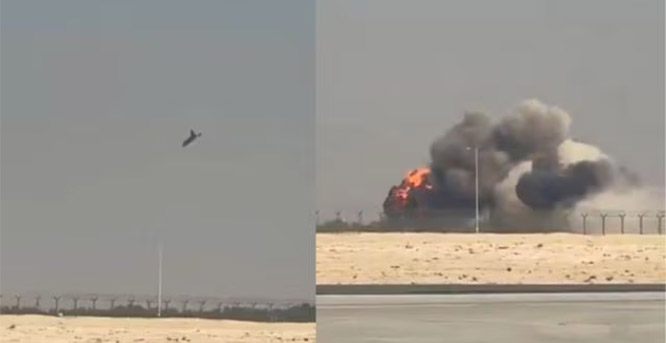
An Indian Air Force (IAF) Tejas fighter jet crashed on Friday, November 21, afternoon during its aerial demonstration at the Dubai Air Show, plunging to the ground at around 2:10 pm local time while performing a manoeuvre before thousands of spectators.

The IAF confirmed the incident, stating that a Tejas aircraft participating in the show had crashed and that further details were being gathered. An Air Force spokesperson said more information would be shared after initial assessments.

The crash sent thick black smoke billowing into the sky near the airport, causing panic among visitors, including families and children who had gathered to watch the display. Authorities have not yet confirmed whether the pilot managed to eject before the aircraft went down. Emergency response teams rushed to the scene, and officials have not released information on casualties or damage so far.

The Tejas is a 4.5-generation, multi-role fighter aircraft developed indigenously by Hindustan Aeronautics Limited (HAL). Designed for versatility, it is capable of offensive air support, close combat, ground attack missions and maritime operations. The aircraft family includes single-seat fighters and twin-seat trainers for both the Air Force and Navy.

HAL describes the latest version, the LCA Mk1A, as the most advanced in the series, featuring an AESA radar, an upgraded electronic warfare suite with radar-warning and self-protection jamming, smart multifunction displays, a digital map generator, a combined interrogator–transponder system and a modern radio altimeter. These enhancements significantly improve the aircraft’s combat capability and survivability.

Further updates from IAF and UAE authorities are awaited.

Comments

Add new comment

  • Coastaldigest.com reserves the right to delete or block any comments.
  • Coastaldigset.com is not responsible for its readers’ comments.
  • Comments that are abusive, incendiary or irrelevant are strictly prohibited.
  • Please use a genuine email ID and provide your name to avoid reject.