India's street children bank on the future

July 6, 2012
street_child

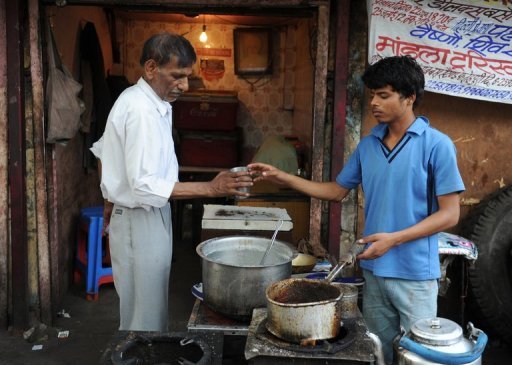
New Delhi, July 6: Ram Singh, 17, earns just one dollar from the 100 cups of tea he makes every day outside Delhi railway station, but each evening, after packing up, he goes to the bank and deposits nearly half of it.

Singh holds an account at a special bank, run for — and mostly by — Indian street children, that keeps what little money they have safe and seeks to instill the idea that savings, however meagre, are important.

Just one among millions of street children who rely on menial jobs for survival, Singh is determined to make his work pay some sort of future dividend.

“I’m smart, but that alone isn’t enough to start a business.

“I save money everyday, hoping to start something of my own. Someday soon,” he said as he served glasses of India’s ubiquitous, spicy milk tea in sweltering heat at a stall near the teeming train station.

The Children’s Development Khazana (treasure chest) opened its first office in New Delhi 2001 and has since spread across the country and overseas with 300 affiliated branches in India, Nepal, Bangladesh, Afghanistan, Sri Lanka and Kyrgyzstan.

Delhi counts 12 branches with around 1,000 child clients aged between nine and 17.

The brightly painted metal cubicles which serve as teller counters are located in shelters that provide children with free meals and sleeping mats, as well as school classes.

The branches are run almost entirely by and for the children, with account holders electing two volunteer managers from the group every six months.

“Children who make money by begging or selling drugs are not allowed to open an account. This bank is only for children who believe in hard work,” said Karan, a 14-year-old “manager”.

During the day, Karan earns a pittance washing up at wedding banquets or other events. In the evening, he sits at his desk to collect money from his friends, update their pass books and close the bank.

“Some account holders want to withdraw their money. I ask them why and give it to them if other children approve. Everyone earns five per cent interest on their savings.”

An adult staff member is always present to collect the takings at the end of each day, depositing the cash in a nationalised bank to earn the interest component.

Sharon Jacob, who works for the rights group Butterflies that set up the bank, said it aimed to give the children a genuine stake in their own future.

“They work in shops as hawkers or porters but they never had a safe place to keep their money. They were always cheated of it or somebody also stole their money,” Jacob said.

“So this is a place where they could keep their money safely and they are also taught life skills, how to manage their finances. They are taught budgeting, they are taught democratic participation,” Jacob said.

Child labour is officially illegal in India but millions of boys and girls have no choice but to earn a living to support themselves or help their families.

Many move to the cities from rural areas, seeking an escape from grinding poverty or abusive homes.

“I ran away from home at the age of 11 after my father beat me for stealing a kitchen appliance,” said Samir who works in a sweatshop.

“For days I slept on a railway platform. I was beaten by the police and even harassed by the drug peddlers. I wanted to go back home but was ashamed of myself.”

Now 14, Samir lives in the children’s shelter and holds an account in the bank.

“I have saved 4,000 rupees (Dh257) in the last seven months. It’s a good feeling to have some money. I will buy a shirt and a watch for my father and send it to him to seek his apology.”

“He might forgive me and ask me to be with him at home.”


Comments

Add new comment

  • Coastaldigest.com reserves the right to delete or block any comments.
  • Coastaldigset.com is not responsible for its readers’ comments.
  • Comments that are abusive, incendiary or irrelevant are strictly prohibited.
  • Please use a genuine email ID and provide your name to avoid reject.
News Network
November 21,2025

Tejas.jpg

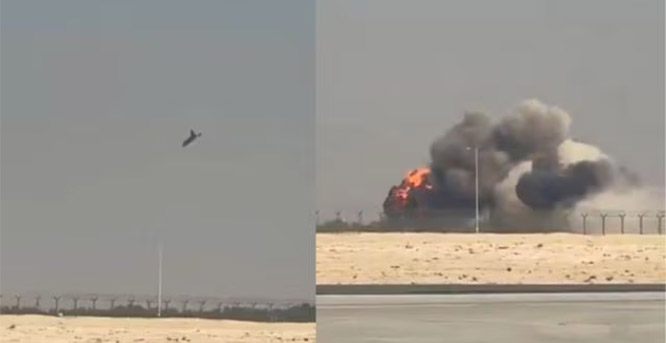
An Indian Air Force (IAF) Tejas fighter jet crashed on Friday, November 21, afternoon during its aerial demonstration at the Dubai Air Show, plunging to the ground at around 2:10 pm local time while performing a manoeuvre before thousands of spectators.

The IAF confirmed the incident, stating that a Tejas aircraft participating in the show had crashed and that further details were being gathered. An Air Force spokesperson said more information would be shared after initial assessments.

The crash sent thick black smoke billowing into the sky near the airport, causing panic among visitors, including families and children who had gathered to watch the display. Authorities have not yet confirmed whether the pilot managed to eject before the aircraft went down. Emergency response teams rushed to the scene, and officials have not released information on casualties or damage so far.

The Tejas is a 4.5-generation, multi-role fighter aircraft developed indigenously by Hindustan Aeronautics Limited (HAL). Designed for versatility, it is capable of offensive air support, close combat, ground attack missions and maritime operations. The aircraft family includes single-seat fighters and twin-seat trainers for both the Air Force and Navy.

HAL describes the latest version, the LCA Mk1A, as the most advanced in the series, featuring an AESA radar, an upgraded electronic warfare suite with radar-warning and self-protection jamming, smart multifunction displays, a digital map generator, a combined interrogator–transponder system and a modern radio altimeter. These enhancements significantly improve the aircraft’s combat capability and survivability.

Further updates from IAF and UAE authorities are awaited.

Comments

Add new comment

  • Coastaldigest.com reserves the right to delete or block any comments.
  • Coastaldigset.com is not responsible for its readers’ comments.
  • Comments that are abusive, incendiary or irrelevant are strictly prohibited.
  • Please use a genuine email ID and provide your name to avoid reject.
News Network
December 5,2025

indigoCEO.jpg

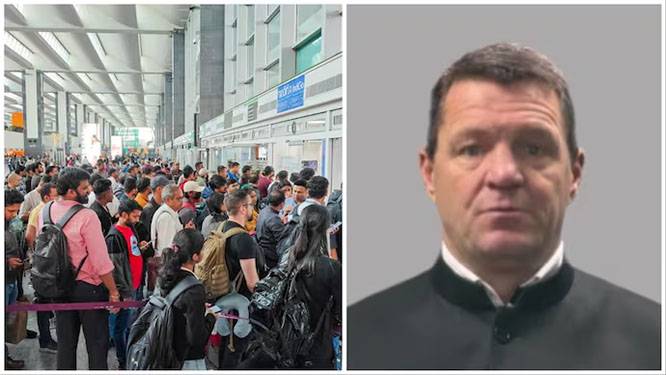
New Delhi, Dec 5: IndiGo CEO Pieter Elbers issued a public apology this evening after more than a thousand flights were cancelled today, making it the "most severely impacted day" in terms of cancellations. The biggest airline of the country cancelled "more than half" of its daily number of flights on Friday, said Elbers. He also said that even though the crisis will persist on Saturday, the airline anticipates fewer than 1,000 flight cancellations.

"Full normalisation is expected between December 10 and 15, though IndiGo cautions that recovery will take time due to the scale of operations," the IndiGo CEO said. 

IndiGo operates around 2,300 domestic and international flights daily.

Pieter Elbers, while apologising for the major inconvenience due to delays and cancellations, said the situation is a result of various causes.

The crisis at IndiGo stems from new regulations that boost pilots' weekly rest requirements by 12 hours to 48 and allow only two night-time landings per week, down from six. IndiGo has attributed the mass cancellations to "misjudgment and planning gaps".

Elbers also listed three lines of action that the airline will adopt to address the issue.

"Firstly, customer communication and addressing your needs, for this, messages have been sent on social media. And just now, a more detailed communication with information, refunds, cancellations and other customer support measures was sent," he said.

The airline has also stepped up its call centre capacity.

"Secondly, due to yesterday's situation, we had customers stranded mostly at the nation's largest airports. Our focus was for all of them to be able to travel today itself, which will be achieved. For this, we also ask customers whose flights are cancelled not to come to the airports as notifications are sent," the CEO said.

"Thirdly, cancellations were made for today to align our crew and planes to be where they need to start tomorrow morning afresh. Earlier measures of the last few days, regrettable, have proven not to be enough, but we have decided today to reboot all our systems and schedules, resulting in the highest numbers of cancellations so far, but imperative for progressive improvements starting from tomorrow," he added.

As airports witnessed chaotic scenes, the Directorate General of Civil Aviation (DGCA) stepped in to grant IndiGo a temporary exemption from stricter night duty rules for pilots. It also allowed substitution of leaves with a weekly rest period. 

Civil Aviation Minister Ram Mohan Naidu has said a high-level inquiry will be ordered and accountability will be fixed.

Comments

Add new comment

  • Coastaldigest.com reserves the right to delete or block any comments.
  • Coastaldigset.com is not responsible for its readers’ comments.
  • Comments that are abusive, incendiary or irrelevant are strictly prohibited.
  • Please use a genuine email ID and provide your name to avoid reject.