On Internet rules, India now more willing to say ICANN

October 14, 2012
New Delhi, October 14: India has reinvented its position on Internet governance, hoping to become a new voice of reason in what has so far been a deeply polarised global debate.

The change, effected after detailed inter-ministerial as well as multi-stakeholder consultation, is intended to distance India from any model propagating governments taking “charge” or “balkanising” the Internet. It was unveiled at the recent Budapest Cyber Space Conference.

According to Minister of State for Telecom Sachin Pilot, who led the Indian delegation to Budapest, instead of opposing the U.S.-based Internet Corporation for Assigned Names and Numbers (ICANN) and its operations through an earlier proposal called the U.N. Committee on Internet-Related Policies (UN-CIRP), India will pursue enhanced cooperation through wider dialogue.

“In our meetings with Fadi Chehade, the new CEO of ICANN, I have sought far stronger representation of the developing world on the four ICANN Advisory committees”, Mr. Pilot told.

ICANN’s committees include the “At Large Advisory Committee (ALAC), Governmental Advisory Committee (GAC), Root Server System Advisory Committee (RSSAC) and the Security and Stability Advisory Committee (SSAC).

Countries such as Russia, China, Uzbekistan and Tajikistan have been advocating governance models that seek to place the Internet under U.N. control while the U.S. and western states have been reluctant to move away from the status quo position of ICANN-led Internet governance. India had positioned its UN-CIRP proposal as something that would lie in between these two extremes. But while the international debate continues, it is keen to step up its engagement with ICANN which remains, for the moment, the only game in town.

“The extreme views being floated by some countries on Internet governance could lead to the balkanisation of Internet and we are against any such move, including control of Internet by government or inter-governmental bodies. We seek enhanced dialogue and continuation of a working group to find ways to resolve the sharp differences that currently exist,” Mr. Pilot said.

Mr. Pilot’s position is consistent with that of Telecom Minister Kapil Sibal, who maintained at two recent meetings on Internet governance in India in September 2012, that India was firmly against government control of the Internet while seeking consensus among multi-stakeholders to develop an appropriate model for the effective management of the Internet.

India had attracted criticism from the U.S. and from corporate stakeholders who want no dilution of the current ICANN-run system after it presented its UN-CIRP model for Internet governance last October at the 66th General Assembly of the United Nations in New York.

While the UN-CIRP essentially sought a shift from the existing ICANN-run model that is perceived to be too close to the U.S. government, many domestic stakeholders were critical of the lack of consultation in the run-up to the October 2011 statement. Signs of a rethink in the government were evident when senior officials in the ministries concerned refused to entertain questions on the genesis of the UN-CIRP proposal put to them by The Hindu over the past few months.

In the run-up to the Budapest meet, a UPA task-force held closed-door consultations involving the Ministry of External Affairs, Ministry of Telecom and IT, industry bodies and others. Latha Reddy, the Deputy National Security Adviser, coordinated this effort.

On the issue of India’s earlier UN-CIRP model, Mr. Pilot also confirmed, “We are moving ahead with new proposals. While the existing system certainly needs to be changed, India’s position will include multi-stakeholder involvement and not inter-governmental bodies that may have been proposed in the past.”

The Indian government’s changed stance on Internet governance, though subtle, is expected to generate further attention at the upcoming Internet Governance Forum in Baku, Azerbaijan next month, where thousands of delegates representing governments, business, civil society, academia and media from across the world will collect to discuss the issue


indian_woman_using_internet


Comments

Add new comment

  • Coastaldigest.com reserves the right to delete or block any comments.
  • Coastaldigset.com is not responsible for its readers’ comments.
  • Comments that are abusive, incendiary or irrelevant are strictly prohibited.
  • Please use a genuine email ID and provide your name to avoid reject.
News Network
December 4,2025

indigoflight.jpg

Domestic carrier IndiGo has cancelled over 180 flights from three major airports — Mumbai, Delhi and Bengaluru — on Thursday, December 4, as the airline struggles to secure the required crew to operate its flights in the wake of new flight-duty and rest-period norms for pilots.

While the number of cancellations at Mumbai airport stands at 86 (41 arrivals and 45 departures) for the day, at Bengaluru, 73 flights have been cancelled, including 41 arrivals, according to a PTI report that quoted sources.

"IndiGo cancelled over 180 flights on Thursday at three airports-Mumbai, Delhi and Bengaluru," the source told the news agency.

Besides, it had cancelled as many as 33 flights at Delhi airport for Thursday, the source said, adding, "The number of cancellations is expected to be higher by the end of the day."

The Gurugram-based airline's On-Time Performance (OTP) nosedived to 19.7 per cent at six key airports — Delhi, Mumbai, Chennai, Kolkata, Bengaluru and Hyderabad — on December 3, as it struggled to get the required crew to operate its services, down from almost half of December 2, when it was 35 per cent.

"IndiGo has been facing acute crew shortage since the implementation of the second phase of the FDTL (Flight Duty Time Limitations) norms, leading to cancellations and huge delays in its operations across the airports," a source had told PTI on Wednesday.

Chaos continued at several major airports for the third day on Thursday because of the cancellations.

A spokesperson for the Kempegowda International Airport (KIA) in Bengaluru said that 73 IndiGo flights had been cancelled on Thursday.

At least 150 flights were cancelled and dozens of others delayed on Wednesday, airport sources said, leaving thousands of travellers stranded, according to news agency Reuters.

The Directorate General of Civil Aviation (DGCA) has said it is investigating IndiGo flight disruptions and has asked the airline to submit the reasons for the current situation, as well as its plans to reduce flight cancellations and delays.

It may be mentioned here that the pilots' body, Federation of Indian Pilots (FIP), has alleged that IndiGo, despite getting a two-year preparatory window before the full implementation of new flight duty and rest period norms for cockpit crew, "inexplicably" adopted a "hiring freeze".

The FIP said it has urged the safety regulator, the DGCA, not to approve airlines' seasonal flight schedules unless they have adequate staff to operate their services "safely and reliably" in accordance with the New Flight Duty Time Limitations (FDTL) norms.

In a letter to the DGCA late on Wednesday, the FIP urged the DGCA to consider re-evaluating and reallocating slots to other airlines, which have the capacity to operate them without disruption during the peak holiday and fog season if IndiGo continues to "fail in delivering on its commitments to passengers due to its own avoidable staffing shortages."

Comments

Add new comment

  • Coastaldigest.com reserves the right to delete or block any comments.
  • Coastaldigset.com is not responsible for its readers’ comments.
  • Comments that are abusive, incendiary or irrelevant are strictly prohibited.
  • Please use a genuine email ID and provide your name to avoid reject.
News Network
November 21,2025

Tejas.jpg

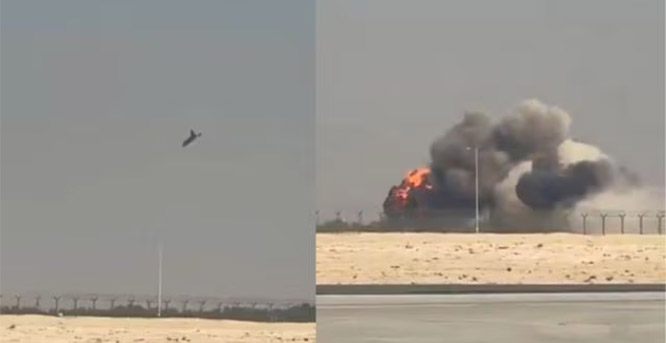
An Indian Air Force (IAF) Tejas fighter jet crashed on Friday, November 21, afternoon during its aerial demonstration at the Dubai Air Show, plunging to the ground at around 2:10 pm local time while performing a manoeuvre before thousands of spectators.

The IAF confirmed the incident, stating that a Tejas aircraft participating in the show had crashed and that further details were being gathered. An Air Force spokesperson said more information would be shared after initial assessments.

The crash sent thick black smoke billowing into the sky near the airport, causing panic among visitors, including families and children who had gathered to watch the display. Authorities have not yet confirmed whether the pilot managed to eject before the aircraft went down. Emergency response teams rushed to the scene, and officials have not released information on casualties or damage so far.

The Tejas is a 4.5-generation, multi-role fighter aircraft developed indigenously by Hindustan Aeronautics Limited (HAL). Designed for versatility, it is capable of offensive air support, close combat, ground attack missions and maritime operations. The aircraft family includes single-seat fighters and twin-seat trainers for both the Air Force and Navy.

HAL describes the latest version, the LCA Mk1A, as the most advanced in the series, featuring an AESA radar, an upgraded electronic warfare suite with radar-warning and self-protection jamming, smart multifunction displays, a digital map generator, a combined interrogator–transponder system and a modern radio altimeter. These enhancements significantly improve the aircraft’s combat capability and survivability.

Further updates from IAF and UAE authorities are awaited.

Comments

Add new comment

  • Coastaldigest.com reserves the right to delete or block any comments.
  • Coastaldigset.com is not responsible for its readers’ comments.
  • Comments that are abusive, incendiary or irrelevant are strictly prohibited.
  • Please use a genuine email ID and provide your name to avoid reject.