No information on black money removed by note ban: RBI

Agencies
September 4, 2017

New Delhi, Sept 4: The RBI has told a parliamentary panel that it has "no information" on how much black money has been extinguished as a result of demonetisation of Rs 500/1,000 notes or about unaccounted cash legitimised through exchange of currency post note ban.

Stating that an estimated Rs 15.28 (rpt) 15.28 lakh crore in junked notes has come back "subject to future corrections based on verification process", the Reserve Bank also said it has "no information" whether demonetisation is being planned to be implemented at regular intervals.

The RBI has been facing flak from the opposition parties for demonetisation and delay in disclosing figures on the junked notes, even as the government has maintained that the November 8, 2016 decision to ban Rs 500/1,000 notes in circulation at that time has helped in curbing black money, among other benefits.

Last week in its annual report, the RBI finally made public the details of the junked notes that have come back into the system putting the figure at Rs 15.28 (rpt) 15.28 lakh crore. The same figure has now been shared with the Parliamentary Standing Committee on Finance.

Replying to queries from the panel, the RBI said the verification for authenticity and numerical accuracy are still on, while some of the specified bank notes (old Rs 500/1,000 notes) which were accepted by banks and post offices are still lying in currency chests.

The central bank also informed the panel that the completion of the process of verification will take time in view of the large volume involved.

The process is "going on in full swing" with most RBI offices working in double shifts and with the help of high-end verification machines, the central bank said.

"Till such time, these notes are processed by the RBI, their numerical accuracy and authenticity, only in estimation of SBNs received back is possible. Subject to future correction, based on verification process when completed, the estimated value of SBNs received as on June 30 is Rs 15.28 trillion," the RBI said in its written reply to the panel.

To a query on how much amount of black money has been extinguished as a result of demonetisation, the central bank said, "The RBI has no information in this regard."

The RBI gave similar reply to another question on how much unaccounted money has been legitimised through exchange of junked currency.

The central bank did not give any direct reply on adverse impact on the informal and unorganised sector, as also about the GDP loss. The RBI said the deceleration in overall economic growth figures for 2016-17 had begun "much before demonetisation" due to weakness in industrial and services sector.

Last week, several members of the panel had sought redrafting of its draft report on demonetisation as the RBI at that time had not provided some crucial details including on the quantum of junked Rs 500/1,000 notes.

The acceptance of the report was deferred as member MPs across party lines including BJD MP Bhartruhari Mahtab, SP MP Naresh Agrawal and BJP MP Nishikant had said that the panel's report on demonetisation needed to be "redrafted" while some of them stated that it "lacks punch".

In its annual report for 2016-17, the RBI had disclosed that all but about 1 per cent of the scrapped currency notes have come back into the system.

The government had on November 8, banned old Rs 500 and Rs 1,000 notes in an attempt to weed out black money in the country. The old notes were allowed to be deposited in banks, with unusual deposits coming under income tax scrutiny.

The government replaced old Rs 500 notes with new ones, but no replacement for Rs 1,000 notes has been made. Instead, a new Rs 2,000 note was introduced post note ban.

Comments

Add new comment

  • Coastaldigest.com reserves the right to delete or block any comments.
  • Coastaldigset.com is not responsible for its readers’ comments.
  • Comments that are abusive, incendiary or irrelevant are strictly prohibited.
  • Please use a genuine email ID and provide your name to avoid reject.
News Network
January 23,2026

modIKERALA.jpg

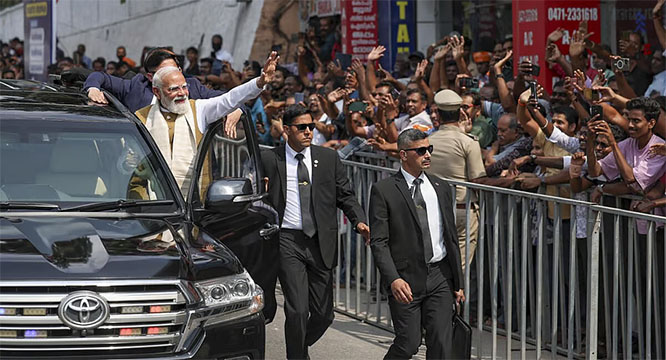
Prime Minister Narendra Modi, during his visit to Thiruvananthapuram on Friday, January 23, indicated that the Bharatiya Janata Party (BJP) is aiming to expand its political footprint in Kerala ahead of the Assembly elections scheduled in the coming months.

Speaking at a BJP-organised public meeting, Modi drew parallels between the party’s early electoral gains in Gujarat and its recent victory in the Thiruvananthapuram Municipal Corporation. The civic body win, which ended decades of Left control, was cited by the Prime Minister as a possible starting point for the party’s broader ambitions in the state.

Recalling BJP’s political trajectory in Gujarat, Modi said the party was largely insignificant before 1987 and received little media attention. He pointed out that the BJP’s first major breakthrough came with its victory in the Ahmedabad Municipal Corporation that year.

“Just as our journey in Gujarat began with one city, Kerala’s journey has also started with a single city,” Modi said, suggesting that the party’s municipal-level success could translate into wider electoral acceptance.

The Prime Minister alleged that successive governments led by the Left Democratic Front (LDF) and the United Democratic Front (UDF) had failed to adequately develop Thiruvananthapuram. He accused both fronts of corruption and neglect, claiming that basic infrastructure and facilities were denied to the capital city for decades.

According to Modi, the BJP’s control of the civic body represents a shift driven by public dissatisfaction with the existing political alternatives. He asserted that the BJP administration in Thiruvananthapuram had begun working towards development, though no specific details or timelines were outlined.

Addressing the gathering at Putharikandam Maidan, Modi said the BJP intended to project Thiruvananthapuram as a “model city,” reiterating his party’s commitment to governance-led change.

The Prime Minister’s visit to Kerala also included the inauguration of several development projects and the flagging off of new train services, as the BJP intensifies its political outreach in the poll-bound state.

Comments

Add new comment

  • Coastaldigest.com reserves the right to delete or block any comments.
  • Coastaldigset.com is not responsible for its readers’ comments.
  • Comments that are abusive, incendiary or irrelevant are strictly prohibited.
  • Please use a genuine email ID and provide your name to avoid reject.
News Network
January 20,2026

iran.jpg

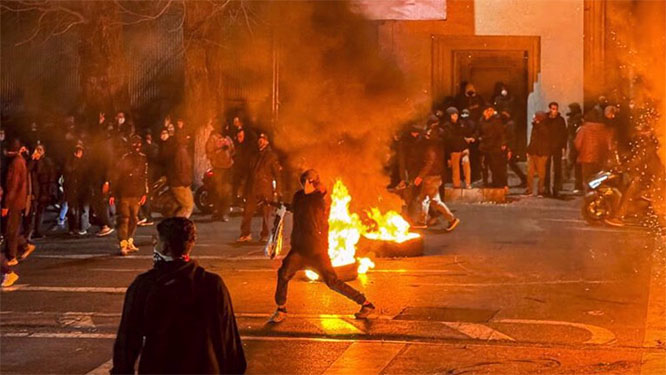
Iranian security and intelligence forces have captured more than 470 individuals in three provinces, identified as key figures behind the recent wave of violent unrest and terrorist activities linked to foreign-backed networks.

The Intelligence Ministry's provincial office in Khorasan Razavi announced on Monday the arrest of 192 armed terrorists, identified as the main agents behind recent riots in the region. 

According to an official statement, the detainees were involved in the killing of several security personnel and civilians, setting fire to mosques, public service facilities, and buses, as well as attacks on military and law enforcement centers.

The seized items from the group include several bulletproof vests, Kalashnikov rifles, hunting weapons, Winchester rifles, and various cold weapons such as daggers, swords, brass knuckles, tactical knives, crossbows, and chains.

Evidence indicates that some of the individuals were tied to hostile movements and terrorist organizations, with links overseas. Others were identified as members of violent criminal gangs, actively taking part in the unrest alongside their associates.

Simultaneously, in the western province of Lorestan, the IRGC announced the arrest of 134 individuals as the main leaders and influential field agents of a US-Israeli terrorist network.

The IRGC statement stated that these individuals formed terrorist cells during the recent unrest, committing "Daesh-like" acts.

They wounded security forces with firearms and cold weapons, and burned and destroyed public and private properties, including mosques, shops, banks, and private and public vehicles.

In the northwestern province of Zanjan, the police reported detaining 150 people identified as principal leaders and agents behind recent riots.

Authorities noted that these individuals were responsible for destroying public and private property and intentionally setting fire to vehicles in the province's squares.

Their crimes include shedding the blood of innocent people, destroying public and private property, attempting to enter military sites, disrupting public order, and spreading terror among citizens.

A variety of cold weapons were reportedly seized from the detainees.

What began late last month as peaceful protests over economic hardship across Iran turned violent after public statements by US and Israeli regime figures encouraged vandalism and disorder.

During the unrest, foreign-backed mercenaries rampaged through cities, killing security forces and civilians and damaging public property.

Comments

Add new comment

  • Coastaldigest.com reserves the right to delete or block any comments.
  • Coastaldigset.com is not responsible for its readers’ comments.
  • Comments that are abusive, incendiary or irrelevant are strictly prohibited.
  • Please use a genuine email ID and provide your name to avoid reject.
News Network
January 23,2026

Karnataka Governor Thaawarchand Gehlot read only three lines from the 122-paragraph address prepared by the Congress-led state government while addressing the joint session of the Legislature on Thursday, effectively bypassing large sections critical of the BJP-led Union government.

The omitted portions of the customary Governor’s address outlined what the state government described as a “suppressive situation in economic and policy matters” under India’s federal framework. The speech also sharply criticised the Centre’s move to replace the Mahatma Gandhi National Rural Employment Guarantee Act (MGNREGA) with the Viksit Bharat–Guarantee for Rozgar and Ajeevika Mission (Gramin) Act, commonly referred to as the VB-GRAM (G) Act.

Governor Gehlot had earlier conveyed his objection to several paragraphs that were explicitly critical of the Union government. On Thursday, he confined himself to the opening lines — “I extend a warm welcome to all of you to the joint session of the State legislature. I am extremely pleased to address this august House” — before jumping directly to the concluding sentence of the final paragraph.

He ended the address by reading the last line of paragraph 122: “Overall, my government is firmly committed to doubling the pace of the State’s economic, social and physical development. Jai Hind — Jai Karnataka.”

According to the prepared speech, the Karnataka government demanded the scrapping of the VB-GRAM (G) Act, describing it as “contractor-centric” and detrimental to rural livelihoods, and called for the full restoration of MGNREGA. The state government argued that the new law undermines decentralisation, weakens labour protections, and centralises decision-making in violation of constitutional norms.

Key points from the unread sections of the speech:

•    Karnataka facing a “suppressive” economic and policy environment within the federal system

•    Repeal of MGNREGA described as a blow to rural livelihoods

•    VB-GRAM (G) Act accused of protecting corporate and contractor interests

•    New law alleged to weaken decentralised governance

•    Decision-making said to be imposed by the Centre without consulting states

•    Rights of Adivasis, women, backward classes and agrarian communities curtailed

•    Labourers allegedly placed under contractor control

•    States facing mounting fiscal stress due to central policies

•    VB-GRAM (G) Act accused of enabling large-scale corruption

Comments

Add new comment

  • Coastaldigest.com reserves the right to delete or block any comments.
  • Coastaldigset.com is not responsible for its readers’ comments.
  • Comments that are abusive, incendiary or irrelevant are strictly prohibited.
  • Please use a genuine email ID and provide your name to avoid reject.