No mercy for Rajiv Gandhi killers: Centre to SC

July 22, 2015

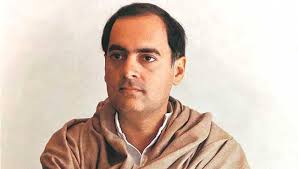
New Delhi, Jul 21: The Centre today asserted in the Supreme Court that the killers of former Prime Minister Rajiv Gandhi did nor deserve any mercy as the assassination was the result of a conspiracy involving foreign nationals.
rajiv
"Our former Prime Minister was killed by these people. There was a conspiracy to kill him in which foreign nationals were also involved. What mercy is to be seen or shown? This is to be looked by you (apex court).

"Their mercy plea was rejected by the President and also by the Governor (of Tamil Nadu). So what mercy is being argued?" Solicitor General Ranjit Kumar told a bench a five-judge Constitution Bench headed by Chief Justice H L Dattu.

Among the seven convicts, V Sriharan alias Murugan, Santhan, Robert Pious and Jaya Kumar were Sri Lankan nationals while female convict Nalini, Ravichandran and Arivu are Indians.

The bench was hearing the maintainability of the Centre's petition opposing Tamil Nadu government's decision to remit the life sentences and set free seven convicts in Rajiv Gandhi assassination case.

The issue of mercy was raised by senior advocates Ram Jethmalani who was appearing for Murugan and traced the history of judicial proceedings.

Earlier the court, on the plea of the erstwhile UPA government, had stayed Tamil Nadu's decision to set free all the seven convicts after remitting their sentences. It had framed seven questions to be decided by a Constitution bench on the scope of executives' power of remission.

However, Jethmalani and Tamil Nadu government's senior counsel Rakesh Dwivedi questioned the maintainability of the Centre's petition saying the Article 32 petition cannot be invoked by the Centre as it did not concern any violation of the fundamental rights with which the state is affected.

The hearing witnessed a debate during which the court said the Centre has a parental duty to voice the grief of victims of the 1991 assassination in Sriperumbudur.

"The Supreme Court commuted the convicts' death penalty to life. The victims did not complain. But here the state government further tinkers with our judgement. Can CBI through the Centre not move under Article 32 of the Constitution? After all, it's CBI probe which got them death penalty," the bench, also comprising Justices F M I Kalifulla, Pinaki Chandra Ghosh, Abhay Manohar Sapre and U U Lalit observed.

The bench said "when CBI is expressing the rights of the victims, then certainly we can entertain the petition of Union of India. CBI as an ivestigator and prosecutor was concerned with the case and if somebody tries to tinker with the case, can't they come before us?"

"If the state tries to tinker, can't CBI come and say I provided protection to this person and can't I come to protect them in this court?" it said.

However, Dwivedi said the role of CBI comes to an end with the case reaching finality in courts and here the apex court has already pronounced its judgement.

When the bench said it was going to examine who has the executive power of remission -- the Centre or the state government - in the cases investigated and prosecuted by the Central probe agencies, the Tamil Nadu counsel said "it is a tough question and there is a tough conflict. It is the issue."

The bench said it would be examining whether there was an application of mind by Tamil Nadu government in remitting the life sentences of the seven convicts.

"CBI was the prosecutor on behalf of the victims and the state. Now, the rights of victims have been tinkered by the executive order of the state. So, the fundamental rights of the victim is affected and the fundamental rights of the victim is looked after by the Union of India.

"When the matter is entrusted to CBI, who will have the power to remission? This is an intense question and needs deeper consideration," the bench observed while addressing various issues including whether the state can file a writ petition under Article 32 of the Constitution in public interest.

The Solicitor General submitted that 18 persons were killed and 48 were critically injured in the 1991 blast and "it is the government who has to take care of interests of the victims. The concept of parens patriae kicks in".

However, the bench also posed some questions to the Centre saying "once we have commuted the death penalty to life, the ball is in the state government's court to decide whether to use its power of remission to release the convicts or not.

"Now, here the State says they have been in prison for 23 years and that is enough... so why do you come to us like a public-spirited person?" the bench asked the Centre. The Solicitor General responded by saying "life imprisonment is till the end of life. You cannot just release them."

However, Jethmalani raised the issue of liberty of the convicts who have been in prison for over two decases. He was asked by the bench not to go into the merits of the case and restrict his arguments on maintainability.

The Solicitor General submitted that Tamil Nadu has at no stage since April 25, 2014, the date of reference, in any proceeding let alone filing of a miscellaneous petition or an application or otherwise by a review, sought to impress upon the court nor did it do so before the Constitution bench on July 9, 2014 when notices were issued to all the states that the writ petition itself being not maintainable, why should the referal at all be decided.

"In that view of the matter, it is the submission of the Union that Tamil Nadu is stopped from raising any such issue of maintainability especially in the light of the fact that larger and more important questions of law are required to be decided and a purposive/authoritative pronouncement made by the Constitution bench," Kumar said.

He said even assuming there is this question of maintainability to be gone into, then it is the submission of Union of India that the filing of the writ petition and its maintainability is fully supported by the law in place in this regard not only by virtue of the 2008 Amendment in the Code of Criminal Procedure but also by the case law on the subject.

It is the submission of the Union of India that the accused persons have violated the fundamental rights of the victims and their families in committing the crime and when this court entertained the writ petition filed by the convicts for commuting the sentences, which happened after the date of Amendment of the above provisions in the Code, the convicts did not make the victims or their families parties to the litigation, the Centre said.

"The victims were neither noticed nor heard in the matter before commuting any of the sentences. They ought to have been given an opportunity to argue against the commutation.

"Therefore comes the role of the Union of India in the capacity of 'parens patriae' which has been developed over a long period of time and which has the effect, by virtue of the precedential case law, that the state is the guardian of all especially in crimes the victims who suffer at the hands of the accused and such like persons. Therefore, the maintainability of the instant writ petition cannot be questioned," the Centre submitted.

The apex court had on February 20 last year stayed the state government's decision to release three convicts Murugan, Santhan and Arivu whose death sentence was commuted to life term by it two days before.

It had later also stayed the release of four other convicts Nalini, Robert Pious, Jayakumar and Ravichandran, saying there were procedural lapses on the part of the state government.

Santhan, Murugan and Arivu are currently lodged in the Central Prison, Vellore. The other four are also undergoing life sentence for their role in Gandhi's assassination on May 21, 1991 in Sriperumbudur.

"The issue of such a nature has been raised for the first time in this Court, which has wide ramification in determining the scope of application of power of remission by the executives, both the Centre and the State.

"Accordingly, we refer this matter to the Constitution Bench to decide the issue pertaining to whether once power of remission under Article 72(by the President) or 161 (by Governor)or by this Court exercising Constitutional power under Article 32 is exercised, is there any scope for further consideration for remission by the executive," the apex court had said while referring the matter to the Constitution bench.

It had said the Constitution bench would decide whether the sentence of a prisoner, whose death penalty has been commuted to life, can be remitted by the government.

Such a bench would also decide whether life imprisonment meant jail term for rest of the life or a convict has a right to claim remission, it had said.

Another issue for the Constitution bench to decide would be whether a special category of sentence may be made for cases where death penalty might be substituted by imprisonment for life or imprisonment for a term in excess of 14 years and to put that category beyond application of remission.

It will also decide whether the Union of India or the State has primacy over the subject matter enlisted in concurrent list of the Seventh Schedule of the Constitution for exercise of power of remission.

The Centre had opposed the decision taken by Tamil Nadu government on remission of sentence, saying that the state has no power of take such a decision and the remission in the present case is illegal and without jurisdiction.


Comments

Add new comment

  • Coastaldigest.com reserves the right to delete or block any comments.
  • Coastaldigset.com is not responsible for its readers’ comments.
  • Comments that are abusive, incendiary or irrelevant are strictly prohibited.
  • Please use a genuine email ID and provide your name to avoid reject.
News Network
December 16,2025

jordan.jpg

Prime Minister Narendra Modi on Monday held talks with Jordan’s King Abdullah II in Amman, during which the two leaders discussed ways to further strengthen bilateral relations, with the Prime Minister outlining an eight-point vision covering key areas of cooperation.

Describing the meeting as “productive”, PM Modi said he shared a roadmap focused on trade and economy, fertilisers and agriculture, information technology, healthcare, infrastructure, critical and strategic minerals, civil nuclear cooperation, and people-to-people ties.

In a post on social media platform X, the Prime Minister praised King Abdullah II’s personal commitment to advancing India–Jordan relations, particularly as both countries mark the 75th anniversary of the establishment of diplomatic ties this year.

“Held productive discussions with His Majesty King Abdullah II in Amman. His personal commitment towards vibrant India-Jordan relations is noteworthy. This year, we are celebrating the 75th anniversary of our bilateral diplomatic relations,” PM Modi said.

The meeting took place at the Al Husseiniya Palace, where the two leaders also exchanged views on regional and global issues of mutual interest. According to the Ministry of External Affairs (MEA), both sides agreed to further deepen cooperation in areas including trade and investment, defence and security, counter-terrorism and de-radicalisation, fertilisers and agriculture, infrastructure, renewable energy, tourism, and heritage.

The MEA said both leaders reaffirmed their united stand against terrorism.

PM Modi arrived in Amman earlier on Monday and was received by Jordanian Prime Minister Jafar Hassan, who accorded him a formal welcome. Following the talks, King Abdullah II hosted a banquet dinner in honour of the Prime Minister, reflecting the warmth of bilateral ties.

Jordan is the first leg of PM Modi’s three-nation tour. From Amman, the Prime Minister will travel to Ethiopia at the invitation of Prime Minister Abiy Ahmed Ali, marking his first official visit to the African nation. The tour will conclude with a visit to Oman.

Comments

Add new comment

  • Coastaldigest.com reserves the right to delete or block any comments.
  • Coastaldigset.com is not responsible for its readers’ comments.
  • Comments that are abusive, incendiary or irrelevant are strictly prohibited.
  • Please use a genuine email ID and provide your name to avoid reject.
News Network
December 4,2025

indigocrisis.jpg

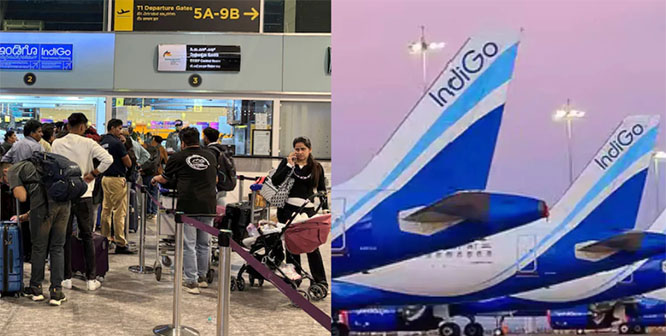
Angry outbursts, long queues, and desperate appeals filled airports across India today as IndiGo grappled with a severe operational breakdown. Hundreds of flights have been cancelled or delayed, leaving thousands of passengers stranded through the night and forcing many to spend long hours at helpdesks.

Social media was flooded with videos of fliers pleading for assistance, accusing the airline of misleading updates, and demanding accommodation after being stuck for 10 to 12 hours at airports such as Hyderabad and Bengaluru.

What Triggered the Meltdown?

IndiGo has attributed the widespread disruption to “a multitude of unforeseen operational challenges.” These include:

•    Minor technology glitches
•    Winter-season schedule adjustments
•    Bad weather
•    Congestion in the aviation network
•    New crew rostering rules (Flight Duty Time Limitations or FDTL)

Among these, the most disruptive has been the implementation of the updated FDTL norms introduced by the Directorate General of Civil Aviation (DGCA) in January 2024.

These rules were designed to reduce pilot fatigue and improve passenger safety. Key changes include:

•    Longer weekly rest periods for flight crew
•    A revised definition of “night,” extending it by an extra hour
•    Tighter caps on flight duty timing and night landings
•    Cutting night shifts for pilots and crew from six per roster cycle to just two

Once these norms became fully enforceable, airlines were required to overhaul rosters well in advance. For IndiGo, this triggered a sudden shortage of crew available for duty, leading to cascading delays and cancellations.

Why IndiGo Was Hit the Hardest

IndiGo is India’s largest airline by a wide margin, operating over 2,200 flights daily. That’s roughly double the number operated by Air India.

When an airline of this size experiences even a 10–20% disruption, it translates to 200–400 flights being delayed or grounded — producing massive spillover effects across the country.

IndiGo also relies heavily on high-frequency overnight operations, a model typical of low-cost carriers that aim to maximise aircraft utilisation and reduce downtime. The stricter FDTL norms clash with these overnight-heavy schedules, forcing the airline to pull back services.

Aviation bodies have also criticised IndiGo’s preparedness. The Airline Pilots' Association of India (ALPA) said airlines were given a two-year window to plan for the new rules but “started preparing rather late.” IndiGo, it said, failed to rebuild crew rosters 15 days in advance as required.

The Federation of Indian Pilots (FIP) went further, calling the crisis the result of IndiGo’s “prolonged and unorthodox lean manpower strategy,” and alleging that the airline adopted a hiring freeze even as it knew the new rules would require more careful staffing.

How Many Flights Are Affected?

In the past 48 hours, over 300 flights have been cancelled. At least 100 more are expected to be cancelled today.

City-wise impact:

•    Hyderabad: 33 expected cancellations; several fliers stranded overnight
•    Bengaluru: over 70 expected cancellations
•    Delhi, Mumbai, Chennai, Kolkata: widespread delays and missed connections

Passengers shared distressing accounts online.

One customer at Hyderabad airport said they waited from 6 PM to 9 AM with “no action taken” regarding their delayed Pune flight. Another said IndiGo repeatedly told them the crew was “arriving soon,” only for the delay to stretch over 12 hours.

IndiGo has apologised for the disruption and promised that operations will stabilise within 48 hours, adding that “calibrated adjustments” are being made to contain the chaos.

What Should Passengers Do Now?

For those flying in the next few days, especially with IndiGo, here are key precautions:

1. Keep Checking Flight Status
Monitor your flight closely before leaving for the airport, as delays may be announced last-minute.

2. Arrive Early
Expect long queues at counters and security due to crowding and rescheduling.

3. Carry Essentials
Pack snacks, water, basic medicines, chargers, and items for children or senior citizens. Extended waiting times should be anticipated.

4. Use Flexible Booking Options
If you booked tickets with a free-date-change or cancellation option, consider using them.
If you haven’t booked yet, prefer refundable or flexible fares, or even consider alternate airlines.

5. Follow IndiGo’s Updates
Keep an eye on IndiGo’s official social media channels and contact customer support for rebooking and refund queries.

What Needs to Change?

Pilot groups have raised concerns not just about staffing but also the planning practices behind it.
The Federation of Indian Pilots accused IndiGo of:

•    Imposing an unexplained hiring freeze despite knowing the FDTL changes were coming
•    Entering non-poaching agreements that limited talent movement
•    Keeping pilot pay frozen
•    Underestimating the need to restructure operations in advance

They have urged DGCA to approve seasonal schedules only after airlines prove they have adequate pilot strength under the new norms.

ALPA also warned that some airlines might be using the delays as an “immature pressure tactic” to push DGCA for relaxations in the new rules — which, if granted, could compromise the very safety standards the norms were meant to protect.

Both pilot bodies stressed that no exemption should dilute safety, and any deviations should be based solely on scientific risk assessment.

Is a Solution in Sight?

While IndiGo says normalcy will return within two days, aviation experts believe that fully stabilising operations could take longer, depending on how quickly the airline can:
•    Re-align rosters
•    Mobilise rested crew
•    Boost staffing
•    Adjust its winter schedule to match regulatory requirements
Passengers are advised to remain prepared for continued delays over the next few days as the airline works through its backlog. 

Comments

Add new comment

  • Coastaldigest.com reserves the right to delete or block any comments.
  • Coastaldigset.com is not responsible for its readers’ comments.
  • Comments that are abusive, incendiary or irrelevant are strictly prohibited.
  • Please use a genuine email ID and provide your name to avoid reject.
News Network
December 4,2025

indigoflight.jpg

Domestic carrier IndiGo has cancelled over 180 flights from three major airports — Mumbai, Delhi and Bengaluru — on Thursday, December 4, as the airline struggles to secure the required crew to operate its flights in the wake of new flight-duty and rest-period norms for pilots.

While the number of cancellations at Mumbai airport stands at 86 (41 arrivals and 45 departures) for the day, at Bengaluru, 73 flights have been cancelled, including 41 arrivals, according to a PTI report that quoted sources.

"IndiGo cancelled over 180 flights on Thursday at three airports-Mumbai, Delhi and Bengaluru," the source told the news agency.

Besides, it had cancelled as many as 33 flights at Delhi airport for Thursday, the source said, adding, "The number of cancellations is expected to be higher by the end of the day."

The Gurugram-based airline's On-Time Performance (OTP) nosedived to 19.7 per cent at six key airports — Delhi, Mumbai, Chennai, Kolkata, Bengaluru and Hyderabad — on December 3, as it struggled to get the required crew to operate its services, down from almost half of December 2, when it was 35 per cent.

"IndiGo has been facing acute crew shortage since the implementation of the second phase of the FDTL (Flight Duty Time Limitations) norms, leading to cancellations and huge delays in its operations across the airports," a source had told PTI on Wednesday.

Chaos continued at several major airports for the third day on Thursday because of the cancellations.

A spokesperson for the Kempegowda International Airport (KIA) in Bengaluru said that 73 IndiGo flights had been cancelled on Thursday.

At least 150 flights were cancelled and dozens of others delayed on Wednesday, airport sources said, leaving thousands of travellers stranded, according to news agency Reuters.

The Directorate General of Civil Aviation (DGCA) has said it is investigating IndiGo flight disruptions and has asked the airline to submit the reasons for the current situation, as well as its plans to reduce flight cancellations and delays.

It may be mentioned here that the pilots' body, Federation of Indian Pilots (FIP), has alleged that IndiGo, despite getting a two-year preparatory window before the full implementation of new flight duty and rest period norms for cockpit crew, "inexplicably" adopted a "hiring freeze".

The FIP said it has urged the safety regulator, the DGCA, not to approve airlines' seasonal flight schedules unless they have adequate staff to operate their services "safely and reliably" in accordance with the New Flight Duty Time Limitations (FDTL) norms.

In a letter to the DGCA late on Wednesday, the FIP urged the DGCA to consider re-evaluating and reallocating slots to other airlines, which have the capacity to operate them without disruption during the peak holiday and fog season if IndiGo continues to "fail in delivering on its commitments to passengers due to its own avoidable staffing shortages."

Comments

Add new comment

  • Coastaldigest.com reserves the right to delete or block any comments.
  • Coastaldigset.com is not responsible for its readers’ comments.
  • Comments that are abusive, incendiary or irrelevant are strictly prohibited.
  • Please use a genuine email ID and provide your name to avoid reject.