Nobel 2017 season opens with medicine prize

Agencies
October 2, 2017

Stockholm, Oct 2: This year's Nobel season opens Monday with the announcement of the medicine prize, turning the page on Bob Dylan's literature prize stunner that stole the spotlight in last year's award season.

Like every year, speculation is rife about the possible winners, given the number of worthy laureates in the fields of medicine, physics, chemistry, literature, peace and economics.

The Nobel medicine prize committee at the Karolinska Institute is first out to announce its choice of laureates, on Monday at 11:30 am (0930 GMT) at the earliest.

Sweden's newspaper of reference, Dagens Nyheter, suggested American oncologist Dennis Slamon could be honoured for his research on breast cancer and the drug treatment Herceptin.

Or possibly American James Allison, a pioneer in the field of immunotherapy that combats cancer cells and the winner of the 2015 Lasker Prize -- often considered the US equivalent of a Nobel medicine prize. If this method were awarded, Allison could share the prize with Arlene Sharpe and Gordon Freeman.

Meanwhile Swedish public radio SR tipped the prize could go to researchers who worked on a cure for Hepatitis C, Ralf Bartenschlager of Germany and Americans Charles Rice and Michael Sofia -- a trio also awarded the Lasker Prize, in 2016.

Waves, scissors or batteries?

The medicine prize will be followed by the physics prize announcement on Tuesday, with the discovery of gravitational waves regularly mentioned as a possible winner.

Sending ripples through space and time, gravitational waves were first predicted by Albert Einstein a century ago as part of his theory of general relativity, but the first hard evidence of their existence came only in 2015, when two US detectors found the first such signal.

That discovery could however be considered too recent by the Nobel committee.

According to Dagens Nyheter, the jury could instead choose to honour the discovery of exoplanets by Swiss astrophysicians Michel Mayor and Didier Queloz.

On Wednesday, the chemistry prize committee could give the nod to a gene-editing technique known as the CRISPR-Cas9 DNA snipping tool, a type of genetic "scissors" used to cut out a mutated gene in a human embryo and replace it by a corrected version.

But that discovery could also be too early for a Nobel, as a legal dispute rages over who discovered the technique.

It has been claimed on the one hand by the French-American research duo of Emmanuelle Charpentier and Jennifer Doudna, and on the other by Chinese-born American Feng Zhang.

Another recurring favourite for the chemistry prize is John Goodenough, a 95-year old electrochemist whose pioneering work led to the invention of rechargeable lithium ion battery present in cell phones, computers and electric cars.

Anti-nuke buzz for peace prize

Perhaps the most watched Nobel is the peace prize, the only one to be announced in Oslo and due on Friday.

This year, anti-nuclear efforts could win, some have suggested. Tensions have escalated between Washington and Pyongyang after North Korea's sixth nuclear test, and there is growing uncertainty over the Iran deal, which US President Donald Trump has threatened to tear up.

Two key orchestrators of that accord, Iranian Foreign Minister Mohammad Javad Zarif and EU foreign policy chief Federica Mogherini, are seen as strong contenders by the head of the Peace Research Institute of Oslo (Prio), Henrik Urdal.

"With North Korea also at stake, it's very important to support initiatives that guard against the development and proliferation of nuclear weapons," he said.

The names of the candidates are kept secret for at least 50 years, but those eligible to nominate candidates — including former laureates, lawmakers and government ministers around the world, and some university professors — are allowed to disclose their choices.

Those believed to be on the list include Syria's White Helmets rescue service, Congolese doctor Denis Mukwege, jailed Saudi blogger Raif Badawi and Edward Snowden, who revealed the scope of America's NSA electronic surveillance programme.

Meanwhile, the Swedish Academy has yet to set the date for its literature prize announcement, but it traditionally falls on a Thursday so October 5 and 12 are seen as possible dates.

The Academy's choice of US singer songwriter Bob Dylan last year was so divisive that Stockholm's literary circles have predicted the Academy will go for a more conservative name this year, such as Italy's Claudio Magris, Kenya's Ngugi wa Thiong'o, Canadian author Margaret Atwood or Syrian poet Adonis.

The economics prize will be announced on October 9.

This year, each Nobel comes with a nine million kronor ($1.1-million, 940,500-euro) prize sum, to be shared if several laureates are honoured in the same discipline.

Comments

Add new comment

  • Coastaldigest.com reserves the right to delete or block any comments.
  • Coastaldigset.com is not responsible for its readers’ comments.
  • Comments that are abusive, incendiary or irrelevant are strictly prohibited.
  • Please use a genuine email ID and provide your name to avoid reject.
News Network
January 23,2026

Mangaluru: The Karnataka Government Polytechnic (KPT), Mangaluru, has achieved autonomous status from the All India Council for Technical Education (AICTE), becoming the first government polytechnic in the country to receive such recognition in its 78-year history. The status was granted by AICTE, New Delhi, and subsequently approved by the Karnataka Board of Technical Education in October last year.

Officials said the autonomy was conferred a few months ago. Until recently, AICTE extended autonomous status only to engineering colleges, excluding diploma institutions. However, with a renewed national focus on skill development, several government polytechnics across India have now been granted autonomy.

KPT, the second-largest polytechnic in Karnataka, was established in 1946 with four branches and has since expanded to offer eight diploma programmes, including computer science and polymer technology. The institution is spread across a 19-acre campus.

Ravindra M Keni, the first dean of the institution, told The Times of India that AICTE had proposed autonomous status for polytechnic institutions that are over 25 years old. “Many colleges applied. In the first round, 100 institutions were shortlisted, which was further narrowed down to 15 in the second round. We have already completed one semester after becoming an autonomous institution,” he said. He added that nearly 500 students are admitted annually across eight three-year diploma courses.

Explaining the factors that helped KPT secure autonomy, Keni said the institution has consistently recorded 100 per cent admissions and placements for its graduates. He also noted its strong performance in sports, with the college emerging champions for 12 consecutive years, along with active student participation in NCC and NSS activities.

Autonomous status allows KPT to design industry-oriented curricula, conduct examinations, prepare question papers, and manage academic documentation independently. The institution can also directly collaborate with industries and receive priority funding from AICTE or the Ministry of Education. While academic autonomy has been granted, financial control will continue to rest with the state government.

“There will be separate committees for examinations, question paper setting, boards of studies, and boards of examiners. The institution will now have the freedom to conduct admissions without government notifications and issue its own marks cards,” Keni said, adding that new academic initiatives would be planned after a year of functioning under the autonomous framework.

Comments

Add new comment

  • Coastaldigest.com reserves the right to delete or block any comments.
  • Coastaldigset.com is not responsible for its readers’ comments.
  • Comments that are abusive, incendiary or irrelevant are strictly prohibited.
  • Please use a genuine email ID and provide your name to avoid reject.
News Network
January 28,2026

ajit.jpg

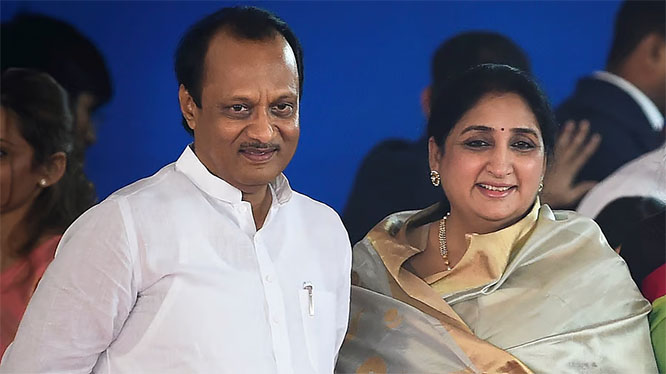
Mumbai: The sudden death of Maharashtra Deputy Chief Minister Ajit Pawar in a plane crash in his hometown of Baramati has plunged the state into political uncertainty, raising a pressing question for both the Nationalist Congress Party (NCP) and its rival faction, the Nationalist Congress Party (Sharadchandra Pawar): what next?

For the two factions that emerged after the dramatic split of June–July 2023, the moment marks their gravest challenge yet. Many believe the answer now rests with party founder Sharad Pawar.

Sharad Pawar, who founded the NCP in 1999 after parting ways with the Congress over Sonia Gandhi’s foreign origin, has already indicated his intention to step away from electoral politics once his Rajya Sabha term ends in April 2026.

Speaking at a public event in Baramati ahead of his 85th birthday on December 12, 2025, Pawar said he would not contest any further elections. “I have contested 14 elections. The younger generation needs to be given an opportunity,” he said, adding that he would decide later whether to seek another Rajya Sabha term.

Often described as the Bhishma Pitamah of Indian politics, Pawar also spoke of his gradual withdrawal from active leadership. “For the first 30 years, I handled everything. For the next 25–30 years, Ajit Dada handled responsibilities. Now, arrangements must be made for new leadership,” he said.

Ajit Pawar’s death has dramatically altered that transition, especially as he was working towards reunifying the two NCP factions.

“After the developments of June–July 2023 and the 2024 Lok Sabha and Vidhan Sabha elections, there were deep changes within the family and the party. In the last six months, serious efforts were made to reunite. Even workers from both sides wanted unity. This is a massive blow,” a Pawar family insider told DH over phone from Baramati.

Electoral outcomes over the past year reflected the split. In the 2024 Lok Sabha elections, NCP (SP) recorded the best strike rate in Maharashtra, winning eight of the 10 seats it contested. The NCP, by contrast, won just one seat out of four.

However, the trend reversed in the subsequent Vidhan Sabha elections, where the NCP emerged stronger, securing 41 of the 288 seats, while NCP (SP) managed only 10.

Within NCP (SP), Sharad Pawar’s daughter Supriya Sule serves as Working President, followed by leaders such as Rohit Pawar, state president Shashikant Shinde and former state chief Jayant Patil.

In the NCP, Praful Patel is the Working President and Raigad MP Sunil Tatkare heads the state unit. Ajit Pawar’s wife, Sunetra Pawar, is a Rajya Sabha MP, while their sons Parth and Jay are not actively involved in day-to-day politics. Parth Pawar briefly entered electoral politics in 2019 but lost the Lok Sabha election from Maval. Jay Pawar’s political debut was under consideration.

With Ajit Pawar gone, speculation has intensified that a member of the family may be asked to assume a larger role. For now, Sunetra Pawar is expected to play a key coordinating role in party affairs, alongside Patel and Tatkare.

The NCP continues to have several heavyweight leaders, including Chhagan Bhujbal, Hasan Mushrif, Dattatreya Bharne, Manikrao Kokate and Dhananjay Munde.

Ajit Pawar had already begun steps towards reconciliation between the two factions. While they contested the Pune and Pimpri-Chinchwad municipal elections separately, they later decided to fight the zilla parishad elections together under the ‘clock’ symbol—seen as the first formal step towards reunification.

Nagpur meet and party roadmap

Both NCP factions claim adherence to the ideology of ‘Shiv–Shahu–Phule–Ambedkar’. At the Rashtravadi Chintan Shivir held in Nagpur on September 19, 2025, the NCP reaffirmed its commitment to sarva dharma sambhav and discussed strengthening ties with the BJP “for the welfare and development of Maharashtra”.

In recent days, reports had suggested Ajit Pawar might return to the Maha Vikas Aghadi following the party’s poor performance in Pune municipal elections, but these claims were denied.

Big question for Maha Yuti

Ajit Pawar’s death also presents an immediate challenge for the Devendra Fadnavis-led Maha Yuti government. Pawar held crucial portfolios, including Finance, Planning and Excise. With the Budget Session approaching, appointing a new Finance Minister has become urgent.

Beyond numbers and portfolios, Maha Yuti has lost a swift decision-maker known for his administrative grip and political finesse—leaving a vacuum that will not be easy to fill.

Comments

Add new comment

  • Coastaldigest.com reserves the right to delete or block any comments.
  • Coastaldigset.com is not responsible for its readers’ comments.
  • Comments that are abusive, incendiary or irrelevant are strictly prohibited.
  • Please use a genuine email ID and provide your name to avoid reject.
News Network
January 23,2026

modIKERALA.jpg

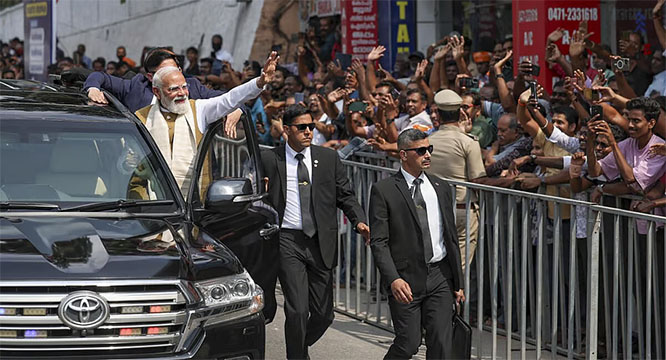
Prime Minister Narendra Modi, during his visit to Thiruvananthapuram on Friday, January 23, indicated that the Bharatiya Janata Party (BJP) is aiming to expand its political footprint in Kerala ahead of the Assembly elections scheduled in the coming months.

Speaking at a BJP-organised public meeting, Modi drew parallels between the party’s early electoral gains in Gujarat and its recent victory in the Thiruvananthapuram Municipal Corporation. The civic body win, which ended decades of Left control, was cited by the Prime Minister as a possible starting point for the party’s broader ambitions in the state.

Recalling BJP’s political trajectory in Gujarat, Modi said the party was largely insignificant before 1987 and received little media attention. He pointed out that the BJP’s first major breakthrough came with its victory in the Ahmedabad Municipal Corporation that year.

“Just as our journey in Gujarat began with one city, Kerala’s journey has also started with a single city,” Modi said, suggesting that the party’s municipal-level success could translate into wider electoral acceptance.

The Prime Minister alleged that successive governments led by the Left Democratic Front (LDF) and the United Democratic Front (UDF) had failed to adequately develop Thiruvananthapuram. He accused both fronts of corruption and neglect, claiming that basic infrastructure and facilities were denied to the capital city for decades.

According to Modi, the BJP’s control of the civic body represents a shift driven by public dissatisfaction with the existing political alternatives. He asserted that the BJP administration in Thiruvananthapuram had begun working towards development, though no specific details or timelines were outlined.

Addressing the gathering at Putharikandam Maidan, Modi said the BJP intended to project Thiruvananthapuram as a “model city,” reiterating his party’s commitment to governance-led change.

The Prime Minister’s visit to Kerala also included the inauguration of several development projects and the flagging off of new train services, as the BJP intensifies its political outreach in the poll-bound state.

Comments

Add new comment

  • Coastaldigest.com reserves the right to delete or block any comments.
  • Coastaldigset.com is not responsible for its readers’ comments.
  • Comments that are abusive, incendiary or irrelevant are strictly prohibited.
  • Please use a genuine email ID and provide your name to avoid reject.