One million species risk extinction due to humans: draft UN report

Agencies
April 24, 2019

UN, Apr 24: Up to one million species face extinction due to human influence, according to a draft UN report obtained by AFP that painstakingly catalogues how humanity has undermined the natural resources upon which its very survival depends.

The accelerating loss of clean air, drinkable water, CO2-absorbing forests, pollinating insects, protein-rich fish and storm-blocking mangroves -- to name but a few of the dwindling services rendered by Nature -- poses no less of a threat than climate change, says the report, set to be unveiled May 6.

Indeed, biodiversity loss and global warming are closely linked, according to the 44-page Summary for Policy Makers, which distills a 1,800-page UN assessment of scientific literature on the state of Nature.

Delegates from 130 nations meeting in Paris from April 29 will vet the executive summary line-by-line.

Wording may change, but figures lifted from the underlying report cannot be altered.

"We need to recognise that climate change and loss of Nature are equally important, not just for the environment, but as development and economic issues as well," Robert Watson, chair of the UN-mandated body that compiled the report, told AFP, without divulging its findings.

"The way we produce our food and energy is undermining the regulating services that we get from Nature," he said, adding that only "transformative change" can stem the damage.

Deforestation and agriculture, including livestock production, account for about a quarter of greenhouse gas emissions, and have wreaked havoc on natural ecosystems as well.

The Intergovernmental Science-Policy Platform on Biodiversity and Ecosystem Services (IPBES) report warns of "an imminent rapid acceleration in the global rate of species extinction." The pace of loss "is already tens to hundreds of times higher than it has been, on average, over the last 10 million years," it notes. "Half-a-million to a million species are projected to be threatened with extinction, many within decades." Many experts think a so-called "mass extinction event" -- only the sixth in the last half-billion years -- is already under way.

The most recent saw the end of the Cretaceous period some 66 million years ago, when a 10-kilometre-wide asteroid strike wiped out most lifeforms.

Scientists estimate that Earth is today home to some eight million distinct species, a majority of them insects.

A quarter of catalogued animal and plant species are already being crowded, eaten or poisoned out of existence.

The drop in sheer numbers is even more dramatic, with wild mammal biomass -- their collective weight -- down by 82 per cent.

Humans and livestock account for more than 95 per cent of mammal biomass.

"If we're going to have a sustainable planet that provides services to communities around the world, we need to change this trajectory in the next ten years, just as we need to do that with climate," noted WWF chief scientist Rebecca Shaw, formerly a member of the UN scientific bodies for both climate and biodiversity.

The direct causes of species loss, in order of importance, are shrinking habitat and land-use change, hunting for food or illicit trade in body parts, climate change, pollution, and alien species such as rats, mosquitoes and snakes that hitch rides on ships or planes, the report finds.

"There are also two big indirect drivers of biodiversity loss and climate change -- the number of people in the world and their growing ability to consume," said Watson. Once seen as primarily a future threat to animal and plant life, the disruptive impact of global warming has accelerated.

Shifts in the distribution of species, for example, will likely double if average temperature go up a notch from 1.5 degrees Celsius (2.7 Fahrenheit) to 2 C.

So far, the global thermometer has risen 1C compared with mid-19th century levels.

The 2015 Paris Agreement enjoins nations to cap the rise to "well below" 2C.

But a landmark UN climate report in October said that would still be enough to boost the intensity and frequency of deadly heatwaves, droughts, floods and storms.

Other findings in the report include:

Three-quarters of land surfaces, 40 per cent of the marine environment, and 50 per cent of inland waterways across the globe have been "severely altered".

Many of the areas where Nature's contribution to human wellbeing will be most severely compromised are home to indigenous peoples and the world's poorest communities that are also vulnerable to climate change.

More than two billion people rely on wood fuel for energy, four billion rely on natural medicines, and more than 75 percent of global food crops require animal pollination.

Nearly half of land and marine ecosystems have been profoundly compromised by human interference in the last 50 years.

Subsidies to fisheries, industrial agriculture, livestock raising, forestry, mining and the production of biofuel or fossil fuel energy encourage waste, inefficiency and over-consumption.

The report cautioned against climate change solutions that may inadvertently harm Nature.

The use, for example, of biofuels combined with "carbon capture and storage" -- the sequestration of CO2 released when biofuels are burned -- is widely seen as key in the transition to green energy on a global scale.

But the land needed to grow all those biofuel crops may wind up cutting into food production, the expansion of protected areas or reforestation efforts.

Comments

Add new comment

  • Coastaldigest.com reserves the right to delete or block any comments.
  • Coastaldigset.com is not responsible for its readers’ comments.
  • Comments that are abusive, incendiary or irrelevant are strictly prohibited.
  • Please use a genuine email ID and provide your name to avoid reject.
coastaldigest.com news network
November 29,2025

health1.jpg

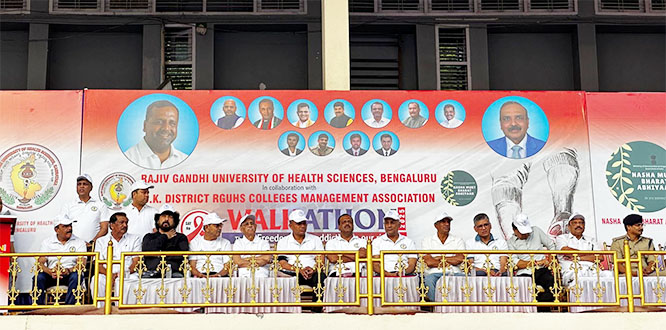
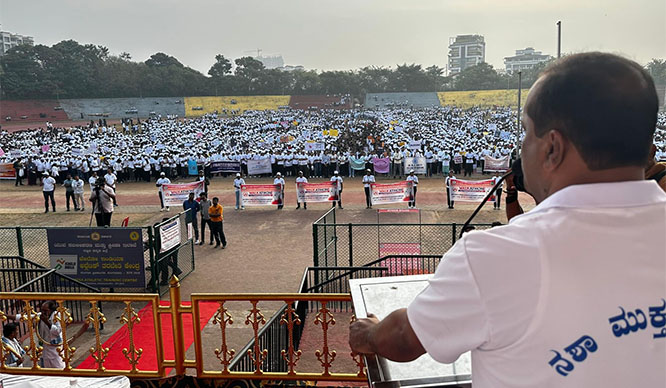
Mangaluru, Nov 29: Around 12,500 healthcare students from Medical, Dental, AYUSH, Pharmacy, Nursing, Physiotherapy and Allied Health Sciences colleges of Dakshina Kannada, affiliated to Rajiv Gandhi University of Health Sciences (RGUHS), took part in a massive walkathon to promote awareness on Organ Donation and Nasha Mukth Bharat.

The inaugural ceremony was held at Mangala Stadium. Dr Bhagavan B C, Hon’ble Vice-Chancellor of RGUHS, delivered the welcome address. The walkathon was flagged off by Shri U T Khader, Hon’ble Speaker of the Karnataka Legislative Assembly, and presided over by Shri Dinesh Gundu Rao, Hon’ble Minister for Health, Family Welfare and Dakshina Kannada District In-charge. Dakshina Kannada MP Shri Brijesh Chowta also addressed the students.

Music director Guru Kiran, MLA Dr Bharat Shetty (Mangalore North), Police Commissioner Shri Sudheer Kumar Reddy, Shri Manjunath Bhandary and Shri Harish Kumar were among those present.

Institution heads including Dr Haji U K Monu (Kanachur Colleges), Dr Shantharam Shetty (Tejaswini College), Dr Bhaskar Shetty (City Group of Colleges), Mr Abdul Rahiman (Kanachur Institute of Medical Sciences), and the District Health Officer, Mangalore, also participated.

The vote of thanks was delivered by Prof U T Ifthikar Fareed, Syndicate Member, RGUHS.

The event was organised by Dr U T Ifthikar Ali and Dr Shiva Sharan (Syndicate Members), Prof Vaishali (Senate Member), Prof Mohammad Suhail (Chairman, BOS Physiotherapy), Dr Sharan Shetty (Former Senate Member), along with principals and faculty of various colleges.

Students marched from Mangala Stadium to Karavali Grounds via MCC and Lalbagh signal. The event set a record as one of the largest gatherings of healthcare students for a social cause in the RGUHS Dakshina Kannada Zone.

health7.jpg

health6.jpg

health5.jpg

health4.jpg

health3.jpg

health2.jpg

Comments

Add new comment

  • Coastaldigest.com reserves the right to delete or block any comments.
  • Coastaldigset.com is not responsible for its readers’ comments.
  • Comments that are abusive, incendiary or irrelevant are strictly prohibited.
  • Please use a genuine email ID and provide your name to avoid reject.
News Network
November 27,2025

Bengaluru, Nov 27: Karnataka Chief Minister Siddaramaiah’s camp is reportedly on alert as the Congress leadership tussle in the state intensifies, particularly amid speculation over the potential promotion of Deputy Chief Minister D.K. Shivakumar. Siddaramaiah is said to be in a “wait-and-watch” mode after admitting to “confusion” earlier this week and urging the party to “put a full stop” to it.

Sources say his supporters are ready to act if senior leaders — including party chief Mallikarjun Kharge, Sonia Gandhi, and Rahul Gandhi — give any indication of backing Shivakumar. If the party insists on a leadership change, Siddaramaiah’s camp has a list of alternatives, underscoring the deep rift between the two leaders. One possible candidate is Home Minister G. Parameshwara, a Siddaramaiah loyalist and influential Dalit leader.

The strategy was reportedly finalized at a meeting led by PWD Minister Satish Jarkiholi, another Siddaramaiah supporter, who stressed that Delhi leaders need to resolve the issue. Kharge and the Gandhis are expected to meet soon, after which Siddaramaiah and Shivakumar may be summoned to Delhi.

Shivakumar has largely stayed non-confrontational, publicly endorsing Siddaramaiah and downplaying speculation about his own ambitions. However, he has made pointed comments emphasizing the importance of honoring promises, directed at Siddaramaiah.

The feud traces back to the 2023 state election, when Siddaramaiah was chosen as Chief Minister while Shivakumar, who led the party’s campaign, was made Deputy CM and state party chief — a departure from the Congress’ usual “one post per person” rule.

There were also hints of a prior understanding that Siddaramaiah would step down midway through the term. As the halfway mark passed last week, Shivakumar-aligned lawmakers have ramped up pressure on the party for a leadership change, with Shivakumar himself hinting at stepping down as state party chief to pursue the top job.

Comments

Add new comment

  • Coastaldigest.com reserves the right to delete or block any comments.
  • Coastaldigset.com is not responsible for its readers’ comments.
  • Comments that are abusive, incendiary or irrelevant are strictly prohibited.
  • Please use a genuine email ID and provide your name to avoid reject.
P A Hameed Padubidri
November 26,2025

CD.jpg

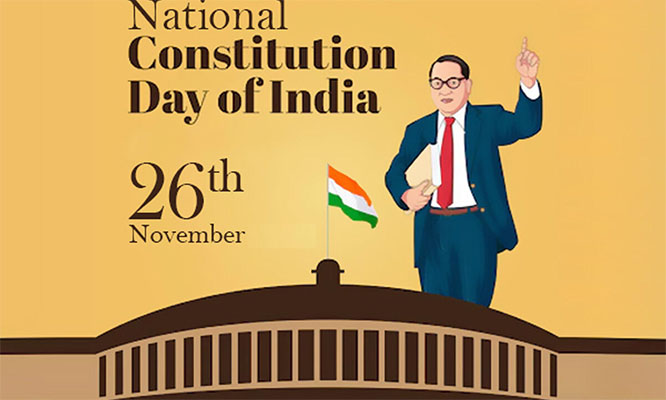
Constitution Day, also known as Samvidhan Divas, is observed every year on November 26 to honor the adoption of the Constitution of India and to recognize the visionary effort that shaped the world’s largest democracy.

Historical Background

It’s on November 26, 1949, the Constituent Assembly of India formally adopted the Constitution.This date is commemorated to acknowledge the completion of nearly three years of drafting, debate, and refinement.

On January 26, 1950, the Constitution came into force, marking India’s transition from a dominion to a sovereign republic.

The date 26 January was chosen to honor the “Purna Swaraj” declaration made in 1930 that marked the relentless efforts & sacrifices of the many. 

Why Constitution Day is Celebrated

* To honor & remember the framers of the Constitution, especially Dr. B. R. Ambedkar, the Chairman of the Drafting Committee, & many others. 

* To remind the citizens of the values, responsibilities, and rights enshrined in the Constitution.

* To promote constitutional values & literacy among students, institutions, and the general public.

* To reaffirm the nation’s commitment to justice, equality, liberty, fraternity and secular values. 

Vision and Significance of the Constitution

It establishes the fundamental political and legal framework for the nation.

Defines the structure, powers and functions of:
    •    The Executive
    •    The Legislature
    •    The Judiciary
    •    Guarantees a comprehensive set of Fundamental Rights, including:

-Equality before law
-Freedom of speech & expression
-Protection of life and personal liberty
-Freedom of religion
-Embeds Directive Principles of State Policy, guiding governance toward social justice and welfare.
-Introduces Fundamental Duties to ensure civic responsibility among citizens.

Key Features Celebrated on Constitution Day

-The Indian constitution is considered one of the longest written constitutions of the world. It’s systematically drafted considering almost all aspects that properly fits to the country. 

-Blend of multiple global constitutional principles while staying rooted in Indian values and realities.

-Framework that balances Federalism, Secularism, Democracy and Rule of Law. This makes everyone-from President to common man-below the law & are equal in the sight of law. 

-Another feature is that it’s based on built-in mechanisms for amendments, ensuring the Constitution grows with changing needs.

Message of the Day

The core ethos of this  Constitution Day is not merely about looking back at history-it’s a reminder of the continuous duty to protect democratic values, respect diversity and uphold the principles that define India as a sovereign, socialist, secular and democratic republic.

Happy Constitution Day to all my compatriots

Comments

Add new comment

  • Coastaldigest.com reserves the right to delete or block any comments.
  • Coastaldigset.com is not responsible for its readers’ comments.
  • Comments that are abusive, incendiary or irrelevant are strictly prohibited.
  • Please use a genuine email ID and provide your name to avoid reject.