OPEC set to prolong output cut after Saudi-Russia deal

Agencies
July 1, 2019

Vienna, Jul 1: OPEC and its allies are set this week to prolong oil output cuts to further boost prices, after the two biggest players Russia and Saudi Arabia agreed to do so.
Ministers from the 14-nation Organization of the Petroleum Exporting Countries (OPEC) meet in Vienna on Monday to discuss output, before gathering a day later for OPEC+, a group of 24 oil-producing countries that includes Russia.

Russian President Vladimir Putin and OPEC cartel kingpin Saudi Arabia agreed Saturday on the sidelines of the G20 in Osaka to extend their deal which aims to keep oil output low owing to abundant world supplies.

"We will extend this deal, Russia and Saudi Arabia. For how long? We will think about that. For six or nine months. It is possible that it could be up to nine months," Putin said.

OPEC and its oil-producer allies decided in December to trim daily crude output by 1.2 million barrels.

The reduction contributed to oil prices soaring by almost one-third in the first quarter of 2019, boosting precious revenues for OPEC and non-OPEC members alike.

The cartel meanwhile remains on red alert over escalating US-Iran tensions that have fuelled recent strong oil-price gains -- but it and other producers are unlikely to end output cutbacks just yet.

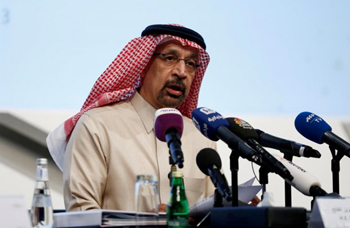
Saudi Arabia's influential energy minister Khalid al-Falih, arriving in Vienna early on Sunday, declared that he wanted the cutbacks which began in January to be extended by nine more months.

"We have to talk about it with the other ministers. My preference will be nine (months)", he told reporters. That would extend the deal to March 2020.

United Arab Emirates energy minister Suhail al-Mazrouei, upon arrival in the Austrian capital, voiced his support to an extension.

"We look forward to a positive meeting, my view is that an extension is needed given the current conditions of the market," he told reporters.

Quizzed about the so-called "pre-deal" unveiled in Osaka, Mazrouei replied: "Each country's voice counts and each country can veto a decision."

OPEC's meeting comes against a background of ample global crude supplies, according to both the cartel and International Energy Agency.

The Paris-based IEA watchdog has cut its forecast for 2019 oil demand-growth for a second straight month and has trimmed also its second-quarter forecast.

Saudi Arabia argues that oil supplies are sufficient, pointing to rising stockpiles despite significant output reduction in sanctions-hit Iran and Venezuela, both members of OPEC.

Falih admitted on Sunday that demand "is softening a little bit" but stressed that he expected demand and supply to strike a balance.

"It is still healthy. So it is likely that the market will balance in due course in six to nine months. So we are happy," he said.

Global oil prices began a sharp ascent in mid-May after the sabotage of several tankers off the Emirati coast.

They jumped further after Washington blamed Tehran for a second spate of such incidents close to the strategic Strait of Hormuz shipping lane in mid-June.

Oil prices rose even more after Iran shot down a US spy drone and President Donald Trump axed retaliatory strikes against Tehran at the last minute.

Worries over the demand backdrop persist -- particularly from the US-China trade war despite a truce agreed over the weekend.

"Geopolitical risk means the supply outlook is tightening, offsetting the moderate weakening in oil demand growth thus far this year," said oil specialist Ann-Louise Hittle at consultancy Wood Mackenzie.

"There is a downside risk for oil demand through the rest of the year if the ongoing trade war intensifies," she added.


Comments

Add new comment

  • Coastaldigest.com reserves the right to delete or block any comments.
  • Coastaldigset.com is not responsible for its readers’ comments.
  • Comments that are abusive, incendiary or irrelevant are strictly prohibited.
  • Please use a genuine email ID and provide your name to avoid reject.
News Network
December 6,2025

pilot.jpg

New Delhi: IndiGo, India’s largest airline, faced major operational turbulence this week after failing to prepare for new pilot-fatigue regulations issued by the Directorate General of Civil Aviation (DGCA). The stricter rules—designed to improve flight safety—took effect in phases through 2024, with the latest implementation on November 1. IndiGo has acknowledged that inadequate roster planning led to widespread cancellations and delays.

Below are the key DGCA rules that affected IndiGo’s operations:

1. Longer Mandatory Weekly Rest

Weekly rest for pilots has been increased from 36 hours to 48 hours.

The government says the extended break is essential to curb cumulative fatigue. This rule remains in force despite the current crisis.

2. Cap on Night Landings

Pilots can now perform only two night landings per week—a steep reduction from the earlier limit of six.

Night hours, defined as midnight to early morning, are considered the least alert period for pilots.

Given the disruptions, this rule has been temporarily relaxed for IndiGo until February 10.

3. Reduced Maximum Night Flight Duty

Flight duty that stretches into the night is now capped at 10 hours.

This measure has also been kept on hold for IndiGo until February 10 to stabilize operations.

4. Weekly Rest Cannot Be Replaced With Personal Leave

Airlines can no longer count a pilot’s personal leave as part of the mandatory 48-hour rest.

Pilots say this closes a loophole that previously reduced actual rest time.

Currently, all airlines are exempt from this rule to normalise travel.

5. Mandatory Fatigue Monitoring

Airlines must submit quarterly fatigue reports along with corrective actions to DGCA.

This system aims to create a transparent fatigue-tracking framework across the industry.

The DGCA has stressed that these rules were crafted to strengthen flight safety and align India with global fatigue-management standards. The temporary relaxations are expected to remain until February 2025, giving IndiGo time to stabilise its schedules and restore normal air travel.

Comments

Add new comment

  • Coastaldigest.com reserves the right to delete or block any comments.
  • Coastaldigset.com is not responsible for its readers’ comments.
  • Comments that are abusive, incendiary or irrelevant are strictly prohibited.
  • Please use a genuine email ID and provide your name to avoid reject.
News Network
November 27,2025

siddDKS.jpg

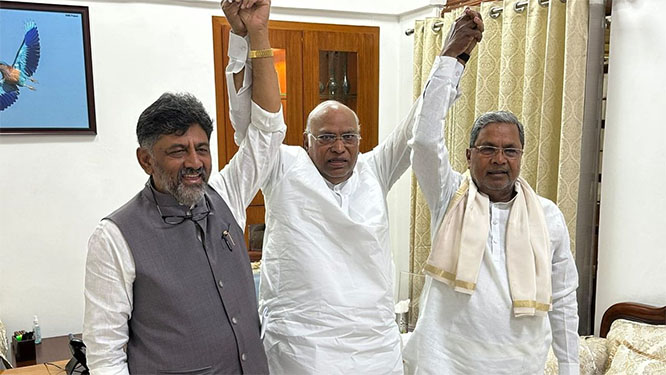
Congress president Mallikarjun Kharge on Thursday announced that he will convene a high-level meeting in New Delhi with senior leaders — including Rahul Gandhi, Karnataka Chief Minister Siddaramaiah and Deputy Chief Minister D.K. Shivakumar — to resolve the escalating leadership turmoil in Karnataka and “put an end to the confusion.”

Kharge said the discussions would focus on the way forward for the ruling party, as rumours of a possible leadership change continue to swirl. The speculation has intensified after the Congress government crossed the halfway mark of its five-year term on November 20, reviving talk of an alleged 2023 “power-sharing agreement” between Siddaramaiah and Shivakumar.

“After reaching Delhi, I will call three or four important leaders and hold discussions. Once we talk, we will decide how to move ahead and end this confusion,” Kharge told reporters in Bengaluru, according to PTI.

When asked specifically about calling Siddaramaiah and Shivakumar to Delhi, he responded: “Certainly, we should call them. We will discuss with them and settle the issue.”

He confirmed that Rahul Gandhi, the Chief Minister, the Deputy Chief Minister and other senior members would be part of the deliberations. “After discussing with everyone, a decision will be made,” he said.

Meanwhile, Siddaramaiah held a separate strategy meeting at his Bengaluru residence with ministers and leaders seen as his close confidants, including G. Parameshwara, Satish Jarkiholi, H.C. Mahadevappa, K. Venkatesh and K.N. Rajanna.
Signalling calm, the Chief Minister told reporters, “Will go to Delhi if the high command calls.”

Shivakumar echoed a similar stance, saying he too would head to the national capital if summoned by the party leadership.

Comments

Add new comment

  • Coastaldigest.com reserves the right to delete or block any comments.
  • Coastaldigset.com is not responsible for its readers’ comments.
  • Comments that are abusive, incendiary or irrelevant are strictly prohibited.
  • Please use a genuine email ID and provide your name to avoid reject.
P A Hameed Padubidri
November 26,2025

CD.jpg

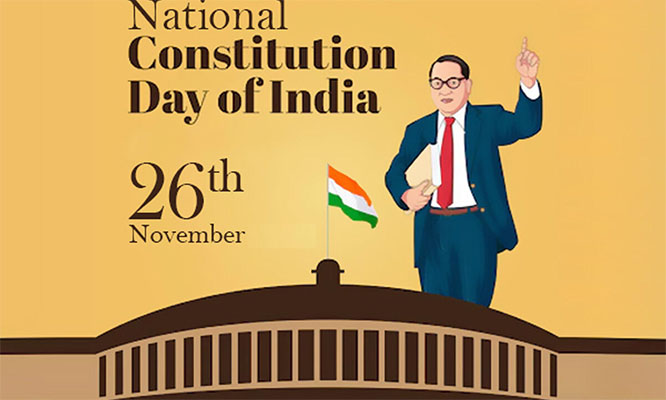
Constitution Day, also known as Samvidhan Divas, is observed every year on November 26 to honor the adoption of the Constitution of India and to recognize the visionary effort that shaped the world’s largest democracy.

Historical Background

It’s on November 26, 1949, the Constituent Assembly of India formally adopted the Constitution.This date is commemorated to acknowledge the completion of nearly three years of drafting, debate, and refinement.

On January 26, 1950, the Constitution came into force, marking India’s transition from a dominion to a sovereign republic.

The date 26 January was chosen to honor the “Purna Swaraj” declaration made in 1930 that marked the relentless efforts & sacrifices of the many. 

Why Constitution Day is Celebrated

* To honor & remember the framers of the Constitution, especially Dr. B. R. Ambedkar, the Chairman of the Drafting Committee, & many others. 

* To remind the citizens of the values, responsibilities, and rights enshrined in the Constitution.

* To promote constitutional values & literacy among students, institutions, and the general public.

* To reaffirm the nation’s commitment to justice, equality, liberty, fraternity and secular values. 

Vision and Significance of the Constitution

It establishes the fundamental political and legal framework for the nation.

Defines the structure, powers and functions of:
    •    The Executive
    •    The Legislature
    •    The Judiciary
    •    Guarantees a comprehensive set of Fundamental Rights, including:

-Equality before law
-Freedom of speech & expression
-Protection of life and personal liberty
-Freedom of religion
-Embeds Directive Principles of State Policy, guiding governance toward social justice and welfare.
-Introduces Fundamental Duties to ensure civic responsibility among citizens.

Key Features Celebrated on Constitution Day

-The Indian constitution is considered one of the longest written constitutions of the world. It’s systematically drafted considering almost all aspects that properly fits to the country. 

-Blend of multiple global constitutional principles while staying rooted in Indian values and realities.

-Framework that balances Federalism, Secularism, Democracy and Rule of Law. This makes everyone-from President to common man-below the law & are equal in the sight of law. 

-Another feature is that it’s based on built-in mechanisms for amendments, ensuring the Constitution grows with changing needs.

Message of the Day

The core ethos of this  Constitution Day is not merely about looking back at history-it’s a reminder of the continuous duty to protect democratic values, respect diversity and uphold the principles that define India as a sovereign, socialist, secular and democratic republic.

Happy Constitution Day to all my compatriots

Comments

Add new comment

  • Coastaldigest.com reserves the right to delete or block any comments.
  • Coastaldigset.com is not responsible for its readers’ comments.
  • Comments that are abusive, incendiary or irrelevant are strictly prohibited.
  • Please use a genuine email ID and provide your name to avoid reject.