OPEC set to prolong output cut after Saudi-Russia deal

Agencies
July 1, 2019

Vienna, Jul 1: OPEC and its allies are set this week to prolong oil output cuts to further boost prices, after the two biggest players Russia and Saudi Arabia agreed to do so.
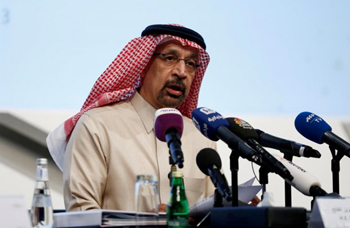
Ministers from the 14-nation Organization of the Petroleum Exporting Countries (OPEC) meet in Vienna on Monday to discuss output, before gathering a day later for OPEC+, a group of 24 oil-producing countries that includes Russia.

Russian President Vladimir Putin and OPEC cartel kingpin Saudi Arabia agreed Saturday on the sidelines of the G20 in Osaka to extend their deal which aims to keep oil output low owing to abundant world supplies.

"We will extend this deal, Russia and Saudi Arabia. For how long? We will think about that. For six or nine months. It is possible that it could be up to nine months," Putin said.

OPEC and its oil-producer allies decided in December to trim daily crude output by 1.2 million barrels.

The reduction contributed to oil prices soaring by almost one-third in the first quarter of 2019, boosting precious revenues for OPEC and non-OPEC members alike.

The cartel meanwhile remains on red alert over escalating US-Iran tensions that have fuelled recent strong oil-price gains -- but it and other producers are unlikely to end output cutbacks just yet.

Saudi Arabia's influential energy minister Khalid al-Falih, arriving in Vienna early on Sunday, declared that he wanted the cutbacks which began in January to be extended by nine more months.

"We have to talk about it with the other ministers. My preference will be nine (months)", he told reporters. That would extend the deal to March 2020.

United Arab Emirates energy minister Suhail al-Mazrouei, upon arrival in the Austrian capital, voiced his support to an extension.

"We look forward to a positive meeting, my view is that an extension is needed given the current conditions of the market," he told reporters.

Quizzed about the so-called "pre-deal" unveiled in Osaka, Mazrouei replied: "Each country's voice counts and each country can veto a decision."

OPEC's meeting comes against a background of ample global crude supplies, according to both the cartel and International Energy Agency.

The Paris-based IEA watchdog has cut its forecast for 2019 oil demand-growth for a second straight month and has trimmed also its second-quarter forecast.

Saudi Arabia argues that oil supplies are sufficient, pointing to rising stockpiles despite significant output reduction in sanctions-hit Iran and Venezuela, both members of OPEC.

Falih admitted on Sunday that demand "is softening a little bit" but stressed that he expected demand and supply to strike a balance.

"It is still healthy. So it is likely that the market will balance in due course in six to nine months. So we are happy," he said.

Global oil prices began a sharp ascent in mid-May after the sabotage of several tankers off the Emirati coast.

They jumped further after Washington blamed Tehran for a second spate of such incidents close to the strategic Strait of Hormuz shipping lane in mid-June.

Oil prices rose even more after Iran shot down a US spy drone and President Donald Trump axed retaliatory strikes against Tehran at the last minute.

Worries over the demand backdrop persist -- particularly from the US-China trade war despite a truce agreed over the weekend.

"Geopolitical risk means the supply outlook is tightening, offsetting the moderate weakening in oil demand growth thus far this year," said oil specialist Ann-Louise Hittle at consultancy Wood Mackenzie.

"There is a downside risk for oil demand through the rest of the year if the ongoing trade war intensifies," she added.

Comments

Add new comment

  • Coastaldigest.com reserves the right to delete or block any comments.
  • Coastaldigset.com is not responsible for its readers’ comments.
  • Comments that are abusive, incendiary or irrelevant are strictly prohibited.
  • Please use a genuine email ID and provide your name to avoid reject.
News Network
November 29,2025

DKSsiddu.jpg

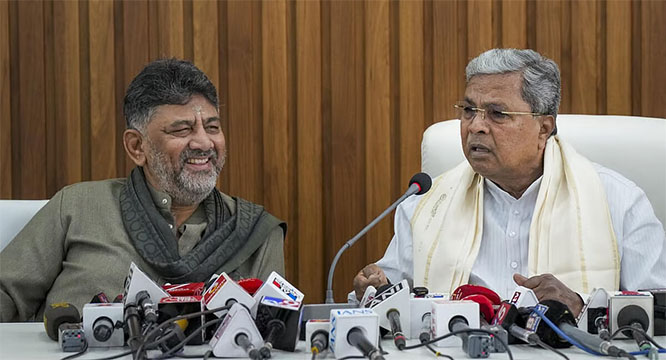
New Delhi: Karnataka chief minister Siddaramaiah and deputy CM DK Shivakumar on Saturday put up a dramatic display of unity at a closely watched joint press briefing, firmly dismissing weeks of speculation about a power-sharing tussle within the Congress. With the high command nudging both leaders to sit together and settle the dust, the meeting became a political spectacle, ending with the duo declaring that there was “no confusion, no differences.”

Calling the reports of a rift “manufactured confusion,” Siddaramaiah said the talks had gone smoothly, even joking about their breakfast. “Breakfast was very good. All three of us enjoyed it,” he said. “We want to end this confusion once and for all. For local elections and for 2028, our mission is clear — Congress must return to power. There is no difference between me and DKS, not now, not before.”

He blamed the media for fuelling rumours and reiterated absolute adherence to the party leadership. “From tomorrow, let there be no confusion. What the high command says, we will follow.”

Siddaramaiah also assured that the Assembly session starting December 8 would run smoothly and vowed that Congress would take on the BJP and JD(S) “together.”

Shivakumar echoed the chief minister word for word, stressing loyalty and discipline. “People have given us a massive mandate. It is our duty to deliver,” he said. “This government was formed under Siddaramaiah’s leadership. We both have complete trust in the high command. If they tell me to wait, I will wait.”

He added that the two leaders had discussed strategy for the 2028 Assembly elections. “Whatever the CM says, I agree. We are loyal soldiers of the party. The party may be facing challenges nationally, but we will keep it strong in Karnataka.”

Shivakumar also said Siddaramaiah would soon visit his home for lunch or dinner — another symbolic gesture meant to underline their unity.

Both leaders later posted on social media describing the breakfast meeting as “productive” and focused on “Karnataka’s priorities.”

The BJP, however, rejected the show of camaraderie as “pure bunkum,” accusing Congress of trying to paper over an internal power struggle. But Siddaramaiah and Shivakumar insisted their united front would continue — and that there was “no confusion” within the state leadership.

Comments

Add new comment

  • Coastaldigest.com reserves the right to delete or block any comments.
  • Coastaldigset.com is not responsible for its readers’ comments.
  • Comments that are abusive, incendiary or irrelevant are strictly prohibited.
  • Please use a genuine email ID and provide your name to avoid reject.
News Network
November 24,2025

Mangaluru, Nov 24: The original departure time of 11.10 pm was a distant memory for scores of Dammam-bound passengers at Mangaluru International Airport last Friday night, as their Air India Express flight was abruptly cancelled at the eleventh hour, sparking hours of frustration and chaos.

The flight, IX 885, initially scheduled to depart at 11.10 pm on November 22, was subject to two back-to-back reschedules—first pushed to 11.45 pm and then significantly postponed to 1.40 am—before the final, crushing announcement of cancellation was made. For the travellers, many of whom are likely expatriate workers with tight schedules, the last-minute change marked the beginning of a distressing ordeal.

"There was no drinking water, no food, and absolutely no proper guidance. We were left stranded like refugees," complained a stranded passenger.

According to multiple passenger accounts, the airline's ground staff failed to provide adequate support or essential amenities following the cancellation. Complaints poured in about the total absence of drinking water, food provisions, and any reliable guidance from the carrier's representatives. Travellers alleged they were left stranded for a considerable period, with no immediate arrangements or clear communication offered regarding accommodation or alternative travel to send them back home.

The incident has highlighted serious concerns over the carrier's contingency planning and customer service protocols during flight disruptions at one of India's key international gateways. The airline is yet to issue a comprehensive statement addressing the alleged lapse in passenger care.
 

Comments

Add new comment

  • Coastaldigest.com reserves the right to delete or block any comments.
  • Coastaldigset.com is not responsible for its readers’ comments.
  • Comments that are abusive, incendiary or irrelevant are strictly prohibited.
  • Please use a genuine email ID and provide your name to avoid reject.
News Network
November 24,2025

israelsyra.jpg

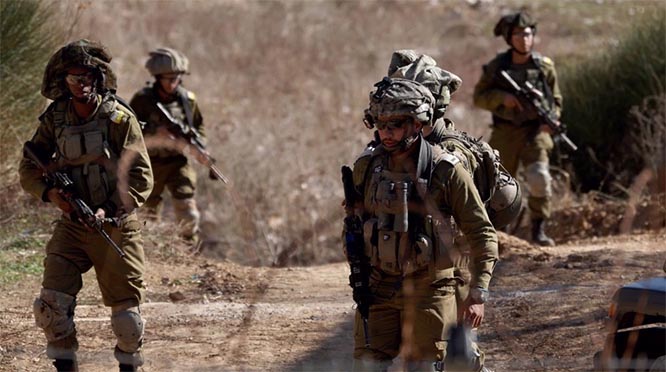
Israeli forces have pushed over the Syrian frontier, erecting a checkpoint and stopping vehicles in the southwestern city of Quneitra, in yet another breach of the Arab country’s sovereignty.

The violation took place on Sunday, when the troops made their way across the border, setting up the outpost near the Ain al-Bayda junction in northern Quneitra, Syrian outlets reported.

According to the al-Ikhbariya paper, an Israeli detachment positioned itself at the junction, halting cars and conducting searches.

The Syrian Arab News Agency (SANA) reported that three Israeli military vehicles then moved further into the northern countryside, deploying between the town of Jubata al-Khashab and the villages of Ofaniya and Ain al-Bayda. The agency added that a separate Israeli unit mounted a new incursion in the central region, approaching the villages of Umm Batina and al-Ajraf.

Residents said such activities have surged in recent months, pointing to Israeli advances onto farmland, leveling of extensive forested areas, arrests, and spread of mobile checkpoints.

The Israeli regime began markedly increasing its military aggression against Syria last year.

The escalation coincided with increasingly ferocious onslaughts throughout the country by the so-called Hay'at Tahrir al-Sham (HTS) Takfiri terrorist group, which the government of President Bashar al-Assad had confined to northwestern Syria. The HTS, however, managed to overthrow the government as the Israeli attacks would pummel the country’s civilian and defensive infrastructure.

Various reports have shown that, during the escalation, the regime conducted more than 1,000 airstrikes on the Syrian territory and over 400 ground raids into the south.

Following the collapse of the Assad government, Tel Aviv also widened its grip over the occupied Golan Heights by taking control of a demilitarized buffer zone, in defiance of a 1974 Disengagement Agreement. Earlier this month, senior Israeli officials, including Prime Minister Benjamin Netanyahu, visited the buffer zone, prompting expressions of alarm on the part of the United Nations.

The United States, the regime’s biggest ally, has, meanwhile, been fraternizing the HTS head Abu Mohammed al-Jolani amid the widely reported prospect of rapprochement with Tel Aviv.

Comments

Add new comment

  • Coastaldigest.com reserves the right to delete or block any comments.
  • Coastaldigset.com is not responsible for its readers’ comments.
  • Comments that are abusive, incendiary or irrelevant are strictly prohibited.
  • Please use a genuine email ID and provide your name to avoid reject.