In Pakistan, voices critical of CPEC being suppressed, US lawmakers told

Agencies
May 14, 2019

Washington, May 14: People and the media in Pakistan are scared of speaking against the multi-billion-dollar China Pakistan Economic Corridor (CPEC) as critical voices are being suppressed, treated as anti-national or branded as terrorists, a former Obama Administration official has told US lawmakers.

"Rarely will you read an article that's critical about CPEC in the Pakistani media. Very rarely. There's been a media capture essentially and there's only the CPEC narrative because people are scared or they've been intimidated or threatened not to do certain pieces," Shamila Chaudhary from the Johns Hopkins University School for Advanced International Studies said.

Testifying before a Congressional committee last week, Chaudhary, who served in the previous Obama Administration, told the lawmakers that at the very local level, people who critique CPEC are often labelled as terrorists.

"There are anti-terrorism laws that can be used against them. Worse things could possibly happen. So it's a very real threat and it has already done a lot of damage to the civil society and the democratic culture that's fairly vibrant, despite their country's history with democracy," she said.

Responding to questions from the lawmakers, Chaudhary said unlike America's soft power, the Chinese model of development does not increase people to people relationship.

"The Chinese don't have that and the Chinese nationals that are going to, say, Pakistan, for example, they're not there to become part of the culture or learn about the communities or have cross-cultural dialogue," she said.

Chinese are in Pakistan to make money, she alleged. "They live in enclaves and essentially what people call Chinese colonies and go to their own restaurants. And that's not something that's going to favour China, Pakistan or China's cooperation with any country for that matter over the long run. Local communities will be very upset by those things, I believe," Chaudhary said.

Informing the lawmakers that the Chinese financial assistance to Pakistan is being kept secret, she said the information now has been shared by Pakistan with the International Monetary Fund (IMF) so that it can be bailed out of the current financial crisis.

"The deal (with IMF) is almost complete and it's my understanding that that information has actually been shared, and so, you know, what Pakistan won't share publicly as part of a bilateral deal with the Chinese, I think it's more willing to share when it needs it," Chaudhary said.

CPEC, she said, hurts US regional interests by disrupting the fragile India-Pakistan ties, a nuclear-fuelled dynamic that demands US stewardship from time to time during times of crisis.

"China's provision of surveillance, data collection capabilities and new hardware to the Pakistani military may seem like it improves security, but such tools also increase the likelihood of invasive data collection, misuse of information and violations of privacy," she said.

"The notion that the Pakistani military might start to mimic Chinese authoritarianism is no longer theoretical. Pakistani civil society and media report more aggressive tactics by the military to silence critical voices. They share a common refrain, that the military is more powerful than ever and that's because of China," Chaudhary said.

She told the lawmakers that in Pakistan, Chinese influence stands alone, changing the rules of the game for everyone else.

For example, Pakistan no longer publicly discloses the terms of its loans from China. Indeed, CPEC pretends immense geo-economic and geopolitical advantages for China in Pakistan, but its repercussions will dwarf any comparable American influence, she said.

To protect US geopolitical options in the future, the US should support the Pakistani and regional actors most threatened by Chinese influence. Ultimately, countering China's rise will require the US to create policies that both address and benefit from the needs of other countries, Chaudhary said.

Make sense of the 2019 Lok Sabha Elections and results on May 23 with TOI. Follow us to track latest news, live updates, news analysis and cutting-edge data analytics. Track live Election Results, the big trends and fastest updates on counting day with India's largest news network.

Comments

Add new comment

  • Coastaldigest.com reserves the right to delete or block any comments.
  • Coastaldigset.com is not responsible for its readers’ comments.
  • Comments that are abusive, incendiary or irrelevant are strictly prohibited.
  • Please use a genuine email ID and provide your name to avoid reject.
News Network
November 27,2025

Bengaluru, Nov 27: Karnataka Chief Minister Siddaramaiah’s camp is reportedly on alert as the Congress leadership tussle in the state intensifies, particularly amid speculation over the potential promotion of Deputy Chief Minister D.K. Shivakumar. Siddaramaiah is said to be in a “wait-and-watch” mode after admitting to “confusion” earlier this week and urging the party to “put a full stop” to it.

Sources say his supporters are ready to act if senior leaders — including party chief Mallikarjun Kharge, Sonia Gandhi, and Rahul Gandhi — give any indication of backing Shivakumar. If the party insists on a leadership change, Siddaramaiah’s camp has a list of alternatives, underscoring the deep rift between the two leaders. One possible candidate is Home Minister G. Parameshwara, a Siddaramaiah loyalist and influential Dalit leader.

The strategy was reportedly finalized at a meeting led by PWD Minister Satish Jarkiholi, another Siddaramaiah supporter, who stressed that Delhi leaders need to resolve the issue. Kharge and the Gandhis are expected to meet soon, after which Siddaramaiah and Shivakumar may be summoned to Delhi.

Shivakumar has largely stayed non-confrontational, publicly endorsing Siddaramaiah and downplaying speculation about his own ambitions. However, he has made pointed comments emphasizing the importance of honoring promises, directed at Siddaramaiah.

The feud traces back to the 2023 state election, when Siddaramaiah was chosen as Chief Minister while Shivakumar, who led the party’s campaign, was made Deputy CM and state party chief — a departure from the Congress’ usual “one post per person” rule.

There were also hints of a prior understanding that Siddaramaiah would step down midway through the term. As the halfway mark passed last week, Shivakumar-aligned lawmakers have ramped up pressure on the party for a leadership change, with Shivakumar himself hinting at stepping down as state party chief to pursue the top job.

Comments

Add new comment

  • Coastaldigest.com reserves the right to delete or block any comments.
  • Coastaldigset.com is not responsible for its readers’ comments.
  • Comments that are abusive, incendiary or irrelevant are strictly prohibited.
  • Please use a genuine email ID and provide your name to avoid reject.
coastaldigest.com news network
November 29,2025

health1.jpg

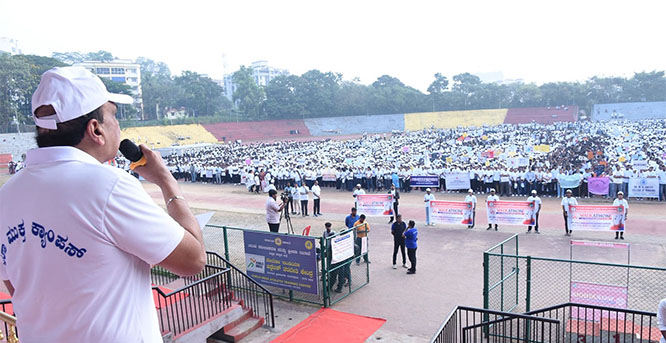
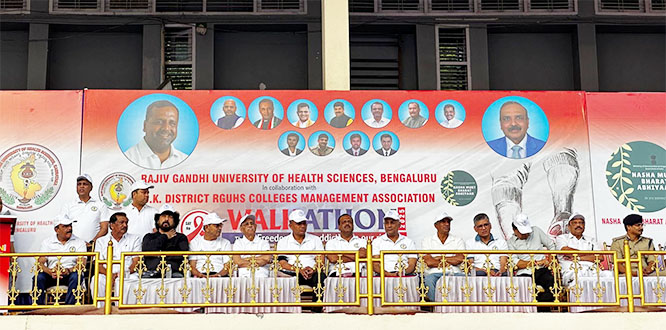
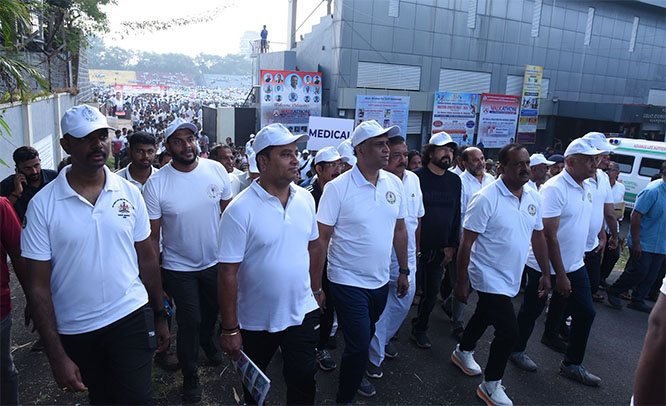
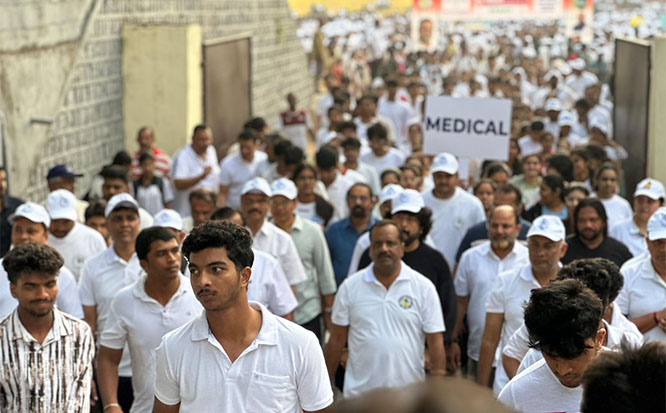
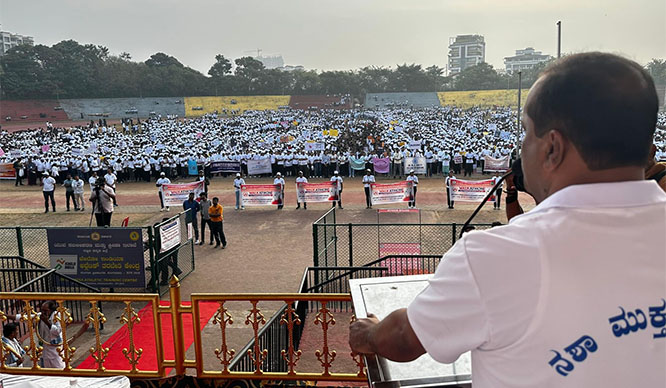
Mangaluru, Nov 29: Around 12,500 healthcare students from Medical, Dental, AYUSH, Pharmacy, Nursing, Physiotherapy and Allied Health Sciences colleges of Dakshina Kannada, affiliated to Rajiv Gandhi University of Health Sciences (RGUHS), took part in a massive walkathon to promote awareness on Organ Donation and Nasha Mukth Bharat.

The inaugural ceremony was held at Mangala Stadium. Dr Bhagavan B C, Hon’ble Vice-Chancellor of RGUHS, delivered the welcome address. The walkathon was flagged off by Shri U T Khader, Hon’ble Speaker of the Karnataka Legislative Assembly, and presided over by Shri Dinesh Gundu Rao, Hon’ble Minister for Health, Family Welfare and Dakshina Kannada District In-charge. Dakshina Kannada MP Shri Brijesh Chowta also addressed the students.

Music director Guru Kiran, MLA Dr Bharat Shetty (Mangalore North), Police Commissioner Shri Sudheer Kumar Reddy, Shri Manjunath Bhandary and Shri Harish Kumar were among those present.

Institution heads including Dr Haji U K Monu (Kanachur Colleges), Dr Shantharam Shetty (Tejaswini College), Dr Bhaskar Shetty (City Group of Colleges), Mr Abdul Rahiman (Kanachur Institute of Medical Sciences), and the District Health Officer, Mangalore, also participated.

The vote of thanks was delivered by Prof U T Ifthikar Fareed, Syndicate Member, RGUHS.

The event was organised by Dr U T Ifthikar Ali and Dr Shiva Sharan (Syndicate Members), Prof Vaishali (Senate Member), Prof Mohammad Suhail (Chairman, BOS Physiotherapy), Dr Sharan Shetty (Former Senate Member), along with principals and faculty of various colleges.

Students marched from Mangala Stadium to Karavali Grounds via MCC and Lalbagh signal. The event set a record as one of the largest gatherings of healthcare students for a social cause in the RGUHS Dakshina Kannada Zone.

health7.jpg

health6.jpg

health5.jpg

health4.jpg

health3.jpg

health2.jpg

Comments

Add new comment

  • Coastaldigest.com reserves the right to delete or block any comments.
  • Coastaldigset.com is not responsible for its readers’ comments.
  • Comments that are abusive, incendiary or irrelevant are strictly prohibited.
  • Please use a genuine email ID and provide your name to avoid reject.
News Network
December 7,2025

envoy.jpg

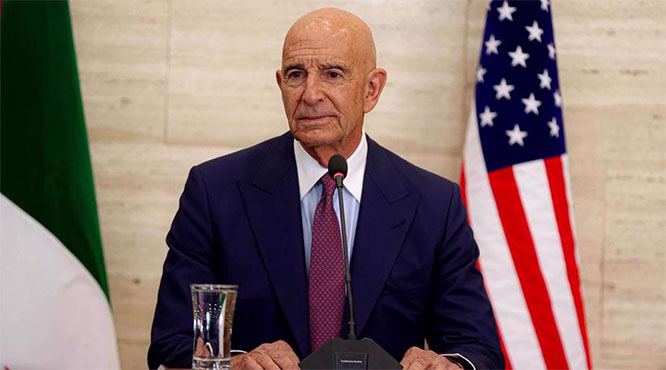
Since 1946, the United States has attempted 93 coups or “regime change” operations across the world — including two in Iran, US Special Envoy for Syria Tom Barrack has admitted.

Speaking to the UAE-based IMI Media Group, in remarks published by The National, Barrack said Washington tried twice to overthrow the Iranian government but failed both times. 

“For (Trump) then to be imputed with regime change — we had two regime changes in Iran already. Neither one worked. So I think wisely leave it to the region to solve,” said Barrack, who also serves as the US ambassador to Turkey.

His comments come six months after the US joined Israel in airstrikes against Iran during ongoing indirect nuclear negotiations between Tehran and Washington.

On June 13, Israel launched an attack on Iran that killed at least 1,064 people and hit civilian infrastructure. Days later, the United States targeted three nuclear facilities — Fordow, Natanz and Isfahan — in what Iran called a clear violation of international law. Iranian retaliation eventually forced a halt to the assault on June 24.

Barrack further claimed that US President Donald Trump and Foreign Secretary Marco Rubio are “not into regime change” and prefer a regional approach driven by Middle Eastern countries themselves. According to him, regional dialogue and non-interference by outside powers offer a more durable path forward.

He added that Washington is still open to an agreement with Tehran if Iranian authorities show “seriousness” and willingness to engage constructively.

However, Iran maintains the US has not shown readiness for meaningful talks. In an interview with Japan’s Kyodo News, Iranian Foreign Minister Abbas Araghchi said negotiations could advance only if Washington acknowledges Iran’s right to peaceful nuclear energy and lifts unilateral sanctions.

Comments

Add new comment

  • Coastaldigest.com reserves the right to delete or block any comments.
  • Coastaldigset.com is not responsible for its readers’ comments.
  • Comments that are abusive, incendiary or irrelevant are strictly prohibited.
  • Please use a genuine email ID and provide your name to avoid reject.