Philippines reports first coronavirus death outside of China

News Network
February 2, 2020

Feb 2: The Philippines on Sunday reported the first death from a new virus outside of China, where authorities delayed the opening of schools in the worst-hit province and tightened quarantine measures in a city that allow only one family member to venture out to buy supplies.

The Philippine Department of Health said a 44-year-old Chinese man from Wuhan was admitted on Jan. 25 after experiencing a fever, cough, and sore throat. He developed severe pneumonia, and in his last few days, “the patient was stable and showed signs of improvement, however, the condition of the patient deteriorated within his last 24 hours resulting in his demise.”

The man’s 38-year-old female companion, also from Wuhan, also tested positive for the virus and remains in hospital isolation in Manila.

President Rodrigo Duterte approved a temporary ban on all travelers, except Filipinos, from China and its autonomous regions. The U.S., Japan, Singapore and Australia have imposed similar restrictions despite criticism from China and an assessment from the World Health Organization that they were unnecessarily hurting trade and travel.

The death toll in China climbed by 45 to 304 and the number of cases by 2,590 to 14,380, according to the National Health Commission, well above the number of those infected in in the 2002-03 outbreak of SARS, or severe acute respiratory syndrome, which broke out in southern China and spread worldwide.

Meanwhile, six officials in the city of Huanggang, neighboring the epicenter of Wuhan in Hubei province, have been fired over “poor performance” in handling the outbreak, the official Xinhua News Agency reported.

It cited the mayor as saying the city’s “capabilities to treat the patients remained inadequate and there is a severe shortage in medical supplies such as protective suits and medical masks.”

After Huanggang, the trading center of Wenzhou in coastal Zhejiang province also confined people to homes, allowing only one family member to venture out every other day to buy necessary supplies.

With the outbreak showing little sign of abating, authorities in Hubei and elsewhere have extended the Lunar New Year holiday, due to end this week, well into February. The annual travel crunch of millions of people returning from their hometowns to the cities is thought to pose a major threat of secondary infection at a time when authorities are encouraging people to avoid public gatherings.

All Hubei schools will postpone the opening of the new semester until further notice and students from elsewhere who visited over the holiday will also be excused from classes.

Far away on China’s southeast coast, the manufacturing hub of Wenzhou put off the opening of government offices until Feb. 9, private businesses until Feb. 17 and schools until March 1.

With nearly 10 million people, Wenzhou has reported 241 confirmed cases of the virus, one of the highest levels outside Hubei. Similar measures have been announced in the provinces and cities of Heilongjiang, Shandong, Guizhou, Hebei and Hunan, while the major cities of Shanghai and Beijing were on indefinite leave pending developments.

Despite imposing drastic travel restrictions at home, China has chafed at those imposed by foreign governments, criticizing Washington’s order barring entry to most non-citizens who visited China in the past two weeks. Apart from dinging China’s international reputation, such steps could worsen a domestic economy already growing at its lowest rate in decades.

The crisis is the latest to confront Chinese leader Xi Jinping, who has been beset by months of anti-government protests in the semi-autonomous Chinese city of Hong Kong, the reelection of Taiwan’s pro-independence president and criticism over human rights violations in the traditionally Muslim northwestern territory of Xinjiang. Economically, Xi faces lagging demand and dramatically slower growth at home while the tariff war with the U.S. remains largely unresolved.

Among a growing number of airlines suspending flights to mainland China was Qatar Airways. The Doha-based carrier said on its website that its flights would stop Monday. It blamed “significant operational challenges caused by entry restrictions imposed by a number of countries” for the suspension of flights.

Oman also halted flights to China, as did Saudi Arabia’s flagship national carrier, Saudia.

Saudi Arabia’s state-run TV reported that 10 Saudi students were evacuated from Wuhan on a special flight. It said the students would be screened upon arrival, but did not say whether they would be quarantined for 14 days.

This weekend, South Korea and India flew hundreds of their citizens out of Wuhan. They went into a two-week quarantine.

On Sunday, South Korea reported three more cases for a total of 15. They include an evacuee, a Chinese relative of a man who tested positive and a man who returned from Wuhan. India reported a second case, also in southern Kerala state.

South Korea also barred foreigners who have stayed or traveled to Hubei province within the last 14 days from entering the country.

Indonesia flew back 241 nationals from Wuhan on Sunday and quarantined them on the remote Natuna Islands for two weeks. Several hundred residents protested the move, with one saying, “This is not because we do not have a sense of solidarity with fellow nationals. But because we fear they could infect us with the deadly virus from China.”

A Turkish military transport plane carrying 42 people arrived in Ankara from Wutan Saturday night. The 32 Turkish, six Azerbaijani, three Georgian nationals and an Albanian will remain under observation for 14 days, together with 20 personnel who participated in the evacuation, Health Minister Fahrettin Koca said.

Vietnam counted its seventh case, a Vietnamese-American man who had a two-hour layover in Wuhan on his way from the U.S. to Ho Chi Minh City.

The virus’ rapid spread in two months prompted the WHO on Thursday to declare it a global emergency.

That declaration “flipped the switch” from a cautious attitude to recommending governments prepare for the possibility the virus might spread, said the WHO representative in Beijing, Gauden Galea. Most cases reported so far have been people who visited China or their family members.

WHO said it was especially concerned that some cases abroad involved human-to-human transmission.

“Countries need to get ready for possible importation in order to identify cases as early as possible and in order to be ready for a domestic outbreak control, if that happens,” Galea told The Associated Press.

Both the new virus and SARS are from the coronavirus family, which also includes those that cause the common cold.

The death rate in China is falling, but the number of confirmed cases will keep growing because thousands of specimens from suspected cases have yet to be tested, Galea said.

“The case fatality ratio is settling out at a much lower level than we were reporting three, now four, weeks ago,” he said.

Although scientists expect to see limited transmission of the virus between people with family or other close contact, they are concerned about cases of infection spreading to people who might have less exposure.

Comments

Add new comment

  • Coastaldigest.com reserves the right to delete or block any comments.
  • Coastaldigset.com is not responsible for its readers’ comments.
  • Comments that are abusive, incendiary or irrelevant are strictly prohibited.
  • Please use a genuine email ID and provide your name to avoid reject.
News Network
January 28,2026

ajit.jpg

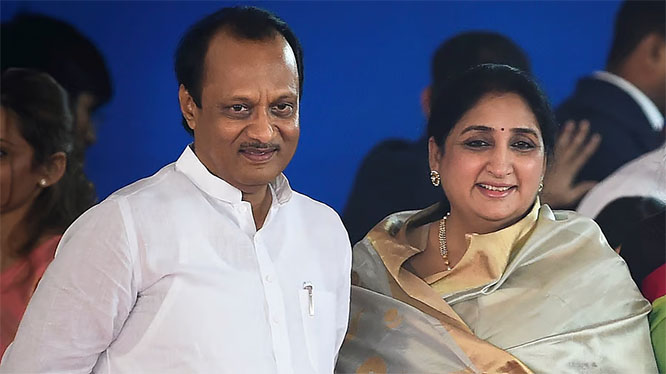
Mumbai: The sudden death of Maharashtra Deputy Chief Minister Ajit Pawar in a plane crash in his hometown of Baramati has plunged the state into political uncertainty, raising a pressing question for both the Nationalist Congress Party (NCP) and its rival faction, the Nationalist Congress Party (Sharadchandra Pawar): what next?

For the two factions that emerged after the dramatic split of June–July 2023, the moment marks their gravest challenge yet. Many believe the answer now rests with party founder Sharad Pawar.

Sharad Pawar, who founded the NCP in 1999 after parting ways with the Congress over Sonia Gandhi’s foreign origin, has already indicated his intention to step away from electoral politics once his Rajya Sabha term ends in April 2026.

Speaking at a public event in Baramati ahead of his 85th birthday on December 12, 2025, Pawar said he would not contest any further elections. “I have contested 14 elections. The younger generation needs to be given an opportunity,” he said, adding that he would decide later whether to seek another Rajya Sabha term.

Often described as the Bhishma Pitamah of Indian politics, Pawar also spoke of his gradual withdrawal from active leadership. “For the first 30 years, I handled everything. For the next 25–30 years, Ajit Dada handled responsibilities. Now, arrangements must be made for new leadership,” he said.

Ajit Pawar’s death has dramatically altered that transition, especially as he was working towards reunifying the two NCP factions.

“After the developments of June–July 2023 and the 2024 Lok Sabha and Vidhan Sabha elections, there were deep changes within the family and the party. In the last six months, serious efforts were made to reunite. Even workers from both sides wanted unity. This is a massive blow,” a Pawar family insider told DH over phone from Baramati.

Electoral outcomes over the past year reflected the split. In the 2024 Lok Sabha elections, NCP (SP) recorded the best strike rate in Maharashtra, winning eight of the 10 seats it contested. The NCP, by contrast, won just one seat out of four.

However, the trend reversed in the subsequent Vidhan Sabha elections, where the NCP emerged stronger, securing 41 of the 288 seats, while NCP (SP) managed only 10.

Within NCP (SP), Sharad Pawar’s daughter Supriya Sule serves as Working President, followed by leaders such as Rohit Pawar, state president Shashikant Shinde and former state chief Jayant Patil.

In the NCP, Praful Patel is the Working President and Raigad MP Sunil Tatkare heads the state unit. Ajit Pawar’s wife, Sunetra Pawar, is a Rajya Sabha MP, while their sons Parth and Jay are not actively involved in day-to-day politics. Parth Pawar briefly entered electoral politics in 2019 but lost the Lok Sabha election from Maval. Jay Pawar’s political debut was under consideration.

With Ajit Pawar gone, speculation has intensified that a member of the family may be asked to assume a larger role. For now, Sunetra Pawar is expected to play a key coordinating role in party affairs, alongside Patel and Tatkare.

The NCP continues to have several heavyweight leaders, including Chhagan Bhujbal, Hasan Mushrif, Dattatreya Bharne, Manikrao Kokate and Dhananjay Munde.

Ajit Pawar had already begun steps towards reconciliation between the two factions. While they contested the Pune and Pimpri-Chinchwad municipal elections separately, they later decided to fight the zilla parishad elections together under the ‘clock’ symbol—seen as the first formal step towards reunification.

Nagpur meet and party roadmap

Both NCP factions claim adherence to the ideology of ‘Shiv–Shahu–Phule–Ambedkar’. At the Rashtravadi Chintan Shivir held in Nagpur on September 19, 2025, the NCP reaffirmed its commitment to sarva dharma sambhav and discussed strengthening ties with the BJP “for the welfare and development of Maharashtra”.

In recent days, reports had suggested Ajit Pawar might return to the Maha Vikas Aghadi following the party’s poor performance in Pune municipal elections, but these claims were denied.

Big question for Maha Yuti

Ajit Pawar’s death also presents an immediate challenge for the Devendra Fadnavis-led Maha Yuti government. Pawar held crucial portfolios, including Finance, Planning and Excise. With the Budget Session approaching, appointing a new Finance Minister has become urgent.

Beyond numbers and portfolios, Maha Yuti has lost a swift decision-maker known for his administrative grip and political finesse—leaving a vacuum that will not be easy to fill.

Comments

Add new comment

  • Coastaldigest.com reserves the right to delete or block any comments.
  • Coastaldigset.com is not responsible for its readers’ comments.
  • Comments that are abusive, incendiary or irrelevant are strictly prohibited.
  • Please use a genuine email ID and provide your name to avoid reject.
News Network
February 1,2026

Bengaluru, Feb 1: For travelers landing at Kempegowda International Airport (KIA), the sleek, wood-paneled curves of Terminal 2 promise a world-class welcome. But the famed “Garden City” charm quickly withers at the curb. As India’s aviation sector swells to record numbers—handling over 43 million passengers in Bengaluru alone this past year—the “last mile” has turned into a marathon of frustration.

The Bengaluru Logjam: Rules vs Reality

While the city awaits the 2027 completion of the Namma Metro Blue Line, the interim has been chaotic. Recent “decongestion” rules at Terminal 1 have pushed app-based cab pickups to distant parking zones, forcing weary passengers into a 20-minute walk with luggage.

“I landed after ten months away and felt like a stranger in my own city,” says Ruchitha Jain, a Koramangala resident. “My driver couldn’t find me, staff couldn’t guide me, and the so-called ‘Premium’ lane is just a fancy tax on convenience.”

•    The Cost of Distance: A 40-km cab ride can now easily cross ₹1,500, driven by demand pricing and airport surcharges.

•    The Bus Gap: While Vayu Vajra remains a lifeline, its ₹300–₹400 fare is often cited as the most expensive airport bus service in the country.

A National Pattern of Disconnect

The struggle is not unique to Karnataka. From Chennai’s coast to Hyderabad’s plateau, India’s airports tell a familiar story: brilliant runways, broken exits.

City:    Primary Issue   |    Recent Development

Bengaluru:    Cab pickup restrictions & distance  |    App-based taxis shifted to far parking zones; long walks and fare spikes reported

Chennai:    Multi-Level Parking (MLCP) hike  |    Passengers report 40-minute walks to reach cab pickup points

Hyderabad:    “Taxi mafia” & touting  |    Over 440 touting cases reported; security presence intensified

Mumbai:    Fare scams  |     Tourists charged ₹18,000 for just 400 metres, triggering police action

In Hyderabad, travelers continue to battle entrenched local groups that intimidate Uber and Ola drivers, pushing passengers toward overpriced private taxis. Chennai flyers, meanwhile, complain that reaching the designated pickup zones now takes longer than short-haul flights from cities like Coimbatore.

The ‘Budget Day’ Hope

As Finance Minister Nirmala Sitharaman presents the Union Budget 2026 today, the aviation sector is watching closely. With the government’s renewed emphasis on multimodal integration, there is cautious hope for funding toward seamless airport-metro-bus hubs.

The vision is clear: a future where planes, trains, and metros speak the same language. Until then, passengers at KIA—and airports across India—will continue to discover that the hardest part of flying isn’t the thousands of kilometres in the air, but the last few on the ground.

Comments

Add new comment

  • Coastaldigest.com reserves the right to delete or block any comments.
  • Coastaldigset.com is not responsible for its readers’ comments.
  • Comments that are abusive, incendiary or irrelevant are strictly prohibited.
  • Please use a genuine email ID and provide your name to avoid reject.
News Network
January 19,2026

trump.jpg

Donald Trump has linked his repeated threats to seize Greenland to his failure to win the Nobel Peace Prize, in a letter to Norwegian Prime Minister Jonas Gahr Støre.

The authenticity of the letter, in which Trump says he no longer feels obligated to “think purely of peace,” was confirmed by Støre to the Norwegian newspaper VG.

“Considering your country decided not to give me the Nobel Peace Prize for having stopped eight wars plus, I no longer feel an obligation to think purely of peace,” Trump wrote, adding he can now “think about what is good and proper for the United States.”

Støre said Trump’s letter was in response to a short message he had sent earlier, on behalf of himself and Finland’s President Alexander Stubb.

Trump has escalated rhetoric toward Greenland, a self-governing Danish territory, insisting the US will take control “one way or the other.” Over the weekend, he tweeted: “Now it is time, and it will be done!!!”

On Saturday, Trump threatened a 10% tariff on imports from Denmark, Norway, Sweden, France, Germany, the UK, the Netherlands, and Finland from 1 February until the US is allowed to purchase the island. EU diplomats met for emergency talks on possible retaliatory tariffs and sanctions.

In his letter, Trump argued Denmark “cannot protect” Greenland from Russia or China, questioning Danish ownership: “There are no written documents; it’s only that a boat landed there hundreds of years ago.” He added that NATO should support the US, claiming the world is “not secure unless we have complete and total control of Greenland.”

Trump’s stance has unsettled the EU and NATO, as he refused to rule out military action to take control of the mineral-rich island.

The Nobel Peace Prize is awarded by the independent Norwegian Nobel Committee, not the government. Trump had campaigned for last year’s prize, which went to Venezuelan opposition leader María Corina Machado, who dedicated her award to him.

Støre reiterated that the Nobel Prize decision rests solely with the committee.

Comments

Add new comment

  • Coastaldigest.com reserves the right to delete or block any comments.
  • Coastaldigset.com is not responsible for its readers’ comments.
  • Comments that are abusive, incendiary or irrelevant are strictly prohibited.
  • Please use a genuine email ID and provide your name to avoid reject.