



PM had 'lucky 9-months' but no improvement on ease of doing business: Parekh

February 18, 2015

Mumbai, Feb 18: Pitching for relaxing "administrative controls" to improve ease of doing business, top industry leader Deepak Parekh has said that impatience has begun creeping in among businessmen as nothing has changed on ground in first nine months of the Narendra Modi government.
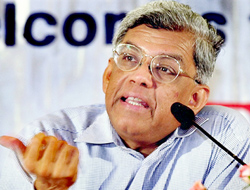
parekh

He said the industry is still optimistic about the changes it expects from the Modi government, but optimism is not translating into revenues and there has been little improvement on 'ease of doing business' front so far.

Parekh, who is known as a guiding voice of the Indian industry and has been on a number of key government panels on various policy and reform matters, further said that 'Make in India' can't succeed unless it is made easier for people to do business here and the decisions are fast-tracked.

"I think there is still a lot of optimism among the people of the country and among the industrialists and entrepreneurs that the Modi government will be good for business, for progress, for reducing corruption. They think this government means business on all these fronts.

"However, after nine months, there is a little bit of impatience creeping in as to why no changes are happening and why this is taking so long having effect on the ground.

"The optimism is there but it is not translating into revenues. Any industry you see, when there is a lot of optimism, the growth should be faster," Parekh told PTI in an interview.

Parekh, an eminent banker and Chairman of financial services giant HDFC, has always been very vocal with his views on reform and policy measures taken by the various governments over the past three decades.

He was among the first industry leaders to openly criticise the previous UPA Government for "policy paralysis" after a spate of scams led to decisions getting delayed within the government and business began getting hurt.

"The thing is that our Prime Minister had a lucky period in these nine months. The world commodity prices are at all-time low which help India the most," Parekh said.

Stating that India is again at a position when everyone is looking at it with high hopes, he said, "I don't see ease of doing business changing so far."

Parekh cited the example of delay faced by his own group's HDFC Bank, the country's top private sector lender, with regard to approvals required for raising of funds, including from overseas.

"Things are happening at such a speed around the world, we need to move faster as well.

"Just to give you an example of our own case. We needed to raise some capital in HDFC Bank. It took more time this time than earlier years to get approvals from FIPB etc," Parekh said.

On benefits from oil prices, he said there are many countries that import oil but benefits have been huge for India.

Japan is also one of the countries that imports oil. But it does not make any difference to Japan with the reserves of oil they have, whether oil is at USD 50 or USD 40 or even USD 110. Also, they are willing to pay higher price because they can afford it, but we can't.

"We have fiscal deficit and shortage of foreign exchange. These factors, when the government came into power, this was not there on the cards. No one had ever anticipated this (fall in oil prices).

Just like none of the 7-8 opinion polls predicted 67-3 in Delhi, no one predicted among the oil analysts at the big firms that the oil will become USD 55. No one predicted this," he said while emphasising that the first nine months of the Modi government has been extremely lucky for it.

Elaborating on HDFC Bank's example with regard to 'ease of doing business', Parekh said, "It got FIPB approvals. Then FIPB minutes had to be signed, and then it had to go to the Cabinet Committee on Economic Affairs.

"People were helpful but processes have not changed. Now we are a 20-year-old organisation and we are within the limits (of 74 per cent foreign investment cap). Why can't they change these things. Why can't the administrative controls be relaxed.

"If 49 per cent in defence is permitted and if someone wants to put in Rs 1,300 crore, why should this go to the Cabinet Committee. The FIPB is good enough and it is within the 49 per cent. So, you have to remove controls. You have to make it easier for people like us to do business."

He said the final approval letter came on the last day, after which the issue of Rs 10,000 crore had to be postponed as there were other listing deadlines of Indian and the US stock markets to be met.

"It is very difficult. And it is only administrative and what does it achieve? If it is within the limits, why should it go to Cabinet Committee on Economic Affairs. Why spend the Prime Minister's time on such things as he chairs the CCEA.

"If it is a controversial issue, something on security or on defence or some other very important issue, then it can, but not for simple commercial transactions. Someone must take the initiative to remove this," he said.

Parekh said that this committee has been there for the last 35 years that he has been in the industry.

"When I started working 35 years, it was Rs 200 crore, now it has gone up to Rs 1,200 crore (foreign investment limit beyond which the case is referred by FIPB to CCEA), but it has not been scrapped."

Suggesting that this revised limit was also very low, Parekh wondered, "Why is it Rs 1,200 crore, make it Rs 5,000 crore. Besides, if it (the investment proposal) meets the guidelines of FIPB, which is chaired by the Finance Secretary and the Finance Minister is always aware of FIPB cases, it should be good enough."

He also said that a lot of work needs to be done at state levels too on ease of doing business, as things have not changed there either on approvals to start construction of a business etc.

Comments

Add new comment

  • Coastaldigest.com reserves the right to delete or block any comments.
  • Coastaldigset.com is not responsible for its readers’ comments.
  • Comments that are abusive, incendiary or irrelevant are strictly prohibited.
  • Please use a genuine email ID and provide your name to avoid reject.
News Network
December 5,2025

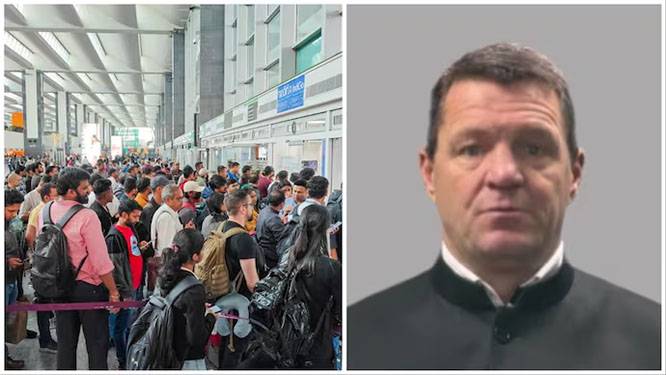
indigoCEO.jpg

New Delhi, Dec 5: IndiGo CEO Pieter Elbers issued a public apology this evening after more than a thousand flights were cancelled today, making it the "most severely impacted day" in terms of cancellations. The biggest airline of the country cancelled "more than half" of its daily number of flights on Friday, said Elbers. He also said that even though the crisis will persist on Saturday, the airline anticipates fewer than 1,000 flight cancellations.

"Full normalisation is expected between December 10 and 15, though IndiGo cautions that recovery will take time due to the scale of operations," the IndiGo CEO said. 

IndiGo operates around 2,300 domestic and international flights daily.

Pieter Elbers, while apologising for the major inconvenience due to delays and cancellations, said the situation is a result of various causes.

The crisis at IndiGo stems from new regulations that boost pilots' weekly rest requirements by 12 hours to 48 and allow only two night-time landings per week, down from six. IndiGo has attributed the mass cancellations to "misjudgment and planning gaps".

Elbers also listed three lines of action that the airline will adopt to address the issue.

"Firstly, customer communication and addressing your needs, for this, messages have been sent on social media. And just now, a more detailed communication with information, refunds, cancellations and other customer support measures was sent," he said.

The airline has also stepped up its call centre capacity.

"Secondly, due to yesterday's situation, we had customers stranded mostly at the nation's largest airports. Our focus was for all of them to be able to travel today itself, which will be achieved. For this, we also ask customers whose flights are cancelled not to come to the airports as notifications are sent," the CEO said.

"Thirdly, cancellations were made for today to align our crew and planes to be where they need to start tomorrow morning afresh. Earlier measures of the last few days, regrettable, have proven not to be enough, but we have decided today to reboot all our systems and schedules, resulting in the highest numbers of cancellations so far, but imperative for progressive improvements starting from tomorrow," he added.

As airports witnessed chaotic scenes, the Directorate General of Civil Aviation (DGCA) stepped in to grant IndiGo a temporary exemption from stricter night duty rules for pilots. It also allowed substitution of leaves with a weekly rest period. 

Civil Aviation Minister Ram Mohan Naidu has said a high-level inquiry will be ordered and accountability will be fixed.

Comments

Add new comment

  • Coastaldigest.com reserves the right to delete or block any comments.
  • Coastaldigset.com is not responsible for its readers’ comments.
  • Comments that are abusive, incendiary or irrelevant are strictly prohibited.
  • Please use a genuine email ID and provide your name to avoid reject.
News Network
December 6,2025

pilot.jpg

New Delhi: IndiGo, India’s largest airline, faced major operational turbulence this week after failing to prepare for new pilot-fatigue regulations issued by the Directorate General of Civil Aviation (DGCA). The stricter rules—designed to improve flight safety—took effect in phases through 2024, with the latest implementation on November 1. IndiGo has acknowledged that inadequate roster planning led to widespread cancellations and delays.

Below are the key DGCA rules that affected IndiGo’s operations:

1. Longer Mandatory Weekly Rest

Weekly rest for pilots has been increased from 36 hours to 48 hours.

The government says the extended break is essential to curb cumulative fatigue. This rule remains in force despite the current crisis.

2. Cap on Night Landings

Pilots can now perform only two night landings per week—a steep reduction from the earlier limit of six.

Night hours, defined as midnight to early morning, are considered the least alert period for pilots.

Given the disruptions, this rule has been temporarily relaxed for IndiGo until February 10.

3. Reduced Maximum Night Flight Duty

Flight duty that stretches into the night is now capped at 10 hours.

This measure has also been kept on hold for IndiGo until February 10 to stabilize operations.

4. Weekly Rest Cannot Be Replaced With Personal Leave

Airlines can no longer count a pilot’s personal leave as part of the mandatory 48-hour rest.

Pilots say this closes a loophole that previously reduced actual rest time.

Currently, all airlines are exempt from this rule to normalise travel.

5. Mandatory Fatigue Monitoring

Airlines must submit quarterly fatigue reports along with corrective actions to DGCA.

This system aims to create a transparent fatigue-tracking framework across the industry.

The DGCA has stressed that these rules were crafted to strengthen flight safety and align India with global fatigue-management standards. The temporary relaxations are expected to remain until February 2025, giving IndiGo time to stabilise its schedules and restore normal air travel.

Comments

Add new comment

  • Coastaldigest.com reserves the right to delete or block any comments.
  • Coastaldigset.com is not responsible for its readers’ comments.
  • Comments that are abusive, incendiary or irrelevant are strictly prohibited.
  • Please use a genuine email ID and provide your name to avoid reject.
