PM Modi compares Indo-Bangla LBA with fall of Berlin Wall, accuses Pak of creating 'nuisance'

June 8, 2015

Dhaka, Jun 8: Prime Minister Narendra Modi said that the Land Boundary Agreement ratified between India and Bangladesh was an agreement to join hearts and lessen the distances between the two nations that are not just "paas-paas" but also "saath saath".
PM Modi

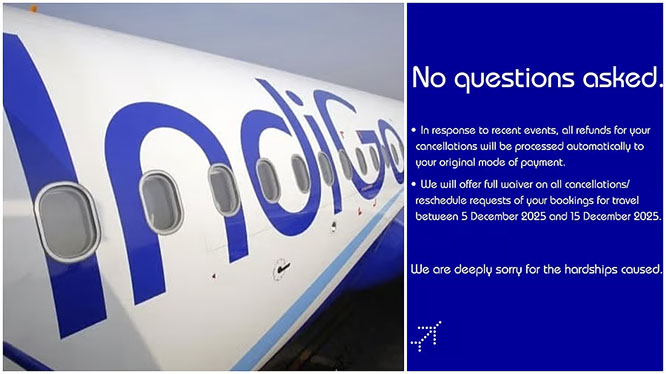
Addressing intellectuals in Dhaka University at the end of his two-day visit on Sunday, Modi said if in one sentence he is to describe ties: "People think that we are 'paas-paas' but now the world will have to accept that we are not just 'paas paas' but 'saath-saath'," he said to loud applause.

On the LBA, Modi also quoted a newspaper editorial that said that the agreement was equivalent to the fall of the Berlin Wall. He asserted that the world will have to acknowledge that "we are people who find ways to move ahead."

Prime Minister also attacked Pakistan accusing it of creating "nuisance" and "constantly" troubling India by promoting terrorism.

The Prime Minister's sharp criticism came during the course of his address at the Bangabandhu International Convention Centre here when he vowed to jointly combat with Bangladesh terrorism in the region.

"Pakistan aaye din (constantly) disturbs India, jo naako dum la deta hai (creates nuisance), terrorism ko badhawa (deta hai)...Ki ghatnaayein ghatthi rehti hain (promotes terrorism and such incidents keep recurring)," Modi said in his address to Dhaka University.

Recalling that 90,000 Pakistani prisoners of war were in India's captivity during the 1971 Bangladesh Liberation War, Modi said, "if we had a diabolic mindset, we don't know then what decision we would have taken."

"Terrorism has no boundaries. India has been troubled by it for the last 40 years. So many innocent people have died and what did those associated with terrorism gain and what have they given to the world...Terrorism has no values, no principles, no traditions and it has only one motive and that is enmity against humanity," he said.

A Joint Declaration issued on the last day of Modi's maiden two-day visit to Bangladesh reaffirmed the two countries' "unequivocal and uncompromising position against extremism and terrorism in all forms and manifestations."

The two sides also committed to cooperate with each other by sharing information about groups and persons indulging in terrorism.

"They reiterated their commitment that their respective territories would not be allowed to be used for any activity inimical to the other," the declaration said.

In his address, the Prime Minister came out strongly against expansionism, saying there is no place for it in today's world.

"The World has changed, there was a time when may be expansionism was used to be the symbol of a country's power as to which one is expanding how much and reaching which place...But times have changed. Now in this era there is no place for expansionism and the world wants development not expansionism and this is the basic vision.

Making a strong pitch for reforms of the UN and its Security Council, Modi said India has still not got a permanent seat in the UNSC.

"India is a country which never fought to gain land. 75,000 Indian soldiers had sacrificed their lives for others in the First World War, and 90,000 in the Second World War," he said.

The Prime Minister also referred to India's role in peacekeeping operations across the world, noting that Indian soldiers had fought alongside 'Mukti Jodhas' (freedom fighters) as well for Bangladesh.

"Yet India has still not got a permanent seat on the UN Security Council," Modi said.

The Prime Minister said that the return of Pakistani PoWs itself should have been enough to convince the world that India should get a permanent seat in the UNSC.

On the settlement of the 41-year-old land boundary dispute by swapping of documents regarding the Land Boundary Agreement (LBA), he said, "If people feel LBA is a pact of few kilometres of the land it is not true, it is a meeting of hearts rather than just an agreement in the world where all battles were fought for land.

On the long-pending Teesta water-sharing deal, Modi said the issue has to be solved with a humanitarian perspective.

"Water issues need to be resolved from humanitarian perspective. I am confident we will be able to do so," he said, adding that, "It is the responsibility of both sides to ensure that a solution is found."

The Prime Minister, who held bilateral talks with his Bangladeshi counterpart Sheikh Hasina after which 22 pacts were signed on Saturday, said, "while people thought we were just near (paas-paas) to each other, now the world would have to acknowledge that we are not just paas-paas but also saath-saath (together)."

Winding up his two-day visit, Modi said though his present trip has ended, he felt the "real journey begins now."

His hour-long address, heard with rapt attention by members of the Indian community, eminent Bangladeshis including political personalities, cultural personalities, business persons, academicians and Dhaka University students here, was repeatedly applauded.

Modi said he was happy that Prime Minister Hasina had declared zero tolerance for terrorism. He said terrorism is an enemy of humanity and therefore all humanitarian forces had to unite to fight it.

The Prime Minister said his vision and Premier Hasina's vision matched perfectly -- that of development.

Modi said many states in India could learn from Bangladesh on several social indicators, such as infant mortality rate.

Modi also congratulated Hasina for her "single-minded focus on economic development." He said a firm foundation is being laid for Bangladesh's economic progress.

The Prime Minister said SAARC countries were keen to establish connectivity at the last SAARC summit -- but then -- not every country is Bangladesh. He said India, Bangladesh, Nepal and Bhutan had now decided to move ahead in this direction.

Noting that no country could work alone as the whole world had become interdependent, Modi said the European Union had developed a lot because of better connectivity.

He said India and Bangladesh had recognised this fact, and this was reflected in the 22 agreements that had been signed during his visit here.

The Prime Minister, in his address, also spoke of shared potential in sectors such as solar energy and space.

Talking about cooperation in SAARC, the Prime Minister said on the first day itself, his government had invited SAARC leaders and indicated his intention to progress.

"The dream I have for India is the same I have for Bangladesh. I will return to Bangladesh," Modi said, concluding his speech.

After the address, Modi left for India after the two-day hectic visit.

"Dhonnobad Bangladesh. History has been created. Now onwards to the future!" Ministry of External Affairs Spokesperson Vikas Swarup tweeted along with a picture of Modi waving before emplaning for Delhi.

Comments

Add new comment

  • Coastaldigest.com reserves the right to delete or block any comments.
  • Coastaldigset.com is not responsible for its readers’ comments.
  • Comments that are abusive, incendiary or irrelevant are strictly prohibited.
  • Please use a genuine email ID and provide your name to avoid reject.
News Network
December 5,2025

indigoCEO.jpg

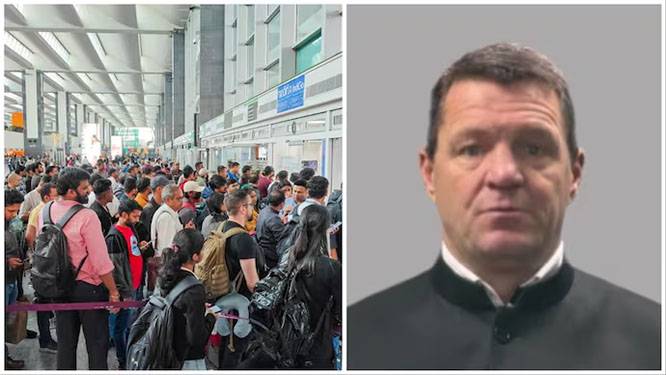
New Delhi, Dec 5: IndiGo CEO Pieter Elbers issued a public apology this evening after more than a thousand flights were cancelled today, making it the "most severely impacted day" in terms of cancellations. The biggest airline of the country cancelled "more than half" of its daily number of flights on Friday, said Elbers. He also said that even though the crisis will persist on Saturday, the airline anticipates fewer than 1,000 flight cancellations.

"Full normalisation is expected between December 10 and 15, though IndiGo cautions that recovery will take time due to the scale of operations," the IndiGo CEO said. 

IndiGo operates around 2,300 domestic and international flights daily.

Pieter Elbers, while apologising for the major inconvenience due to delays and cancellations, said the situation is a result of various causes.

The crisis at IndiGo stems from new regulations that boost pilots' weekly rest requirements by 12 hours to 48 and allow only two night-time landings per week, down from six. IndiGo has attributed the mass cancellations to "misjudgment and planning gaps".

Elbers also listed three lines of action that the airline will adopt to address the issue.

"Firstly, customer communication and addressing your needs, for this, messages have been sent on social media. And just now, a more detailed communication with information, refunds, cancellations and other customer support measures was sent," he said.

The airline has also stepped up its call centre capacity.

"Secondly, due to yesterday's situation, we had customers stranded mostly at the nation's largest airports. Our focus was for all of them to be able to travel today itself, which will be achieved. For this, we also ask customers whose flights are cancelled not to come to the airports as notifications are sent," the CEO said.

"Thirdly, cancellations were made for today to align our crew and planes to be where they need to start tomorrow morning afresh. Earlier measures of the last few days, regrettable, have proven not to be enough, but we have decided today to reboot all our systems and schedules, resulting in the highest numbers of cancellations so far, but imperative for progressive improvements starting from tomorrow," he added.

As airports witnessed chaotic scenes, the Directorate General of Civil Aviation (DGCA) stepped in to grant IndiGo a temporary exemption from stricter night duty rules for pilots. It also allowed substitution of leaves with a weekly rest period. 

Civil Aviation Minister Ram Mohan Naidu has said a high-level inquiry will be ordered and accountability will be fixed.

Comments

Add new comment

  • Coastaldigest.com reserves the right to delete or block any comments.
  • Coastaldigset.com is not responsible for its readers’ comments.
  • Comments that are abusive, incendiary or irrelevant are strictly prohibited.
  • Please use a genuine email ID and provide your name to avoid reject.
News Network
December 6,2025

indigoticket.jpg

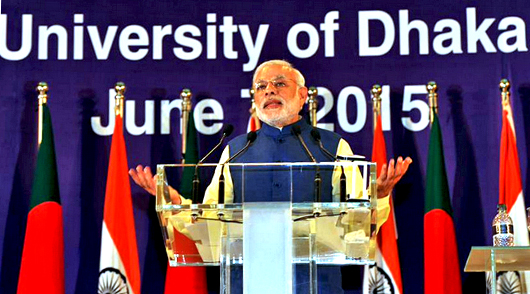
With IndiGo flight disruptions impacting thousands of passengers, the airline on Saturday said that it will offer full waiver on all cancellations/reschedule requests for travel bookings between December 5, 2025 and December 15, 2025.

Earlier in the day, the civil aviation ministry had directed the airline to complete the ticket refund process for the cancelled flights by Sunday evening, as well as ensure baggage separated from the travellers are delivered in the next two days.

In a post on X, titled 'No questions asked', IndiGo wrote, "In response to recent events, all refunds for your cancellations will be processed automatically to your original mode of payment."

"We are deeply sorry for the hardships caused," it further added.

Several passengers, however, complained of not getting full refund as promised by the airline.

Netizens have shared screenchots of getting charged for airline cancellation fee and convenience fee.

"Please tell me why u have did this airline cancellation charges when u say full amount will be refunded (sic)," a user wrote sharing a screenshot of the refund page.

"Well, but you have still debited the convenience charges," wrote another.

Passengers have also raised concerns about the "cancel" option being disabled on the IndiGo app. "First enable the 'Cancel' button on your App & offer full refund on tickets cancelled by customers between the said dates," wrote a user.

A day after the country's largest airline, IndiGo, cancelled more than 1,000 flights and caused disruptions for the fifth day on Saturday, the ministry said that any delay or non-compliance in refund processing will invite immediate regulatory action.

The refund process for all cancelled or disrupted flights must be completed by 8 pm on Sunday, the ministry said in a statement.

"Airlines have also been instructed not to levy any rescheduling charges for passengers whose travel plans were affected by cancellations," it said.

On Saturday, more than 400 flights were cancelled at various airports.

IndiGo has also been instructed to set up dedicated passenger support and refund facilitation cells.

Comments

Add new comment

  • Coastaldigest.com reserves the right to delete or block any comments.
  • Coastaldigset.com is not responsible for its readers’ comments.
  • Comments that are abusive, incendiary or irrelevant are strictly prohibited.
  • Please use a genuine email ID and provide your name to avoid reject.
News Network
December 6,2025

pilot.jpg

New Delhi: IndiGo, India’s largest airline, faced major operational turbulence this week after failing to prepare for new pilot-fatigue regulations issued by the Directorate General of Civil Aviation (DGCA). The stricter rules—designed to improve flight safety—took effect in phases through 2024, with the latest implementation on November 1. IndiGo has acknowledged that inadequate roster planning led to widespread cancellations and delays.

Below are the key DGCA rules that affected IndiGo’s operations:

1. Longer Mandatory Weekly Rest

Weekly rest for pilots has been increased from 36 hours to 48 hours.

The government says the extended break is essential to curb cumulative fatigue. This rule remains in force despite the current crisis.

2. Cap on Night Landings

Pilots can now perform only two night landings per week—a steep reduction from the earlier limit of six.

Night hours, defined as midnight to early morning, are considered the least alert period for pilots.

Given the disruptions, this rule has been temporarily relaxed for IndiGo until February 10.

3. Reduced Maximum Night Flight Duty

Flight duty that stretches into the night is now capped at 10 hours.

This measure has also been kept on hold for IndiGo until February 10 to stabilize operations.

4. Weekly Rest Cannot Be Replaced With Personal Leave

Airlines can no longer count a pilot’s personal leave as part of the mandatory 48-hour rest.

Pilots say this closes a loophole that previously reduced actual rest time.

Currently, all airlines are exempt from this rule to normalise travel.

5. Mandatory Fatigue Monitoring

Airlines must submit quarterly fatigue reports along with corrective actions to DGCA.

This system aims to create a transparent fatigue-tracking framework across the industry.

The DGCA has stressed that these rules were crafted to strengthen flight safety and align India with global fatigue-management standards. The temporary relaxations are expected to remain until February 2025, giving IndiGo time to stabilise its schedules and restore normal air travel.

Comments

Add new comment

  • Coastaldigest.com reserves the right to delete or block any comments.
  • Coastaldigset.com is not responsible for its readers’ comments.
  • Comments that are abusive, incendiary or irrelevant are strictly prohibited.
  • Please use a genuine email ID and provide your name to avoid reject.