Rahul Gandhi criticises PM Modi's economic policies

Agencies
September 12, 2017

Washington, Sep 12: Congress vice president Rahul Gandhi today criticised Prime Minister Narendra Modi's economic policies, accusing him of causing "tremendous damage" to India's economy with "reckless and dangerous" decisions like demonetisation and "hastily-applied" GST.

Gandhi, 47, who arrived in the US yesterday on a two- week-long tour, addressed students at the University of California, Berkeley, to reflect on contemporary India and the path forward for the world's largest democracy.

He said the November 8 demonetisation decision was taken without asking the Chief Economic Advisor and Parliament, which caused tremendous damage to the economy. Demonetisation, he alleged, imposed a devastating cost on India.

"Ignoring India's tremendous institutional knowledge and taking such decisions is reckless and dangerous," he charged. He said 30,000 new youngsters were joining the job market every single day and the government was only creating 500 jobs a day.

"This does not include the massive pool of already employed youngsters," he said. "The decline in economic growth today is leading to an upsurge of anger in the country. The government's economic policies demonetisation and hastily-applied GST have caused tremendous damage," he alleged.

Goods and Services Tax, a tax regime which combines all of India's states and union territories into a single market, was launched at midnight on June 30. Gandhi also accused the government of wiping out millions by demonetisation.

"Millions of small businesses were simply wiped out as a result of the demonetisation, farmers and many who use cash were hit extremely hard. Agriculture is in deep distress and farmers suicides have skyrocketed across the country."

Finance Minister Arun Jaitley, however, had said the fallout of demonetisation was on predicted lines and the economy will benefit in medium and long term.

Jaitley's remarks came after the Reserve Bank of India said that 99 per cent of the demonetised currency came back into the system. Jaitley had also insisted that money getting deposited in banks does not mean that all of it is legitimate.

But Gandhi described demonetisation "a completely self- inflicted wound" that caused approximately 2 per cent loss of the GDP.

India, the Congress leader said, cannot afford to grow and create jobs at the current rate. "If we continue at the current rate, if India cannot give the millions of people entering the job market employment, anger will increase and it has the potential to derail what has been built so far. That would be catastrophic for India and the world beyond," Gandhi warned.

The Congress vice president said that the central challenge for the country today is creating jobs. Noting that roughly 12 million young people join the Indian job market every year with nearly 90 per cent of them having a high school education or less, Gandhi said India, being a democratic country, cannot follow the Chinese model of coercion.

"Unlike China it has to create jobs in a democratic environment," he said, adding that India does not "want China's coercive" instruments. "We cannot follow the model of massive factories controlled by a few," Gandhi said.

Jobs in India, he said, are going to come in from small and medium scale industry. India, he asserted, needs to turn colossal numbers of small and medium businesses into international companies.

Alleging that currently all the attention in India is being paid to the top hundred companies, he said: "Everything is geared towards them, the banking systems are monopolised by them and the doors of government are always open to them."

"And laws are shaped by them," he said, adding that entrepreneurs running small and medium businesses are struggling to get bank loans.

"They have no protection and no support. Small and medium businesses are the bedrock of India and the world's innovation. Big businesses can easily manage the unpredictability of India. They are protected by their deep deep pockets and connections," he said. India, he said, has triggered a massive process of human transformation.

The momentum is so powerful that India's failure is no longer an option, he said, "Our success impacts the world," Gandhi said, warning that this momentum can be destroyed by "hatred, anger and violence".

"The politics of polarisation has raised its ugly head in India," he said, adding that liberal journalists are being shot. He was apparently referring to rights activist and journalist Gauri Lankesh's killing.

"People being lynched because they are Dalit," he alleged. "Muslims were killed on suspicion of eating beef. This is new in India and damages India very badly."

He said the politics of hate divided and polarised India and was making millions of people feel that they have no future in their own country.

"In today's connected world this is extremely dangerous," he said. Gandhi at the same time also acknowledged that Prime Minister Narendra Modi is a better communicator than him.

"I'm an opposition leader. But Mr Modi is also my prime minister. Mr Modi has certain skills. He's a very good communicator. Probably much better than me. He understands how to give a message to three or four different groups in a crowd. So his messaging abilities very subtle and very effective," Gandhi said.

He was responding to a question on what does he think about Modi as the prime minister. "What I sense is that he doesn't converse with the people he works with. Even members of Parliament of the BJP come to me and tell me that 'sunte nahi hain' (he does not listen to us)," Gandhi added.

He said Modi must speak to the people who work with him. "I mean there is a lot of information that the opposition for example has. He is not really interested in that input. So that is what has been going on," he said.

Gandhi described Modi's flagship policies like 'Make in India' and 'Swachh Bharat' as a good idea. "On what they have done well? What I like? I like the concept of 'Make in India'. But the orientation of 'Make in India' is slightly different than what I would. So, the orientation of Make in India is big business and a lot of it is defence.My orientation of 'Make in India' would be small and medium businesses," he said.

Gandhi said he would like to carve out space for small and medium businesses and bring in experts from Silicon Valley and take these small and medium businesses and transforming them into global companies.

"Swachh Bharat is something that Mr Modi likes. The idea of hygiene I think is a good one. And I think I think the sort of stuff that they are doing on open defecation is not a bad thing," Gandhi said.

The Congress vice president said the impression that he was a reluctant politician was a result of the campaign against him by the other political camp.

"There is a BJP machine about a thousand guys sitting on computers that basically tell you about me," he said as the audience burst into laughter.

"They tell you, I am reluctant, I'm stupid. They tell you all these things," he said amidst another round of laughter and applause.

"All they do is spread abuse about it. And the operation is basically run by the gentleman who is running our country," Gandhi said.

Responding to a question, Gandhi said the country needs political reform. "Administrative reform is important. But much more important than administrative report is actually political reform. Today, the real problem in India is that our political machine.. they are not empowered the way they should be... The laws in India are made by the ministers and five or six people surrounding the minister.

"And until you make that process transparent and out into the open, you are not really going to transform the system," he said.

He said the lawmakers who should be formulating policies are today more worried about building roads.

"Today our MPs don't make laws. They are worried about building roads in villages. And they get punished for not building roads in villages. They should be making laws. They should be empowered to make laws. That's their job. And that is the fundamental thing that has this gone wrong in India," he said.

Comments

Add new comment

  • Coastaldigest.com reserves the right to delete or block any comments.
  • Coastaldigset.com is not responsible for its readers’ comments.
  • Comments that are abusive, incendiary or irrelevant are strictly prohibited.
  • Please use a genuine email ID and provide your name to avoid reject.
News Network
November 24,2025

israelsyra.jpg

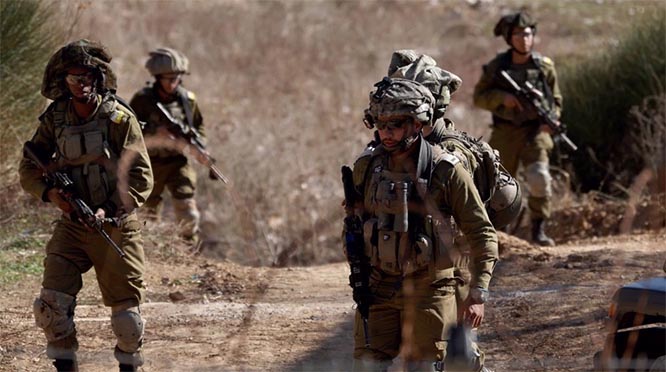
Israeli forces have pushed over the Syrian frontier, erecting a checkpoint and stopping vehicles in the southwestern city of Quneitra, in yet another breach of the Arab country’s sovereignty.

The violation took place on Sunday, when the troops made their way across the border, setting up the outpost near the Ain al-Bayda junction in northern Quneitra, Syrian outlets reported.

According to the al-Ikhbariya paper, an Israeli detachment positioned itself at the junction, halting cars and conducting searches.

The Syrian Arab News Agency (SANA) reported that three Israeli military vehicles then moved further into the northern countryside, deploying between the town of Jubata al-Khashab and the villages of Ofaniya and Ain al-Bayda. The agency added that a separate Israeli unit mounted a new incursion in the central region, approaching the villages of Umm Batina and al-Ajraf.

Residents said such activities have surged in recent months, pointing to Israeli advances onto farmland, leveling of extensive forested areas, arrests, and spread of mobile checkpoints.

The Israeli regime began markedly increasing its military aggression against Syria last year.

The escalation coincided with increasingly ferocious onslaughts throughout the country by the so-called Hay'at Tahrir al-Sham (HTS) Takfiri terrorist group, which the government of President Bashar al-Assad had confined to northwestern Syria. The HTS, however, managed to overthrow the government as the Israeli attacks would pummel the country’s civilian and defensive infrastructure.

Various reports have shown that, during the escalation, the regime conducted more than 1,000 airstrikes on the Syrian territory and over 400 ground raids into the south.

Following the collapse of the Assad government, Tel Aviv also widened its grip over the occupied Golan Heights by taking control of a demilitarized buffer zone, in defiance of a 1974 Disengagement Agreement. Earlier this month, senior Israeli officials, including Prime Minister Benjamin Netanyahu, visited the buffer zone, prompting expressions of alarm on the part of the United Nations.

The United States, the regime’s biggest ally, has, meanwhile, been fraternizing the HTS head Abu Mohammed al-Jolani amid the widely reported prospect of rapprochement with Tel Aviv.

Comments

Add new comment

  • Coastaldigest.com reserves the right to delete or block any comments.
  • Coastaldigset.com is not responsible for its readers’ comments.
  • Comments that are abusive, incendiary or irrelevant are strictly prohibited.
  • Please use a genuine email ID and provide your name to avoid reject.
News Network
November 21,2025

Bengaluru, Nov 21: The Karnataka government is facing pressure to overhaul its employment system after a high-level Cabinet sub-committee recommended the complete phase-out of job outsourcing in government offices, boards, and corporations by March 2028. The move is aimed at tackling a systemic issue that has led to the potential violation of constitutional reservation policies and the exploitation of workers.

The Call for Systemic Change

With over three lakh vacant posts currently being filled through private agencies on an outsource, insource, or daily wage basis, the sub-committee highlighted a significant lapse. "As a result, reservations are not being followed as per the Constitution and state laws. It’s an urgent need to take serious steps to change the system. It has been recommended to completely stop the system of outsourcing by March 2028," the panel stated in a document.

The practice of outsourcing involves private companies hiring workers to perform duties for a government agency. Critics argue this model results in lesser salaries, a lack of social security benefits (otherwise available to permanent government employees), and a failure to adhere to the provisions of Articles 14 and 15 of the Constitution, which guarantee equality before the law and prohibit discrimination.

The 'Bidar Model' as a Stop-Gap Solution

To regulate the current mode of employment and reduce worker exploitation until the 2028 deadline, the government plans to establish workers’ services multi-purpose cooperative societies across all districts, following the successful "Bidar Model."

The Bidar District Services of Labour Multi-purpose Cooperative Society Ltd., which operates under the District Commissioner, is cited as a successful example of providing a measure of social security to outsourced staff. Labour Department officials argue this society ensures workers receive their due wages and statutory facilities like ESI (Employees' State Insurance) and PF (Provident Fund), in exchange for a 1% service fee collected from the employees.

legislative push and Priority Insourcing

The recommendations, led by the sub-committee headed by Law and Parliamentary Affairs Minister H K Patil, are set to be discussed at the next Cabinet meeting. The committee has proposed the introduction of the Karnataka Outsourced Employees (Regulation, Placement and Welfare) Bill 2025.

In a move addressing immediate concerns, Labour Minister Santosh Lad, a member of the sub-committee, has reportedly assured that steps will be taken over the next 2-3 years to insource workers in "life-threatening services" on a priority basis. This includes essential personnel like pourakarmikas (sanitation workers), drivers, electrical staff in the Energy Department, and Health Department staff handling contagious diseases. The transition aims to grant these workers the long-term security and benefits they currently lack under the outsourcing system. 

Comments

Add new comment

  • Coastaldigest.com reserves the right to delete or block any comments.
  • Coastaldigset.com is not responsible for its readers’ comments.
  • Comments that are abusive, incendiary or irrelevant are strictly prohibited.
  • Please use a genuine email ID and provide your name to avoid reject.
News Network
November 24,2025

lebanon.jpg

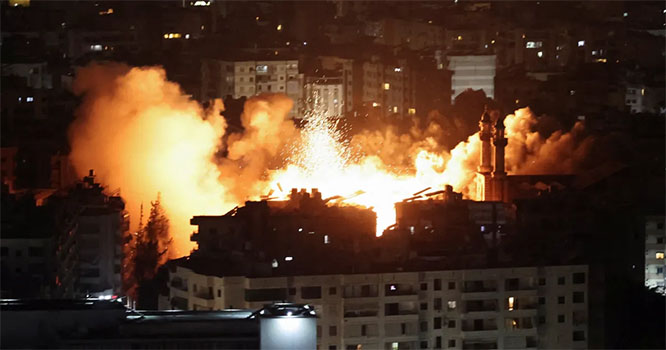
Israel has launched a new act of aggression on a residential neighborhood in Lebanon's capital, Beirut, killing and injuring about two dozen civilians.

The Israeli regime's military said in a statement that its forces carried out a so-called precise strike in a residential apartment in Dahiyeh in the southern suburbs of Beirut on Sunday.

The aggression targeted residential areas, killing at least five people and injuring more than 28 people, Lebanon's Health Ministry said. 

Hezbollah announced the martyrdom of senior Hezbollah commander Haytham Ali Tabatabai and four resistance fighters.

Lebanese President Michel Aoun condemned the airstrike, calling it a clear demonstration of Tel Aviv’s disregard for repeated international calls to halt violations on Lebanese soil.

“Israel refuses to implement international resolutions and all efforts aimed at ending the escalation and restoring stability,” Aoun said, urging the international community to take action to prevent further aggression.

The Palestinian Islamic Jihad movement also condemned the attack, holding the international community accountable. 

“The international community bears responsibility and continues to provide cover for these attacks as long as it does not restrain the occupiers,” said Ali Abu Shahin, a member of the group’s political bureau.

Israeli prime minister Benjamin Netanyahu’s office announced that the Israeli army carried out a strike “in the heart of Beirut."

Netanyahu reportedly approved the operation following recommendations from top Israeli security officials.

Two senior US officials commented on the Israeli strike.

The first official said that Israel did not notify Americans in advance about the attack. "We were informed immediately after the strike was carried out."

The second senior official said that the "US knew for several days that Israel was planning to escalate its strikes in Lebanon, but did not know in advance the timing, location, or target of the strike."

Speaking from the site of the Israeli strike, Lebanese MP Ali Ammar condemned the attack as part of a broader campaign of aggression that has targeted "all of Lebanon since the Washington-sponsored ceasefire."

He stated that "any attack on Lebanon is a violation of red lines; this aggression is part and parcel of the entity that targets Lebanon's dignity, sovereignty, and security of citizens."

Ammar went on to say the resistance is responding with "utmost wisdom, patience, and will confront the enemy at the appropriate time."

"Unfortunately, the enemy is emboldened to commit its aggression by voices within Lebanon that have turned themselves into tools that support its aggression," he added.

The Israeli attack on the southern suburbs of the Lebanese capital is the latest blatant violation of the ceasefire Israel signed with Hezbollah in November 2024, which was intended to end hostilities that had escalated into full-scale war.

An Israeli strike on the Ain al-Hilweh camp near Sidon in southern Lebanon late Tuesday killed at least 14 people. It wounded several others, including young students, according to the Lebanese health ministry.

The military claimed the attack targeted “a Hamas training compound” used to plan and carry out attacks against the regime -- a claim that has frequently been made without evidence.

Hamas rejected the allegations as “a blatant lie aimed at justifying the massacre,” stating it had “no military installations in the Palestinian camps in Lebanon” and that the targeted site was merely “an open sports field.”

According to Lebanese authorities, Israeli attacks have killed approximately 4,000 people and displaced more than 1.2 million residents across the country since October 2023.

Comments

Add new comment

  • Coastaldigest.com reserves the right to delete or block any comments.
  • Coastaldigset.com is not responsible for its readers’ comments.
  • Comments that are abusive, incendiary or irrelevant are strictly prohibited.
  • Please use a genuine email ID and provide your name to avoid reject.