Ram's birthplace Ayodhya is in Pakistan, reveals book

May 8, 2015

Hyderabad, May 8: Ayodhya, the birthplace of Hindu warrior-god Ram, is in Pakistan, claims a book by a top Muslim leader.
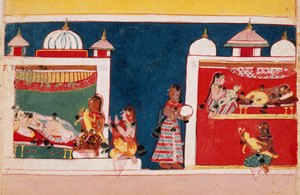
Ramayana
Ayodhya in Faizabad district of Uttar Pradesh is not the original city by the same name as it was inhabited by human beings only in 7th century BC while Rama is believed to have been born 18 million years ago, says "Facts of Ayodhya Episode" authored by Abdul Rahim Quraishi, assistant general secretary of the All India Muslim Personal Law Board (AIMPLB).

Quoting research papers of Jassu Ram and other archaeologists of the Archaeological Survey of India (ASI), the book reveals that there were two Ayodhyas - one which was built by King Raghu, great grandfather of Ram, and the second built by Ram himself.

"Jassu Ram in 'Ancient Geography of the Ramayana' says that both Ayodhyas are in Dera Ismail Khan district of Pakistan's North West Frontier Province (now Khyber Pakhtunkhwa)," says Quraishi, also president of Majlis Tameer-e-Millat, a socio-religious organization.

Quraishi, a key figure in the committee constituted by the AIMPLB to fight the Babri Masjid case, said Ayodhya in Faizabad district was known as Saket in 7th century BC.

In all probability, Hindus in 11th century CE gave the name of Ayodhya to the town. They also gave names connected with Ram Katha to various areas of the town.

The writer says that if the present Ayodhya was the birthplace of Ram, it would have been mentioned in Ramayana of Tulsidas, who penned the epic in 1574 CE in Ayodhya. Tulsidas wrote Ramayana during the time of Mughal emperor Akbar, the grandson of Babar.

"If Babri Masjid was constructed by demolishing a temple, he would have mentioned this," Quraishi told media persons.

He believes all these evidences may be produced during the hearing of the case in the Supreme Court, where the AIMPLB has challenged the 2010 verdict of the Allahbad High Court on the Babri Masjid title suit.

The Urdu version of the 82-year-old leader's book has hit the stands. The English translation is expected to be published soon.

Quraishi pointed out that the excavations undertaken by Banaras Hindu University and ASI and those on the orders of Allahbad High Court found nothing to prove that a temple existed there. There was no objection by Hindus when Babri Masjid was constructed in 1528.

He referred to a 1855 incident in which 'bairagies' (Hindu ascetics) returned Babri Masjid to Muslims after occupying it for some days.

It was in 1885 that a Mahant filed a suit for permission to construct a temple on chabutra or platform in the outer courtyard of the Babri Masjid claiming it to be the birthplace of Ram.

The sub-judge of Faizabad, Pandit Hari Kishan, on Dec 24, 1885, refused to give permission. Neither Mahant Dharam Das in his plaint stated nor sub-judge, a Hindu Pandit, remarked that Babar built the mosque at a scared place of Hindus.

The author said the Allahbad High Court decided the Babri Masjid title suit on the basis of belief. "The findings of the three-judge bench are patently wrong. In 1855, the Hindus of Ayodhya did not believe that the Babri Masjid stood on Ram Janmasthan." The book has dealt in detail with developments leading to the night of December 22, 1949, when idols of Ram and other gods were planted in Babri Masjid.

Quoting extensively from the orders of various courts, reports of commissions and books, Quraishi has written in detail how the conspiracy was hatched by the Hindu Mahasbha and implemented by K.K.K. Nayar, the then deputy commissioner-cum-district magistrate.

The Babri Masjid was demolished by a mob of Hindu zealots on December 6, 1992, and and a makeshift shrine was constructed on its debris.

Comments

Add new comment

  • Coastaldigest.com reserves the right to delete or block any comments.
  • Coastaldigset.com is not responsible for its readers’ comments.
  • Comments that are abusive, incendiary or irrelevant are strictly prohibited.
  • Please use a genuine email ID and provide your name to avoid reject.
News Network
December 7,2025

SHRIMP.jpg

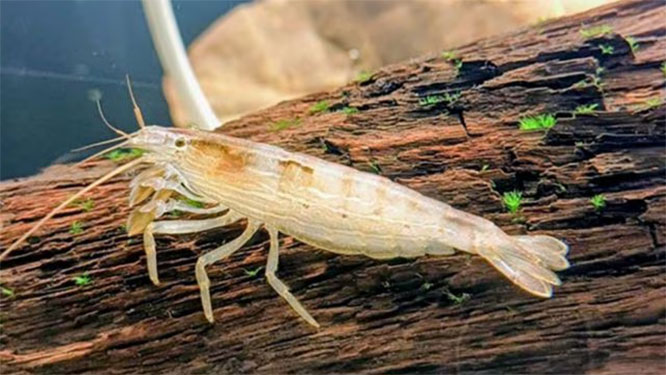
Mangaluru, Dec 7: A rare bamboo shrimp has been rediscovered on mainland India more than 70 years after it was last reported, confirming for the first time the presence of Atyopsis spinipes in the country. The find was made by researchers from the Centre for Climate Change Studies at Sathyabama Institute of Science and Technology, Chennai, during surveys in Karnataka and Odisha.

The team — shrimp expert Dr S Prakash, PhD scholar K Kunjulakshmi, and Mangaluru-based researcher Maclean Antony Santos — combined field surveys, ecological assessments and DNA analysis to identify the elusive species. Their findings, published in Zootaxa, resolve decades of taxonomic confusion stemming from a 1951 report that misidentified the species as Atyopsis moluccensis without strong evidence.

The shrimp has now been confirmed at two locations: the Mulki–Pavanje estuary near Mangaluru and the Kuakhai River in Bhubaneswar. Historical specimens from the Andaman Islands, previously labelled as A. moluccensis, were also found to be misidentified and actually belong to A. spinipes.

The rediscovery began after an aquarium hobbyist in Odisha spotted a shrimp in 2022, prompting systematic surveys across Udupi, Karwar and Mangaluru. Four female specimens were collected in Mulki and one in Odisha, all genetically matching.

Researchers warn the species may exist in very small, vulnerable populations as freshwater habitats face increasing pressure from pollution, sand mining and infrastructure development. All verified specimens have been deposited with the Zoological Survey of India for future reference.

Comments

Add new comment

  • Coastaldigest.com reserves the right to delete or block any comments.
  • Coastaldigset.com is not responsible for its readers’ comments.
  • Comments that are abusive, incendiary or irrelevant are strictly prohibited.
  • Please use a genuine email ID and provide your name to avoid reject.
News Network
December 15,2025

Udupi, Dec 15: What was meant to be a post-pilgrimage gathering turned tragic in Padukere village of Brahmavar taluk, Udupi district, late Sunday night, when a clash among youths escalated into a fatal assault, leaving one man dead.

The victim has been identified as 30-year-old Santosh Mogaveera, a resident of Padukere.

According to preliminary information, the incident took place during a late-night drinking party involving a group of local youths who had recently returned after completing their pilgrimage to the Sabarimala shrine. An argument reportedly broke out among the group and soon escalated into a violent confrontation.

During the ensuing brawl, Santosh Mogaveera was allegedly assaulted and collapsed at the spot after sustaining serious injuries. He was rushed by local residents to a private hospital in Brahmavar, where doctors declared him dead.

On receiving information, senior police officials, including Brahmavar Circle Inspector Gopikrishna, Kota Police Sub-Inspector Praveen Kumar T, Station ASI Manthesh Jabagoudar, and head constables Pradeep and Ashok, visited the spot and conducted an inspection.

Police have taken four youths into custody in connection with the incident. A case has been registered at the Kota police station, and further investigation is underway to ascertain the exact sequence of events leading to the death.

Comments

Add new comment

  • Coastaldigest.com reserves the right to delete or block any comments.
  • Coastaldigset.com is not responsible for its readers’ comments.
  • Comments that are abusive, incendiary or irrelevant are strictly prohibited.
  • Please use a genuine email ID and provide your name to avoid reject.
News Network
December 2,2025

DKSsiddu.jpg

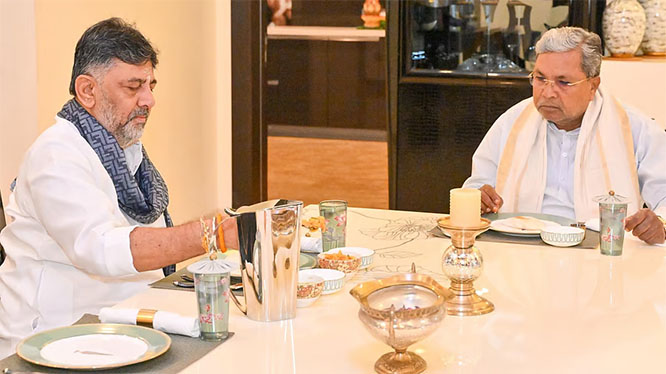
Bengaluru: 'Nati koli saaru' (country chicken curry) considered one of Chief Minister Siddaramaiah’s favourites along with steaming hot idlis was on the breakfast menu at Deputy CM D K Shivakumar’s residence on Tuesday, according to official sources.

The spread also included 'nati koli' fry, vada and pongal, among other items, they said.

In an apparent show of unity, Siddaramaiah visited Shivakumar’s residence for breakfast, just days after the two leaders shared a meal amid a simmering power tussle in the state Congress.

Siddaramaiah drove to the Deputy CM’s residence in Sadashivanagar, where he was received by Shivakumar and his brother D K Suresh, who is a former Congress MP.

Suresh and Kunigal MLA H D Ranganath, a relative of Shivakumar, joined them for breakfast, which featured a mix of vegetarian and non-vegetarian dishes.

Speaking to reporters later, Siddaramaiah said Shivakumar had invited him during his visit to the CM’s residence for breakfast on Saturday.

Asked about the difference between the two meals, the chief minister said, "At his (Shivakumar’s) house it was non-veg, while at my house it was veg. He is a vegetarian, I am a non-vegetarian. I had not prepared non-veg. I told DK to get chicken from the village as you won’t get the original in Bengaluru."

Shivakumar said he had initially invited Siddaramaiah to his residence, but the CM had suggested visiting his place first and reciprocating later. "It was a vegetarian breakfast at the CM’s house on Saturday," he noted.

"Today, I invited him (the CM) to my house. He enjoyed the breakfast, which had his Mysuru taste," Shivakumar added. At this point, Siddaramaiah remarked that Shivakumar’s wife is also from Mysuru.

Saturday’s breakfast at Siddaramaiah’s official residence, held as part of efforts by the Congress high command to ease tensions in the leadership dispute between the two, reportedly included idlis and sambar, according to official sources.

Comments

Add new comment

  • Coastaldigest.com reserves the right to delete or block any comments.
  • Coastaldigset.com is not responsible for its readers’ comments.
  • Comments that are abusive, incendiary or irrelevant are strictly prohibited.
  • Please use a genuine email ID and provide your name to avoid reject.