RBI new bad loan rules may improve prospects of loan recovery

News Network
February 14, 2018

Mumbai, Feb 14: The Reserve Bank of India’s (RBI) decision to tighten norms for resolution of stressed loans, currently estimated at over Rs10 trillion, will improve recovery prospects from bad loans but keep banks’ provisioning requirement at an elevated level, analysts said.
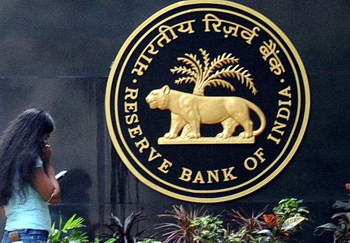
Late on Monday, the central bank withdrew a host of norms such as strategic debt restructuring (SDR) and scheme for sustainable structuring of stressed assets (S4A) among others, and made the process time-bound. The new rules stipulate that starting 1 March, lenders must implement a resolution plan within 180 days for accounts of at least Rs2,000 crore.

“To begin with, lenders will have to start finalizing and implementing resolution plans for cases where restructuring has been done. The fact that most cases remain in stress despite restructuring under various RBI schemes means that there is a high probability that most of these could be referred for (insolvency) proceedings,” said Udit Kariwala, senior analyst, financial institutions at India Ratings. “To that extent, provisioning cost will increase.”

He added that as per the rating agency’s analysis, at the end of September, large banks—six each from private and public sectors—are sitting on a restructured loan pool (including SDR and another scheme called 5/25) of around Rs1.9 trillion.

Accounts from highly leveraged thermal power and capital goods sectors are at high risk of landing in bankruptcy courts.

However, Krishnan Sitaraman, senior director at Crisil Ratings, said the circular in itself may not lead to materially higher provisioning on an aggregate basis, since banks are already steadily increasing their provisioning levels on bad loans owing to the resolution processes under way.

Public sector banks on an aggregate basis are looking to enhance provision coverage levels from 40-45% to 55-60%, he said.

Banks must kept aside at least 50% in the form of provision for accounts referred to bankruptcy court.

Currently, lenders are finalizing resolution plans for 11 of the 12 accounts in RBI’s first defaulter list referred to bankruptcy court. They are also filing insolvency petitions for some of the 28 accounts which were part of central bank’s second defaulter list.

Analysts said the revised rules - which, for instance, call for credit rating agencies to evaluate resolution plans will make the process of restructuring more transparent, enable lenders to get better market-linked pricing for the underlying asset, and sync bank balance sheets with expected loss from the stressed asset pool.

Still, there are some grey areas, others said.

For instance, it is not clear how lenders would work out a proposal which involves interest rate reductions or other sacrifices without a framework in place, said Manish Aggarwal, partner and head resolutions, special situations group, KPMG.

Crisil’s Sitaram said that in the long term, the new rules will improve recovery rates because the failure in meeting timeline will lead to insolvency proceedings, which has to be completed in a maximum of 270 days.

“In the past, we have the average recovery period in corporate NPA accounts extending to 4-5 years. Reduction in the recovery period will lead to higher certainty of outcome for lenders as well as preserve value better,” he said.

With the revised norms mandating an account must no longer be in default after the implementation of a resolution plan, there will be an improvement in the quality of such plans and both the debtors and lenders will have more skin in the game, according to analysts.

As per new RBI norms, in case the resolution plan involves change in the ownership structure of the defaulting firm, the account should not be in default at any point during the specified period, which is the time between implementation of the plan and the date, where up to 20% of the outstanding principal debt is repaid. If there is a default in the specified period, the account must be referred for IBC proceedings.

“With the new norms in place, there is possibility that the promoters will try to defend their assets by bringing the amount and safeguarding their assets from insolvency and bankruptcy code reference. That probability is increasing is what I feel,” said R. Subramaniakumar managing director and chief executive officer at Indian Overseas Bank.

Comments

Add new comment

  • Coastaldigest.com reserves the right to delete or block any comments.
  • Coastaldigset.com is not responsible for its readers’ comments.
  • Comments that are abusive, incendiary or irrelevant are strictly prohibited.
  • Please use a genuine email ID and provide your name to avoid reject.
P A Hameed Padubidri
November 26,2025

CD.jpg

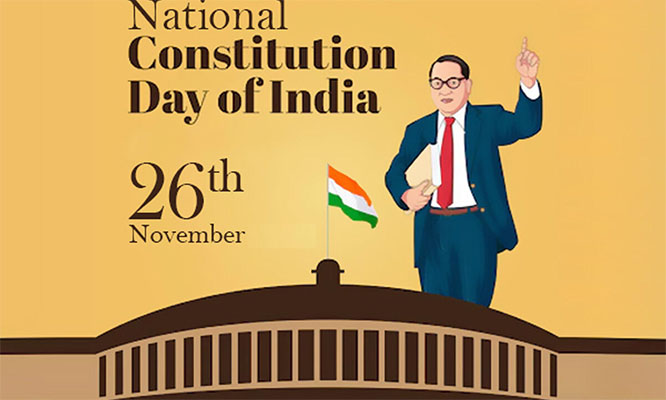
Constitution Day, also known as Samvidhan Divas, is observed every year on November 26 to honor the adoption of the Constitution of India and to recognize the visionary effort that shaped the world’s largest democracy.

Historical Background

It’s on November 26, 1949, the Constituent Assembly of India formally adopted the Constitution.This date is commemorated to acknowledge the completion of nearly three years of drafting, debate, and refinement.

On January 26, 1950, the Constitution came into force, marking India’s transition from a dominion to a sovereign republic.

The date 26 January was chosen to honor the “Purna Swaraj” declaration made in 1930 that marked the relentless efforts & sacrifices of the many. 

Why Constitution Day is Celebrated

* To honor & remember the framers of the Constitution, especially Dr. B. R. Ambedkar, the Chairman of the Drafting Committee, & many others. 

* To remind the citizens of the values, responsibilities, and rights enshrined in the Constitution.

* To promote constitutional values & literacy among students, institutions, and the general public.

* To reaffirm the nation’s commitment to justice, equality, liberty, fraternity and secular values. 

Vision and Significance of the Constitution

It establishes the fundamental political and legal framework for the nation.

Defines the structure, powers and functions of:
    •    The Executive
    •    The Legislature
    •    The Judiciary
    •    Guarantees a comprehensive set of Fundamental Rights, including:

-Equality before law
-Freedom of speech & expression
-Protection of life and personal liberty
-Freedom of religion
-Embeds Directive Principles of State Policy, guiding governance toward social justice and welfare.
-Introduces Fundamental Duties to ensure civic responsibility among citizens.

Key Features Celebrated on Constitution Day

-The Indian constitution is considered one of the longest written constitutions of the world. It’s systematically drafted considering almost all aspects that properly fits to the country. 

-Blend of multiple global constitutional principles while staying rooted in Indian values and realities.

-Framework that balances Federalism, Secularism, Democracy and Rule of Law. This makes everyone-from President to common man-below the law & are equal in the sight of law. 

-Another feature is that it’s based on built-in mechanisms for amendments, ensuring the Constitution grows with changing needs.

Message of the Day

The core ethos of this  Constitution Day is not merely about looking back at history-it’s a reminder of the continuous duty to protect democratic values, respect diversity and uphold the principles that define India as a sovereign, socialist, secular and democratic republic.

Happy Constitution Day to all my compatriots

Comments

Add new comment

  • Coastaldigest.com reserves the right to delete or block any comments.
  • Coastaldigset.com is not responsible for its readers’ comments.
  • Comments that are abusive, incendiary or irrelevant are strictly prohibited.
  • Please use a genuine email ID and provide your name to avoid reject.
News Network
December 4,2025

indigoflight.jpg

Domestic carrier IndiGo has cancelled over 180 flights from three major airports — Mumbai, Delhi and Bengaluru — on Thursday, December 4, as the airline struggles to secure the required crew to operate its flights in the wake of new flight-duty and rest-period norms for pilots.

While the number of cancellations at Mumbai airport stands at 86 (41 arrivals and 45 departures) for the day, at Bengaluru, 73 flights have been cancelled, including 41 arrivals, according to a PTI report that quoted sources.

"IndiGo cancelled over 180 flights on Thursday at three airports-Mumbai, Delhi and Bengaluru," the source told the news agency.

Besides, it had cancelled as many as 33 flights at Delhi airport for Thursday, the source said, adding, "The number of cancellations is expected to be higher by the end of the day."

The Gurugram-based airline's On-Time Performance (OTP) nosedived to 19.7 per cent at six key airports — Delhi, Mumbai, Chennai, Kolkata, Bengaluru and Hyderabad — on December 3, as it struggled to get the required crew to operate its services, down from almost half of December 2, when it was 35 per cent.

"IndiGo has been facing acute crew shortage since the implementation of the second phase of the FDTL (Flight Duty Time Limitations) norms, leading to cancellations and huge delays in its operations across the airports," a source had told PTI on Wednesday.

Chaos continued at several major airports for the third day on Thursday because of the cancellations.

A spokesperson for the Kempegowda International Airport (KIA) in Bengaluru said that 73 IndiGo flights had been cancelled on Thursday.

At least 150 flights were cancelled and dozens of others delayed on Wednesday, airport sources said, leaving thousands of travellers stranded, according to news agency Reuters.

The Directorate General of Civil Aviation (DGCA) has said it is investigating IndiGo flight disruptions and has asked the airline to submit the reasons for the current situation, as well as its plans to reduce flight cancellations and delays.

It may be mentioned here that the pilots' body, Federation of Indian Pilots (FIP), has alleged that IndiGo, despite getting a two-year preparatory window before the full implementation of new flight duty and rest period norms for cockpit crew, "inexplicably" adopted a "hiring freeze".

The FIP said it has urged the safety regulator, the DGCA, not to approve airlines' seasonal flight schedules unless they have adequate staff to operate their services "safely and reliably" in accordance with the New Flight Duty Time Limitations (FDTL) norms.

In a letter to the DGCA late on Wednesday, the FIP urged the DGCA to consider re-evaluating and reallocating slots to other airlines, which have the capacity to operate them without disruption during the peak holiday and fog season if IndiGo continues to "fail in delivering on its commitments to passengers due to its own avoidable staffing shortages."

Comments

Add new comment

  • Coastaldigest.com reserves the right to delete or block any comments.
  • Coastaldigset.com is not responsible for its readers’ comments.
  • Comments that are abusive, incendiary or irrelevant are strictly prohibited.
  • Please use a genuine email ID and provide your name to avoid reject.
coastaldigest.com news network
November 28,2025

roadshow.jpg

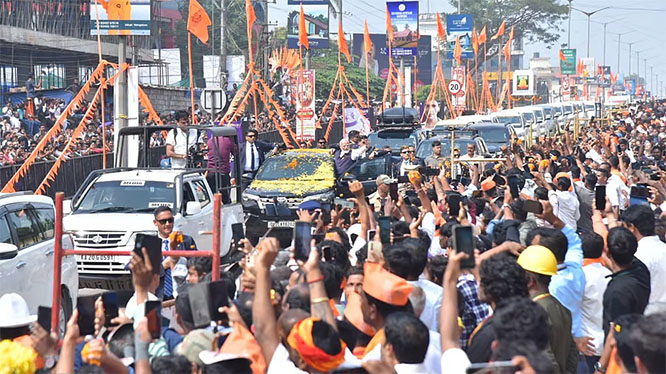
Udupi district transformed into a sea of saffron and celebration on Friday, November 28, as Prime Minister Narendra Modi’s roadshow swept through the coastal temple town. Thousands of residents lined the streets, turning the event into a vibrant public spectacle filled with cheers, flags, and festive energy.

The procession route—from the helipad to the historic Sri Krishna Math—was decked with buntings, saffron flags, and multilayered security barricades. One of the district’s largest-ever security deployments was put in place for the high-profile visit, with over 3,000 police personnel on duty. The arrangement included ten SPs, 27 DSPs, 49 inspectors, 127 sub-inspectors, 232 assistant sub-inspectors, 1,608 constables, and 39 women staff.

Six platoons of the Karnataka State Reserve Police, six Quick Response Teams, bomb detection units, and dog squads were stationed across Udupi. Enhanced surveillance covered Adi Udupi, Bannanje bus stand, and the Sri Krishna Math parking zone, with combing operations carried out along the roadshow corridor.

At the 800-year-old Sri Krishna Math, preparations reached a ceremonial peak. Paryaya Puttige Math seer Sugunendra Teertha Swamiji said the Prime Minister would take part in the Laksha Kantha Geetha Parayana, a mass chanting of the Bhagavad Gita by one lakh devotees, and inaugurate the new Suvarna Teertha Mantapa.

“He will first offer floral tributes to saint-poet Kanakadasa and then unveil the golden covering over the Kanakana Kindi,” the seer said.

The Prime Minister will also receive a Poorna Kumbha welcome and have darshan of Lord Sri Krishna, Mukhyaprana Devaru, and the Suvarna Paduke. Union Minister Pralhad Joshi, Karnataka Governor Thaawarchand Gehlot, Minister Bairathi Suresh, Dharmadhikari D. Veerendra Heggade, and seers from the Ashta Maths are expected to join the ceremony.

Ahead of his arrival, the Prime Minister posted on X that he felt “honoured” to attend the spiritually significant gathering. “This is a special occasion that brings together people from different sections of society for a recital of the Gita. This Matha has a very special significance in our cultural life,” he wrote, noting the institution’s long-standing legacy rooted in the teachings of Sri Madhvacharya.

roadshow2.jpg

Comments

Add new comment

  • Coastaldigest.com reserves the right to delete or block any comments.
  • Coastaldigset.com is not responsible for its readers’ comments.
  • Comments that are abusive, incendiary or irrelevant are strictly prohibited.
  • Please use a genuine email ID and provide your name to avoid reject.