RBI not to pursue proposal for introduction of Islamic banking in India

Agencies
November 12, 2017

New Delhi, Nov 12: In a reverse move, the Reserve Bank of India (RBI) has decided not to pursue a proposal for introduction of Islamic banking in the country.

Replying to an RTI query, the central bank said the decision was taken after considering "the wider and equal opportunities" available to all citizens to access banking and financial services.

Islamic or Sharia banking is a finance system based on the principles of not charging interest, which is prohibited under Islam.

The issue of introduction of Islamic banking in India was examined by the RBI and the government of India, it said.

"Taking into account, the wider and equal opportunities available to all citizens to access banking and financial services, it has been decided not to pursue the proposal further," the central bank said in its reply to the RTI application filed by this PTI correspondent.

The RBI was asked to provide details of steps being taken for the introduction of Islamic or 'interest-free' banking in India.

Prime Minister Narendra Modi had on August 28, 2014 launched Jan Dhan Yojana, a national mission to bring about comprehensive financial inclusion of all the households in the country.

In late 2008, a committee on Financial Sector Reforms, headed by former RBI governor Raghuram Rajan, had stressed on the need for a closer look at the issue of interest-free banking in the country.

"Certain faiths prohibit the use of financial instruments that pay interest. The non-availability of interest-free banking products results in some Indians, including those in the economically disadvantaged strata of society, not being able to access banking products and services due to reasons of faith," the committee had said.

Later, on the instruction of the central government, an inter-departmental group (IDG) set up in the RBI examined the legal, technical and regulatory issues for introducing interest free banking in India and has submitted its report to the government.

The RBI had in February last year sent a copy of the IDG report to the finance ministry and recommended an "Islamic window" in conventional banks for gradual introduction of Sharia-compliant banking.

"In our considered opinion, given the complexities of Islamic finance and various regulatory and supervisory challenges involved in the matter and also due to the fact that Indian banks have no experience in this field, Islamic banking may be introduced in India in a gradual manner.

"Initially, a few simple products which are similar to conventional banking products may be considered for introduction through Islamic window of the conventional banks after necessary notification by the government," it had said in a letter to the ministry.

The letter further reads: "It is also our understanding that interest free banking for financial inclusion will require a proper process of the product being certified as Sharia complaint will be required both on the asset and liability side and the funds received under the interest free banking could not be mingled with other funds and therefore, this banking will have to be conducted under a separate window."

Comments

Add new comment

  • Coastaldigest.com reserves the right to delete or block any comments.
  • Coastaldigset.com is not responsible for its readers’ comments.
  • Comments that are abusive, incendiary or irrelevant are strictly prohibited.
  • Please use a genuine email ID and provide your name to avoid reject.
P A Hameed Padubidri
November 26,2025

CD.jpg

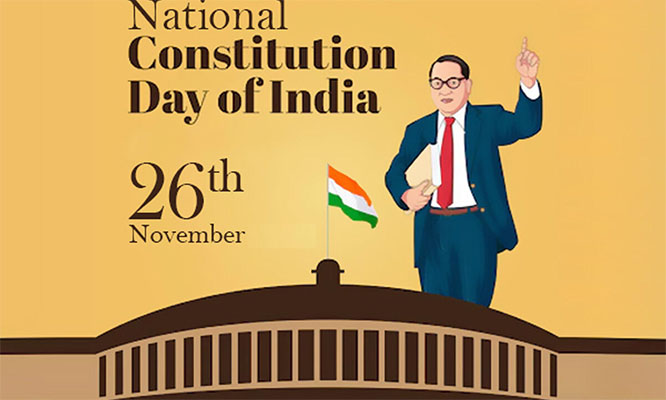
Constitution Day, also known as Samvidhan Divas, is observed every year on November 26 to honor the adoption of the Constitution of India and to recognize the visionary effort that shaped the world’s largest democracy.

Historical Background

It’s on November 26, 1949, the Constituent Assembly of India formally adopted the Constitution.This date is commemorated to acknowledge the completion of nearly three years of drafting, debate, and refinement.

On January 26, 1950, the Constitution came into force, marking India’s transition from a dominion to a sovereign republic.

The date 26 January was chosen to honor the “Purna Swaraj” declaration made in 1930 that marked the relentless efforts & sacrifices of the many. 

Why Constitution Day is Celebrated

* To honor & remember the framers of the Constitution, especially Dr. B. R. Ambedkar, the Chairman of the Drafting Committee, & many others. 

* To remind the citizens of the values, responsibilities, and rights enshrined in the Constitution.

* To promote constitutional values & literacy among students, institutions, and the general public.

* To reaffirm the nation’s commitment to justice, equality, liberty, fraternity and secular values. 

Vision and Significance of the Constitution

It establishes the fundamental political and legal framework for the nation.

Defines the structure, powers and functions of:
    •    The Executive
    •    The Legislature
    •    The Judiciary
    •    Guarantees a comprehensive set of Fundamental Rights, including:

-Equality before law
-Freedom of speech & expression
-Protection of life and personal liberty
-Freedom of religion
-Embeds Directive Principles of State Policy, guiding governance toward social justice and welfare.
-Introduces Fundamental Duties to ensure civic responsibility among citizens.

Key Features Celebrated on Constitution Day

-The Indian constitution is considered one of the longest written constitutions of the world. It’s systematically drafted considering almost all aspects that properly fits to the country. 

-Blend of multiple global constitutional principles while staying rooted in Indian values and realities.

-Framework that balances Federalism, Secularism, Democracy and Rule of Law. This makes everyone-from President to common man-below the law & are equal in the sight of law. 

-Another feature is that it’s based on built-in mechanisms for amendments, ensuring the Constitution grows with changing needs.

Message of the Day

The core ethos of this  Constitution Day is not merely about looking back at history-it’s a reminder of the continuous duty to protect democratic values, respect diversity and uphold the principles that define India as a sovereign, socialist, secular and democratic republic.

Happy Constitution Day to all my compatriots

Comments

Add new comment

  • Coastaldigest.com reserves the right to delete or block any comments.
  • Coastaldigset.com is not responsible for its readers’ comments.
  • Comments that are abusive, incendiary or irrelevant are strictly prohibited.
  • Please use a genuine email ID and provide your name to avoid reject.
News Network
December 1,2025

hindutvaboy.jpg

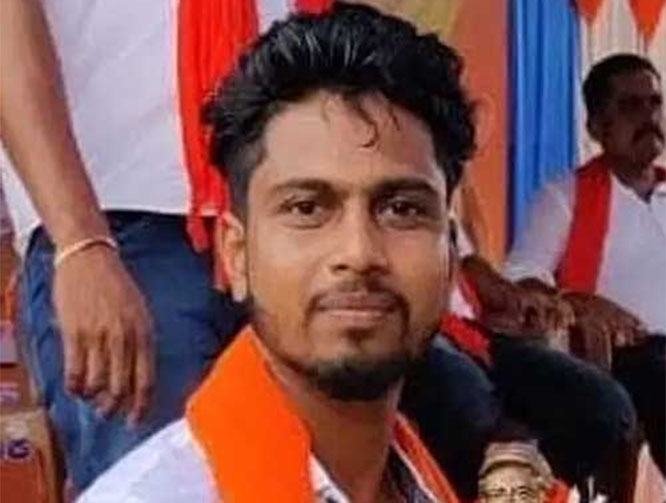
Udupi, Dec 1: A horrific case of alleged rape has unfolded in Udupi, where a worker from a Hindutva organisation, previously arrested and released on bail for harassing a young woman, is now accused of waylaying and sexually assaulting her.

The arrested individual has been identified as Pradeep Poojary (26), a member of the Hindu Jagarana Vedike's Nairkode unit in Perdur.

Poojary had allegedly been relentlessly harassing the young woman, pressuring her to marry him. When she bravely stood up to him and refused his demands, she filed a formal complaint at the Hiriyadka police station. He was subsequently arrested in that initial harassment case but was later granted bail.

According to police reports, driven by the same malicious grudge, Poojary allegedly intercepted the woman again on November 29. While she was walking through a deserted area, the accused is claimed to have threatened her by grabbing her neck. When she again refused to marry him, he allegedly proceeded to rape her.

The survivor immediately informed her family about the traumatic assault. Following this, her parents lodged a complaint at the Udupi women’s police station.

Police arrested Poojary again and produced him before the court. He has since been remanded to judicial custody.

Comments

Add new comment

  • Coastaldigest.com reserves the right to delete or block any comments.
  • Coastaldigset.com is not responsible for its readers’ comments.
  • Comments that are abusive, incendiary or irrelevant are strictly prohibited.
  • Please use a genuine email ID and provide your name to avoid reject.
News Network
November 26,2025

students.jpg

Bengaluru, Nov 26: Karnataka is taking its first concrete steps towards lifting a three-decade-old ban on student elections in colleges and universities. Deputy Chief Minister D.K. Shivakumar announced Wednesday that the state government will form a small committee to study the reintroduction of campus polls, a practice halted in 1989 following incidents of violence.

Speaking at a 'Constitution Day' event organised by the Karnataka Congress, Mr. Shivakumar underscored the move's aim: nurturing new political leadership from the grassroots.

"Recently, (Leader of the Opposition in Lok Sabha) Rahul Gandhi wrote a letter to me and Chief Minister (Siddaramaiah) asking us to think about restarting student elections," Shivakumar stated. "I'm announcing today that we'll form a small committee and seek a report on this."

Student elections were banned in Karnataka in 1989, largely due to concerns over violence and the infiltration of political party affiliates into campus life. The ban effectively extinguished vibrant student bodies and the pipeline of young leaders they often produced.

Mr. Shivakumar, who also serves as the Karnataka Congress president, said that former student leaders will be consulted to "study the pros and cons" of the re-introduction.

Acknowledging the history of the ban, he added, "There were many criminal activities taking place back then. We’ll see how we can conduct (student) elections by regulating such criminal activities."

The Deputy CM reminisced about his own journey, which began on campus. He recalled his political activism at Sri Jagadguru Renukacharya College leading to his first Assembly ticket in 1985 at the age of 23. "That's how student leadership was at the time. Such leadership has gone today. College elections have stopped," he lamented, adding that for many, college elections were "like a big movement" where leaders were forged.

The move, driven by the Congress high command's push to cultivate young talent, will face scrutiny from academics and university authorities who have, in the past, expressed concern that the return of polls could disrupt the peaceful academic environment and turn campuses into political battlegrounds.

Comments

Add new comment

  • Coastaldigest.com reserves the right to delete or block any comments.
  • Coastaldigset.com is not responsible for its readers’ comments.
  • Comments that are abusive, incendiary or irrelevant are strictly prohibited.
  • Please use a genuine email ID and provide your name to avoid reject.