Remembering Maulana Abul Kalam Azad, the visionary

Shaastra Bhat Urimajalu
November 11, 2017

On November 11 every year, India celebrates the National Education Day to commemorate the birth anniversary of Maulana Abul Kalam Azad, a prominent freedom fighter and first education minister of independent India, who played a crucial role in synthesizing Muslims and Hindus of the country by exposing the divide-and-rule policy of the British.

In the independent country, the focus on education was paramount for the learned understood that no true nation can develop until and unless education was considered a fundamental pillar. Speaking at All India Education on January 16, 1948, Azad had said, "We must not for a moment forget, it is a birthright of every individual to receive at least the basic education without which he cannot fully discharge his duties as a citizen."

Maulana Azad was born as Abul Kalam Ghulam Muhiyuddin on November 11, 1888 in Makkah in an Indian origin family. Since a very young age, Maulana Azad was a literature enthusiast. He had mastered several languages including Urdu, Hindi, Persian, Bengali, Arabic and English. He translated the meaning of Quran to Urdu. He is considered as one of the greatest Urdu writers of the 20th century. His work was recognized through his journalistic practice, publishing works critical of the colonial British Raj and espousing the causes of Indian nationalism. He has also written many books including India Wins Freedom, Ghubar-e-Khatir, Tazkirah and Tarjumanul Quran.

Maulana Azad became the leader of the Khilafat Movement, during which he came into close contact with the Indian leader Mahatma Gandhi. He was an enthusiastic supporter of Gandhi's ideas of non-violent civil disobedience, and worked to organise the non-co-operation movement in protest of the 1919 Rowlatt Acts. In 1920, he was elected as one of the founding members to establish Jamia Millia Islamia at Aligarh in Uttar Pradesh without the help of the British. In 1923, at an age of 35, he became the youngest person to serve as the President of the Indian National Congress.

Maulana Azad was given the charge of the Education Minister for free India in 1947. At the time, India, though free, was reeling through the years of exploitation. Contrary to ordinary belief, the education system under the British India was rudimentary at best. The only schools of excellence were set up by the Indian revolutionaries who managed to bring modern education to India. At a grass root level, however, India was still suffering from widespread illeteracy.

Understanding the fundamental role education plays in the development of the nation, Maulana Azad as the Chairman of Central Advisory Board of Education, gave impetus to Adult Education and Literacy. Not only did he lay emphasis on elementary education but also propagated diversification of secondary education and vocational training.

Under his tenure as Education Minister (1947 to 1958), he founded most of the major cultural and literary academies we have today including Sangeet Natak Academy, Lalit Kala Academy, Sahitya Academy as well as the Indian Council for Cultural Relations and School of Planning and Architecture.

He was responsible for setting up of The Central Institute of Education, Delhi which later became the Department of Education of Delhi University. The setting up of Indian Institute of Technology (IIT) in 1951, the University Grants Commission (UGC) in 1953 are all credited to his vision. He also lay stress on and was the primary propagator of Indian Institute of Science, Bengaluru and Faculty of Technology of Delhi University and a founder of Jamia Millia Islamia University.

Maulana Azad always emphasised on quality education and considered schools as laboratories which produced future citizens of the country. He strongly believed in free primary education and compulsory education to all children. He was awarded with the highest civilian honour, the Bharat Ratna in 1992.

Comments

Add new comment

  • Coastaldigest.com reserves the right to delete or block any comments.
  • Coastaldigset.com is not responsible for its readers’ comments.
  • Comments that are abusive, incendiary or irrelevant are strictly prohibited.
  • Please use a genuine email ID and provide your name to avoid reject.
coastaldigest.com news network
November 29,2025

health1.jpg

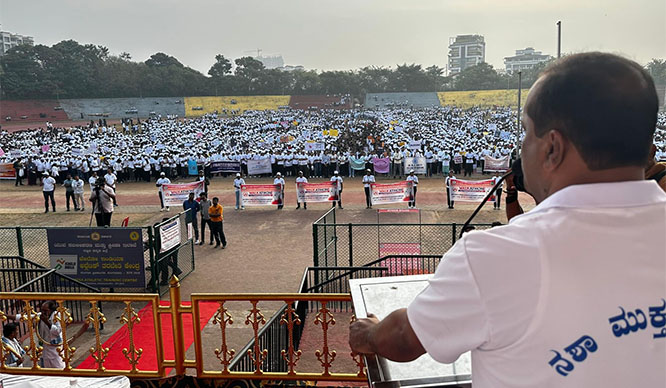
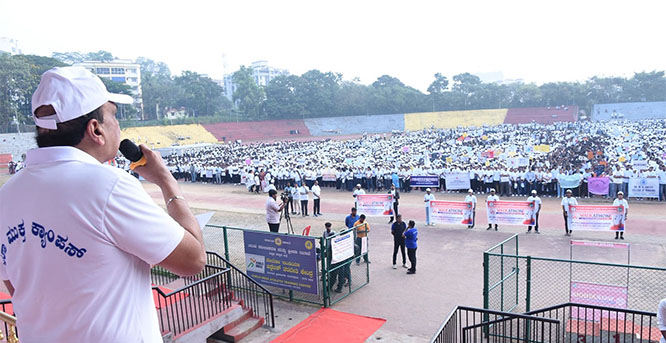
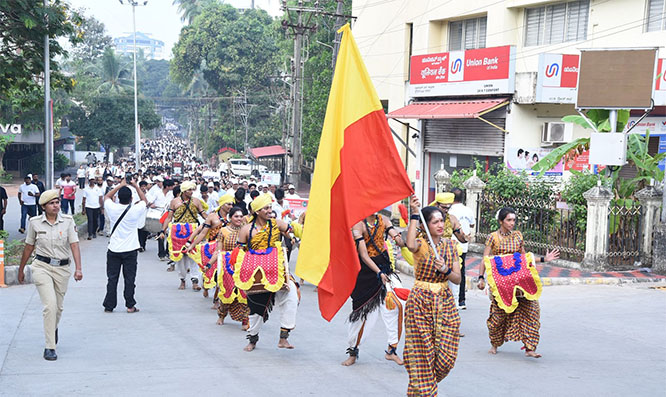
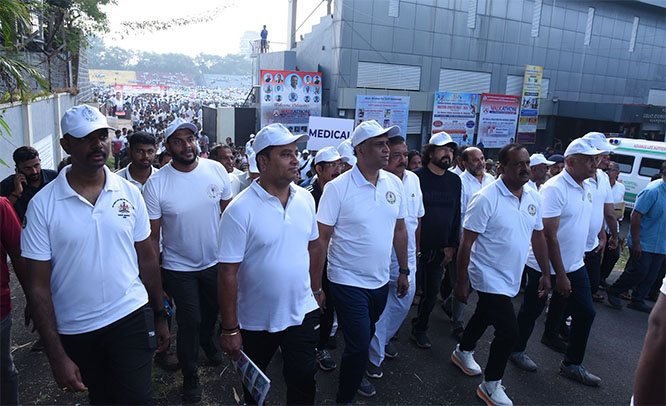
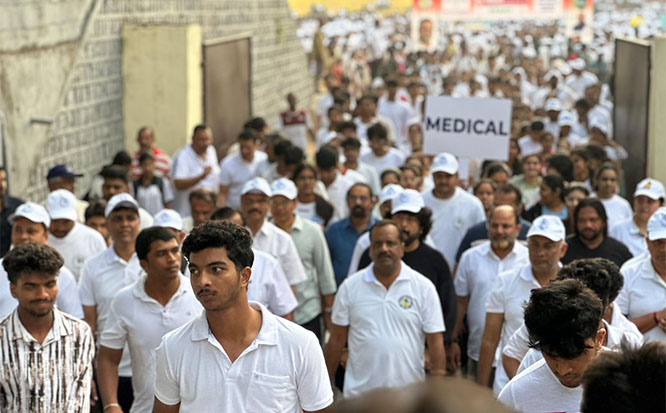
Mangaluru, Nov 29: Around 12,500 healthcare students from Medical, Dental, AYUSH, Pharmacy, Nursing, Physiotherapy and Allied Health Sciences colleges of Dakshina Kannada, affiliated to Rajiv Gandhi University of Health Sciences (RGUHS), took part in a massive walkathon to promote awareness on Organ Donation and Nasha Mukth Bharat.

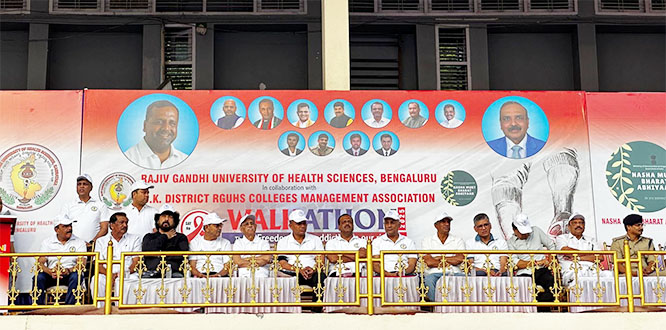
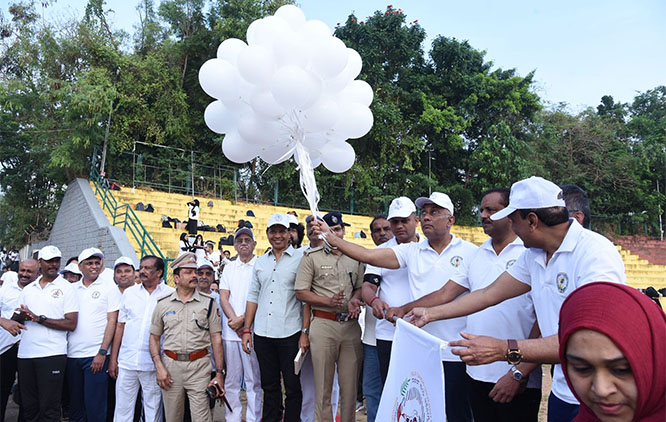
The inaugural ceremony was held at Mangala Stadium. Dr Bhagavan B C, Hon’ble Vice-Chancellor of RGUHS, delivered the welcome address. The walkathon was flagged off by Shri U T Khader, Hon’ble Speaker of the Karnataka Legislative Assembly, and presided over by Shri Dinesh Gundu Rao, Hon’ble Minister for Health, Family Welfare and Dakshina Kannada District In-charge. Dakshina Kannada MP Shri Brijesh Chowta also addressed the students.

Music director Guru Kiran, MLA Dr Bharat Shetty (Mangalore North), Police Commissioner Shri Sudheer Kumar Reddy, Shri Manjunath Bhandary and Shri Harish Kumar were among those present.

Institution heads including Dr Haji U K Monu (Kanachur Colleges), Dr Shantharam Shetty (Tejaswini College), Dr Bhaskar Shetty (City Group of Colleges), Mr Abdul Rahiman (Kanachur Institute of Medical Sciences), and the District Health Officer, Mangalore, also participated.

The vote of thanks was delivered by Prof U T Ifthikar Fareed, Syndicate Member, RGUHS.

The event was organised by Dr U T Ifthikar Ali and Dr Shiva Sharan (Syndicate Members), Prof Vaishali (Senate Member), Prof Mohammad Suhail (Chairman, BOS Physiotherapy), Dr Sharan Shetty (Former Senate Member), along with principals and faculty of various colleges.

Students marched from Mangala Stadium to Karavali Grounds via MCC and Lalbagh signal. The event set a record as one of the largest gatherings of healthcare students for a social cause in the RGUHS Dakshina Kannada Zone.

health7.jpg

health6.jpg

health5.jpg

health4.jpg

health3.jpg

health2.jpg

Comments

Add new comment

  • Coastaldigest.com reserves the right to delete or block any comments.
  • Coastaldigset.com is not responsible for its readers’ comments.
  • Comments that are abusive, incendiary or irrelevant are strictly prohibited.
  • Please use a genuine email ID and provide your name to avoid reject.
News Network
November 26,2025

students.jpg

Bengaluru, Nov 26: Karnataka is taking its first concrete steps towards lifting a three-decade-old ban on student elections in colleges and universities. Deputy Chief Minister D.K. Shivakumar announced Wednesday that the state government will form a small committee to study the reintroduction of campus polls, a practice halted in 1989 following incidents of violence.

Speaking at a 'Constitution Day' event organised by the Karnataka Congress, Mr. Shivakumar underscored the move's aim: nurturing new political leadership from the grassroots.

"Recently, (Leader of the Opposition in Lok Sabha) Rahul Gandhi wrote a letter to me and Chief Minister (Siddaramaiah) asking us to think about restarting student elections," Shivakumar stated. "I'm announcing today that we'll form a small committee and seek a report on this."

Student elections were banned in Karnataka in 1989, largely due to concerns over violence and the infiltration of political party affiliates into campus life. The ban effectively extinguished vibrant student bodies and the pipeline of young leaders they often produced.

Mr. Shivakumar, who also serves as the Karnataka Congress president, said that former student leaders will be consulted to "study the pros and cons" of the re-introduction.

Acknowledging the history of the ban, he added, "There were many criminal activities taking place back then. We’ll see how we can conduct (student) elections by regulating such criminal activities."

The Deputy CM reminisced about his own journey, which began on campus. He recalled his political activism at Sri Jagadguru Renukacharya College leading to his first Assembly ticket in 1985 at the age of 23. "That's how student leadership was at the time. Such leadership has gone today. College elections have stopped," he lamented, adding that for many, college elections were "like a big movement" where leaders were forged.

The move, driven by the Congress high command's push to cultivate young talent, will face scrutiny from academics and university authorities who have, in the past, expressed concern that the return of polls could disrupt the peaceful academic environment and turn campuses into political battlegrounds.

Comments

Add new comment

  • Coastaldigest.com reserves the right to delete or block any comments.
  • Coastaldigset.com is not responsible for its readers’ comments.
  • Comments that are abusive, incendiary or irrelevant are strictly prohibited.
  • Please use a genuine email ID and provide your name to avoid reject.
News Network
November 22,2025

gaza.jpg

The Israeli regime’s forces have killed two Palestinian children in the Gaza Strip every day since the ceasefire began in early October, UNICEF has warned.

The UN children’s agency said on Friday that Israeli forces continue to attack Palestinians in Gaza even though the agreement was meant to stop the killing.

“Since 11 October, while the ceasefire has been in effect, at least 67 children have been killed in conflict-related incidents in the Gaza Strip. Dozens more have been injured. That is an average of almost two children killed every day since the ceasefire took effect,” UNICEF spokesperson Ricardo Pires said in Geneva, reminding that each number in the statistics represents a child whose life had ended violently.

“These are not statistics,” he said. “Each child had a story, a family, and a future that was stolen from them.”

Data from Palestinian factions, human rights groups, and government bodies recorded since the US-brokered ceasefire deal went into effect on October 10 show that Israeli forces have carried out numerous attacks, each constituting a separate ceasefire violation.

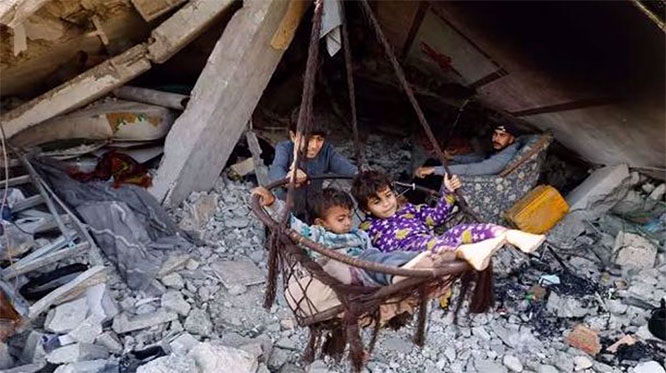
UNICEF teams say they repeatedly continue to witness heart-wrenching scenes of fearful Palestinian children sleeping outdoors with amputated limbs, while others live as orphans in flooded, makeshift shelters.

“I saw this myself in August. There is no safe place for them. The world cannot normalize their suffering,” Pires said, lamenting that the UN could “do a lot more if the aid that is really needed was entering faster.”

The UNICEF spokesperson warned that with the advent of winter, the risks for hundreds of thousands of displaced children will increase.

He warned, “The stakes are incredibly high” for children as winter acts as a threat multiplier, where children have no heating, no insulation, and few blankets. He said respiratory infections rise.

“Too many children have already paid the highest price,” Pires said. “Too many are still paying it, even under a ceasefire. The world promised them it would stop and that we would protect them.”

“Now we must act like it,” the UNICEF spokesperson added.

Since the Israeli regime launched its genocidal war against Palestinians in Gaza in October 2023, it has killed nearly 70,000 people in the territory, most of them women and children, and injured over 170,000 more, while reducing most of the structures in the enclave to rubble.

Comments

Add new comment

  • Coastaldigest.com reserves the right to delete or block any comments.
  • Coastaldigset.com is not responsible for its readers’ comments.
  • Comments that are abusive, incendiary or irrelevant are strictly prohibited.
  • Please use a genuine email ID and provide your name to avoid reject.