Saudi Approves IPO of Aramco, World's Most Profitable Company

News Network
November 3, 2019

Dhahran, Nov 3: Saudi Aramco said Sunday it will list on the Riyadh stock exchange in what could be the world's largest IPO, underpinning Crown Prince Mohammed bin Salman's ambitions to overhaul the kingdom's oil-reliant economy.
After years of delays, Saudi Aramco finally fired the starting gun on the stock market debut, saying it was a "significant milestone" in the history of the energy giant which pumps 10 per cent of the world's oil.

With analysts saying that Aramco could be valued at up to $1.7 trillion, the initial public offering (IPO) could be the world's biggest, depending on how much of the company it decides to sell.

"Today marks a significant milestone in the history of the company and important progress towards delivering Saudi Vision 2030, the kingdom's blueprint for sustained economic diversification and growth," Aramco chairman Yasir al-Rumayyan said.

"Since its formation, Saudi Aramco has become critical to global energy supply," he said in a statement.

The final offer price and the number of shares to be sold "will be determined at the end of the book-building period", said the firm, which is headquartered in the eastern city of Dhahran.

Aramco had initially been expected to sell a total of five per cent on two exchanges, with a first listing of two per cent on the Tadawul Saudi bourse followed by a three per cent listing on an overseas exchange.

The company made no mention Sunday of a foreign listing but it did say that the Riyadh offering was open to institutional investors as well as Saudi individuals, foreigners resident in the kingdom and other Gulf citizens.

The world's most profitable company also released its results for the nine months to September, saying net profits came in at $68 billion. Aramco only began releasing interim financial results recently.

Its 2018 net profit of $111.1 billion is higher than the profits of Apple, Google and Exxon Mobil combined.

'Integral Component'

The listing forms the linchpin of Prince Mohammed's ambitious plans to overhaul the oil-reliant economy, with tens of billions of dollars needed to fund megaprojects and new industries.

First suggested by the kingdom's de facto ruler in 2016, the IPO was delayed several times reportedly due to his dissatisfaction with the valuation of the firm, which fell short of the hoped for $2 trillion.

Last week, Energy Intelligence cited sources as saying they expect the Saudis to settle on a valuation of $1.6 trillion to $1.7 trillion for the firm.

If confirmed, that would imply the kingdom is ready to accept a compromise of less than the $2 trillion that Prince Mohammed has long insisted the state oil giant is worth.

It remains to be seen whether Saudi authorities are able to find "a compromise between the crown prince's stated preference and market realities in their valuation of Aramco," said Kristian Ulrichsen, a fellow at Rice University's Baker Institute in the United States.

"As the process has been delayed repeatedly and built up as such an integral component of the crown prince's plan to transform Saudi Arabia, international investors will pay very close attention to how Aramco performs on the domestic exchange," Mr Ulrichsen told news agency AFP.

Aramco, which pumps around 10 per cent of the world's oil, is the most profitable company globally and is seen as the kingdom's crown jewel and the backbone of its economic and social stability.

Saudi Arabia has boosted efforts to woo investors to the long-awaited stock market debut by announcing an annual dividend of $75 billion, according to the company's website.

Riyadh is also reportedly seeking to get wealthy Saudi families to buy a stake in the company while some Saudi commentators have sought to promote investment in the stock as a patriotic duty.

However, Aramco executives have encountered scepticism among institutional investors in London and New York on questions about the firm's transparency, governance practices and targeted valuation, sources have told AFP.

"An important function of the domestic IPO is to project confidence in the company towards the international market, but doing it domestically encounters no meaningful obstacle, comparable to doing an international listing," said Cinzia Bianco, Gulf research fellow at the European Council on Foreign Relations.

"It allows Prince Mohammed to show he keeps his promises and gets things done, another step to reassure international investors that the IPO will happen after all," Bianco said.

Saudi Arabia's market regulator approved on Sunday Saudi Aramco's application to list on the domestic stock market as the kingdom seeks to diversify and create the world's most valuable listed company.

The statement did not give a timeframe or say how much Aramco would sell, but sources have told news agency Reuters the oil company could sell 1-2 per cent of its shares on the local bourse, raising as much $20 billion-$40 billion.

Confirmation of the share sale in Saudi Arabian Oil Co, or Aramco, as the oil giant is usually known, comes about seven weeks after crippling attacks on its oil facilities, underlining Saudi Arabia's determination to push on with the listing regardless.

The IPO of the world's most profitable company is designed to turbo charge Crown Prince Mohammed bin Salman's economic reform agenda by raising billions to diversify the kingdom, whose dependency on oil was highlighted by the production impact of the September 14 attacks.

The Capital Market Authority said its board "has issued its resolution approving the Saudi Arabian Oil Company (Saudi Aramco) ... application for the registration and offering of part of its shares."

CMA said the approval would remain valid for six months.

The listing announcement had been expected on October 20 but was delayed after advisers said they needed more time to lock in cornerstone investors, three sources told Reuters.

To help get the deal done, Saudi Arabia is relying on easy credit for retail investors and hefty contributions from rich locals.

Prince Mohammed gave the green light on Friday for the IPO to go ahead, Reuters reported, citing sources.

Although Crown Prince Mohammed put a $2-trillion valuation on the company in early 2016, bankers and company insiders say Aramco's value is closer to $1.5 trillion.

A growing movement to fight climate change and embrace new "green" technologies have put some fund managers, particularly in Europe and the United States, off the oil and gas sector.

At a valuation of $1.5 trillion, Aramco would still be worth at least 50 per cent more than the world's most valuable companies, Microsoft and Apple, which each have a market capitalisation of about $1 trillion.

But a 1 per cent sale would 'only' raise around $15 billion for Saudi coffers, less than the $25 billion generated by Chinese e-commerce giant Alibaba in its record-breaking IPO in 2014.

It would rank Aramco as the 11th biggest IPO of all time, Refinitiv data show.

A sale of 2 per cent of Aramco shares at a $1.5-trillion valuation would make it the biggest IPO of all time, beating Alibaba's.

The prospect of the world's largest oil company selling a piece of itself has had Wall Street on tenterhooks since Crown Prince Mohammed flagged it three years ago.

Initial hopes for a blockbuster international listing of about 5 per cent were dashed when the share sale was halted last year amid debate over where to list Aramco overseas.

Aramco said the IPO timetable was delayed because it began a process to acquire a 70 per cent stake in petrochemicals maker Saudi Basic Industries Corp.

IPO preparations were revived over the summer after Aramco attracted huge interest in its first international bond sale, seen as a pre-IPO relationship-building exercise with investors.

The bond sale forced the secretive company to reveal its finances for the first time, including net income of $111 billion, over a third bigger than the combined net income of the five super majors Exxon Mobil, Royal Dutch/Shell, BP, Chevron and Total.

Oil majors have been raising payouts to shareholders to counter rising pressure from climate activism.

Aramco has said it will pay a base dividend of $75 billion, which at a valuation of $1.5 trillion would mean a dividend yield of 5 per cent, below those offered by competitors such as Exxon Mobil Corp and Royal Dutch Shell.

Shell's dividend yield is over 6 per cent and Exxon's over 5 per cent, according to Refinitiv data.

Adverse Impact

The September attacks on Aramco's largest oil plant, which shut off about 5 per cent of global supply, raised questions about the vulnerability of Aramco's oil fields, plants and exports amid deepening regional tensions.

In its April bond prospectus, Aramco noted that any disruption to its processing facilities could harm its business.

The potential threat to the company's valuation presents a challenge for Yasser al-Rumayyan, head of the kingdom's sovereign wealth fund, who became Aramco chairman in September.

Al-Rumayyan replaced former energy minister Khalid al-Falih in a move to separate Aramco from the ministry ahead of an IPO.

Aramco hired nine banks as joint global coordinators to lead the IPO, including JPMorgan, Morgan Stanley and Saudi Arabia's National Commercial Bank. It added a number of banks as book-runners.

Comments

Add new comment

  • Coastaldigest.com reserves the right to delete or block any comments.
  • Coastaldigset.com is not responsible for its readers’ comments.
  • Comments that are abusive, incendiary or irrelevant are strictly prohibited.
  • Please use a genuine email ID and provide your name to avoid reject.
News Network
November 30,2025

airportmetro.jpg

Udupi: The pontiffs of Sri Paryaya Puttige Mutt, the sacred seat of Jagadguru Shrimad Madhvacharya Moola Samsthanam, have submitted a proposal to the Prime Minister seeking comprehensive development for Udupi district. 

Proposal for International Airport

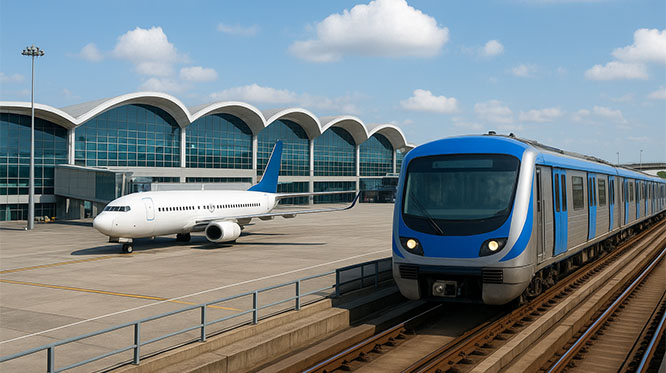
A key request is the establishment of an international airport. Highlighting that around 1,000 acres of land are available and suitable, the pontiffs noted that the existing Mangalore Airport provides limited international connectivity. They suggested the airport be developed under a Public-Private Partnership (PPP) or as a Greenfield Airport to boost trade, education, healthcare, and spiritual tourism.

Metro and Rapid Transit Connectivity

The proposal also calls for Metro Rail or Rapid Transit between Mangaluru and Udupi. The 55 km coastal stretch experiences heavy daily commuter traffic, causing congestion. The district administration is ready to prepare an initial project report for a Mass Rapid Transit corridor and requested inclusion under national urban mobility programmes to ensure safe, green, and time-efficient regional transport.

Port and Coastal Development

The pontiffs urged the development of an international-standard port with a cruise terminal along Udupi’s coast. They also requested fast-tracking of pending coastal tourism projects and revising Coastal Regulation Zone (CRZ) norms to encourage sustainable infrastructure and hospitality investment.

IT, AI and Technological Infrastructure

Support was sought for an IT and AI Innovation Park with incubation facilities under Digital India and Startup India initiatives. The proposal also emphasized the need for strengthened data security and cloud computing infrastructure to boost India’s technological independence.

Sports and Education Initiatives

The pontiffs requested national sports status for Kambala, along with financial and infrastructure support. They also sought the establishment of an AIIMS in Udupi, a new IIT campus, and approval for an IIM to promote higher education in the district.

Representation to the Prime Minister

Sri Sugunendra Tirtha Pontiff and Sri Sushrendra Tirtha Swamiji represented the pontiffs in submitting the comprehensive development proposal to the Prime Minister during his recent visit.

Comments

Add new comment

  • Coastaldigest.com reserves the right to delete or block any comments.
  • Coastaldigset.com is not responsible for its readers’ comments.
  • Comments that are abusive, incendiary or irrelevant are strictly prohibited.
  • Please use a genuine email ID and provide your name to avoid reject.
News Network
December 4,2025

indigocrisis.jpg

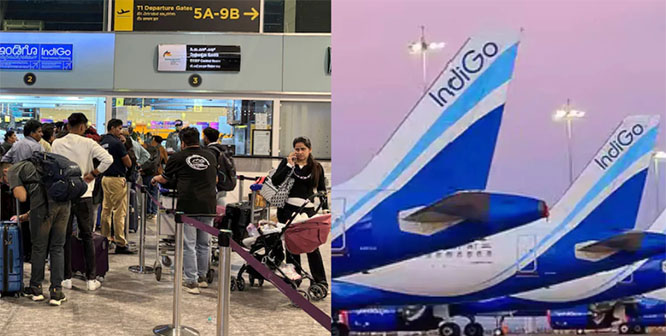
Angry outbursts, long queues, and desperate appeals filled airports across India today as IndiGo grappled with a severe operational breakdown. Hundreds of flights have been cancelled or delayed, leaving thousands of passengers stranded through the night and forcing many to spend long hours at helpdesks.

Social media was flooded with videos of fliers pleading for assistance, accusing the airline of misleading updates, and demanding accommodation after being stuck for 10 to 12 hours at airports such as Hyderabad and Bengaluru.

What Triggered the Meltdown?

IndiGo has attributed the widespread disruption to “a multitude of unforeseen operational challenges.” These include:

•    Minor technology glitches
•    Winter-season schedule adjustments
•    Bad weather
•    Congestion in the aviation network
•    New crew rostering rules (Flight Duty Time Limitations or FDTL)

Among these, the most disruptive has been the implementation of the updated FDTL norms introduced by the Directorate General of Civil Aviation (DGCA) in January 2024.

These rules were designed to reduce pilot fatigue and improve passenger safety. Key changes include:

•    Longer weekly rest periods for flight crew
•    A revised definition of “night,” extending it by an extra hour
•    Tighter caps on flight duty timing and night landings
•    Cutting night shifts for pilots and crew from six per roster cycle to just two

Once these norms became fully enforceable, airlines were required to overhaul rosters well in advance. For IndiGo, this triggered a sudden shortage of crew available for duty, leading to cascading delays and cancellations.

Why IndiGo Was Hit the Hardest

IndiGo is India’s largest airline by a wide margin, operating over 2,200 flights daily. That’s roughly double the number operated by Air India.

When an airline of this size experiences even a 10–20% disruption, it translates to 200–400 flights being delayed or grounded — producing massive spillover effects across the country.

IndiGo also relies heavily on high-frequency overnight operations, a model typical of low-cost carriers that aim to maximise aircraft utilisation and reduce downtime. The stricter FDTL norms clash with these overnight-heavy schedules, forcing the airline to pull back services.

Aviation bodies have also criticised IndiGo’s preparedness. The Airline Pilots' Association of India (ALPA) said airlines were given a two-year window to plan for the new rules but “started preparing rather late.” IndiGo, it said, failed to rebuild crew rosters 15 days in advance as required.

The Federation of Indian Pilots (FIP) went further, calling the crisis the result of IndiGo’s “prolonged and unorthodox lean manpower strategy,” and alleging that the airline adopted a hiring freeze even as it knew the new rules would require more careful staffing.

How Many Flights Are Affected?

In the past 48 hours, over 300 flights have been cancelled. At least 100 more are expected to be cancelled today.

City-wise impact:

•    Hyderabad: 33 expected cancellations; several fliers stranded overnight
•    Bengaluru: over 70 expected cancellations
•    Delhi, Mumbai, Chennai, Kolkata: widespread delays and missed connections

Passengers shared distressing accounts online.

One customer at Hyderabad airport said they waited from 6 PM to 9 AM with “no action taken” regarding their delayed Pune flight. Another said IndiGo repeatedly told them the crew was “arriving soon,” only for the delay to stretch over 12 hours.

IndiGo has apologised for the disruption and promised that operations will stabilise within 48 hours, adding that “calibrated adjustments” are being made to contain the chaos.

What Should Passengers Do Now?

For those flying in the next few days, especially with IndiGo, here are key precautions:

1. Keep Checking Flight Status
Monitor your flight closely before leaving for the airport, as delays may be announced last-minute.

2. Arrive Early
Expect long queues at counters and security due to crowding and rescheduling.

3. Carry Essentials
Pack snacks, water, basic medicines, chargers, and items for children or senior citizens. Extended waiting times should be anticipated.

4. Use Flexible Booking Options
If you booked tickets with a free-date-change or cancellation option, consider using them.
If you haven’t booked yet, prefer refundable or flexible fares, or even consider alternate airlines.

5. Follow IndiGo’s Updates
Keep an eye on IndiGo’s official social media channels and contact customer support for rebooking and refund queries.

What Needs to Change?

Pilot groups have raised concerns not just about staffing but also the planning practices behind it.
The Federation of Indian Pilots accused IndiGo of:

•    Imposing an unexplained hiring freeze despite knowing the FDTL changes were coming
•    Entering non-poaching agreements that limited talent movement
•    Keeping pilot pay frozen
•    Underestimating the need to restructure operations in advance

They have urged DGCA to approve seasonal schedules only after airlines prove they have adequate pilot strength under the new norms.

ALPA also warned that some airlines might be using the delays as an “immature pressure tactic” to push DGCA for relaxations in the new rules — which, if granted, could compromise the very safety standards the norms were meant to protect.

Both pilot bodies stressed that no exemption should dilute safety, and any deviations should be based solely on scientific risk assessment.

Is a Solution in Sight?

While IndiGo says normalcy will return within two days, aviation experts believe that fully stabilising operations could take longer, depending on how quickly the airline can:
•    Re-align rosters
•    Mobilise rested crew
•    Boost staffing
•    Adjust its winter schedule to match regulatory requirements
Passengers are advised to remain prepared for continued delays over the next few days as the airline works through its backlog. 

Comments

Add new comment

  • Coastaldigest.com reserves the right to delete or block any comments.
  • Coastaldigset.com is not responsible for its readers’ comments.
  • Comments that are abusive, incendiary or irrelevant are strictly prohibited.
  • Please use a genuine email ID and provide your name to avoid reject.
News Network
November 27,2025

siddDKS.jpg

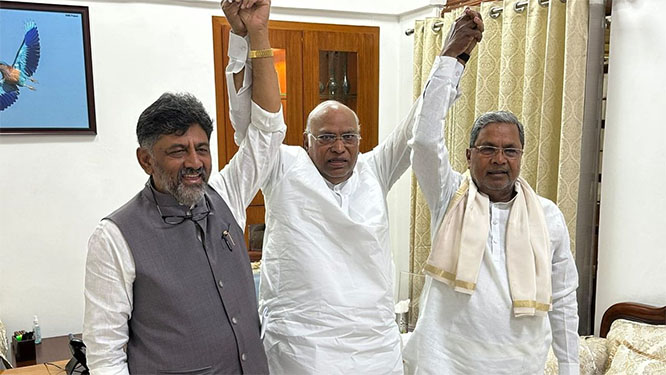
Congress president Mallikarjun Kharge on Thursday announced that he will convene a high-level meeting in New Delhi with senior leaders — including Rahul Gandhi, Karnataka Chief Minister Siddaramaiah and Deputy Chief Minister D.K. Shivakumar — to resolve the escalating leadership turmoil in Karnataka and “put an end to the confusion.”

Kharge said the discussions would focus on the way forward for the ruling party, as rumours of a possible leadership change continue to swirl. The speculation has intensified after the Congress government crossed the halfway mark of its five-year term on November 20, reviving talk of an alleged 2023 “power-sharing agreement” between Siddaramaiah and Shivakumar.

“After reaching Delhi, I will call three or four important leaders and hold discussions. Once we talk, we will decide how to move ahead and end this confusion,” Kharge told reporters in Bengaluru, according to PTI.

When asked specifically about calling Siddaramaiah and Shivakumar to Delhi, he responded: “Certainly, we should call them. We will discuss with them and settle the issue.”

He confirmed that Rahul Gandhi, the Chief Minister, the Deputy Chief Minister and other senior members would be part of the deliberations. “After discussing with everyone, a decision will be made,” he said.

Meanwhile, Siddaramaiah held a separate strategy meeting at his Bengaluru residence with ministers and leaders seen as his close confidants, including G. Parameshwara, Satish Jarkiholi, H.C. Mahadevappa, K. Venkatesh and K.N. Rajanna.
Signalling calm, the Chief Minister told reporters, “Will go to Delhi if the high command calls.”

Shivakumar echoed a similar stance, saying he too would head to the national capital if summoned by the party leadership.

Comments

Add new comment

  • Coastaldigest.com reserves the right to delete or block any comments.
  • Coastaldigset.com is not responsible for its readers’ comments.
  • Comments that are abusive, incendiary or irrelevant are strictly prohibited.
  • Please use a genuine email ID and provide your name to avoid reject.