



Sensex crashes over 1,100 points, Rs 5 lakh crore investor wealth wiped off

News Network
February 28, 2020

Feb 28: Market benchmark Sensex plummeted over 1,100 points, wiping off over Rs 5 lakh crore investor wealth, in opening session on Friday amid a massive selloff in global equities as rising coronavirus cases outside China stoked fears of a pandemic that could dent world growth.
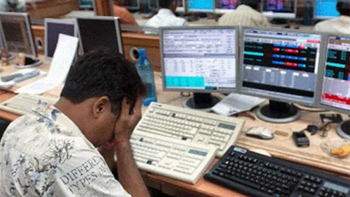
The 30-share index sank 1,100.27 points, or 2.77 per cent, to 38,645.39, while the NSE Nifty cracked 329.50 points, or 2.83 per cent, to 11,303.80.

All Sensex components were trading in the red, led by losses in Tata Steel, Tech Mahindra, Infosys, Mahindra and Mahindra, Bajaj Finance, HCL Tech and Reliance Industries.

In the previous session, the Sensex settled 143.30 points, or 0.36 per cent, lower at 39,745.66, and the Nifty fell 45.20 points or 0.39 per cent to end at 11,633.30.

According to analysts, till last week the market was of the view that coronavirus was going to have minimum impact on global economy as situation in China was being contained. But the increase in the number of new cases is changing the view and investors are worried about an intense slowdown.

Further, incessant selling by foreign investors is also spooking domestic market participants, traders said.

On a net basis, foreign institutional investors sold equities worth Rs 3,127.36 crore on Thursday, data available with stock exchanges showed.

Stock exchanges in Shanghai, Hong Kong, Seoul and Tokyo plunged up to 4 per cent in their morning sessions.

On Wall Street, the Dow Jones Industrial Average dropped 1,190.95 points, its largest one-day point drop in history, bringing its loss for the week to 3,225.77 points, or 11.1 per cent.

The S&P 500 has now plunged 12 per cent from the all-time high it set just a week ago.

World oil prices too tumbled by more than 4 per cent overnight as traders fretted about the impact of spreading coronavirus on crude demand, particularly from key consumer China.

Brent crude oil futures fell another 2.47 per cent to USD 50.45 per barrel early in the day.

The rupee depreciated 28 paise to 71.89 against the US dollar in morning session.

Comments

Add new comment

  • Coastaldigest.com reserves the right to delete or block any comments.
  • Coastaldigset.com is not responsible for its readers’ comments.
  • Comments that are abusive, incendiary or irrelevant are strictly prohibited.
  • Please use a genuine email ID and provide your name to avoid reject.
News Network
December 6,2025

pilot.jpg

New Delhi: IndiGo, India’s largest airline, faced major operational turbulence this week after failing to prepare for new pilot-fatigue regulations issued by the Directorate General of Civil Aviation (DGCA). The stricter rules—designed to improve flight safety—took effect in phases through 2024, with the latest implementation on November 1. IndiGo has acknowledged that inadequate roster planning led to widespread cancellations and delays.

Below are the key DGCA rules that affected IndiGo’s operations:

1. Longer Mandatory Weekly Rest

Weekly rest for pilots has been increased from 36 hours to 48 hours.

The government says the extended break is essential to curb cumulative fatigue. This rule remains in force despite the current crisis.

2. Cap on Night Landings

Pilots can now perform only two night landings per week—a steep reduction from the earlier limit of six.

Night hours, defined as midnight to early morning, are considered the least alert period for pilots.

Given the disruptions, this rule has been temporarily relaxed for IndiGo until February 10.

3. Reduced Maximum Night Flight Duty

Flight duty that stretches into the night is now capped at 10 hours.

This measure has also been kept on hold for IndiGo until February 10 to stabilize operations.

4. Weekly Rest Cannot Be Replaced With Personal Leave

Airlines can no longer count a pilot’s personal leave as part of the mandatory 48-hour rest.

Pilots say this closes a loophole that previously reduced actual rest time.

Currently, all airlines are exempt from this rule to normalise travel.

5. Mandatory Fatigue Monitoring

Airlines must submit quarterly fatigue reports along with corrective actions to DGCA.

This system aims to create a transparent fatigue-tracking framework across the industry.

The DGCA has stressed that these rules were crafted to strengthen flight safety and align India with global fatigue-management standards. The temporary relaxations are expected to remain until February 2025, giving IndiGo time to stabilise its schedules and restore normal air travel.

Comments

Add new comment

  • Coastaldigest.com reserves the right to delete or block any comments.
  • Coastaldigset.com is not responsible for its readers’ comments.
  • Comments that are abusive, incendiary or irrelevant are strictly prohibited.
  • Please use a genuine email ID and provide your name to avoid reject.
News Network
December 16,2025

jordan.jpg

Prime Minister Narendra Modi on Monday held talks with Jordan’s King Abdullah II in Amman, during which the two leaders discussed ways to further strengthen bilateral relations, with the Prime Minister outlining an eight-point vision covering key areas of cooperation.

Describing the meeting as “productive”, PM Modi said he shared a roadmap focused on trade and economy, fertilisers and agriculture, information technology, healthcare, infrastructure, critical and strategic minerals, civil nuclear cooperation, and people-to-people ties.

In a post on social media platform X, the Prime Minister praised King Abdullah II’s personal commitment to advancing India–Jordan relations, particularly as both countries mark the 75th anniversary of the establishment of diplomatic ties this year.

“Held productive discussions with His Majesty King Abdullah II in Amman. His personal commitment towards vibrant India-Jordan relations is noteworthy. This year, we are celebrating the 75th anniversary of our bilateral diplomatic relations,” PM Modi said.

The meeting took place at the Al Husseiniya Palace, where the two leaders also exchanged views on regional and global issues of mutual interest. According to the Ministry of External Affairs (MEA), both sides agreed to further deepen cooperation in areas including trade and investment, defence and security, counter-terrorism and de-radicalisation, fertilisers and agriculture, infrastructure, renewable energy, tourism, and heritage.

The MEA said both leaders reaffirmed their united stand against terrorism.

PM Modi arrived in Amman earlier on Monday and was received by Jordanian Prime Minister Jafar Hassan, who accorded him a formal welcome. Following the talks, King Abdullah II hosted a banquet dinner in honour of the Prime Minister, reflecting the warmth of bilateral ties.

Jordan is the first leg of PM Modi’s three-nation tour. From Amman, the Prime Minister will travel to Ethiopia at the invitation of Prime Minister Abiy Ahmed Ali, marking his first official visit to the African nation. The tour will conclude with a visit to Oman.

Comments

Add new comment

  • Coastaldigest.com reserves the right to delete or block any comments.
  • Coastaldigset.com is not responsible for its readers’ comments.
  • Comments that are abusive, incendiary or irrelevant are strictly prohibited.
  • Please use a genuine email ID and provide your name to avoid reject.

