



Snapdeal ends merger talks with Flipkart; to go solo

Agencies
July 31, 2017

New Delhi, Jul 31: Snapdeal today called off the USD 950 million-takeover (over Rs 6,000 crore) by Flipkart, apparently over differences in valuation and terms of what could possibly have been the largest deal in the Indian e-commerce space.
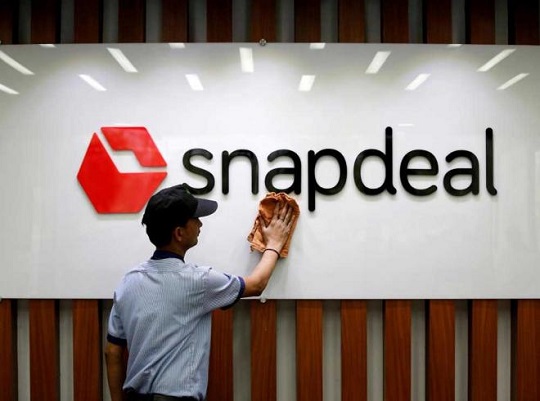
Discussions to acquire the beleagured Snapdeal by Flipkart were initiated in March but contours of the deal could not reach a finality even after several rounds.

"Snapdeal has been exploring strategic options over the last several months. The company has now decided to pursue an independent path and is terminating all strategic discussions as a result," a Snapdeal spokesperson said in a statement, without naming Flipkart.

The spokesperson added that the company will now pursue "Snapdeal 2.0" which is expected to help Snapdeal be "financially self-sustainable".

Japanese conglomerate SoftBank, which holds close to 35 per cent stake in Snapdeal and one that was driving the discussions, said it supports entrepreneurs and their vision.

"...we respect the decision to pursue an independent strategy. We look forward to the results of the Snapdeal 2.0 strategy, and to remaining invested in the vibrant Indian e- commerce space," a SoftBank spokesperson said.

According to company sources, the talks ended on account of the complexity of the deal that came with multiple conditions, right from indemnity to a non-compete clause.

These did not find favour with the founders of the Gurugram-based online marketplace, they added. The sources did not wish to be named as the discussions were private.

The deal was also contingent upon a nod from Snapdeal's high-profile minority investors, including Ratan Tata and Azim Premji's investment arm, PremjiInvest.

It wasn't immediately clear if any of the minority shareholders had objected to the deal. Once a leading player in the Indian e-commerce space, Snapdeal has seen its fortunes falling amid strong competition from rivals, Amazon and Flipkart.

Its valuation plunged from a peak of about USD 6.5 billion in February 2016 to about USD 1 billion during the latest round of discussions. India's nascent e-commerce sector is witnessing an intense battle for leadership between US-based Amazon and homegrown firm, Flipkart as more Indians turn to online shopping.

The players have been pumping in millions of dollars in building infrastructure, getting sellers online as well as promotions to bring more shoppers onboard.

The decision to continue independently also comes within days of Snapdeal agreeing to sell its digital payment platform, FreeCharge, to Axis Bank for Rs 385 crore.

One of the sources said Snapdeal is now pivoting into a 'Taobao'-like open marketplace setup and with money coming in from the sale of non-core assets like Freecharge and Vulcan (when it gets completed), the company will have a run time of at a few years. Snapdeal has about 1,200 employees.

In an e-mail to employees last week, Bahl had indicated that the company may decide to continue independently. Bahl had said the Freecharge deal would give Snapdeal the "necessary boost in resources" to continue its e-commerce journey.

The discussions with Flipkart stretched over five months for a number of reasons. SoftBank worked overtime to get early investors, Kalaari and Nexus Venture Partners -- who also have Board representation -- to agree to the deal.

After their approval, Snapdeal Board turned down Flipkart's USD 800-850 million (about Rs 5,500 crore) offer, saying the amount undervalued the company.

While Flipkart revised the offer to USD 900-950 million, it came with a number of riders that did not find favour with the company.

There have been reports suggesting that SoftBank was looking at picking up stake in Flipkart through the Snapdeal transaction.

With the deal now off, reports say SoftBank may look at investing in Flipkart separately, though it could not be independently verified.

Greyhound Research chief analyst and CEO Sanchit Vir Gogia said Snapdeal 2.0 will need the company to have a different approach to survive and thrive.

"They will have to take a specialised approach to ensure they can continue. The market is now clearly open to a third player after Amazon and Flipkart, possibly to Paytm," he said.

Gogia also noted that the development should also be a reminder to startups that "they should not take consumers and investors for granted". "Valuation alone doesn't help keep a business alive," he said.


Comments

Add new comment

  • Coastaldigest.com reserves the right to delete or block any comments.
  • Coastaldigset.com is not responsible for its readers’ comments.
  • Comments that are abusive, incendiary or irrelevant are strictly prohibited.
  • Please use a genuine email ID and provide your name to avoid reject.
News Network
January 23,2026

modIKERALA.jpg

Prime Minister Narendra Modi, during his visit to Thiruvananthapuram on Friday, January 23, indicated that the Bharatiya Janata Party (BJP) is aiming to expand its political footprint in Kerala ahead of the Assembly elections scheduled in the coming months.

Speaking at a BJP-organised public meeting, Modi drew parallels between the party’s early electoral gains in Gujarat and its recent victory in the Thiruvananthapuram Municipal Corporation. The civic body win, which ended decades of Left control, was cited by the Prime Minister as a possible starting point for the party’s broader ambitions in the state.

Recalling BJP’s political trajectory in Gujarat, Modi said the party was largely insignificant before 1987 and received little media attention. He pointed out that the BJP’s first major breakthrough came with its victory in the Ahmedabad Municipal Corporation that year.

“Just as our journey in Gujarat began with one city, Kerala’s journey has also started with a single city,” Modi said, suggesting that the party’s municipal-level success could translate into wider electoral acceptance.

The Prime Minister alleged that successive governments led by the Left Democratic Front (LDF) and the United Democratic Front (UDF) had failed to adequately develop Thiruvananthapuram. He accused both fronts of corruption and neglect, claiming that basic infrastructure and facilities were denied to the capital city for decades.

According to Modi, the BJP’s control of the civic body represents a shift driven by public dissatisfaction with the existing political alternatives. He asserted that the BJP administration in Thiruvananthapuram had begun working towards development, though no specific details or timelines were outlined.

Addressing the gathering at Putharikandam Maidan, Modi said the BJP intended to project Thiruvananthapuram as a “model city,” reiterating his party’s commitment to governance-led change.

The Prime Minister’s visit to Kerala also included the inauguration of several development projects and the flagging off of new train services, as the BJP intensifies its political outreach in the poll-bound state.

Comments

Add new comment

  • Coastaldigest.com reserves the right to delete or block any comments.
  • Coastaldigset.com is not responsible for its readers’ comments.
  • Comments that are abusive, incendiary or irrelevant are strictly prohibited.
  • Please use a genuine email ID and provide your name to avoid reject.
News Network
January 19,2026

New Delhi: Setting speculation to the rest, the CPI(M) has made it clear that it is open to have an electoral understanding with the Congress “to defeat” the Trinamool Congress and the BJP in West Bengal Assembly election even as it is all set to take on the grand old party in Kerala accusing it of “found wanting” in fighting the Hindutva forces.

The CPI(M) also said that it will contest the Tamil Nadu election “with DMK and its allies to defeat the BJP and its allies”, amid a section in the Congress triggering confusion about its participation in the M K Stalin-led coalition over demand over power-sharing and more seats. It is also willing to join hands with Congress and others in Assam and Puducherry to defeat the BJP.

The decisions came at a three-day meeting of the CPI(M) Central Committee in Thiruvananthapuram, which ended on Sunday after reviewing the poll preparations in the poll-bound states.

The CPI(M)'s decision came even as a section led by West Bengal Congress president Subhankar Sarkar is averse to tying up with the Left Front, claiming that their party is not benefitted by the electoral understanding. Both Congress and CPI(M)-led Left Front had electoral understanding in 2016 and 2021 Assembly elections and 2024 Lok Sabha polls.

Congress and the Left Front fought together for the first time in 2016 when Congress won 44 seats and the CPI(M) got 26. In 2021, the Left Front and the Congress drew a blank. In the 2024 Lok Sabha polls, Congress managed to win one seat while the Left did not win any. In the 2019 Lok Sabha polls, both fought against each other with Congress winning two and the Left none.

“In Bengal, the party will work for the defeat of both the TMC and the BJP, which are trying to polarise the society. We will try to rally all the forces that are ready to work against them,” the CPI(M) said in a statement without naming Congress by name. Senior leaders said there is no change in its strategy of pooling all non-BJP, non-TMC votes.

However, the party was critical of the Congress in Kerala where both will fight against each other.

The CPI(M) said it would "expose the BJP-led Union government’s denial of rightful dues to Kerala, the fiscal constraints imposed and the overall attack on federalism" as also "expose the failure of the Congress to effectively counter this attack on federalism, as the largest opposition party in the Parliament".

"The Congress, especially in Kerala, was found wanting in the fight against communal RSS-BJP, ideologically and this will also be exposed before the people," it added.

In Assam, it said, the CPI(M) will work for the mobilisation of all the anti-BJP parties and forces and defeat the rabidly communal and divisive BJP government. The Left parties are cooperating with Congress in the north-eastern state. In Puducherry, it said it will work for the defeat of the BJP alliance government.

Comments

Add new comment

  • Coastaldigest.com reserves the right to delete or block any comments.
  • Coastaldigset.com is not responsible for its readers’ comments.
  • Comments that are abusive, incendiary or irrelevant are strictly prohibited.
  • Please use a genuine email ID and provide your name to avoid reject.
News Network
January 20,2026

Mangaluru: In a major step towards strengthening rural innovation, the Office of the Principal Scientific Adviser (PSA) to the Government of India is supporting the establishment of RuTAGe Smart Village Centres (RSVCs) across the country through collaborations with academic institutions, civil society organisations and philanthropic partners.

As part of this national initiative, Nitte (Deemed to be University) will set up the first RSVCs in the region at Nitte GP in Udupi district and at the Nitte Health Centre, Sevanjali Trust, Farangipete, in Dakshina Kannada district. The centres will be inaugurated on January 21. In South India, the programme is being implemented by the Section Infin-8 Foundation (SI-8).

Speaking to reporters on Monday, SI-8 founder-director Vishwas US said experts from Nitte University and SI-8 would work closely with farmers, students, youth and local entrepreneurs to adapt and deploy technologies tailored to local needs.

Project head Prof Iddya Karunasagar, representing Nitte DU, said the RSVCs at Nitte and Farangipete would serve as demonstration hubs for a wide range of agriculture, energy, skill-development and assistive technologies. These include solar dryers for fruits, vegetables and crops; soil-testing solutions; power weeders and women-friendly farm tools; wind-powered devices for rural artisans; grain storage systems; grass-cutting and tree-climbing equipment; and liquid fertiliser production using cowshed waste.

SI-8 CEO Aravind C Kumar said the centres would also provide access to digital and knowledge-based platforms such as ISRO applications, government scheme portals, market linkage tools and gamified learning resources, along with assistive technologies for persons with visual impairments.

Highlighting the broader impact of the initiative, Principal Scientific Adviser Prof Ajay Kumar Sood said it demonstrated how applied research could bridge the rural–urban divide and help create self-reliant, technology-enabled villages.

The initiative has been made possible through philanthropic support from Dr NC Murthy of ACM Business Solutions, LLC, USA. Dr Sapna Poti, Director (Strategic Alliances) at the Office of the Principal Scientific Adviser, said the long-term objective is to build self-sufficient, technology-driven communities capable of generating sustainable livelihoods on their own.

Comments

Add new comment

  • Coastaldigest.com reserves the right to delete or block any comments.
  • Coastaldigset.com is not responsible for its readers’ comments.
  • Comments that are abusive, incendiary or irrelevant are strictly prohibited.
  • Please use a genuine email ID and provide your name to avoid reject.