Qatar World Cup is now Morocco’s World Cup!

News Network
December 11, 2022

morocco.jpg

The first World Cup in the Arab world began with a shock, Saudi Arabia upsetting Argentina in a first-round game, setting off waves of jubilation in a region lacking in soccer giants.

The tournament in Qatar is reaching its final stages with another stunner: Morocco upset Portugal on Saturday to become the first country in Africa and the Arab world to ever reach the semifinals.

Supporters who packed cafes in Rabat, Morocco, poured into the streets after the final whistle of the 1-0 game. Cries of joy, horns and fireworks kicked off a party, worthy of a World Cup final, that spread through the Moroccan capital.

Hundreds of families — women, men and children — sang, danced and played instruments in a sea of red and green, the colors of the Moroccan flag. Many more people gathered in front of the parliament building, blocking traffic and greeting one another with “mabrouk alina” (“congratulations to us”).

Morocco added Portugal — and its superstar, Cristiano Ronaldo — to the list of major European nations that it has unexpectedly dumped out of the Cup. Having never previously been in contention for soccer’s biggest prize, Morocco is just one game from a place in the final, after dispatching the likes of Belgium, Spain and now Portugal without allowing them a single goal.

“Pinch me, I think I’m dreaming,” Yassine Bounou, the Morocco goalkeeper known as Bono, said after the game. “These moments are great, but we’re here to change the mentality. With this feeling of inferiority, we have to get rid of it. The Moroccan player can face any in the world. The generation coming after us will know we can create miracles.”

Players from Africa and the Arab world have long played in soccer’s upper-tier leagues in Europe and elsewhere, and like many athletes who hold citizenship in more than one place, many are playing on teams other than the one where they were born. But national teams in Africa have struggled to make a mark late in the tournament until now.

Of Morocco’s 26-member team, just 12 were born in Morocco, the lowest ratio in the competition, according to a tally by FIFA. The others are of Moroccan heritage but born in Spain, Canada, France, the Netherlands and Belgium. Other teams in Africa have also lured players with familial, if not residential, ties to their teams.

Still, Morocco’s storybook run has millions of Arabs, Muslims and North Africans coalescing behind a single team in a way that this tournament has not seen.

That fanatical support was in full display inside the Al Thumama Stadium, which for 90 minutes (plus eight minutes of heart-stopping injury time) resembled a corner of Casablanca, Rabat or Marrakech. Every period of Portuguese possession was met with ear-piercing whistles, and every Moroccan incursion the other way was greeted with the type of boisterous cheering that threatened to pull the ball into the Portuguese net.

The next step of Morocco’s magical journey will come against France in a semifinal game Wednesday, setting the former colony against its former colonizer. But as Morocco celebrated Saturday’s victory, the result almost certainly meant the end of another era.

Ronaldo arrived in Qatar as one of the most famous people in the world, one of the best players to play soccer in any era. But at age 37, he arrived almost as an awkward tourist. He no longer played for a professional club, having been dumped by Manchester United. And his position in Portugal’s starting lineup, which he had gripped for nearly two decades, was tenuous. By the time Portugal reached the round of 16, he had lost it.

Against Switzerland, Ronaldo watched as his young replacement, Gonçalo Ramos, announced himself as an heir apparent, scoring a stunning three goals.

But against Morocco’s iron-willed defense, Ramos and the Portuguese wilted as the wall of whistles reached fever pitch and stayed there. Ronaldo entered the stage with 40 minutes left, a platform to produce one more heroic act, a final cinematic moment in a career filled with cinematic moments.

At the point of an attack that featured a line of four forwards in ever more desperate attempts to break Moroccan resistance, Ronaldo could not bend the World Cup to his will. He ran, he chased balls in behind, he leaped to get his head to balls, he tried to find shooting angles, everything and anything to break the redshirted Moroccan barrier.

So did his teammates. But nothing worked. Shots were blocked, tackles were made as Moroccan numbers seemingly multiplied in the face of incessant waves of Portuguese attacks.

Portugal simply could not get the ball to break for it. But in one first-half moment, Morocco did. In the 42nd minute, Yahia Attiyat Allah sent a hopeful crossing pass in front of the Portuguese goal. The ball hung in the air for what seemed like an age, before the tall striker Youssef En-Nesyri, timing his run to perfection, headed it in a fraction of a second before goalkeeper Diogo Costa could get his hand on it.

It was in the aftermath of that goal when Morocco let its guard down for the only time in the game, allowing the ball to ricochet dangerously close to its goal. Portugal almost tied the game in that moment, with midfielder Bruno Fernandes hitting a strike from an improbable angle that came crashing off the bar.

That was as close as Morocco would let Portugal get.

By the final minutes of the game, Morocco was reduced to 10 men with substitute Walid Cheddira collecting two yellow cards in quick succession. But Morocco refused to be distracted. The final seconds were a blur played against the sound of whistling that threatened to make ears bleed. And then, came the whistle that mattered.

While his teammates sank to their knees, Ronaldo brushed aside the good wishes of two Moroccan players and headed straight toward the tunnel, wiping away tears with his jersey. Morocco, swept up by the bedlam, summoned one final reserve of energy to embark on celebrations that will live long in memory. The team charged toward its fans massed behind the goal that refused to be breached, lifting their arms into the air, milking a moment that only the most optimistic member of its squad could have deemed possible when the journey began last month.

While one hero departs soccer’s biggest stage, the World Cup has given birth to a team of heroes for the Arab world. Morocco is not ready to say goodbye.

In Rabat, the party continued through the night. “I am happy and proud to see men and women shoulder to shoulder supporting and lifting the national team,” said Loubna Taleb, 34, a political adviser at an embassy in the capital. “They have exceeded all expectations and made all of us believe in more than football.”

She added: “Every Moroccan feels invincible and capable of doing and succeeding in anything even against the odds. And for that I am eternally grateful to them for healing a nation from colonial scars.”


Comments

Add new comment

  • Coastaldigest.com reserves the right to delete or block any comments.
  • Coastaldigset.com is not responsible for its readers’ comments.
  • Comments that are abusive, incendiary or irrelevant are strictly prohibited.
  • Please use a genuine email ID and provide your name to avoid reject.
News Network
February 5,2026

Bengaluru: As air quality continues to worsen across several parts of the city, hospitals in Bengaluru are reporting a steady rise in patients suffering from respiratory illnesses such as asthma, bronchitis and Chronic Obstructive Pulmonary Disease (COPD), health officials and doctors said.

Data from the Suvarna Arogya Suraksha Trust (SAST) shows that 3,891 patients received treatment for respiratory ailments between April and November 2024. The figure rose to 4,187 during the same period in 2025.

Private hospitals, too, are witnessing a 10–15 per cent year-on-year increase in such cases.

While doctors caution that the rise cannot be attributed solely to air pollution, a significant number of patients are non-smokers with no prior history of respiratory disease.

“Nearly 70 per cent of the patients we see are non-smokers with no previous respiratory issues. When other causes are ruled out, air pollution emerges as the most likely factor,” said Dr Manjunath PH, consultant interventional pulmonologist at a hospital in Kengeri.

Doctors noted that patient footfall spikes during the winter months and around Deepavali, when air quality typically worsens.

“There is a clear correlation between poor air quality and the rise in cases. People commonly present with persistent cough, breathlessness and irritation of the respiratory tract, indicating the impact of polluted air on their health,” said Dr Sheetal Chaurasia, consultant in pulmonary medicine at a private hospital in Whitefield.

Dr Chaurasia added that respiratory tract infections are also on the rise.

“Poor air quality leads to chronic airway inflammation, making the airways more vulnerable to infections. We are seeing an increase in both upper and lower respiratory tract infections,” she said.

Patients with pre-existing respiratory conditions remain the worst affected.

“For those already diagnosed with respiratory illnesses, deteriorating air quality significantly worsens the condition. Both the frequency and severity of attacks increase sharply,” said Dr Vandana P, a pulmonologist at a hospital on Bannerghatta Road.

Doctors also flagged a worrying trend of rising respiratory problems among younger adults and children.

To reduce exposure, they advised people to wear masks while travelling on two-wheelers or autos and ensure adequate ventilation at home to minimise indoor air pollution.

Comments

Add new comment

  • Coastaldigest.com reserves the right to delete or block any comments.
  • Coastaldigset.com is not responsible for its readers’ comments.
  • Comments that are abusive, incendiary or irrelevant are strictly prohibited.
  • Please use a genuine email ID and provide your name to avoid reject.
News Network
January 23,2026

modIKERALA.jpg

Prime Minister Narendra Modi, during his visit to Thiruvananthapuram on Friday, January 23, indicated that the Bharatiya Janata Party (BJP) is aiming to expand its political footprint in Kerala ahead of the Assembly elections scheduled in the coming months.

Speaking at a BJP-organised public meeting, Modi drew parallels between the party’s early electoral gains in Gujarat and its recent victory in the Thiruvananthapuram Municipal Corporation. The civic body win, which ended decades of Left control, was cited by the Prime Minister as a possible starting point for the party’s broader ambitions in the state.

Recalling BJP’s political trajectory in Gujarat, Modi said the party was largely insignificant before 1987 and received little media attention. He pointed out that the BJP’s first major breakthrough came with its victory in the Ahmedabad Municipal Corporation that year.

“Just as our journey in Gujarat began with one city, Kerala’s journey has also started with a single city,” Modi said, suggesting that the party’s municipal-level success could translate into wider electoral acceptance.

The Prime Minister alleged that successive governments led by the Left Democratic Front (LDF) and the United Democratic Front (UDF) had failed to adequately develop Thiruvananthapuram. He accused both fronts of corruption and neglect, claiming that basic infrastructure and facilities were denied to the capital city for decades.

According to Modi, the BJP’s control of the civic body represents a shift driven by public dissatisfaction with the existing political alternatives. He asserted that the BJP administration in Thiruvananthapuram had begun working towards development, though no specific details or timelines were outlined.

Addressing the gathering at Putharikandam Maidan, Modi said the BJP intended to project Thiruvananthapuram as a “model city,” reiterating his party’s commitment to governance-led change.

The Prime Minister’s visit to Kerala also included the inauguration of several development projects and the flagging off of new train services, as the BJP intensifies its political outreach in the poll-bound state.

Comments

Add new comment

  • Coastaldigest.com reserves the right to delete or block any comments.
  • Coastaldigset.com is not responsible for its readers’ comments.
  • Comments that are abusive, incendiary or irrelevant are strictly prohibited.
  • Please use a genuine email ID and provide your name to avoid reject.
News Network
January 23,2026

oscar.jpg

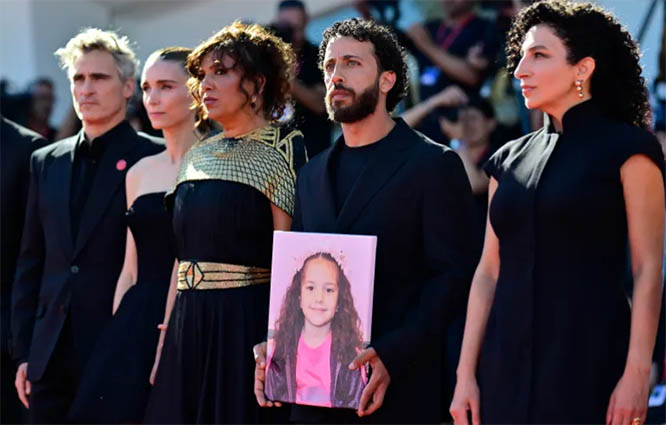
The Voice of Hind Rajab, inspired by the tragic final moments of a young Palestinian girl killed by Israeli fire in Gaza, has been nominated for an Academy Award in the Best International Feature Film category.

Directed by Tunisian filmmaker Kaouther Ben Hania, the film recounts the true story of five-year-old Hind Rajab, who lost her life in January 2024 while fleeing Israeli bombardment with her family.

The film features the real audio of Hind’s desperate call to the Palestinian Red Crescent Society, where she pleaded for help moments before the vehicle she was in was struck by 355 bullets.

The haunting narrative begins with a brief call made from the besieged Tel al-Hawa neighborhood of Gaza, where gunfire and armored vehicles drowned out every sound.

After witnessing the brutal killing of her family, she made a trembling call, her voice reduced to a whisper as she spoke of the massacre and her unbearable loneliness as the sole survivor.

Premiering at the Venice International Film Festival in September 2025, The Voice of Hind Rajab garnered widespread acclaim, receiving a record-setting 23-minute standing ovation and the Silver Lion Grand Jury Prize, the festival’s second-highest honor.

In her acceptance speech, Ben Hania dedicated the film to humanitarian workers and first responders in Gaza, emphasizing that Hind's voice symbolizes countless civilians affected by war.

She aims to give voice to victims often reduced to mere statistics, highlighting the broader suffering of civilians in war zones.

The film’s Oscar nomination underscores its powerful storytelling and ethical approach to depicting real-life tragedy, making it a crucial piece of contemporary cinema.

It serves not only as a narration of individual tragedy but also as an artistic and documentary response to the silence and censorship that often overshadow West Asian struggles and wars.

Using an innovative method she calls docufiction, Ben Hania bridges unvarnished reality and narrative structure, creating a work that is both artistically valuable and socially impactful.

Born in 1977 in Sidi Bouzid—later the epicenter of the Arab revolution—her background profoundly influenced her worldview and artistic approach.

She is a graduate of the Higher School of Audiovisual Arts of Tunis, Pantheon-Sorbonne University, and La Fémis in Paris, where her studies equipped her with the technical and theoretical tools needed to address complex subjects. 

Comments

Add new comment

  • Coastaldigest.com reserves the right to delete or block any comments.
  • Coastaldigset.com is not responsible for its readers’ comments.
  • Comments that are abusive, incendiary or irrelevant are strictly prohibited.
  • Please use a genuine email ID and provide your name to avoid reject.