



Swallowing chicken could make you immune to antibiotics!

July 31, 2014

New Delhi, Jul 31: Each time you eat chicken, you could also be consuming a cocktail of antibiotics. A lab study released by Centre for Science and Environment (CSE) found antibiotic residues in 40% of chicken samples bought from outlets in Delhi and NCR.
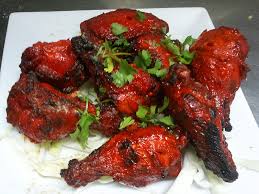
chiken
While the amount of antibiotics found in each sample was not very high, experts said regular consumers of such meat could be in danger of developing antibiotic resistance. In other words, eating chicken with drug traces over a period of time could make you immune to important antibiotics prescribed to treat common illnesses.

The study said it had evidence of large scale and reckless use of antibiotics by poultry owners, which can also lead to antibiotic-resistant bacterial strains in the chicken itself.

CSE said it conducted the study after being alerted by doctors, including Bangalore-based cardiac surgeon Devi Shetty, about a rising trend of antibiotic resistance among patients.

CSE said 22.9% of the 70 samples it collected contained residues of one antibiotic while 17.1% had more than one. One sample purchased from Gurgaon was found to have a cocktail of as many as three antibiotics.

The CSE report, released on Wednesday, said poultry owners routinely pumped antibiotics into chicken during their short life of about 35 to 42 days, to promote growth so that they look bigger and also to treat or prevent infections. India has no law to regulate antibiotic use in the poultry sector.
CSE's research team tested chicken samples at its Pollution Monitoring Laboratory. Three tissues in each sample were tested — muscle, kidney and liver. Residues of five of the six antibiotics were found in all three tissues of the samples in the range of 3.37 to 131.75 micrograms per kg.

According to Dr Shetty, after a researcher conducted a study on antibiotic resistance at his hospital, they found about 10% of the patients to be resistant to common antibiotics.

"These are people who probably haven't taken antibiotics before. They are villagers. We started thinking it could be caused from the food they are eating. That is why I approached CSE to do a study and now the data says it all," he said on a live video chat from Bangalore during the presentation of the findings.

Dr Shetty also said that the likelihood of becoming antibiotic resistant after eating chicken depends on how often we eat chicken. "If you are eating poultry chicken on a daily basis then you could be at a higher risk. That is why I asked my family to get only village reared chicken not the poultry ones," he said.

Dr Randeep Guleria, head pulmonary medicine at AIIMS said he wasn't surprised that antibiotics were entering the food chain through poultry.

"The findings aren't surprising. It's a big concern and in the last few years after the NDM 1 superbug scare, the medical community has been raising concern about indiscriminate use of antibiotics in poultry and agriculture," Dr Guleria said.

Said Chandra Bhushan, CSE's deputy director general, "Our study is only the tip of the iceberg. There are many more antibiotics that are rampantly used that the lab has not tested," Bhushan said.

When contacted by TOI, Union health minister Harsh Vardhan said he would react to the findings only after reading the entire lab report.

CSE also conducted a review of 13 research studies on antibiotic resistance (ABR) in India since 2002 and found that ABR levels were very high for ciprofloxacin and doxycycline, both used for illnesses such as diarrhoea, pneumonia, urinary tract infections and others. High level residues of the same antibiotics were found in chicken samples tested by CSE. The problem according to CSE is compounded by the fact that antibiotics that are essential for humans are now being used in the poultry industry.

"In India there is growing evidence that resistance to fluoroquinolones such as ciprofloxacin is rapidly increasing. Treating fatal diseases like sepsis, pneumonia and tuberculosis (TB) with fluoroquinolones is becoming tough because microbes that cause these diseases are increasingly becoming resistant to fluoroquinolones," a CSE statement said.
What is even more shocking is that poultry farmers seem to have no qualms about accepting that they use high levels of antibiotics and that these antibiotics are widely available, bought easily without any prescription.

A CSE researcher made investigative videos of a farm in Haryana where the poultry staff are seen briefing him about the use of antibiotics. Another researcher bought bags of antibiotics from Karnal and even from Bhagirath Palace in Delhi.

Shopkeepers said the antibiotics are imported from China. The chicken samples for the study were collected from randomly selected shops, both small and big and also some branded outlets. Since these outlets were randomly selected, the trend is likely to be similar in most parts of the country, researchers asserted.

CSE has made a set of recommendations to deal with the problem. It has called for a ban on use of antibiotics as growth promoters and for mass disease prevention. Antibiotics critical for humans should not be allowed in the poultry industry and antibiotics should not be used as a feed additive, it said and asked for government regulation of the poultry feed industry.

Interestingly, the ongoing Indo-US dialogue has the import of free chicken legs on its agenda. Considering that US has only voluntary standards for antibiotic usage in poultry and that 80% of antibiotics there are given to farm animals, CSE head Sunita Narain said India should be cautious. "The government should think about allowing import of chicken legs from a country with such poor regulations," she said.

Comments

Add new comment

  • Coastaldigest.com reserves the right to delete or block any comments.
  • Coastaldigset.com is not responsible for its readers’ comments.
  • Comments that are abusive, incendiary or irrelevant are strictly prohibited.
  • Please use a genuine email ID and provide your name to avoid reject.
News Network
December 15,2025

Mangaluru, Dec 15: Air India Express has announced that it will resume direct flight services between Mangaluru and Muscat from March 2026, restoring an important international air link for passengers from the coastal region.

Airport authorities said the service will operate twice a week—on Sundays and Tuesdays—from March 1. The initial flights are scheduled on March 3, 8 and 10, followed by March 15 and 17, with the same operating pattern to continue thereafter. The flight duration is approximately three hours and 25 minutes.

The Mangaluru–Muscat route was earlier operated under the 2025 summer schedule, with services beginning on July 14. At that time, Air India Express had operated four flights a week before suspending the service.

Officials said the summer schedule will come into effect from March 29, after which changes in flight timings and departure schedules from Mangaluru are expected. Passengers have been advised to check the latest schedules while planning their travel.

The resumption of direct flights to Muscat is expected to significantly benefit expatriates, business travellers and others, further strengthening Mangaluru’s air connectivity with the Gulf region.

Comments

Add new comment

  • Coastaldigest.com reserves the right to delete or block any comments.
  • Coastaldigset.com is not responsible for its readers’ comments.
  • Comments that are abusive, incendiary or irrelevant are strictly prohibited.
  • Please use a genuine email ID and provide your name to avoid reject.
News Network
December 15,2025

Udupi, Dec 15: What was meant to be a post-pilgrimage gathering turned tragic in Padukere village of Brahmavar taluk, Udupi district, late Sunday night, when a clash among youths escalated into a fatal assault, leaving one man dead.

The victim has been identified as 30-year-old Santosh Mogaveera, a resident of Padukere.

According to preliminary information, the incident took place during a late-night drinking party involving a group of local youths who had recently returned after completing their pilgrimage to the Sabarimala shrine. An argument reportedly broke out among the group and soon escalated into a violent confrontation.

During the ensuing brawl, Santosh Mogaveera was allegedly assaulted and collapsed at the spot after sustaining serious injuries. He was rushed by local residents to a private hospital in Brahmavar, where doctors declared him dead.

On receiving information, senior police officials, including Brahmavar Circle Inspector Gopikrishna, Kota Police Sub-Inspector Praveen Kumar T, Station ASI Manthesh Jabagoudar, and head constables Pradeep and Ashok, visited the spot and conducted an inspection.

Police have taken four youths into custody in connection with the incident. A case has been registered at the Kota police station, and further investigation is underway to ascertain the exact sequence of events leading to the death.

Comments

Add new comment

  • Coastaldigest.com reserves the right to delete or block any comments.
  • Coastaldigset.com is not responsible for its readers’ comments.
  • Comments that are abusive, incendiary or irrelevant are strictly prohibited.
  • Please use a genuine email ID and provide your name to avoid reject.
News Network
December 7,2025

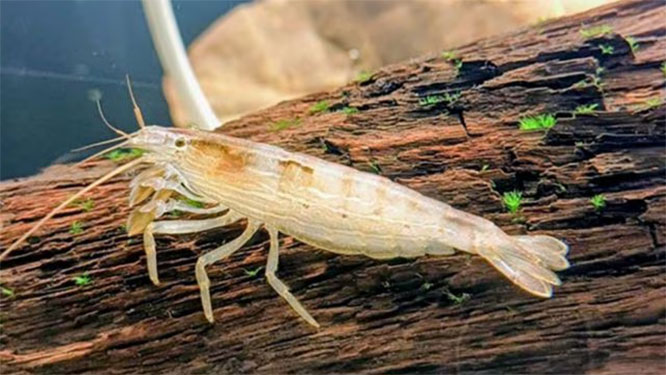
SHRIMP.jpg

Mangaluru, Dec 7: A rare bamboo shrimp has been rediscovered on mainland India more than 70 years after it was last reported, confirming for the first time the presence of Atyopsis spinipes in the country. The find was made by researchers from the Centre for Climate Change Studies at Sathyabama Institute of Science and Technology, Chennai, during surveys in Karnataka and Odisha.

The team — shrimp expert Dr S Prakash, PhD scholar K Kunjulakshmi, and Mangaluru-based researcher Maclean Antony Santos — combined field surveys, ecological assessments and DNA analysis to identify the elusive species. Their findings, published in Zootaxa, resolve decades of taxonomic confusion stemming from a 1951 report that misidentified the species as Atyopsis moluccensis without strong evidence.

The shrimp has now been confirmed at two locations: the Mulki–Pavanje estuary near Mangaluru and the Kuakhai River in Bhubaneswar. Historical specimens from the Andaman Islands, previously labelled as A. moluccensis, were also found to be misidentified and actually belong to A. spinipes.

The rediscovery began after an aquarium hobbyist in Odisha spotted a shrimp in 2022, prompting systematic surveys across Udupi, Karwar and Mangaluru. Four female specimens were collected in Mulki and one in Odisha, all genetically matching.

Researchers warn the species may exist in very small, vulnerable populations as freshwater habitats face increasing pressure from pollution, sand mining and infrastructure development. All verified specimens have been deposited with the Zoological Survey of India for future reference.

Comments

Add new comment

  • Coastaldigest.com reserves the right to delete or block any comments.
  • Coastaldigset.com is not responsible for its readers’ comments.
  • Comments that are abusive, incendiary or irrelevant are strictly prohibited.
  • Please use a genuine email ID and provide your name to avoid reject.