A tailor by day and killer by night; Bhopal man murdered 33

TOI
September 12, 2018

Bhopal, Sept 12: During the day Adesh Khamra stitched clothes, hunched over his sewing machine in a small shop on the fringes of Bhopal. In the night, as he tossed in bed, consumed by visions of deadly crimes that he wanted to commit, he perhaps saw himself switching the needle for an axe, the thread into a hangman's noose.

Then the killings started. Sometime around 2010. The first one in Amravati, the other in Nashik. Soon, bodies started popping up everywhere in MP, some even in Maharashtra, UP and Bihar. There was one element that connected the murders. All the victims were truck drivers and their helpers. But no one thought the quiet, affable tailor from Mandideep could have been behind the brutality.

Last week, when the local police finally nabbed Khamra, they were stunned he admitted to 30 killings. On Tuesday, he said he had killed three more. At 33 serial strikes, that would make him one of India's deadliest killers, behind the likes of Raman Raghav, who was charged with slaughtering 42, Surendra Koli and the Stoneman of Kolkata. Khamra, who was arrested from the jungles of Sultanpur in UP by a daring woman cop after a three-day chase last week, "was admitting to murders so rapidly" that the raiding team said it was struggling to keep up with the flow of information.

‘He killed drivers to give them salvation’

It was Bhopal city SP Bittu Sharma — a taekwondo black belt and Asian Games bronze medalist in judo — who took Khamra down at gunpoint in the dead of the night. Neither she nor SP Lodha Rahul Kumar, who headed investigations into two recent murders of truckers, had any clue then that they possibly had one of India’s most notorious serial killers in their custody. “This is a once-in-a-lifetime case,” said Lodha.

Co-accused Jaykaran has told police that whenever they asked him why he killed the drivers, he would laugh and say he is granting them salvation. “They lead hard lives,” he would laugh. “I am giving them mukti, freeing them from pain.”

Friends and relatives said it was unbelievable that they had lived next to a monster all this while. “He was a quiet man, well behaved. There is no way anyone will accept he has the blood of so many on his hands,” said a neighbor.

Bhopal DIG Dharmendra Choudhary said Khamra, 48 now, could put up a disarming show of warmth and friendliness. He used this to befriend truckers and trap them. While his men looted the cargo, he would strangle the drivers with a length of rope. Occasionally, he used poison to silence his victims.

The modus operandi was chillingly effective — ensnare truckers over drinks, drug them, murder them, strip them of every bit of clothing that could lead to their identification, and dump bodies under culverts or on hilly roads.

This way, bodies would turn up in states ranging from MP to Maharashtra, UP, Bihar and Jharkhand, with police struggling to join the dots. “That is what makes this gang so deadly. We don’t know how many more cold cases will be traced back to them,” said an officer interrogating Khamra.

Talking to Khamra is quite unsettling, police officers involved in the probe said. He shows no remorse. “And he remembers every little detail about everyone he has killed. The victim’s last meal, where they ate, what they wore, where and how he was killed and where exactly the body was dumped. The details are bloodcurdling. In postmortem reports, the injuries were exactly where he had dealt the blows,” added a police officer.

For police, there were more startling disclosures in store. Khamra was most likely influenced by a dreaded killer he called uncle, a man whose name was Ashok Khamra. Ashok himself had admitted to 100 trucker murders when he was arrested in 2010, police said. Ashok drugged his police escort while being brought to Bhopal by train and escaped. He hasn’t been seen since.

In the close-knit Khamra community — a group of hard working, educated people whose forefathers came as refugees from Pakistan — Ashok’s notoriety is a matter of shame. So is Khamra’s now.

Comments

Add new comment

  • Coastaldigest.com reserves the right to delete or block any comments.
  • Coastaldigset.com is not responsible for its readers’ comments.
  • Comments that are abusive, incendiary or irrelevant are strictly prohibited.
  • Please use a genuine email ID and provide your name to avoid reject.
News Network
November 22,2025

gaza.jpg

The Israeli regime’s forces have killed two Palestinian children in the Gaza Strip every day since the ceasefire began in early October, UNICEF has warned.

The UN children’s agency said on Friday that Israeli forces continue to attack Palestinians in Gaza even though the agreement was meant to stop the killing.

“Since 11 October, while the ceasefire has been in effect, at least 67 children have been killed in conflict-related incidents in the Gaza Strip. Dozens more have been injured. That is an average of almost two children killed every day since the ceasefire took effect,” UNICEF spokesperson Ricardo Pires said in Geneva, reminding that each number in the statistics represents a child whose life had ended violently.

“These are not statistics,” he said. “Each child had a story, a family, and a future that was stolen from them.”

Data from Palestinian factions, human rights groups, and government bodies recorded since the US-brokered ceasefire deal went into effect on October 10 show that Israeli forces have carried out numerous attacks, each constituting a separate ceasefire violation.

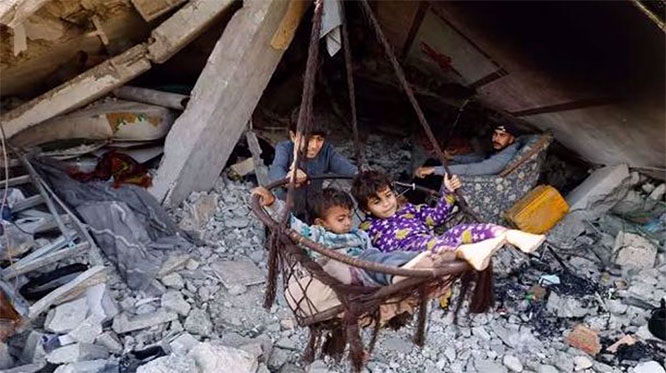
UNICEF teams say they repeatedly continue to witness heart-wrenching scenes of fearful Palestinian children sleeping outdoors with amputated limbs, while others live as orphans in flooded, makeshift shelters.

“I saw this myself in August. There is no safe place for them. The world cannot normalize their suffering,” Pires said, lamenting that the UN could “do a lot more if the aid that is really needed was entering faster.”

The UNICEF spokesperson warned that with the advent of winter, the risks for hundreds of thousands of displaced children will increase.

He warned, “The stakes are incredibly high” for children as winter acts as a threat multiplier, where children have no heating, no insulation, and few blankets. He said respiratory infections rise.

“Too many children have already paid the highest price,” Pires said. “Too many are still paying it, even under a ceasefire. The world promised them it would stop and that we would protect them.”

“Now we must act like it,” the UNICEF spokesperson added.

Since the Israeli regime launched its genocidal war against Palestinians in Gaza in October 2023, it has killed nearly 70,000 people in the territory, most of them women and children, and injured over 170,000 more, while reducing most of the structures in the enclave to rubble.

Comments

Add new comment

  • Coastaldigest.com reserves the right to delete or block any comments.
  • Coastaldigset.com is not responsible for its readers’ comments.
  • Comments that are abusive, incendiary or irrelevant are strictly prohibited.
  • Please use a genuine email ID and provide your name to avoid reject.
News Network
November 21,2025

israel.jpg

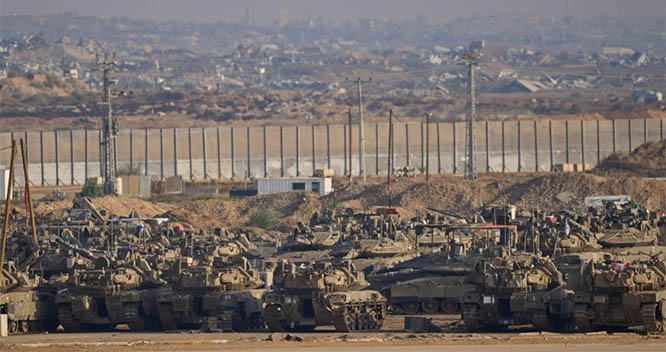
Local authorities say the Israeli military has expanded the so-called “yellow line” truce demarcation in Gaza City and repositioned its forces deeper into the territory in violation of a ceasefire agreement that came into force on October 10, besieging dozens of Palestinian families.

Gaza’s Government Media Office announced in a statement on Thursday that Israeli forces widened the boundary by shifting the markers, and advanced roughly 300 meters (984 feet) into the neighborhoods of Ash-Shaaf, An-Nazzaz and Baghdad Street.

The move pushed further into civilian areas, trapping families who were unable to flee as tanks rolled forward, it added.

“The fate of many of these families remains unknown amidst the shelling that targeted the area,” the office said, adding that the expansion of the yellow line shows a “blatant disregard” for the ceasefire deal.

On Friday, sources said the Israeli military carried out continued air and artillery strikes inside the so-called “yellow line” east of Khan Younis in the southern Gaza Strip.

According to the reports, Israeli warplanes and tanks targeted areas within the zone. One Palestinian was reported killed and several others wounded in the strikes, the sources said.

The fresh aggression came only a day after 25 Palestinians were killed in Israeli airstrikes on Gaza City and Khan Younis on Wednesday.

The media office reported that Israel has consistently violated the truce deal since its implementation last month, with near-daily attacks by air, artillery and direct shootings.

The office said over 400 violations have been documented. These breaches have resulted in the deaths of more than 300 Palestinians and left hundreds injured.

The Government Media Office in Gaza urged the guarantors of the ceasefire — the US, Egypt, Qatar and Turkey — to take swift action to halt the ongoing violations and facilitate the delivery of food, shelter materials, medical aid, and infrastructure equipment.

The so-called “yellow line,” set out in the agreement between Israel and Hamas resistance movement, refers to a non-physical partition where the Israeli military repositioned itself when the truce deal took effect.

It has allowed Israel, which routinely fires at Palestinians who approach the line, to retain control over more than half of the Gaza Strip.

International bodies, including the UN Independent International Commission of Inquiry, the International Association of Genocide Scholars, Amnesty International, Human Rights Watch, B’Tselem, and other rights groups, have concluded that the Israeli war on Gaza amounts to genocide.

In the attacks in Gaza since October 2023, Israel has killed at least 69,546 people and injured 170,833 others, leveling large swaths of the territory and displacing almost all of the population. 

Comments

Add new comment

  • Coastaldigest.com reserves the right to delete or block any comments.
  • Coastaldigset.com is not responsible for its readers’ comments.
  • Comments that are abusive, incendiary or irrelevant are strictly prohibited.
  • Please use a genuine email ID and provide your name to avoid reject.
News Network
December 2,2025

A major upgrade in safety and monitoring is planned for Haj 2026, with every Indian pilgrim set to receive a Haj Suvidha smart wristband linked to the official Haj Suvidha mobile app. The initiative aims to support pilgrims—especially senior citizens—who may struggle with smartphones during the 45-day journey.

What the Smart Wristband Will Do

Officials said the device will come with:
•    Location tracking
•    Pedometer
•    SOS emergency button
•    Qibla compass
•    Prayer timings
•    Basic health monitoring

SP Tiwari, secretary of the UP State Haj Committee, said the goal is to make the pilgrimage safer and more comfortable.

“Most Hajis are elderly and not comfortable with mobile apps,” he said. “The smartwatch will help locate pilgrims who forget their way or cannot communicate their location.”

The wristbands will be monitored by the Consulate General of India in Saudi Arabia, similar to mobile tracking via the Haj Suvidha App.

Free Distribution and Training

•    Smart wristbands will be given free of cost.
•    Training for pilgrims will be conducted between January and February 2026.
•    Sample units will reach state Haj committees soon.
•    Final devices will be distributed as pilgrims begin their journey.

New Rules for Accommodation

Two major decisions have also been finalised for Haj 2026:
1.    Separate rooms for men and women – including married couples. They may stay on the same floor but must occupy different rooms, following stricter Saudi guidelines.
2.    Cooking banned – gas cylinders will not be allowed; all meals will be provided through official catering services arranged by the Haj Committee of India.

These decisions were finalised during a meeting of the Haj Committee of India and state representatives in Mumbai.

Haj Suvidha App Launched Earlier

The government launched the Haj Suvidha App in 2024, offering:

•    Training modules
•    Accommodation and flight details
•    Baggage information
•    SOS and translation tools
•    Grievance redressal

Haj 2026 Quota and Key States

•    India’s total Haj quota for 2026: 1,75,025 pilgrims
•    70% (1,25,000) allotted to the Haj Committee of India
•    30% (around 50,000) reserved for Haj Group Organisers

Uttar Pradesh has the largest allocation (around 30,000 seats), though approximately 18,000 pilgrims are expected to go this year. States with high pilgrim numbers include Kerala, Maharashtra and Gujarat.

Dates of Haj 2026

The pilgrimage is scheduled to take place from 24 May to 29 May, 2026 (tentative).
Haj is one of the five pillars of Islam and is mandatory for Muslims who meet the required conditions.

Comments

Add new comment

  • Coastaldigest.com reserves the right to delete or block any comments.
  • Coastaldigset.com is not responsible for its readers’ comments.
  • Comments that are abusive, incendiary or irrelevant are strictly prohibited.
  • Please use a genuine email ID and provide your name to avoid reject.