Take extra care to lessen suffering of poor post note ban: President

January 5, 2017

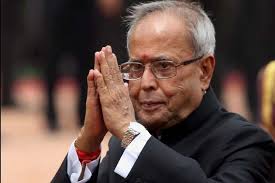
New Delhi, Jan 5: Extra care must be taken to alleviate sufferings of the poor triggered by economic slowdown which has become unavoidable post demonetisation, President Pranab Mukherjee said today.
pranav
Demonetisation, while immobilising black money and fighting corruption, may lead to "temporary slowdown" of the economy, the President said addressing the Governors and Lt Governors through video-conferencing from Rashtrapati Bhavan here.

"We all will have to be extra careful to alleviate the suffering of the poor which might become unavoidable for the expected progress in the long term," Mukherjee said.

He said that while he appreciates the thrust on transition from entitlement approach to an entrepreneurial one for poverty alleviation, he is not too sure that the "poor can wait that long".

"They need to get succour here and now so that they can also participate actively in the national march toward a future devoid of hunger, unemployment and exploitation," the President said.

Mukherjee said the recent package announced by the Prime Minister will provide some relief.
There will be elections in as many as seven states this year and the dates for elections in five of them have already been announced, the President said.

"The conduct of free and fair elections has made our democracy one of the most vibrant in the world. Elections reflect the attitudes, values and beliefs of the people towards their political environment," he said.

Cautioning about competitive populism, electoral rhetoric and vote bank politics during elections, Mukherjee said noisy debates can "deepen the fault-lines in the society".

"Goodwill must prevail between different communities. At times, harmony may be put to test by vested interests. Communal tensions may rear their ugly head. Rule of law must form the sole basis of dealing with any such challenging situation," the President said.

He said the Governors and Lt Governors command respect and attention of the people of their state and they can play a role in easing tensions in the society.

"Through your interaction and wise counsel, you can play an important role in easing the tensions in the society," he said in his address.

He said, "In a pluralistic democracy like ours, tolerance, respect for contrary views and patience are a must which have to be preserved.

"India's strength lies in her diversity. The multiplicity in culture, faith and language is what makes India special. There will always be divergent strands in public discourse. We may argue. We may disagree. But we cannot deny the prevalence of multiplicity of opinion," Mukherjee said.

The President asked Governors and Lt Governors to inculcate among the citizens of their states this fundamental ethos of the civilisation.

Mukherjee said the year gone was a year of mixed fortunes.

"It began on a very promising note with the economy performing well, overcoming the weak global economic trends. GDP growth of 7.2 percent in the first half of 2016-17 -- same as that of last year-- is a pointer to the fact that our economic recovery has been on solid grounds," he said.

In 2014 and 2015, below normal rains had caused rural distress but a good monsoon in 2016 is expected to improve agricultural production and increase rural employment and incomes, Mukherjee said.

"Though our exports have been affected by weak global demand, we have a stable external sector. Reviving exports will remain a challenge but we can overcome it by improving the competitiveness of the domestic industry," he said.

The President asked the Governors and Lt Governors to protect, preserve and defend the Constitution as they had taken an oath when they assumed this exalted office.

"This pious document protects the liberty of the people and promotes the well-being of the citizens. It decrees inclusiveness, tolerance, self-restraint, and protection of women, senior citizens and weaker sections as essential ingredients of our polity. Our institutions of democracy must operate on these vital features," he said.

Mukherjee said strong credible institutions lead to good governance ensuring a healthy functioning of the democracy.

The President also asked them to work with the academic leaders to effect holistic changes for quality up-gradation in the institutions of higher learning.

He also asked them to promote art and culture in their respective states.

"As I have said elsewhere, art and culture are our link with the past. They provide the foundation for our current thought and by extension, the platform for our future action.

They also provide a stable base to life and make it possible for us to have a joyous existence.

"With art and culture, we can experience life in its fullest and most meaningful form. They add to the overall happiness and well-being of the society," he said.


Comments

Add new comment

  • Coastaldigest.com reserves the right to delete or block any comments.
  • Coastaldigset.com is not responsible for its readers’ comments.
  • Comments that are abusive, incendiary or irrelevant are strictly prohibited.
  • Please use a genuine email ID and provide your name to avoid reject.
News Network
December 6,2025

pilot.jpg

New Delhi: IndiGo, India’s largest airline, faced major operational turbulence this week after failing to prepare for new pilot-fatigue regulations issued by the Directorate General of Civil Aviation (DGCA). The stricter rules—designed to improve flight safety—took effect in phases through 2024, with the latest implementation on November 1. IndiGo has acknowledged that inadequate roster planning led to widespread cancellations and delays.

Below are the key DGCA rules that affected IndiGo’s operations:

1. Longer Mandatory Weekly Rest

Weekly rest for pilots has been increased from 36 hours to 48 hours.

The government says the extended break is essential to curb cumulative fatigue. This rule remains in force despite the current crisis.

2. Cap on Night Landings

Pilots can now perform only two night landings per week—a steep reduction from the earlier limit of six.

Night hours, defined as midnight to early morning, are considered the least alert period for pilots.

Given the disruptions, this rule has been temporarily relaxed for IndiGo until February 10.

3. Reduced Maximum Night Flight Duty

Flight duty that stretches into the night is now capped at 10 hours.

This measure has also been kept on hold for IndiGo until February 10 to stabilize operations.

4. Weekly Rest Cannot Be Replaced With Personal Leave

Airlines can no longer count a pilot’s personal leave as part of the mandatory 48-hour rest.

Pilots say this closes a loophole that previously reduced actual rest time.

Currently, all airlines are exempt from this rule to normalise travel.

5. Mandatory Fatigue Monitoring

Airlines must submit quarterly fatigue reports along with corrective actions to DGCA.

This system aims to create a transparent fatigue-tracking framework across the industry.

The DGCA has stressed that these rules were crafted to strengthen flight safety and align India with global fatigue-management standards. The temporary relaxations are expected to remain until February 2025, giving IndiGo time to stabilise its schedules and restore normal air travel.

Comments

Add new comment

  • Coastaldigest.com reserves the right to delete or block any comments.
  • Coastaldigset.com is not responsible for its readers’ comments.
  • Comments that are abusive, incendiary or irrelevant are strictly prohibited.
  • Please use a genuine email ID and provide your name to avoid reject.
News Network
December 5,2025

indigoCEO.jpg

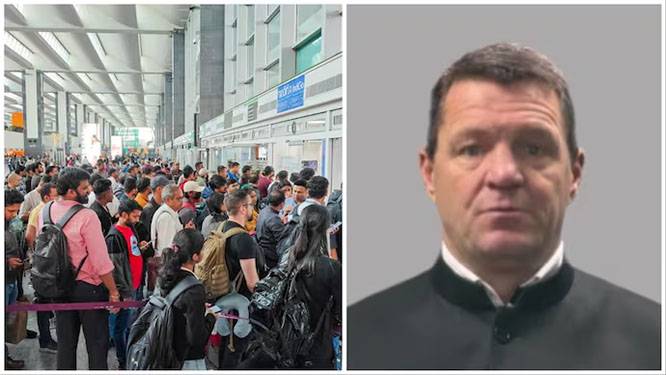
New Delhi, Dec 5: IndiGo CEO Pieter Elbers issued a public apology this evening after more than a thousand flights were cancelled today, making it the "most severely impacted day" in terms of cancellations. The biggest airline of the country cancelled "more than half" of its daily number of flights on Friday, said Elbers. He also said that even though the crisis will persist on Saturday, the airline anticipates fewer than 1,000 flight cancellations.

"Full normalisation is expected between December 10 and 15, though IndiGo cautions that recovery will take time due to the scale of operations," the IndiGo CEO said. 

IndiGo operates around 2,300 domestic and international flights daily.

Pieter Elbers, while apologising for the major inconvenience due to delays and cancellations, said the situation is a result of various causes.

The crisis at IndiGo stems from new regulations that boost pilots' weekly rest requirements by 12 hours to 48 and allow only two night-time landings per week, down from six. IndiGo has attributed the mass cancellations to "misjudgment and planning gaps".

Elbers also listed three lines of action that the airline will adopt to address the issue.

"Firstly, customer communication and addressing your needs, for this, messages have been sent on social media. And just now, a more detailed communication with information, refunds, cancellations and other customer support measures was sent," he said.

The airline has also stepped up its call centre capacity.

"Secondly, due to yesterday's situation, we had customers stranded mostly at the nation's largest airports. Our focus was for all of them to be able to travel today itself, which will be achieved. For this, we also ask customers whose flights are cancelled not to come to the airports as notifications are sent," the CEO said.

"Thirdly, cancellations were made for today to align our crew and planes to be where they need to start tomorrow morning afresh. Earlier measures of the last few days, regrettable, have proven not to be enough, but we have decided today to reboot all our systems and schedules, resulting in the highest numbers of cancellations so far, but imperative for progressive improvements starting from tomorrow," he added.

As airports witnessed chaotic scenes, the Directorate General of Civil Aviation (DGCA) stepped in to grant IndiGo a temporary exemption from stricter night duty rules for pilots. It also allowed substitution of leaves with a weekly rest period. 

Civil Aviation Minister Ram Mohan Naidu has said a high-level inquiry will be ordered and accountability will be fixed.

Comments

Add new comment

  • Coastaldigest.com reserves the right to delete or block any comments.
  • Coastaldigset.com is not responsible for its readers’ comments.
  • Comments that are abusive, incendiary or irrelevant are strictly prohibited.
  • Please use a genuine email ID and provide your name to avoid reject.
News Network
December 16,2025

bengal.jpg

The deletion of over 58 lakh names from West Bengal’s draft electoral rolls following a Special Intensive Revision (SIR) has sparked widespread concern and is likely to deepen political tensions in the poll-bound state.

According to the Election Commission, the revision exercise has identified 24 lakh voters as deceased, 19 lakh as relocated, 12 lakh as missing, and 1.3 lakh as duplicate entries. The draft list, published after the completion of the first phase of SIR, aims to remove errors and duplication from the electoral rolls.

However, the scale of deletions has raised fears that a large number of eligible voters may have been wrongly excluded. The Election Commission has said that individuals whose names are missing can file objections and seek corrections. The final voter list is scheduled to be published in February next year, after which the Assembly election announcement is expected. Notably, the last Special Intensive Revision in Bengal was conducted in 2002.

The development has intensified the political row over the SIR process. Chief Minister Mamata Banerjee and her Trinamool Congress have strongly opposed the exercise, accusing the Centre and the Election Commission of attempting to disenfranchise lakhs of voters ahead of the elections.

Addressing a rally in Krishnanagar earlier this month, Banerjee urged people to protest if their names were removed from the voter list, alleging intimidation during elections and warning of serious consequences if voting rights were taken away.

The BJP, meanwhile, has defended the revision and accused the Trinamool Congress of politicising the issue to protect what it claims is an illegal voter base. Leader of the Opposition Suvendu Adhikari alleged that the ruling party fears losing power due to the removal of deceased, fake, and illegal voters.

The controversy comes amid earlier allegations by the Trinamool Congress that excessive work pressure during the SIR led to the deaths by suicide of some Booth Level Officers (BLOs), for which the party blamed the Election Commission. With the draft list now out, another round of political confrontation appears imminent.

As objections begin to be filed, the focus will be on whether the correction mechanism is accessible, transparent, and timely—critical factors in ensuring that no eligible voter is denied their democratic right ahead of a crucial election.

Comments

Add new comment

  • Coastaldigest.com reserves the right to delete or block any comments.
  • Coastaldigset.com is not responsible for its readers’ comments.
  • Comments that are abusive, incendiary or irrelevant are strictly prohibited.
  • Please use a genuine email ID and provide your name to avoid reject.