



Top journalists denounce trolling on social media

Agencies
September 29, 2017

New Delhi, Sept 29: Online abuse heaped on a dead Gauri Lankesh lays bare the "hostile atmosphere" people are facing today on social media where an army of trolls is either "intimidating dissenters" or fomenting tension, according to leading journalists.
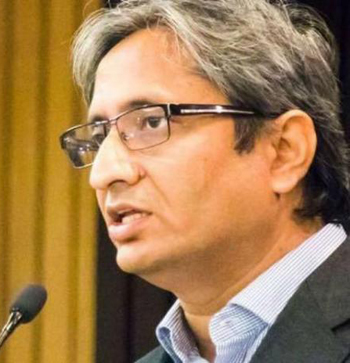
Shocked at the gunning down of the 55-year-old journalist -activist, an outspoken critic of Hindutva politics, many journalists and activists concurred that a "climate of fear" was being built by "paid trolls" on Facebook and Twitter to silence those holding divergent views or to "spread disinformation".

Senior TV journalist Ravish Kumar said that he felt like he was a "dead man walking" ever since he heard about the chilling murder of Lankesh at the entrance of her home in Bengaluru, an eerie reminder of the killings of rationalist Narendra Dabholkar and former vice-chancellor of Hampi University M M Kalburgi.

"Gauri Lankesh's killing is not a one-off case. She was silenced because she bravely and fearlessly aired her views. People have been killed in the last few years just because they had a divergent opinion or dissented against an idea.

"Even after her (Lankesh's) death, many on social media are using abusive language to describe her. Look at your timelines (on Facebook and Twitter), there are people watching, what you are writing. She was killed to send out a message to all of us that if you dissent, you will meet this fate," Kumar said at a gathering yesterday.

Senior journalist Paranjoy Guha Thakurta, who was trolled for an article recently, shared how the world over people were fighting an "organised army of trolls, paid for by those with vested interest, either political or corporate".

"And, especially the extreme-right-wing people are using the techniques and the tactics in a Goebbels-like manner to spread disinformation, which is a propaganda, for a purpose, which is extremely pernicious. Fake news is being spread through WhatsApp and other media to foment hatred and tension, like in the Muzaffarnagar riot case," he said.
Facebook has more users than the population of China and it's is only growing. "So, it cannot be ignored or wished away," Thakurta said.

"It (social media) is like a surgeon's scalpel. It is sharp and can be used to remove a diseases part of the body and the same tool can be used to injure, maim or even kill somebody. Facebook and Twitter are becoming a difficult terrain, especially for journalists and outspoken people," he added.

Amid an outrage over the cold-blooded murder of Lankesh, scores of fellow journalists from various media houses yesterday gathered at the Press Club of India here, and also expressed concern over tasteless jibes being hurled on social media, for the political views she held.

JNU student leader Kanhaiya Kumar said, hours after her death, there were people on social media, who described her with demeaning epithets.

"It is a tough time for journalists. And, even RTI activists and environmental activists have been killed in the past. Now, social media is being used to intimidate and threaten people. If you have a different opinion or if you dissent and air your view on Facebook or Twitter, you will be trolled and harassed," he said.

General Secretary of Broadcast Editors Association Ajit Anjum said it was a difficult time for journalists and people expressing divergent views, especially on social media.

"People are being killed on social media first," he said.Noted Supreme Court lawyer Vrinda Grover, who was present at the protest meet, expressed her horror over the killing, and said, "We are living in very dangerous times."

"This was not a one-off, random case. Lankesh was killed because she stood and fought for ideas of justice and values enshrined in our Constitution -- liberty, equality. And, even after her death, people are using abusive language for her on social media. People being abused or intimidated on social media to silence them, is a very dangerous trend," she added.

Comments

Add new comment

  • Coastaldigest.com reserves the right to delete or block any comments.
  • Coastaldigset.com is not responsible for its readers’ comments.
  • Comments that are abusive, incendiary or irrelevant are strictly prohibited.
  • Please use a genuine email ID and provide your name to avoid reject.
News Network
January 31,2026

Roy.jpg

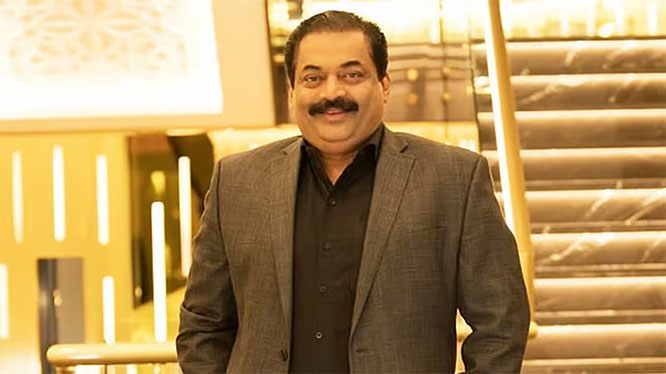
Bengaluru: The shooting incident involving CJ Roy, founder of the Confident Group, has once again put the spotlight on a businessman whose life has swung between flamboyant global success and persistent controversy at home.

Though Roy’s business interests extended across continents, his roots lay firmly in Karnataka. An alumnus of Christ School in Bengaluru, he later moved to Tumakuru to pursue an engineering degree. Those familiar with his early years describe him as intensely ambitious, beginning his career as a salesman at a small electronics firm dealing in computers.

Roy’s entry into large-scale real estate came through the Crystal Group, where he worked closely with Latha Namboothiri and rose from manager to director. However, the launch of the Confident Group in 2005 was clouded by industry speculation. Insiders speak of a fallout involving alleged “benami” properties and claims of deception that ultimately led to his independent venture—an episode Roy spent years trying to distance himself from, according to associates.

A tale of two cities

Roy’s professional trajectory diverged sharply across geographies.

In Dubai, he built a reputation as a bold and efficient developer, completing massive luxury residential projects in record time—some reportedly within 11 months. His rapid project delivery and lavish lifestyle in the Emirates earned him admiration and visibility in the real estate sector.

In Bengaluru, however, his image remained far more fractured. Sources say Roy stayed away from the city for several years amid disputes over unpaid dues to vendors and suppliers. Several projects were allegedly stalled, with accusations of unfulfilled commitments to cement and steel suppliers continuing to follow him.

Roy’s return to Bengaluru’s business and social circles began around 2018, marked by a conscious attempt at rebranding. His appointment as Honorary Consul of the Slovak Republic added diplomatic legitimacy, which he complemented with visible CSR initiatives, including ambulance donations and high-profile charity events.

Heavy police presence in Langford Town

Following the incident, police personnel from the Central division were deployed outside the Confident Group building in Langford Town, which also houses the Slovak Honorary Consulate in Bengaluru.

The otherwise busy premises near Hosur Road wore a deserted look on Friday, reflecting the shock and uncertainty that followed the tragedy.

Comments

Add new comment

  • Coastaldigest.com reserves the right to delete or block any comments.
  • Coastaldigset.com is not responsible for its readers’ comments.
  • Comments that are abusive, incendiary or irrelevant are strictly prohibited.
  • Please use a genuine email ID and provide your name to avoid reject.
News Network
January 23,2026

Mangaluru: The Karnataka Government Polytechnic (KPT), Mangaluru, has achieved autonomous status from the All India Council for Technical Education (AICTE), becoming the first government polytechnic in the country to receive such recognition in its 78-year history. The status was granted by AICTE, New Delhi, and subsequently approved by the Karnataka Board of Technical Education in October last year.

Officials said the autonomy was conferred a few months ago. Until recently, AICTE extended autonomous status only to engineering colleges, excluding diploma institutions. However, with a renewed national focus on skill development, several government polytechnics across India have now been granted autonomy.

KPT, the second-largest polytechnic in Karnataka, was established in 1946 with four branches and has since expanded to offer eight diploma programmes, including computer science and polymer technology. The institution is spread across a 19-acre campus.

Ravindra M Keni, the first dean of the institution, told The Times of India that AICTE had proposed autonomous status for polytechnic institutions that are over 25 years old. “Many colleges applied. In the first round, 100 institutions were shortlisted, which was further narrowed down to 15 in the second round. We have already completed one semester after becoming an autonomous institution,” he said. He added that nearly 500 students are admitted annually across eight three-year diploma courses.

Explaining the factors that helped KPT secure autonomy, Keni said the institution has consistently recorded 100 per cent admissions and placements for its graduates. He also noted its strong performance in sports, with the college emerging champions for 12 consecutive years, along with active student participation in NCC and NSS activities.

Autonomous status allows KPT to design industry-oriented curricula, conduct examinations, prepare question papers, and manage academic documentation independently. The institution can also directly collaborate with industries and receive priority funding from AICTE or the Ministry of Education. While academic autonomy has been granted, financial control will continue to rest with the state government.

“There will be separate committees for examinations, question paper setting, boards of studies, and boards of examiners. The institution will now have the freedom to conduct admissions without government notifications and issue its own marks cards,” Keni said, adding that new academic initiatives would be planned after a year of functioning under the autonomous framework.

Comments

Add new comment

  • Coastaldigest.com reserves the right to delete or block any comments.
  • Coastaldigset.com is not responsible for its readers’ comments.
  • Comments that are abusive, incendiary or irrelevant are strictly prohibited.
  • Please use a genuine email ID and provide your name to avoid reject.
News Network
February 1,2026

Bengaluru: Karnataka Deputy Chief Minister D K Shivakumar on Sunday criticised the Union Budget presented by Finance Minister Nirmala Sitharaman, claiming it offered no tangible benefit to the state.

Though he said he was yet to study the budget in detail, Shivakumar asserted that Karnataka had gained little from it. “There is no benefit for our state from the central budget. I was observing it. They have now named a programme after Mahatma Gandhi, after repealing the MGNREGA Act that was named after him,” he said.

Speaking to reporters here, the Deputy Chief Minister demanded the restoration of MGNREGA, and made it clear that the newly enacted rural employment scheme — VB-G RAM G — which proposes a 60:40 fund-sharing formula between the Centre and the states, would not be implemented in Karnataka.

“I don’t see any major share for our state in this budget,” he added.

Shivakumar, who also holds charge of Bengaluru development, said there were high expectations for the city from the Union Budget. “The Prime Minister calls Bengaluru a ‘global city’, but what has the Centre done for it?” he asked.

He also drew attention to the problems faced by sugar factories, particularly those in the cooperative sector, alleging a lack of timely decisions and support from the central government.

Noting that the Centre has the authority to fix the minimum support price (MSP) for agricultural produce, Shivakumar said the Union government must take concrete steps to protect farmers’ interests.

Comments

Add new comment

  • Coastaldigest.com reserves the right to delete or block any comments.
  • Coastaldigset.com is not responsible for its readers’ comments.
  • Comments that are abusive, incendiary or irrelevant are strictly prohibited.
  • Please use a genuine email ID and provide your name to avoid reject.