Choosing My Religion: ‘Freedom of Religion Laws’ to Curb Liberty

Ram Puniyani
December 27, 2020

Indian Constitution gives us the right to practice, preach and propagate our religion. To not to follow any religion is also a matter of right for the individual. Now in our country as we are facing declining GDP, worsening economic situation, rising prices-unemployment-farmers suicides and currently farmer’s agitation, some of our state Governments are more worried about the interfaith marriages and conversions. Some of them are busy putting forth the laws to prevent conversions. As such conversions have been nagging issue since last few decades but currently they are being attributed as the goal behind inter faith marriages. BJP ruled states and particularly UP, are busy formulating the laws to punish those who are involved in the process of conversions. Parallel to the efforts of state Governments, the vigilante groups are having a gala time harassing couples to ‘save their religion’!

Conversion, mainly away from Hinduism, is yet again coming to fore. The UP Government is planning an ordinance against organizations which are involved in conversion process. As per this organizations will lose their registration and face dire consequences. The ordinance demands a two-month notice to be given to the local administration. The local administration will have the power to decide whether your intended act is legal or not. And of course the burden of proof will be on the converts and the persons converting them. There is a special; mention of SC/ST and women. Many states are now vying to bring in anti ‘Love jihad’ and anti-conversion laws. There are many individual cases where couples and their relatives are being tormented by groups in the name of conversion and love jihad. Many of the laws being framed by the states are mostly against many provisions of Indian constitution.

During freedom movement, Arya Samaj had started Shuddhi movement to bring back those who had embraced other religions. Similarly Tablighi Jamat was active with the parallel campaign of Tanzim to convert people into Islam. The biggest conversion of twentieth Century was of course the one undertaken by Bhimrao Ambedkar. This conversion as such tells us the real cause of the conversions into other religions. Ambedkar, a dalit, got the highest of degrees and on return he had to face the ignominy of being and untouchable. In his struggles for social justice and for dignified life his, his major conclusions were that Hindus cannot be a nation due to the caste hierarchy. Hinduism is dominated by Brahmanical values. This is what made him declare that ‘I was born a Hindu that was not in my hands but I will not die a Hindu’.

His exploration led him to Buddhism, which formed that basis of his decision to embrace Buddhism along with over three lakh followers. Law Professor Sameena Dalwai, in her article draws our attention to the fact that had the present type of laws would have been there, Ambedkar might be behind the bars by now. The architect of Indian Constitution was for Liberty. Liberty does include right to our choice to follow any faith of our liking, or to be an agnostic or atheist as well.

While many people have not been exercising their right to choose their religion, many have done so in the past. That’s how Islam, Christianity, Sikhism and Buddhism spread in India. Buddhism did face a painful trajectory as it was attacked by elite intolerant traditions within Hinduism, which are totally against the concept of equality as propounded by Buddhism. Birth based inequality is peculiar feature of some sects prevailing here, with the sanction of Holy Scriptures. As a practice it is also part of other religions to some extent.

While today so many obstacles are being erected for the odd one opting to change one’s religion, history has seen streams of conversions, minor and major, to Islam and Christianity. Indian history has seen conversions mainly due to two factors. One is the tyranny of caste oppression. Swami Vivekananda tells us, “and The Mohammedan conquest of India came as a salvation of the downtrodden, to the poor. That is why one fifth of our people have become Mohammedans. It was not the sword that did it all. It would be the height of madness to think that it was all the work of sword and fire. It was to gain their liberty from the… zaminders and from the Priest, and as a consequence you find in Bengal there are more Mohammedans than Hindus amongst cultivators, because there were so many zaminders there.” (Selected Works of Swami Vivekanand, Vol.3, 12th edition, 1979.p.294.Extracted from the sayings of Swami Vivekananda compiled in `Proletariat! Win Equal Rights’ Advaita Ashram, Calcutta, 1984 p.16.).  

Many a conversions did take place also due to the social interaction and spiritual quest also. Some victor Kings also put humiliating condition of acceptance of their religion by the defeated kings. In India it was mainly the interaction with Sufi saints that many took to Islam. One interesting example is that of Dileep Kumar becoming A. R. Rahman, under the influence of a Sufi saint.

The second phenomenon is that of Christian missionaries. They have been working on issues of health and education in remote areas also. A couple of decades ago Pastor Stains was done to death on pretext of conversion (1999) and in 2008 anti Christian violence has been orchestrated in places like Kandhamal in particular. The extent of this conversion is not very huge if we see that despite centuries of work, the Christian population in India as per the census of 2011 is 2.3%. (First Church was set up by St. Thomas in AD 52).

Political phenomena of ‘reconversion to Hinduism’ are not far behind as witnessed in Agra, where the pavement dwellers were promised the BPL card and ration card. They were lured to come to a puja and declared that now they are Hindus. Ghar Wapsi by giving bath in hot springs in Adivasi areas is very much there. This is a political move to bring these sections into the fold of caste hierarchy, yet again.

Comments

Add new comment

  • Coastaldigest.com reserves the right to delete or block any comments.
  • Coastaldigset.com is not responsible for its readers’ comments.
  • Comments that are abusive, incendiary or irrelevant are strictly prohibited.
  • Please use a genuine email ID and provide your name to avoid reject.
News Network
December 2,2025

Puttur: The long-cherished dream of a government medical college in Puttur has moved a decisive step closer to reality, with the Karnataka State Finance Department granting its official approval for the construction of a new 300-bed hospital.

Puttur MLA Ashok Kumar Rai announced the crucial development to reporters on Monday, confirming that the official communication from the finance department was issued on November 27. This 300-bed facility is intended to be the cornerstone for the establishment of the government medical college, a project announced in the state budget.

Fast-Track Implementation

The MLA outlined an aggressive timeline for the project:

•    A Detailed Project Report (DPR) for the hospital is expected to be ready within 45 days.

•    The tender process for the construction will be completed within two months.

Following the completion of the tender process, Chief Minister Siddaramaiah is scheduled to lay the foundation stone for the project.

"Setting up a medical college in Puttur is a historical decision by the Congress government in Karnataka," Rai stated. The project has an estimated budget allocation of Rs 1,000 crore for the medical college.

Focus on Medical Education Department

The MLA highlighted a key strategic move: requesting the government to implement the hospital construction through the Medical Education Department instead of the Health and Family Welfare Department. This is intended to streamline the entire process of establishing the full medical college, ensuring the facilities—including labs, operation theatres, and other necessary infrastructure—adhere to the strict guidelines set by the Medical Council of India (MCI). The proposed site for the project is in Bannur.

Rai also took the opportunity to address political criticism, stating that the government has fulfilled its promise despite "apprehensions" and "mocking and criticising" from opposition parties who had failed to take similar initiatives when they were in power. "Chief Minister Siddaramaiah has kept his word," he added.

Comments

Add new comment

  • Coastaldigest.com reserves the right to delete or block any comments.
  • Coastaldigset.com is not responsible for its readers’ comments.
  • Comments that are abusive, incendiary or irrelevant are strictly prohibited.
  • Please use a genuine email ID and provide your name to avoid reject.
News Network
November 27,2025

DKSvokkaliga.jpg

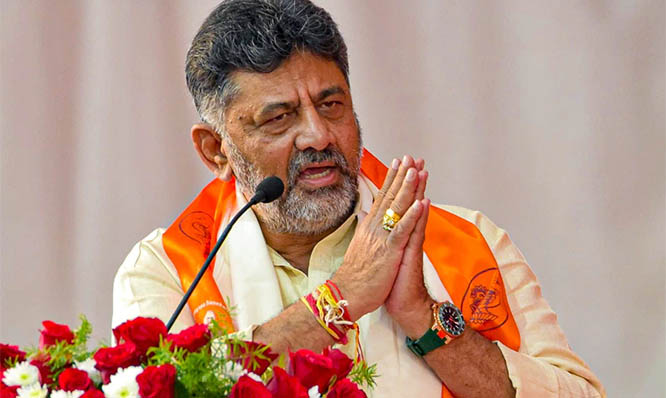
Bengaluru: The Vokkaligara Sangha on Thursday issued a stern warning to the Congress, saying the party could face serious electoral repercussions if Deputy Chief Minister D.K. Shivakumar is not appointed as Chief Minister.

The warning follows the public backing of Shivakumar’s chief ministerial ambition by top Vokkaliga pontiff Nirmalanandanatha Swami, who urged the Congress high command to honor his claim.

“The community supported Congress in the 2023 Assembly elections only because Shivakumar had a real chance to become CM. If he is cheated, we’ll teach the party a big lesson,” said newly elected Sangha president L. Srinivas. He added that Vokkaligas would organize protests under the guidance of community leaders.

General Secretary C.G. Gangadhar pointed out that Congress won more seats in the Vokkaliga-dominated Old Mysuru region due to Shivakumar’s influence, adding, “If Congress wants to retain power, Shivakumar should be made the CM.”

Outgoing president Kenchappa Gowda emphasized Shivakumar’s contribution to Congress’ victory. “Our community voted for Congress thinking he would become CM. Siddaramaiah has also served the party well, but Shivakumar should now be given a chance,” he said.

Former general-secretary Konappa Reddy appealed to Sonia and Rahul Gandhi to recognize Shivakumar’s loyalty and service, saying, “Congress is known to keep its promises. We hope it won’t break the promise made to him.”

Comments

Add new comment

  • Coastaldigest.com reserves the right to delete or block any comments.
  • Coastaldigset.com is not responsible for its readers’ comments.
  • Comments that are abusive, incendiary or irrelevant are strictly prohibited.
  • Please use a genuine email ID and provide your name to avoid reject.
News Network
December 4,2025

indigocrisis.jpg

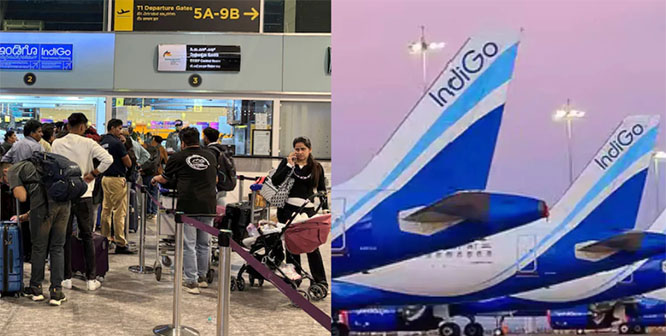
Angry outbursts, long queues, and desperate appeals filled airports across India today as IndiGo grappled with a severe operational breakdown. Hundreds of flights have been cancelled or delayed, leaving thousands of passengers stranded through the night and forcing many to spend long hours at helpdesks.

Social media was flooded with videos of fliers pleading for assistance, accusing the airline of misleading updates, and demanding accommodation after being stuck for 10 to 12 hours at airports such as Hyderabad and Bengaluru.

What Triggered the Meltdown?

IndiGo has attributed the widespread disruption to “a multitude of unforeseen operational challenges.” These include:

•    Minor technology glitches
•    Winter-season schedule adjustments
•    Bad weather
•    Congestion in the aviation network
•    New crew rostering rules (Flight Duty Time Limitations or FDTL)

Among these, the most disruptive has been the implementation of the updated FDTL norms introduced by the Directorate General of Civil Aviation (DGCA) in January 2024.

These rules were designed to reduce pilot fatigue and improve passenger safety. Key changes include:

•    Longer weekly rest periods for flight crew
•    A revised definition of “night,” extending it by an extra hour
•    Tighter caps on flight duty timing and night landings
•    Cutting night shifts for pilots and crew from six per roster cycle to just two

Once these norms became fully enforceable, airlines were required to overhaul rosters well in advance. For IndiGo, this triggered a sudden shortage of crew available for duty, leading to cascading delays and cancellations.

Why IndiGo Was Hit the Hardest

IndiGo is India’s largest airline by a wide margin, operating over 2,200 flights daily. That’s roughly double the number operated by Air India.

When an airline of this size experiences even a 10–20% disruption, it translates to 200–400 flights being delayed or grounded — producing massive spillover effects across the country.

IndiGo also relies heavily on high-frequency overnight operations, a model typical of low-cost carriers that aim to maximise aircraft utilisation and reduce downtime. The stricter FDTL norms clash with these overnight-heavy schedules, forcing the airline to pull back services.

Aviation bodies have also criticised IndiGo’s preparedness. The Airline Pilots' Association of India (ALPA) said airlines were given a two-year window to plan for the new rules but “started preparing rather late.” IndiGo, it said, failed to rebuild crew rosters 15 days in advance as required.

The Federation of Indian Pilots (FIP) went further, calling the crisis the result of IndiGo’s “prolonged and unorthodox lean manpower strategy,” and alleging that the airline adopted a hiring freeze even as it knew the new rules would require more careful staffing.

How Many Flights Are Affected?

In the past 48 hours, over 300 flights have been cancelled. At least 100 more are expected to be cancelled today.

City-wise impact:

•    Hyderabad: 33 expected cancellations; several fliers stranded overnight
•    Bengaluru: over 70 expected cancellations
•    Delhi, Mumbai, Chennai, Kolkata: widespread delays and missed connections

Passengers shared distressing accounts online.

One customer at Hyderabad airport said they waited from 6 PM to 9 AM with “no action taken” regarding their delayed Pune flight. Another said IndiGo repeatedly told them the crew was “arriving soon,” only for the delay to stretch over 12 hours.

IndiGo has apologised for the disruption and promised that operations will stabilise within 48 hours, adding that “calibrated adjustments” are being made to contain the chaos.

What Should Passengers Do Now?

For those flying in the next few days, especially with IndiGo, here are key precautions:

1. Keep Checking Flight Status
Monitor your flight closely before leaving for the airport, as delays may be announced last-minute.

2. Arrive Early
Expect long queues at counters and security due to crowding and rescheduling.

3. Carry Essentials
Pack snacks, water, basic medicines, chargers, and items for children or senior citizens. Extended waiting times should be anticipated.

4. Use Flexible Booking Options
If you booked tickets with a free-date-change or cancellation option, consider using them.
If you haven’t booked yet, prefer refundable or flexible fares, or even consider alternate airlines.

5. Follow IndiGo’s Updates
Keep an eye on IndiGo’s official social media channels and contact customer support for rebooking and refund queries.

What Needs to Change?

Pilot groups have raised concerns not just about staffing but also the planning practices behind it.
The Federation of Indian Pilots accused IndiGo of:

•    Imposing an unexplained hiring freeze despite knowing the FDTL changes were coming
•    Entering non-poaching agreements that limited talent movement
•    Keeping pilot pay frozen
•    Underestimating the need to restructure operations in advance

They have urged DGCA to approve seasonal schedules only after airlines prove they have adequate pilot strength under the new norms.

ALPA also warned that some airlines might be using the delays as an “immature pressure tactic” to push DGCA for relaxations in the new rules — which, if granted, could compromise the very safety standards the norms were meant to protect.

Both pilot bodies stressed that no exemption should dilute safety, and any deviations should be based solely on scientific risk assessment.

Is a Solution in Sight?

While IndiGo says normalcy will return within two days, aviation experts believe that fully stabilising operations could take longer, depending on how quickly the airline can:
•    Re-align rosters
•    Mobilise rested crew
•    Boost staffing
•    Adjust its winter schedule to match regulatory requirements
Passengers are advised to remain prepared for continued delays over the next few days as the airline works through its backlog. 

Comments

Add new comment

  • Coastaldigest.com reserves the right to delete or block any comments.
  • Coastaldigset.com is not responsible for its readers’ comments.
  • Comments that are abusive, incendiary or irrelevant are strictly prohibited.
  • Please use a genuine email ID and provide your name to avoid reject.