



Traditional Indian diet with lower meat content cuts Alzheimer's risk: study

August 27, 2016

Washington, Aug 27: Consuming traditional diets of countries such as India, Japan and Nigeria - which have lower meat content than the Western diet - may significantly reduce the risk of Alzheimer's disease, a new study has found.

indian-diet

Globally, about 42 million people now have dementia, with Alzheimer's disease as the most common type of dementia. Rates of Alzheimer's disease are rising worldwide. The most important risk factors seem to be linked to diet, especially the consumption of meat, sweets, and high-fat dairy products that characterise a Western Diet.

For example, when Japan made the nutrition transition from the traditional Japanese diet to the Western diet, Alzheimer's disease rates rose from 1 per cent in 1985 to 7 per cent in 2008, with rates lagging the nutrition transition by 20-25 years. The evidence of these risk factors, which come from ecological and observational studies, also shows that fruits, vegetables, grains, low-fat dairy products, legumes, and fish are associated with reduced risk.

In addition to reviewing the journal literature, a new ecological study was conducted using Alzheimer's disease prevalence from 10 countries (Brazil, Chile, Cuba, Egypt, India, Mongolia, Nigeria, Republic of Korea, Sri Lanka and the US) along with dietary supply data 5, 10 and 15 years before the prevalence data. Dietary supply of meat or animal products (not including milk) five years before Alzheimer's disease prevalence had the highest correlations with it.

The study discussed the specific risk each country and region faces for developing Alzheimer's disease based on their associated dietary habits. Residents of the US seem to be at particular risk, with each person having about a 4 per cent chance of developing Alzheimer's disease, likely due in part to the Western dietary pattern, which tends to include a large amount of meat consumption.

"Reducing meat consumption could significantly reduce the risk of Alzheimer's disease as well as of several cancers, diabetes mellitus type 2, stroke and chronic kidney disease," said William B Grant, author of the research published in the Journal of the American College of Nutrition. "Mounting evidence from ecological and observational studies, as well as studies of mechanisms, indicates that the Western dietary pattern - especially the large amount of meat in that diet - is strongly associated with risk of developing Alzheimer's disease and several other chronic diseases," Grant said.

"Although the traditional Mediterranean diet is associated with about half the risk for Alzheimer's disease of the Western diet, the traditional diets of countries such as India, Japan, and Nigeria, with very low meat consumption, are associated with an additional 50 per cent reduction in risk of Alzheimer's disease," he said.

Comments

suresh
 - 
Sunday, 28 Aug 2016

Three things cannot be hidden for long: the sun, the moon and the truth.

Add new comment

  • Coastaldigest.com reserves the right to delete or block any comments.
  • Coastaldigset.com is not responsible for its readers’ comments.
  • Comments that are abusive, incendiary or irrelevant are strictly prohibited.
  • Please use a genuine email ID and provide your name to avoid reject.
News Network
December 19,2025

Mangaluru: In a decisive move to tackle the city’s deteriorating sanitation infrastructure, the Mangaluru City Corporation (MCC) has announced a massive ₹1,200 crore action plan to overhaul its underground drainage (UGD) network.

The initiative, spearheaded by Deputy Commissioner and MCC Administrator Darshan HV, aims to bridge "missing links" in the current system that have left residents grappling with overflowing sewage and environmental hazards.

The Breaking Point

The announcement follows a high-intensity phone-in session on Thursday, where the DC was flooded with grievances from frustrated citizens. Residents, including Savithri from Yekkur, described a harrowing reality: raw sewage from apartments leaking into stormwater drains, creating a "permanent stink" and turning residential zones into mosquito breeding grounds.

"We are facing immense difficulties due to the stench and the health risks. Local officials have remained silent until now," one resident reported during the session.

The Strategy: A Six-Year Vision

DC Darshan HV confirmed that the proposed plan is not a temporary patch but a comprehensive six-year roadmap designed to accommodate Mangaluru’s projected population growth. Key highlights of the plan include:

•    Infrastructure Expansion: Laying additional pipelines to connect older neighborhoods to the main grid.

•    STP Crackdown: Stricter enforcement of Sewage Treatment Plant (STP) regulations. While new apartments are required to have functional STPs, many older buildings lack them entirely, and several newer units are reportedly non-functional.

•    Budgetary Push: The plan has already been discussed with the district in-charge minister and the Secretary of the Urban Development Department. It is slated for formal presentation in the upcoming state budget.

Comments

Add new comment

  • Coastaldigest.com reserves the right to delete or block any comments.
  • Coastaldigset.com is not responsible for its readers’ comments.
  • Comments that are abusive, incendiary or irrelevant are strictly prohibited.
  • Please use a genuine email ID and provide your name to avoid reject.
News Network
December 15,2025

Udupi, Dec 15: What was meant to be a post-pilgrimage gathering turned tragic in Padukere village of Brahmavar taluk, Udupi district, late Sunday night, when a clash among youths escalated into a fatal assault, leaving one man dead.

The victim has been identified as 30-year-old Santosh Mogaveera, a resident of Padukere.

According to preliminary information, the incident took place during a late-night drinking party involving a group of local youths who had recently returned after completing their pilgrimage to the Sabarimala shrine. An argument reportedly broke out among the group and soon escalated into a violent confrontation.

During the ensuing brawl, Santosh Mogaveera was allegedly assaulted and collapsed at the spot after sustaining serious injuries. He was rushed by local residents to a private hospital in Brahmavar, where doctors declared him dead.

On receiving information, senior police officials, including Brahmavar Circle Inspector Gopikrishna, Kota Police Sub-Inspector Praveen Kumar T, Station ASI Manthesh Jabagoudar, and head constables Pradeep and Ashok, visited the spot and conducted an inspection.

Police have taken four youths into custody in connection with the incident. A case has been registered at the Kota police station, and further investigation is underway to ascertain the exact sequence of events leading to the death.

Comments

Add new comment

  • Coastaldigest.com reserves the right to delete or block any comments.
  • Coastaldigset.com is not responsible for its readers’ comments.
  • Comments that are abusive, incendiary or irrelevant are strictly prohibited.
  • Please use a genuine email ID and provide your name to avoid reject.
News Network
December 7,2025

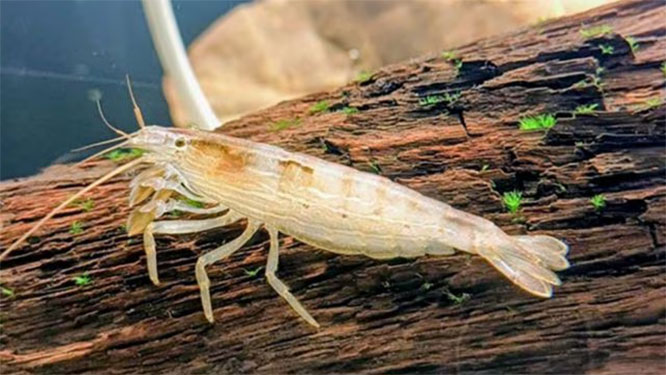
SHRIMP.jpg

Mangaluru, Dec 7: A rare bamboo shrimp has been rediscovered on mainland India more than 70 years after it was last reported, confirming for the first time the presence of Atyopsis spinipes in the country. The find was made by researchers from the Centre for Climate Change Studies at Sathyabama Institute of Science and Technology, Chennai, during surveys in Karnataka and Odisha.

The team — shrimp expert Dr S Prakash, PhD scholar K Kunjulakshmi, and Mangaluru-based researcher Maclean Antony Santos — combined field surveys, ecological assessments and DNA analysis to identify the elusive species. Their findings, published in Zootaxa, resolve decades of taxonomic confusion stemming from a 1951 report that misidentified the species as Atyopsis moluccensis without strong evidence.

The shrimp has now been confirmed at two locations: the Mulki–Pavanje estuary near Mangaluru and the Kuakhai River in Bhubaneswar. Historical specimens from the Andaman Islands, previously labelled as A. moluccensis, were also found to be misidentified and actually belong to A. spinipes.

The rediscovery began after an aquarium hobbyist in Odisha spotted a shrimp in 2022, prompting systematic surveys across Udupi, Karwar and Mangaluru. Four female specimens were collected in Mulki and one in Odisha, all genetically matching.

Researchers warn the species may exist in very small, vulnerable populations as freshwater habitats face increasing pressure from pollution, sand mining and infrastructure development. All verified specimens have been deposited with the Zoological Survey of India for future reference.

Comments

Add new comment

  • Coastaldigest.com reserves the right to delete or block any comments.
  • Coastaldigset.com is not responsible for its readers’ comments.
  • Comments that are abusive, incendiary or irrelevant are strictly prohibited.
  • Please use a genuine email ID and provide your name to avoid reject.