Trump sets tariffs on $50 billion in Chinese goods; Beijing strikes back

Agencies
June 16, 2018

Washington/Beijing, Jun 16:US President Donald Trump said he was pushing ahead with hefty tariffs on $50 billion of Chinese imports on Friday, and the smoldering trade war between the world’s two largest economies showed signs of igniting as Beijing immediately vowed to respond in kind.

Trump laid out a list of more than 800 strategically important imports from China that would be subject to a 25 percent tariff starting on July 6, including cars, the latest hardline stance on trade by a U.S. president who has already been wrangling with allies.

China’s Commerce Ministry said it would respond with tariffs “of the same scale and strength” and that any previous trade deals with Trump were “invalid.” The official Xinhua news agency said China would impose 25 percent tariffs on 659 U.S. products, ranging from soybeans and autos to seafood.

China’s retaliation list was increased more than six-fold from a version released in April, but the value was kept at $50 billion, as some high-value items such as commercial aircraft were deleted.

Shares of Boeing Co, the single largest U.S. exporter to China, closed down 1.3 percent after paring earlier losses. Caterpillar Inc, another big exporter to China, ended 2 percent lower.

Trump said in a statement that the United States would pursue additional tariffs if China retaliates.

Washington and Beijing appeared increasingly headed toward open trade conflict after several rounds of negotiations failed to resolve U.S. complaints over Chinese industrial policies, lack of market access in China and a $375 billion U.S. trade deficit.

“These tariffs are essential to preventing further unfair transfers of American technology and intellectual property to China, which will protect American jobs,” Trump said.

Analysts, however, did not expect the U.S. tariffs to inflict a major wound to China’s economy and said the trade dispute likely would continue to fester.

TVs SPARED, CHIPS ADDED

U.S. Customs and Border Protection will begin collecting tariffs on 818 product categories valued at $34 billion on July 6, the U.S. Trade Representative’s office said.

The list was slimmed down from a version unveiled in April, dropping Chinese flat-panel television sets, medical breathing devices and oxygen generators and air conditioning parts.

The tariffs will still target autos, including those imported by General Motors Co and Volvo, owned by China’s Geely Automobile Holdings, and electric cars.

And USTR added tariffs on another 284 product lines, valued at $16 billion, targeting semiconductors, a broad range of electronics and plastics that it said benefited from China’s industrial subsidy programs, including the “Made in China 2025” plan, aimed at making China more competitive in key technologies such as robotics and semiconductors.

Tariffs on these products will go into effect after a public comment period. A senior Trump administration official told reporters that companies will be able to apply for exclusions for Chinese imports they cannot source elsewhere.

Most semiconductor devices imported from China use chips produced in the United States, with low-level assembly and testing work done in China, prompting the Semiconductor Industry Association to call the new tariff list “counterproductive.”

While many business groups and lawmakers urged the two governments to negotiate instead, there was little sign talks would resume soon.

Trump’s tariffs did gain some support from an unlikely source, U.S. Senate Democratic leader Charles Schumer, who called them “right on target.”

“China is our real trade enemy, and their theft of intellectual property and their refusal to let our companies compete fairly threatens millions of future American jobs,” Schumer said in a statement.

The USTR official said the tariffs were aimed at changing China’s behavior on its technology transfer policies and massive subsidies to develop high-tech industries. The United States now dominates those industries, but Chinese government support could make it difficult for U.S. companies to compete.

Washington has completed a second list of possible tariffs on another $100 billion in Chinese goods, in the expectation that China will respond to the initial U.S. tariff list in kind, sources told Reuters.

U.S. soybean futures plunged 1.5 percent to a one-year low on concerns that an escalating trade fight with China will threaten shipments to the biggest buyer of the oilseed, traders said.

 Beijing and Washington had held three rounds of high-level talks since early May but failed to reach a compromise. Trump was unmoved by a Chinese offer to buy an additional $70 billion worth of U.S. farm and energy products and other goods, according to people familiar with the matter.Analysts at Capital Economics said the impact of the tariffs on China’s economy would be small. Even if the U.S. duties reach the full $150 billion, they estimated it would shave well under a half-percentage point off China’s annual growth rate, which could be offset by fiscal and monetary policy actions.

“Neither side will be brought to its knees – which is one reason to think the trade dispute could drag on,” Capital Economics said. “For China’s part, its leaders will be determined not to be seen to back down to foreign pressure.”

Although shares of some tariff-sensitive companies fell on Wall Street, the stock market overall fell only modestly.

“With the announcement of the tariffs, there’s a real risk that we can see a continued increased escalation,” said Robin Anderson, senior economist at Principal Global Investors in Des Moines, Iowa. But he said that underlying strong economic fundamentals in the United States would dampen the market impact.

Trump has also triggered a trade fight with Canada, Mexico and the European Union over steel and aluminum and has threatened to impose duties on European cars.

While China in recent months made incremental market-opening reforms in industries that critics in the foreign business community say were already planned, it has not been inclined to yield on its core industrial policies.

Comments

Add new comment

  • Coastaldigest.com reserves the right to delete or block any comments.
  • Coastaldigset.com is not responsible for its readers’ comments.
  • Comments that are abusive, incendiary or irrelevant are strictly prohibited.
  • Please use a genuine email ID and provide your name to avoid reject.
News Network
December 17,2025

melkar1.jpg

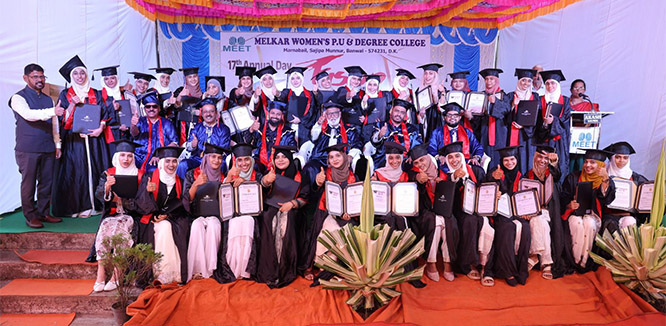
Melkar, Dec 17: The 17th Annual Day and Graduation Ceremony of Melkar Women’s PU and Degree College, themed “Fusion-2K25,” was celebrated with dignity and enthusiasm, marking a significant milestone in the institution’s academic journey. The programme reflected the college’s steadfast commitment to academic excellence, character building, and the holistic development of students.

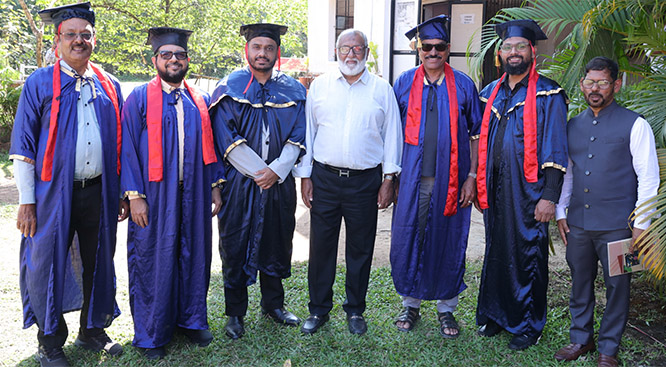
The event was inaugurated by Mr. Asif Mohammed, whose presence greatly enriched the occasion. The celebration was further graced by the chief guests Mr. P. B. Ahmed Mudassir and Mr. Nissar Fakeer Mohammed, along with the distinguished guests of honour Mr. B. A. Nazeer and Mr. Ibrahim Gadiyar. In their inspiring addresses, the guests encouraged the graduating students and appreciated the dedicated efforts of the management, faculty, and students.

The annual report was presented by the Principal, Mr. Abdul Majeed S, highlighting the institution’s academic progress, notable achievements, and extracurricular accomplishments during the academic year.

The presidential address was delivered by the esteemed Chairman of Melkar Women’s PU and Degree College, Dr. Haji S. M. Rasheed, who emphasized the vital role of education in empowering women and shaping responsible citizens. He also stressed the importance of discipline, dedication, and perseverance in achieving success.

Cultural programmes and academic recognitions formed an integral part of the celebration, showcasing the talents and achievements of the students. The graduation ceremony was a proud moment for the outgoing students as they were formally conferred degrees and wished success in their future endeavours.

Ms. Mashmooma Fathima served as the Master of Ceremonies. The welcome address was delivered by Ms. Fathima Nida, and the programme concluded with a vote of thanks proposed by Ms. Ayisha Suhana.

The event successfully achieved its objectives and was highly appreciated by the guests and attendees.

melkar3.jpg

melkar2.jpg

Comments

Add new comment

  • Coastaldigest.com reserves the right to delete or block any comments.
  • Coastaldigset.com is not responsible for its readers’ comments.
  • Comments that are abusive, incendiary or irrelevant are strictly prohibited.
  • Please use a genuine email ID and provide your name to avoid reject.
News Network
December 13,2025

New Delhi: School-going children are picking up drug and smoking habits and engaging in consumption of alcohol, with the average age of introduction to such harmful substances found to be around 13 years, suggesting a need for earlier interventions as early as primary school, a multi-city survey by AIIMS-Delhi said.

The findings also showed substance use increased in higher grades, with grade XI/XII students two times more likely to report use of substances when compared with grade VIII students. This emphasised the importance of continued prevention and intervention through middle and high school.

The study led by Dr Anju Dhawan of AIIMS's National Drug Dependence Treatment Centre, published in the National Medical Journal of India this month, looks at adolescent substance use across diverse regions.

The survey included 5,920 students from classes 8, 9, 11 and 12 in urban government, private and rural schools across 10 cities -- Bengaluru, Chandigarh, Delhi, Dibrugarh, Hyderabad, Imphal, Jammu, Lucknow, Mumbai, and Ranchi. The data were collected between May 2018 and June 2019.

The average age of initiation for any substance was 12.9 (2.8) years. It was lowest for inhalants (11.3 years) followed by heroin (12.3 years) and opioid pharmaceuticals (without prescription; 12.5 years).

Overall, 15.1 per cent of participants reported lifetime use, 10.3 per cent reported past year use, and 7.2 per cent reported use in the past month of any substance, the study found.

The most common substances used in the past year, after tobacco (4 per cent) and alcohol (3.8 per cent), were opioids (2.8 per cent), followed by cannabis (2 per cent) and inhalants (1.9 per cent). Use of non-prescribed pharmaceutical opioids was most common among opioid users (90.2 per cent).

On being asked, 'Do you think this substance is easily available for a person of your age' separately for each substance category, nearly half the students (46.3 per cent) endorsed that tobacco products and more than one-third of the students (36.5 per cent) agreed that a person of their age can easily procure alcohol products.

Similarly, for Bhang (21.9 per cent), ganja/charas (16.1 per cent), inhalants (15.2 per cent), sedatives (13.7 per cent), opium and heroin (10 per cent each), the students endorsed that these can be easily procured.

About 95 per cent of the children, irrespective of their grade, agreed with the statement that 'drug use is harmful'.

The rates of substance use (any) among boys were significantly higher than those of girls for substance use (ever), use in the past year and use in the past 30 days. Compared to grade VIII students, grade IX students were more likely, and grade XI/XII students were twice as likely to have used any substance (ever).

The likelihood of past-year use of any substance was also higher for grade IX students and for grade XI/XII students as compared to grade VIII students.

About 40 per cent of students mentioned that they had a family member who used tobacco or alcohol each. The use of cannabis (any product) and opioid (any product) by a family member was reported by 8.2 per cent and 3.9 per cent of students, respectively, while the use of other substances, such as inhalants/sedatives by family was 2-3 per cent, the study found.

A relatively smaller percentage of students reported use of tobacco or alcohol among peers as compared to among family members, while a higher percentage reported inhalants, sedatives, cannabis or opioid use among peers.

Children using substances (past year) compared to non-users reported significantly higher any substance use by their family members and peers.

There were 25.7 per cent students who replied 'yes' to the question 'conflicts/fights often occur in your family'. Most students also replied affirmatively to 'family members are aware of how their time is being spent' and 'damily members are aware of with whom they spend their time'.

Comments

Add new comment

  • Coastaldigest.com reserves the right to delete or block any comments.
  • Coastaldigset.com is not responsible for its readers’ comments.
  • Comments that are abusive, incendiary or irrelevant are strictly prohibited.
  • Please use a genuine email ID and provide your name to avoid reject.