



UAE to host 40th GCC Summit in 2019

Agencies
December 10, 2018

Abu Dhabi, Dec 10: The 40th session of the GCC summit will be held in the UAE, according to a communique issued at the end of the 39th summit in Riyadh.

King Salman bin Abdulaziz Al Saud, Custodian of the Two Holy Mosques and King of Saudi Arabia, chaired the 39th session of the council in the presence of His Highness Sheikh Mohammed bin Rashid Al Maktoum, Vice President and Prime Minister of the UAE and Ruler of Dubai.

The Supreme Council of GCC States welcomed the UAE's hosting of next summit and issued the 'Riyadh Declaration', which included 72 items covering matters related to the Gulf countries, the region and the world.

GCC Secretary-General Dr. Abdullatif bin Rashid Al Zayani, delivered the final declaration, saying that the risks have threaten the security and stability of the region and the economic challenges it faces prove the importance of adhering to the blessed march of the GCC, enhancing collective action and mobilising the common energies to address these risks and challenges and meet the aspirations of the citizens of the GCC countries to achieve further gains of Gulf integration and the far-sighted vision of their leaders who established the Council in May 1981.

The Basic Law adopted by the Founders of the council states that the ultimate goal of the GCC is "to achieve coordination, integration and interdependence among the Member States in all fields in order to reach their unity and enhance bonds links, among its people in various fields."

Al-Zayani asserted the importance of bolstering ties among GCC countries and friendly nations, similar to the relationship between the US and GCC. He noted that discussions in the summit focused on such relations and views that would call for optimism based on the agreement in its general perspective.

Al-Zayani pointed out that one of the most highlighted issues during the meeting of leaders were similar to the adoption of laws and strategies to ensure a greater acceleration of the Gulf joint action in terms of economic, political and security, in line with the changes in the regional and rapid changes in the international arenas.

The Secretary-General noted on the keenness of GCC leaders and contribute to the development and prosperity of their countries and the well-being of their peoples.

Supporting the right of the UAE to regain sovereignty over its three islands: the Greater and the Lesser Tunbs and Abu Musa, and over the territorial waters, the airspace, the continental shelf, and the economic zone of the three islands, as they are an integral part of the UAE.

The Council expressed disappointment that the repeated contacts with the Islamic Republic of Iran have not yielded any positive outcomes that would actively contribute to the resolution of the issue, and lead to the security and stability of the region. "The Council will continuing to look into all peaceful means that would lead to the restoration of UAE's right on the three islands," according to the declaration, which also urged Iran to respond to the efforts of the UAE and the international community in solving the issue by peaceful means or taking recourse to the International Court of Justice.

The summit welcomed the announcement by the UAE and Saudi Arabia to set up a coordination council and to adopt a strategy for economic, development and military integration. The GCC leaders reaffirmed keenness on maintaining the unity of member countries and noted their Gulf bloc realised many achievements that contributed to regional security, stability, economic and social prosperity.

They said challenges required further efforts to achieve integration at economic, social, political, security and military levels, said the declaration. They also called for completing programmes and projects needed to honour Saudi King Salman bin Abdulaziz's integration vision to ultimately boost the regional and international role of the GCC.

They called for addressing all obstacles to achieve economic integration by 2025 and to complete the requirement for the creation of the common market and customs union.

The GCC leaders appointed a commander for the joint military command to advance towards completion of the joint defence system, while underlining the importance of the bloc's role in addressing extreme ideologies through the promotion of moderation, tolerance, human rights, rule of law and Islamic Sharia.

They called for joining hands with partners within the international community to eliminate terrorism and drying its financing resources. The leaders also called for forming a "single and effective" foreign policy to be based on the statute, noted the declaration. They reiterated support for the Palestinian cause and the Yemeni people.

GCC leaders also discussed a number of issues related to the final declaration and to Arab and Islamic dossiers. They also extended thanks and appreciation to the Custodian of the Two Holy Mosques and Chairman of the Summit, Saudi wise leadership, and people for hosting the meeting.

Comments

Add new comment

  • Coastaldigest.com reserves the right to delete or block any comments.
  • Coastaldigset.com is not responsible for its readers’ comments.
  • Comments that are abusive, incendiary or irrelevant are strictly prohibited.
  • Please use a genuine email ID and provide your name to avoid reject.
News Network
January 23,2026

Mangaluru: The Karnataka Government Polytechnic (KPT), Mangaluru, has achieved autonomous status from the All India Council for Technical Education (AICTE), becoming the first government polytechnic in the country to receive such recognition in its 78-year history. The status was granted by AICTE, New Delhi, and subsequently approved by the Karnataka Board of Technical Education in October last year.

Officials said the autonomy was conferred a few months ago. Until recently, AICTE extended autonomous status only to engineering colleges, excluding diploma institutions. However, with a renewed national focus on skill development, several government polytechnics across India have now been granted autonomy.

KPT, the second-largest polytechnic in Karnataka, was established in 1946 with four branches and has since expanded to offer eight diploma programmes, including computer science and polymer technology. The institution is spread across a 19-acre campus.

Ravindra M Keni, the first dean of the institution, told The Times of India that AICTE had proposed autonomous status for polytechnic institutions that are over 25 years old. “Many colleges applied. In the first round, 100 institutions were shortlisted, which was further narrowed down to 15 in the second round. We have already completed one semester after becoming an autonomous institution,” he said. He added that nearly 500 students are admitted annually across eight three-year diploma courses.

Explaining the factors that helped KPT secure autonomy, Keni said the institution has consistently recorded 100 per cent admissions and placements for its graduates. He also noted its strong performance in sports, with the college emerging champions for 12 consecutive years, along with active student participation in NCC and NSS activities.

Autonomous status allows KPT to design industry-oriented curricula, conduct examinations, prepare question papers, and manage academic documentation independently. The institution can also directly collaborate with industries and receive priority funding from AICTE or the Ministry of Education. While academic autonomy has been granted, financial control will continue to rest with the state government.

“There will be separate committees for examinations, question paper setting, boards of studies, and boards of examiners. The institution will now have the freedom to conduct admissions without government notifications and issue its own marks cards,” Keni said, adding that new academic initiatives would be planned after a year of functioning under the autonomous framework.

Comments

Add new comment

  • Coastaldigest.com reserves the right to delete or block any comments.
  • Coastaldigset.com is not responsible for its readers’ comments.
  • Comments that are abusive, incendiary or irrelevant are strictly prohibited.
  • Please use a genuine email ID and provide your name to avoid reject.
News Network
January 23,2026

modIKERALA.jpg

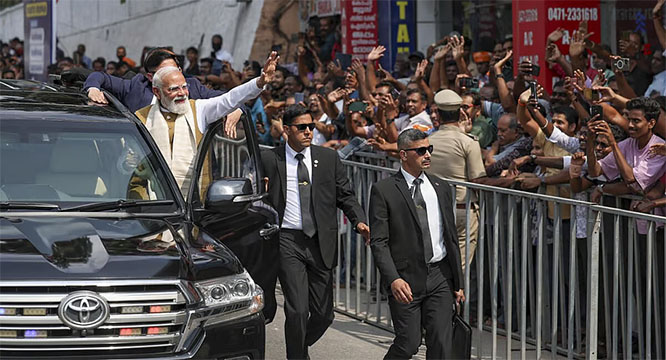
Prime Minister Narendra Modi, during his visit to Thiruvananthapuram on Friday, January 23, indicated that the Bharatiya Janata Party (BJP) is aiming to expand its political footprint in Kerala ahead of the Assembly elections scheduled in the coming months.

Speaking at a BJP-organised public meeting, Modi drew parallels between the party’s early electoral gains in Gujarat and its recent victory in the Thiruvananthapuram Municipal Corporation. The civic body win, which ended decades of Left control, was cited by the Prime Minister as a possible starting point for the party’s broader ambitions in the state.

Recalling BJP’s political trajectory in Gujarat, Modi said the party was largely insignificant before 1987 and received little media attention. He pointed out that the BJP’s first major breakthrough came with its victory in the Ahmedabad Municipal Corporation that year.

“Just as our journey in Gujarat began with one city, Kerala’s journey has also started with a single city,” Modi said, suggesting that the party’s municipal-level success could translate into wider electoral acceptance.

The Prime Minister alleged that successive governments led by the Left Democratic Front (LDF) and the United Democratic Front (UDF) had failed to adequately develop Thiruvananthapuram. He accused both fronts of corruption and neglect, claiming that basic infrastructure and facilities were denied to the capital city for decades.

According to Modi, the BJP’s control of the civic body represents a shift driven by public dissatisfaction with the existing political alternatives. He asserted that the BJP administration in Thiruvananthapuram had begun working towards development, though no specific details or timelines were outlined.

Addressing the gathering at Putharikandam Maidan, Modi said the BJP intended to project Thiruvananthapuram as a “model city,” reiterating his party’s commitment to governance-led change.

The Prime Minister’s visit to Kerala also included the inauguration of several development projects and the flagging off of new train services, as the BJP intensifies its political outreach in the poll-bound state.

Comments

Add new comment

  • Coastaldigest.com reserves the right to delete or block any comments.
  • Coastaldigset.com is not responsible for its readers’ comments.
  • Comments that are abusive, incendiary or irrelevant are strictly prohibited.
  • Please use a genuine email ID and provide your name to avoid reject.
News Network
January 20,2026

Mangaluru: In a major step towards strengthening rural innovation, the Office of the Principal Scientific Adviser (PSA) to the Government of India is supporting the establishment of RuTAGe Smart Village Centres (RSVCs) across the country through collaborations with academic institutions, civil society organisations and philanthropic partners.

As part of this national initiative, Nitte (Deemed to be University) will set up the first RSVCs in the region at Nitte GP in Udupi district and at the Nitte Health Centre, Sevanjali Trust, Farangipete, in Dakshina Kannada district. The centres will be inaugurated on January 21. In South India, the programme is being implemented by the Section Infin-8 Foundation (SI-8).

Speaking to reporters on Monday, SI-8 founder-director Vishwas US said experts from Nitte University and SI-8 would work closely with farmers, students, youth and local entrepreneurs to adapt and deploy technologies tailored to local needs.

Project head Prof Iddya Karunasagar, representing Nitte DU, said the RSVCs at Nitte and Farangipete would serve as demonstration hubs for a wide range of agriculture, energy, skill-development and assistive technologies. These include solar dryers for fruits, vegetables and crops; soil-testing solutions; power weeders and women-friendly farm tools; wind-powered devices for rural artisans; grain storage systems; grass-cutting and tree-climbing equipment; and liquid fertiliser production using cowshed waste.

SI-8 CEO Aravind C Kumar said the centres would also provide access to digital and knowledge-based platforms such as ISRO applications, government scheme portals, market linkage tools and gamified learning resources, along with assistive technologies for persons with visual impairments.

Highlighting the broader impact of the initiative, Principal Scientific Adviser Prof Ajay Kumar Sood said it demonstrated how applied research could bridge the rural–urban divide and help create self-reliant, technology-enabled villages.

The initiative has been made possible through philanthropic support from Dr NC Murthy of ACM Business Solutions, LLC, USA. Dr Sapna Poti, Director (Strategic Alliances) at the Office of the Principal Scientific Adviser, said the long-term objective is to build self-sufficient, technology-driven communities capable of generating sustainable livelihoods on their own.

Comments

Add new comment

  • Coastaldigest.com reserves the right to delete or block any comments.
  • Coastaldigset.com is not responsible for its readers’ comments.
  • Comments that are abusive, incendiary or irrelevant are strictly prohibited.
  • Please use a genuine email ID and provide your name to avoid reject.