Under Xi Jinping, China stepped up 'aggressive' foreign policy towards India

News Network
July 3, 2020

Jul 3: China under President Xi Jinping has stepped up its "aggressive" foreign policy toward India and "resisted" efforts to clarify the Line of Actual Control that prevented a lasting peace from being realised, according to a report released by a US Congress appointed commission.

The armies of India and China have been locked in a bitter standoff at multiple locations in eastern Ladakh for the last seven weeks, and the tension escalated after 20 Indian soldiers were killed in a violent clash in the Galwan Valley on June 15.

“Under General Secretary of the Chinese Communist Party (CCP) Xi Jinping, Beijing has stepped up its aggressive foreign policy toward New Delhi. Since 2013, China has engaged in five major altercations with India along the Line of Actual Control (LAC),” said a brief issued by US-China Economic and Security Review Commission.

"Beijing and New Delhi have signed a series of agreements and committed to confidence-building measures to stabilise their border, but China has resisted efforts to clarify the LAC, preventing a lasting peace from being realised,” said the report and was prepared at the request of the Commission to support its deliberations.

Authored by Will Green, a Policy Analyst on the Security and Foreign Affairs Team at the Commission, the report says that the Chinese government is particularly fearful of India’s growing relationship with the United States and its allies and partners.

“The latest border clash is part of a broader pattern in which Beijing seeks to warn New Delhi against aligning with Washington,” it said.

After Xi assumed power in 2012, there was a significant increase in clashes, despite the fact that he met Prime Minister Narendra Modi several times and Beijing and New Delhi have agreed to a series of confidence-building mechanisms designed to mitigate tensions.

Prior to 2013, the last major border clash was in 1987. The 1950s and 1960s were a particularly tense period, culminating in 1962 with a war that left thousands of soldiers dead on both sides, according to the records of China's People's Liberation Army, the report said.

“The 2020 skirmish is in line with Beijing’s increasingly assertive foreign policy. The clash came as Beijing was aggressively pressing its other expansive sovereignty claims in the Indo-Pacific region, such as over Taiwan and in the South and East China seas,” it said.

China is engaged in hotly contested territorial disputes in both the South China Sea and the East China Sea. Beijing has built up and militarised many of the islands and reefs it controls in the region. Both areas are stated to be rich in minerals, oil and other natural resources and are vital to global trade.

China claims almost all of the South China Sea. Vietnam, the Philippines, Malaysia, Brunei and Taiwan have counter claims over the area.

Several weeks before the clash in the Galwan Valley, Chinese Defence Minister Wei Fenghe called on Beijing to “use fighting to promote stability” as the country’s external security environment worsened, a potential indication of China’s intent to proactively initiate military tensions with its neighbours to project an image of strength, the report said.

Comments

Add new comment

  • Coastaldigest.com reserves the right to delete or block any comments.
  • Coastaldigset.com is not responsible for its readers’ comments.
  • Comments that are abusive, incendiary or irrelevant are strictly prohibited.
  • Please use a genuine email ID and provide your name to avoid reject.
News Network
November 26,2025

students.jpg

Bengaluru, Nov 26: Karnataka is taking its first concrete steps towards lifting a three-decade-old ban on student elections in colleges and universities. Deputy Chief Minister D.K. Shivakumar announced Wednesday that the state government will form a small committee to study the reintroduction of campus polls, a practice halted in 1989 following incidents of violence.

Speaking at a 'Constitution Day' event organised by the Karnataka Congress, Mr. Shivakumar underscored the move's aim: nurturing new political leadership from the grassroots.

"Recently, (Leader of the Opposition in Lok Sabha) Rahul Gandhi wrote a letter to me and Chief Minister (Siddaramaiah) asking us to think about restarting student elections," Shivakumar stated. "I'm announcing today that we'll form a small committee and seek a report on this."

Student elections were banned in Karnataka in 1989, largely due to concerns over violence and the infiltration of political party affiliates into campus life. The ban effectively extinguished vibrant student bodies and the pipeline of young leaders they often produced.

Mr. Shivakumar, who also serves as the Karnataka Congress president, said that former student leaders will be consulted to "study the pros and cons" of the re-introduction.

Acknowledging the history of the ban, he added, "There were many criminal activities taking place back then. We’ll see how we can conduct (student) elections by regulating such criminal activities."

The Deputy CM reminisced about his own journey, which began on campus. He recalled his political activism at Sri Jagadguru Renukacharya College leading to his first Assembly ticket in 1985 at the age of 23. "That's how student leadership was at the time. Such leadership has gone today. College elections have stopped," he lamented, adding that for many, college elections were "like a big movement" where leaders were forged.

The move, driven by the Congress high command's push to cultivate young talent, will face scrutiny from academics and university authorities who have, in the past, expressed concern that the return of polls could disrupt the peaceful academic environment and turn campuses into political battlegrounds.

Comments

Add new comment

  • Coastaldigest.com reserves the right to delete or block any comments.
  • Coastaldigset.com is not responsible for its readers’ comments.
  • Comments that are abusive, incendiary or irrelevant are strictly prohibited.
  • Please use a genuine email ID and provide your name to avoid reject.
coastaldigest.com news network
December 2,2025

karkala.jpg

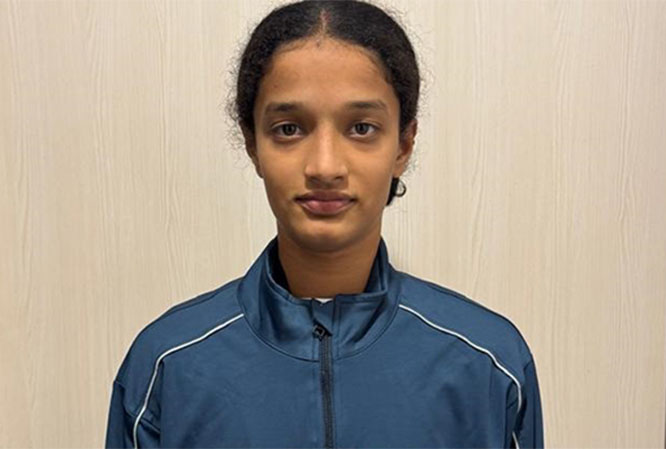
Udupi, Dec 2: A wave of regional pride is sweeping through Udupi district as Shagun S Verma Hegde, a talented Class 9 student from Christ King English Medium High School, Karkala, has been named the captain of the Indian National Team for the Under-15 Girls’ Volleyball Championship.

Shagun holds the unique distinction of being the sole player from Karnataka selected to represent the country in the prestigious international tournament. The championship, organized by the School Games Federation, is scheduled to take place in Shangluo, China, from December 3 to 13, where Shagun will lead the national squad.

A Remarkable Journey to the Top

Shagun’s selection is a testament to her dedication and exceptional skill on the court. Her journey included several rigorous rounds of selection:

•    She was the only player from Udupi district to qualify for the state-level selection camp.

•    Out of eight players from Karnataka who advanced to the national selection camp in Pune, Maharashtra, Shagun was the only one to secure a place in the final national squad.

•    The national camp saw participation from approximately 200 players, which was shortlisted to 23. Shagun not only made the final cut but was also ranked as the second-best player overall, solidifying her leadership role.

Shagun, who is the daughter of Sandesh Verma and Shruthiraj of Kallotte, Karkala, has trained under experienced coaches Santosh D’Souza, Jeevan D’Silva, Jairaj Poojary, and Ramesh. Her selection as the team captain has brought profound honour to her family, school, the Udupi district, and the entire state of Karnataka.

Comments

Add new comment

  • Coastaldigest.com reserves the right to delete or block any comments.
  • Coastaldigset.com is not responsible for its readers’ comments.
  • Comments that are abusive, incendiary or irrelevant are strictly prohibited.
  • Please use a genuine email ID and provide your name to avoid reject.