



Why Recreating Gandhi Murder?

Ram Puniyani
February 8, 2019

This 30th January 2019, when the whole country was observing the 71st martyrdom day of ‘Father of the Nation’, Mahatma Gandhi, the members of Hindu Mahasabha recreated the murder of Gandhi in Aligarh. Led by Hindu Mahasabha Secretary Pooja Shakun Pandey, a group of saffron wearing workers assembled with preparation for video shooting. Pandey fired three shots on the effigy of Gandhi and blood started dripping from the balloon behind the effigy. The Assembled Hindu Mahasabha workers shouted slogans condemning Gandhi and hailing Godse, the murderer of Gandhi. They shouted Mahatma Nathuram Godse Amar Rahein (Long live Nathuram Godse). They declared that from this year on they will recreate Gandhi murder every year the way Ravan’s effigy is burned on Dusshera day.  The video went viral. Pandey’s facebook post also showed an earlier picture of hers’ with BJP leaders, ex MP Chief Minister Shivraj Singh Chauhan and Central BJP minister Uma Bharati. Police has filed criminal cases against some of those participating in the event.

The hailing of Nathurm Godse, Vinayak Damodar Savarkar and attacking Gandhi has been the plank of Hindu Nationalists (Hindu Mahasabha and RSS). Few years ago in a public meeting Congress President Rahul Gandhi stated that RSS people killed Gandhi, a case was been filed against him, and RSS wants him to apologize as Rahul Gandhi holds on to his statement. A few years ago one leader of BJP, Gopal Krishnan, had said that Godse picked up the wrong target; he should have killed Nehru instead of Gandhi as Nehru was responsible for partition. Sakhshi Maharaj, the BJP MP stated that Godse was a patriot. Farmer RSS Sarsanghchalak Rajendra Singh had said that Godse had right intentions but his method was wrong.

None of these Hindu nationalists ever targeted Muslim League or Jinnah, who among others, had played a role in the partition of the country. During last few years those supporting Godse and Savarkar are becoming more assertive. There are few differences in the two branches of Hindu Nationalists, Hindu Mahasabha and RSS, still all those who oppose Indian nationalism and values of Indian Constitution have been covert or overt supporters of the ideology due to which Gandhi was murdered.

The plea given for Gandhi murder was that it’s due to Gandhi that Muslims became bolder, demanded Pakistan, and India had to give 55 corers to Pakistan. As a matter of fact the attempts to murder him had been on from 1934. The 30th January 1948 attack was the sixth in the sequence. Godse himself was involved in two earlier attacks. Nehru summed up the national mood when mourning the death of his mentor saying ‘light has gone and there is darkness around’. Teesta Setalvad in her compilation, ‘Beyond Doubt’ comprehensively deals with the issue. She quotes from Home ministry circulars, eminent books dealing with the issue (Jagan Phadnis –‘Mahtyamechi Akher’, Y.D. Phadke ‘Nathuramayan’ and Chunuibhai Vaidya’s book: ‘Spitting on the Sun’) and argues that the issue of partition and 55 Crores to the Pakistan were mere pretexts, as much before these issues came to surface, attempts on Gandhi’s life were made in 1934, 1940 and 1944. The real reason for attacks on the Mahatma was that he was a great Hindu and he was the greatest opponent of Hindu nationalism. Hindu nationalists saw him as the big obstacle to their agenda of Hindu nation. Surely Hindu nationalists’ major act of violence was to kill the greatest Hindu of our time, Gandhi.

Godse who succeeded in killing Gandhi was a trained Paracharak of RSS, who joined the Pune branch of Hindu Mahasabah in 1938 and edited a newspaper called Agrani subtitled Hindu Rashtra. In his journal a cartoon was carried with Gandhi as Ravan with ten heads (two heads being Patel and Netaji Bose) slayer being Savarkar. After the murder of Gandhi, RSS was banned by the then Home minster Sardar Patel, who in his letter to Shyama Prasad Mukherjee of Hindu Mahsabha stated that it was due to the hate spread by Hindu Mahasabha and RSS; due to which Nation had to lose its father. The main accused of Gandhi murder Godse had many accomplices one of whom was Savarkar. He was let off due to lack of any corroborative evidence. Jeevanlal Kapoor Commission, which went into the whole issue pointed out, “All these facts taken together were destructive of any theory other than the conspiracy to murder by Savarkar and his group.”

Also as far as Godse’s membership of RSS is concerned we should note that at that time RSS did not have a written Constitution and membership register. One of the conditions for lifting the ban on RSS was that it will have written Constitution. In Court Godse denied that he was member of RSS. RSS people also denied that Godse was part of RSS. In contrast Nathuram’s brother Gopal, who was a co accused with him, wrote, “The appeasement policy followed by him (Gandhi) and imposed on all Congress governments’ encouraged the Muslim separatist tendencies that eventually created Pakistan. Technically and theoretically he (Nathuram) was a member (of RSS), but he stopped workings for it later. His statement in the court that he had left the RSS was to protect the RSS workers; who would be imprisoned following the murder. On the understanding that they (RSS workers) would benefit from his dissociating himself from the RSS, he gladly did it.”

In RSS, Savarkar is given the high place for nationalism. The whole Nationalism as asserted by RSS-Hindu Mahasabha is sectarian Hindu Nationalism, the parallel and opposite of Muslim Nationalism propounded by Muslim League. It was Savarkar who had apologized to British to get released from Andmans., and later propounded ‘two nation (Hindu and Muslim) theory’. This was to opposes the Indian nationalism, which was surging under the leadership of Gandhi led Congress. The present recreation of the dastardly act is a symbol of rise in assertion of RSS-BJP during last few years in particular.

Comments

Add new comment

  • Coastaldigest.com reserves the right to delete or block any comments.
  • Coastaldigset.com is not responsible for its readers’ comments.
  • Comments that are abusive, incendiary or irrelevant are strictly prohibited.
  • Please use a genuine email ID and provide your name to avoid reject.
News Network
December 4,2025

indigocrisis.jpg

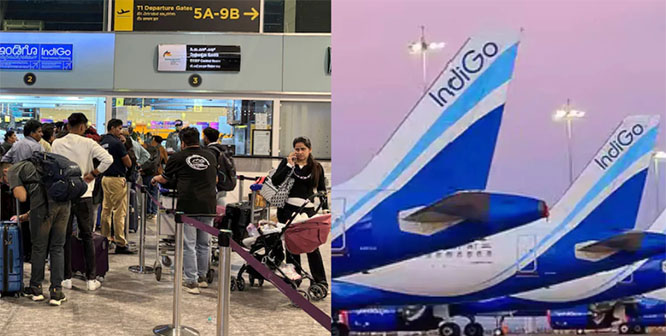
Angry outbursts, long queues, and desperate appeals filled airports across India today as IndiGo grappled with a severe operational breakdown. Hundreds of flights have been cancelled or delayed, leaving thousands of passengers stranded through the night and forcing many to spend long hours at helpdesks.

Social media was flooded with videos of fliers pleading for assistance, accusing the airline of misleading updates, and demanding accommodation after being stuck for 10 to 12 hours at airports such as Hyderabad and Bengaluru.

What Triggered the Meltdown?

IndiGo has attributed the widespread disruption to “a multitude of unforeseen operational challenges.” These include:

•    Minor technology glitches
•    Winter-season schedule adjustments
•    Bad weather
•    Congestion in the aviation network
•    New crew rostering rules (Flight Duty Time Limitations or FDTL)

Among these, the most disruptive has been the implementation of the updated FDTL norms introduced by the Directorate General of Civil Aviation (DGCA) in January 2024.

These rules were designed to reduce pilot fatigue and improve passenger safety. Key changes include:

•    Longer weekly rest periods for flight crew
•    A revised definition of “night,” extending it by an extra hour
•    Tighter caps on flight duty timing and night landings
•    Cutting night shifts for pilots and crew from six per roster cycle to just two

Once these norms became fully enforceable, airlines were required to overhaul rosters well in advance. For IndiGo, this triggered a sudden shortage of crew available for duty, leading to cascading delays and cancellations.

Why IndiGo Was Hit the Hardest

IndiGo is India’s largest airline by a wide margin, operating over 2,200 flights daily. That’s roughly double the number operated by Air India.

When an airline of this size experiences even a 10–20% disruption, it translates to 200–400 flights being delayed or grounded — producing massive spillover effects across the country.

IndiGo also relies heavily on high-frequency overnight operations, a model typical of low-cost carriers that aim to maximise aircraft utilisation and reduce downtime. The stricter FDTL norms clash with these overnight-heavy schedules, forcing the airline to pull back services.

Aviation bodies have also criticised IndiGo’s preparedness. The Airline Pilots' Association of India (ALPA) said airlines were given a two-year window to plan for the new rules but “started preparing rather late.” IndiGo, it said, failed to rebuild crew rosters 15 days in advance as required.

The Federation of Indian Pilots (FIP) went further, calling the crisis the result of IndiGo’s “prolonged and unorthodox lean manpower strategy,” and alleging that the airline adopted a hiring freeze even as it knew the new rules would require more careful staffing.

How Many Flights Are Affected?

In the past 48 hours, over 300 flights have been cancelled. At least 100 more are expected to be cancelled today.

City-wise impact:

•    Hyderabad: 33 expected cancellations; several fliers stranded overnight
•    Bengaluru: over 70 expected cancellations
•    Delhi, Mumbai, Chennai, Kolkata: widespread delays and missed connections

Passengers shared distressing accounts online.

One customer at Hyderabad airport said they waited from 6 PM to 9 AM with “no action taken” regarding their delayed Pune flight. Another said IndiGo repeatedly told them the crew was “arriving soon,” only for the delay to stretch over 12 hours.

IndiGo has apologised for the disruption and promised that operations will stabilise within 48 hours, adding that “calibrated adjustments” are being made to contain the chaos.

What Should Passengers Do Now?

For those flying in the next few days, especially with IndiGo, here are key precautions:

1. Keep Checking Flight Status
Monitor your flight closely before leaving for the airport, as delays may be announced last-minute.

2. Arrive Early
Expect long queues at counters and security due to crowding and rescheduling.

3. Carry Essentials
Pack snacks, water, basic medicines, chargers, and items for children or senior citizens. Extended waiting times should be anticipated.

4. Use Flexible Booking Options
If you booked tickets with a free-date-change or cancellation option, consider using them.
If you haven’t booked yet, prefer refundable or flexible fares, or even consider alternate airlines.

5. Follow IndiGo’s Updates
Keep an eye on IndiGo’s official social media channels and contact customer support for rebooking and refund queries.

What Needs to Change?

Pilot groups have raised concerns not just about staffing but also the planning practices behind it.
The Federation of Indian Pilots accused IndiGo of:

•    Imposing an unexplained hiring freeze despite knowing the FDTL changes were coming
•    Entering non-poaching agreements that limited talent movement
•    Keeping pilot pay frozen
•    Underestimating the need to restructure operations in advance

They have urged DGCA to approve seasonal schedules only after airlines prove they have adequate pilot strength under the new norms.

ALPA also warned that some airlines might be using the delays as an “immature pressure tactic” to push DGCA for relaxations in the new rules — which, if granted, could compromise the very safety standards the norms were meant to protect.

Both pilot bodies stressed that no exemption should dilute safety, and any deviations should be based solely on scientific risk assessment.

Is a Solution in Sight?

While IndiGo says normalcy will return within two days, aviation experts believe that fully stabilising operations could take longer, depending on how quickly the airline can:
•    Re-align rosters
•    Mobilise rested crew
•    Boost staffing
•    Adjust its winter schedule to match regulatory requirements
Passengers are advised to remain prepared for continued delays over the next few days as the airline works through its backlog. 

Comments

Add new comment

  • Coastaldigest.com reserves the right to delete or block any comments.
  • Coastaldigset.com is not responsible for its readers’ comments.
  • Comments that are abusive, incendiary or irrelevant are strictly prohibited.
  • Please use a genuine email ID and provide your name to avoid reject.
News Network
December 4,2025

Mangaluru: Chaos erupted at Mangaluru International Airport (MIA) after IndiGo flight 6E 5150, bound for Mumbai, was repeatedly delayed and ultimately cancelled, leaving around 100 passengers stranded overnight. The incident highlights the ongoing country-wide operational disruptions affecting the airline, largely due to the implementation of new Flight Duty Time Limitations (FDTL) norms for crew.

The flight was initially scheduled for 9:25 PM on Tuesday but was first postponed to 11:40 PM, then midnight, before being cancelled around 3:00 AM. Passengers expressed frustration over last-minute communication and the lack of clarity, with elderly and ailing travellers particularly affected. “Though the airline arranged food, there was no proper communication, leaving us confused,” said one family member.

An IndiGo executive at MIA cited the FDTL rules, designed to prevent pilot fatigue by limiting crew working hours, as the cause of the cancellation. While alternative arrangements, including hotel stays, were offered, about 100 passengers chose to remain at the airport, creating tension. A replacement flight was arranged but also faced delays due to the same constraints, finally departing for Mumbai around 1:45 PM on Wednesday. Passengers either flew, requested refunds, or postponed their travel.

The Mangaluru delay is part of a broader crisis for IndiGo. The airline has been forced to make “calibrated schedule adjustments”—a euphemism for widespread cancellations and delays—after stricter FDTL norms came into effect on November 1.

While an IndiGo spokesperson acknowledged unavoidable flight disruptions due to technology issues, operational requirements, and the updated crew rostering rules, the DGCA has intervened, summoning senior airline officials to explain the chaos and outline corrective measures.

The ripple effect has been felt across the country, with major hubs like Bengaluru and Mumbai reporting numerous cancellations. The Mangaluru incident underscores the systemic operational strain currently confronting India’s largest carrier, leaving passengers nationwide grappling with uncertainty and delays.

Comments

Add new comment

  • Coastaldigest.com reserves the right to delete or block any comments.
  • Coastaldigset.com is not responsible for its readers’ comments.
  • Comments that are abusive, incendiary or irrelevant are strictly prohibited.
  • Please use a genuine email ID and provide your name to avoid reject.
News Network
November 24,2025

Mangaluru, Nov 24: The original departure time of 11.10 pm was a distant memory for scores of Dammam-bound passengers at Mangaluru International Airport last Friday night, as their Air India Express flight was abruptly cancelled at the eleventh hour, sparking hours of frustration and chaos.

The flight, IX 885, initially scheduled to depart at 11.10 pm on November 22, was subject to two back-to-back reschedules—first pushed to 11.45 pm and then significantly postponed to 1.40 am—before the final, crushing announcement of cancellation was made. For the travellers, many of whom are likely expatriate workers with tight schedules, the last-minute change marked the beginning of a distressing ordeal.

"There was no drinking water, no food, and absolutely no proper guidance. We were left stranded like refugees," complained a stranded passenger.

According to multiple passenger accounts, the airline's ground staff failed to provide adequate support or essential amenities following the cancellation. Complaints poured in about the total absence of drinking water, food provisions, and any reliable guidance from the carrier's representatives. Travellers alleged they were left stranded for a considerable period, with no immediate arrangements or clear communication offered regarding accommodation or alternative travel to send them back home.

The incident has highlighted serious concerns over the carrier's contingency planning and customer service protocols during flight disruptions at one of India's key international gateways. The airline is yet to issue a comprehensive statement addressing the alleged lapse in passenger care.
 

Comments

Add new comment

  • Coastaldigest.com reserves the right to delete or block any comments.
  • Coastaldigset.com is not responsible for its readers’ comments.
  • Comments that are abusive, incendiary or irrelevant are strictly prohibited.
  • Please use a genuine email ID and provide your name to avoid reject.