



Why Saudi Arabia is abandoning Islamic calendar for govt pay

October 3, 2016

Riyadh, Oct 3: Saudi government workers will be paid according to the Gregorian calendar instead of the Islamic Hijri calendar, making the working month longer as part of cost-cutting measures, newspapers reported on Monday.

Islamiccalendar
The change, approved by cabinet last week, brings civil service pay in line with the government's January-December fiscal year, the Arab News and Saudi Gazette reported.

The reports said the latest austerity measure took effect on October 1.

Saudi Arabia, the world's biggest oil exporter, is cutting government spending and re-orienting its economy after a collapse over the past two years of the global oil price which provided most of its revenue.

The Hijri calendar consists of 12 months of 29 or 30 days depending on the sighting of the moon, meaning the Islamic year is several days shorter than the Gregorian calendar, which is widely used in the world.

Last week, cabinet also cut by 20 percent the salaries of ministers and froze the wages of lower-ranked civil servants.

Almost twice as many Saudis are employed in the bloated public sector — where hours are shorter and leave longer — than in private firms.

In April, the king's son, Deputy Crown Prince Mohammed bin Salman, announced the wide-ranging Vision 2030 plan to diversify the economy.

Among its goals, Vision 2030 aims to boost private sector employment, cutting the government payroll to 40 percent of the budget from 45 percent by 2020.

Comments

Add new comment

  • Coastaldigest.com reserves the right to delete or block any comments.
  • Coastaldigset.com is not responsible for its readers’ comments.
  • Comments that are abusive, incendiary or irrelevant are strictly prohibited.
  • Please use a genuine email ID and provide your name to avoid reject.
News Network
December 15,2025

Mangaluru police have arrested a 27-year-old NRI on his return from Saudi Arabia in connection with an Instagram post allegedly containing derogatory and provocative remarks about the Hindu religion, officials said on Monday.

The accused, Abdul Khader Nehad, a resident of Ulaibettu in Mangaluru, was working in Saudi Arabia when the post was uploaded, police said.

A suo motu case was registered at the Bajpe police station on October 11 after an allegedly offensive post circulated from the Instagram account ‘team_sdpi_2025’. Police said the content was flagged for being provocative and derogatory in nature.

During the investigation, technical analysis traced the Instagram post to Nehad, who was residing abroad at the time, a senior police officer said. Based on these findings, a Look Out Circular (LOC) was issued against him.

On December 14, Nehad arrived from Saudi Arabia at Calicut International Airport in Kerala, where he was taken into custody on arrival. Police said further investigation is underway.

Comments

Add new comment

  • Coastaldigest.com reserves the right to delete or block any comments.
  • Coastaldigset.com is not responsible for its readers’ comments.
  • Comments that are abusive, incendiary or irrelevant are strictly prohibited.
  • Please use a genuine email ID and provide your name to avoid reject.
News Network
December 5,2025

Mangaluru: In a significant step to curb online hate and intimidation, Mangaluru City Police have registered a suo motu case against multiple Instagram accounts accused of circulating alleged provocative and threatening content.

While monitoring social media activity on Tuesday, Kankanady Town PSI Anitha Nikkam identified the Instagram handle ‘team_targetttt_900’ for posting a hate message alongside images of lethal weapons. Another account, ‘team_nagara_900’, allegedly shared a threatening post targeting activist Bharath Kumdelu, tagging additional pages such as KARAVALI-OFFICIAL.

Several other accounts — including ‘immu_bhai.fan’, ‘target_boy_900’, ‘kings_of_manglore’, ‘team_target_boys.900’, ‘arshad_mangalore’, ‘target_ka19_ullal’, ‘team_target__’, ‘troll_tigersz_900’, ‘tr_group_900’, and ‘team_target_900’ — are also under scrutiny for spreading similar inflammatory material, police said.

Authorities have urged citizens, especially young social media users, to report suspicious pages and avoid engaging with groups that glorify violence or threaten individuals. Online hate can quickly escalate into real-world harm, and police stress that sharing or promoting such content can attract legal consequences.

Comments

Add new comment

  • Coastaldigest.com reserves the right to delete or block any comments.
  • Coastaldigset.com is not responsible for its readers’ comments.
  • Comments that are abusive, incendiary or irrelevant are strictly prohibited.
  • Please use a genuine email ID and provide your name to avoid reject.
News Network
December 7,2025

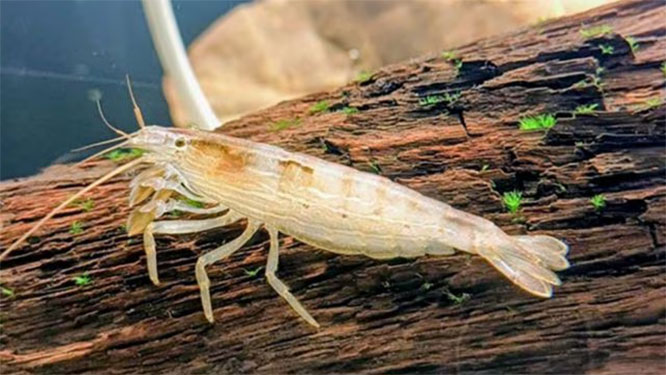
SHRIMP.jpg

Mangaluru, Dec 7: A rare bamboo shrimp has been rediscovered on mainland India more than 70 years after it was last reported, confirming for the first time the presence of Atyopsis spinipes in the country. The find was made by researchers from the Centre for Climate Change Studies at Sathyabama Institute of Science and Technology, Chennai, during surveys in Karnataka and Odisha.

The team — shrimp expert Dr S Prakash, PhD scholar K Kunjulakshmi, and Mangaluru-based researcher Maclean Antony Santos — combined field surveys, ecological assessments and DNA analysis to identify the elusive species. Their findings, published in Zootaxa, resolve decades of taxonomic confusion stemming from a 1951 report that misidentified the species as Atyopsis moluccensis without strong evidence.

The shrimp has now been confirmed at two locations: the Mulki–Pavanje estuary near Mangaluru and the Kuakhai River in Bhubaneswar. Historical specimens from the Andaman Islands, previously labelled as A. moluccensis, were also found to be misidentified and actually belong to A. spinipes.

The rediscovery began after an aquarium hobbyist in Odisha spotted a shrimp in 2022, prompting systematic surveys across Udupi, Karwar and Mangaluru. Four female specimens were collected in Mulki and one in Odisha, all genetically matching.

Researchers warn the species may exist in very small, vulnerable populations as freshwater habitats face increasing pressure from pollution, sand mining and infrastructure development. All verified specimens have been deposited with the Zoological Survey of India for future reference.

Comments

Add new comment

  • Coastaldigest.com reserves the right to delete or block any comments.
  • Coastaldigset.com is not responsible for its readers’ comments.
  • Comments that are abusive, incendiary or irrelevant are strictly prohibited.
  • Please use a genuine email ID and provide your name to avoid reject.