Will God’s own country succumb to communal polarisation?

Ram Puniyani
November 1, 2017

Recently, BJP President Amit Shah led ‘Jan Suraksha Yatra’, a two-week program to highlight the death of RSS workers in Kerala. Many BJP dignitaries (twelve union ministers and five chief ministers) participated in this. The one who made big news was Yogi Adityanath, Chief Minister of UP. The slogan of Amit Shah was that CPM has been indulging in political violence, which has led to the death of RSS workers in Kannur region. He wanted to draw the attention of people to Jihadi-red terror in Kerala. Yogi Adityanath was offering advises to Kerala about health care and administration. This did reflect his audacity as we have recently seen the death of number of children in Gorakhpur hospital due to lack of Oxygen. This is one among the many ludicrous acts of Yogi, as Kerala tops in the welfare indices in the whole country.

The whole propaganda unleashed by the BJP is reflective of the pattern of their politics. During last seventeen years, the numbers of political killings in Kerala are as follows: Those dying from CPM-85, RSS-65, Muslim League and Congress-11 each. Kannur has seen the rivalry between CPM and RSS, in which on frequent intervals the political workers have been killed from both the sections. Shah’s attempt to show that it is RSS workers alone who are being killed is a fake breast beating. He knows well that CPM workers have also been killed. RSS cabal as such has built itself up around identity issues which have led to massive killings. Leave apart the earlier issues raised by RSS-BJP, the latest such have been Ram Temple and Holy Cow. Both these issues have led to violence and killings. The RSS combine has been deflecting the blame on the victims in a clever manner. It delves on selective presentation of facts, raising of emotions and consequent violence.

In MP it tried to consolidate its position by raising the issue of Kamaal Maula Masjid (Bhoj Shala), in Karnataka it raised the issue of Baba Budan Giri, calling it Datta Peetham. Capitalisation of issues around identity is the speciality of RSS combine. Can their ploy succeed in Kerala? Kerala is one place where the representation of different religious communities is matching. The first Christian community begins on the Malabar Coast, with coming of St Thomas in AD 52, establishment of series of Churches and the beginning of Christian community. The Arab traders have been coming for trade all through and from Seventh Century onwards Islam comes. The first mosque, Cheraman Jumma Mosque also came up in Kerala. While Amit Shah thrives on dividing the communities along religious lines, Kerala has been the place of inter-community harmony from ages.

Also, Kerala is a place where social reform has been in the forefront. It’s here that great social reformer Narayan Guru preached for casteless society, equal respect for all castes by establishing temples where people from all castes were welcome. Same Narayan Guru also organized the first Parliament of religions, breaking the religious divides to build one Humanity. The Communist government of Namboodripad brought in land reforms, rare in other parts of the country, to bring in economic succour for the landless peasants. This is what led the foundation for other changes making Kerala number one state in social development indices.

The attempt to communalise Kerala has been very intense on the part of BJP-RSS, it has been raising the issue of so called ‘love Jihad’ on regular basis. Many investigations by police authorities have concluded that there is no organized attempt to woo over Hindu-Christian girls to convert them to Islam. It is an occasional case of inter-religious marriage. It is the harmony and bonding of intercommunity relations to which Amit Shah tribe is opposed, leading to harassment of girls and torture of the boys, who happen to choose their life partners on their free will.

Amit Shah has not only been sowing the divisive seeds through his efforts, he has also been highlighting the Brahmanical nature of his politics. On Pongal, the biggest festival of Kerala, he brought out posters celebrating Waman, calling the festival as Waman Jayanti, wished the people of Kerala happy Waman Jayanti. The legend is that King Mahabali was killed through deceit by Waman, the Avatar of Lord Vishnu. Pongal as such is regarded as King Mahabali visiting his subject one’s in a year. The legend goes that the king belonged to low caste, and treated all the castes with same respect.

While BJP has been going strong guns in different parts of the country by its tactics of promoting sectarianism and subtle Brahmanism, it is unlikely that Kerala, the very enlightened state, with better social welfare and amity, will fall prey to Shah’s tactics. He has been labelling the violence as Red-Jihadi violence, by calling it so he wants to kill two birds in a single stone. Kerala has a large Muslim population; Jihadi word is to demonize them. It is likely that this time around these tactics will boomerang on the saffron party as Kerala is the bastion of social reform and political awareness. While RSS has been coming up here from last many decades, its political child BJP has not been able to make any headway barring one seat in Assembly. One knows that there is a rise in the electoral votes lately, can that trend grow is a matter of conjecture and depends on how CPM and other parties respond to these attempts by BJP and company.

It is heartening to know that Left parties have kicked off yatras, Jan Jagrata Yatra (People’s awareness), to promote the democratic values. Also, it seems Congress (UDF) is also planning Yatras. Time for these elements to wake up to the fact, that they need to coordinate their efforts to save communal amity, their coordination on this will help the matters to a great deal.

Comments

Add new comment

  • Coastaldigest.com reserves the right to delete or block any comments.
  • Coastaldigset.com is not responsible for its readers’ comments.
  • Comments that are abusive, incendiary or irrelevant are strictly prohibited.
  • Please use a genuine email ID and provide your name to avoid reject.
News Network
December 2,2025

Puttur: The long-cherished dream of a government medical college in Puttur has moved a decisive step closer to reality, with the Karnataka State Finance Department granting its official approval for the construction of a new 300-bed hospital.

Puttur MLA Ashok Kumar Rai announced the crucial development to reporters on Monday, confirming that the official communication from the finance department was issued on November 27. This 300-bed facility is intended to be the cornerstone for the establishment of the government medical college, a project announced in the state budget.

Fast-Track Implementation

The MLA outlined an aggressive timeline for the project:

•    A Detailed Project Report (DPR) for the hospital is expected to be ready within 45 days.

•    The tender process for the construction will be completed within two months.

Following the completion of the tender process, Chief Minister Siddaramaiah is scheduled to lay the foundation stone for the project.

"Setting up a medical college in Puttur is a historical decision by the Congress government in Karnataka," Rai stated. The project has an estimated budget allocation of Rs 1,000 crore for the medical college.

Focus on Medical Education Department

The MLA highlighted a key strategic move: requesting the government to implement the hospital construction through the Medical Education Department instead of the Health and Family Welfare Department. This is intended to streamline the entire process of establishing the full medical college, ensuring the facilities—including labs, operation theatres, and other necessary infrastructure—adhere to the strict guidelines set by the Medical Council of India (MCI). The proposed site for the project is in Bannur.

Rai also took the opportunity to address political criticism, stating that the government has fulfilled its promise despite "apprehensions" and "mocking and criticising" from opposition parties who had failed to take similar initiatives when they were in power. "Chief Minister Siddaramaiah has kept his word," he added.

Comments

Add new comment

  • Coastaldigest.com reserves the right to delete or block any comments.
  • Coastaldigset.com is not responsible for its readers’ comments.
  • Comments that are abusive, incendiary or irrelevant are strictly prohibited.
  • Please use a genuine email ID and provide your name to avoid reject.
News Network
November 26,2025

students.jpg

Bengaluru, Nov 26: Karnataka is taking its first concrete steps towards lifting a three-decade-old ban on student elections in colleges and universities. Deputy Chief Minister D.K. Shivakumar announced Wednesday that the state government will form a small committee to study the reintroduction of campus polls, a practice halted in 1989 following incidents of violence.

Speaking at a 'Constitution Day' event organised by the Karnataka Congress, Mr. Shivakumar underscored the move's aim: nurturing new political leadership from the grassroots.

"Recently, (Leader of the Opposition in Lok Sabha) Rahul Gandhi wrote a letter to me and Chief Minister (Siddaramaiah) asking us to think about restarting student elections," Shivakumar stated. "I'm announcing today that we'll form a small committee and seek a report on this."

Student elections were banned in Karnataka in 1989, largely due to concerns over violence and the infiltration of political party affiliates into campus life. The ban effectively extinguished vibrant student bodies and the pipeline of young leaders they often produced.

Mr. Shivakumar, who also serves as the Karnataka Congress president, said that former student leaders will be consulted to "study the pros and cons" of the re-introduction.

Acknowledging the history of the ban, he added, "There were many criminal activities taking place back then. We’ll see how we can conduct (student) elections by regulating such criminal activities."

The Deputy CM reminisced about his own journey, which began on campus. He recalled his political activism at Sri Jagadguru Renukacharya College leading to his first Assembly ticket in 1985 at the age of 23. "That's how student leadership was at the time. Such leadership has gone today. College elections have stopped," he lamented, adding that for many, college elections were "like a big movement" where leaders were forged.

The move, driven by the Congress high command's push to cultivate young talent, will face scrutiny from academics and university authorities who have, in the past, expressed concern that the return of polls could disrupt the peaceful academic environment and turn campuses into political battlegrounds.

Comments

Add new comment

  • Coastaldigest.com reserves the right to delete or block any comments.
  • Coastaldigset.com is not responsible for its readers’ comments.
  • Comments that are abusive, incendiary or irrelevant are strictly prohibited.
  • Please use a genuine email ID and provide your name to avoid reject.
News Network
December 4,2025

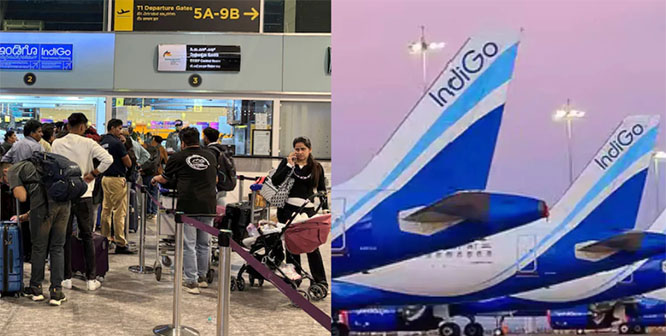
indigocrisis.jpg

Angry outbursts, long queues, and desperate appeals filled airports across India today as IndiGo grappled with a severe operational breakdown. Hundreds of flights have been cancelled or delayed, leaving thousands of passengers stranded through the night and forcing many to spend long hours at helpdesks.

Social media was flooded with videos of fliers pleading for assistance, accusing the airline of misleading updates, and demanding accommodation after being stuck for 10 to 12 hours at airports such as Hyderabad and Bengaluru.

What Triggered the Meltdown?

IndiGo has attributed the widespread disruption to “a multitude of unforeseen operational challenges.” These include:

•    Minor technology glitches
•    Winter-season schedule adjustments
•    Bad weather
•    Congestion in the aviation network
•    New crew rostering rules (Flight Duty Time Limitations or FDTL)

Among these, the most disruptive has been the implementation of the updated FDTL norms introduced by the Directorate General of Civil Aviation (DGCA) in January 2024.

These rules were designed to reduce pilot fatigue and improve passenger safety. Key changes include:

•    Longer weekly rest periods for flight crew
•    A revised definition of “night,” extending it by an extra hour
•    Tighter caps on flight duty timing and night landings
•    Cutting night shifts for pilots and crew from six per roster cycle to just two

Once these norms became fully enforceable, airlines were required to overhaul rosters well in advance. For IndiGo, this triggered a sudden shortage of crew available for duty, leading to cascading delays and cancellations.

Why IndiGo Was Hit the Hardest

IndiGo is India’s largest airline by a wide margin, operating over 2,200 flights daily. That’s roughly double the number operated by Air India.

When an airline of this size experiences even a 10–20% disruption, it translates to 200–400 flights being delayed or grounded — producing massive spillover effects across the country.

IndiGo also relies heavily on high-frequency overnight operations, a model typical of low-cost carriers that aim to maximise aircraft utilisation and reduce downtime. The stricter FDTL norms clash with these overnight-heavy schedules, forcing the airline to pull back services.

Aviation bodies have also criticised IndiGo’s preparedness. The Airline Pilots' Association of India (ALPA) said airlines were given a two-year window to plan for the new rules but “started preparing rather late.” IndiGo, it said, failed to rebuild crew rosters 15 days in advance as required.

The Federation of Indian Pilots (FIP) went further, calling the crisis the result of IndiGo’s “prolonged and unorthodox lean manpower strategy,” and alleging that the airline adopted a hiring freeze even as it knew the new rules would require more careful staffing.

How Many Flights Are Affected?

In the past 48 hours, over 300 flights have been cancelled. At least 100 more are expected to be cancelled today.

City-wise impact:

•    Hyderabad: 33 expected cancellations; several fliers stranded overnight
•    Bengaluru: over 70 expected cancellations
•    Delhi, Mumbai, Chennai, Kolkata: widespread delays and missed connections

Passengers shared distressing accounts online.

One customer at Hyderabad airport said they waited from 6 PM to 9 AM with “no action taken” regarding their delayed Pune flight. Another said IndiGo repeatedly told them the crew was “arriving soon,” only for the delay to stretch over 12 hours.

IndiGo has apologised for the disruption and promised that operations will stabilise within 48 hours, adding that “calibrated adjustments” are being made to contain the chaos.

What Should Passengers Do Now?

For those flying in the next few days, especially with IndiGo, here are key precautions:

1. Keep Checking Flight Status
Monitor your flight closely before leaving for the airport, as delays may be announced last-minute.

2. Arrive Early
Expect long queues at counters and security due to crowding and rescheduling.

3. Carry Essentials
Pack snacks, water, basic medicines, chargers, and items for children or senior citizens. Extended waiting times should be anticipated.

4. Use Flexible Booking Options
If you booked tickets with a free-date-change or cancellation option, consider using them.
If you haven’t booked yet, prefer refundable or flexible fares, or even consider alternate airlines.

5. Follow IndiGo’s Updates
Keep an eye on IndiGo’s official social media channels and contact customer support for rebooking and refund queries.

What Needs to Change?

Pilot groups have raised concerns not just about staffing but also the planning practices behind it.
The Federation of Indian Pilots accused IndiGo of:

•    Imposing an unexplained hiring freeze despite knowing the FDTL changes were coming
•    Entering non-poaching agreements that limited talent movement
•    Keeping pilot pay frozen
•    Underestimating the need to restructure operations in advance

They have urged DGCA to approve seasonal schedules only after airlines prove they have adequate pilot strength under the new norms.

ALPA also warned that some airlines might be using the delays as an “immature pressure tactic” to push DGCA for relaxations in the new rules — which, if granted, could compromise the very safety standards the norms were meant to protect.

Both pilot bodies stressed that no exemption should dilute safety, and any deviations should be based solely on scientific risk assessment.

Is a Solution in Sight?

While IndiGo says normalcy will return within two days, aviation experts believe that fully stabilising operations could take longer, depending on how quickly the airline can:
•    Re-align rosters
•    Mobilise rested crew
•    Boost staffing
•    Adjust its winter schedule to match regulatory requirements
Passengers are advised to remain prepared for continued delays over the next few days as the airline works through its backlog. 

Comments

Add new comment

  • Coastaldigest.com reserves the right to delete or block any comments.
  • Coastaldigset.com is not responsible for its readers’ comments.
  • Comments that are abusive, incendiary or irrelevant are strictly prohibited.
  • Please use a genuine email ID and provide your name to avoid reject.