Will violate prohibitory orders if Citizenship Bill not withdrawn: Ex-Assam CM

Agencies
January 12, 2019

Guwahati, Jan 12: A day after protests were banned in parts of Guwahati, former Assam chief minister Tarun Gogoi said on Friday he would violate the prohibitory order and court arrest if the Citizenship (Amendment) Bill was not withdrawn by the Centre.
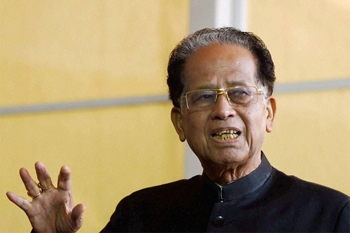
Addressing a press conference, Gogoi added that if protests or disturbances continue in the state, youths are likely to get attracted towards insurgency.

"I will violate (Section) 144 (of the Code of Criminal Procedure) if you (Centre) do not withdraw the Citizenship (Amendment) Bill. I will lead people and shout slogans. I will go to jail a jail bharo (movement)," he asserted.

The bill will not only affect Assam but threaten the entire country's unity and culture, Gogoi claimed.

By completely prohibiting all sorts of protests, the BJP-led government is curtailing the democratic rights of people and running the state in an autocratic manner, the senior Congress leader said.

"Before bringing the bill, why was no attempt made to have discussion by the government with all stakeholders? Even after protests started, the government could have talked. (Former prime minister) Indira Gandhi had herself come to talk when the Assam agitation was on," he said.

In view of protests on a daily basis against the bill, the Guwahati police on Thursday banned all sorts of agitation in parts of Guwahati under Section 144 of the CrPC.

The jurisdiction of the order will cover Dispur, where the Secretariat complex is, Bhangagarh, Basistha, Hatigaon, Sonapur and Khetri police station areas, said Deputy Commissioner (East) Ramandeep Kaur.

"If protests and disturbances continue, youths will be unhappy and terrorism will rise. Because of such developments like the Citizenship Bill, youths are getting attracted towards insurgency and joining the ULFA.

"We had brought them to the mainstream, but the BJP is doing the opposite by taking anti-people policies. The government should not ignore peoples' aspirations," Gogoi said.

He also said the BJP is unable to handle the law and order situation and added the home department was "clueless".

"That is why, a Bengal cadre officer is brought as security adviser. Why an Assam cadre officer was not appointed? Now they will appoint all officers from outside," he said.

Gogoi was referring to the appointment of former Kolkata Police Commissioner Ranjit Kumar Panchnanda as the security adviser to the Assam chief minister.

"May be, one day, we will have the CM also from outside. May be, Ram Madhav (BJP general secretary) will become the CM next time. In any case, the government is being run from outside," he claimed.

Talking about religious persecution of Hindus in Bangladesh, the former CM said in his 15-year tenure, he did not get a single application from anyone about religious persecution in the neighbouring country or political persecution.

"If the JPC got information that 31,000 have applied for citizenship under religious persecution, then why did the Centre not take up the issue with the Bangladesh government? In fact, Hindus are living at peace there," he said.

Assam Finance Minister Himanta Biswa Sarma is trying to create a clash between Hindus and Muslims in Assam on the citizenship issue, Gogoi alleged.

"Mizoram, Meghalaya are opposing (the bill). Manipur CM has asked to exclude his state. The alliance of the Tripura government has threatened to pull out if the bill is passed. However, the BJP leadership in Assam is silent and assuring people it will not harm us," he said.

Gogoi also vowed to defeat the BJP in the forthcoming Lok Sabha election and asked people to ensure that the saffron party's tally comes down to zero.

On infiltration, he said, "The BJP itself said that no Bangladeshi came to India in the last 10 years. So, they were not happy and now want to bring Bangladeshis into Assam with the help of the bill.

"During election rallies, (Prime Minister Narendra) Modi said that 'I brought all foreigners and I won with their votes'. Now, their own spokesperson said that his PM lied and it was a 'jumla'."

BJP spokesman Swapnanil Barua on Thursday said there had been no illegal infiltration from Bangladesh into India during the last 10 years, despite making the issue a major poll plank in the 2014 Lok Sabha and 2016 Assam assembly elections.


Comments

Add new comment

  • Coastaldigest.com reserves the right to delete or block any comments.
  • Coastaldigset.com is not responsible for its readers’ comments.
  • Comments that are abusive, incendiary or irrelevant are strictly prohibited.
  • Please use a genuine email ID and provide your name to avoid reject.
News Network
December 6,2025

pilot.jpg

New Delhi: IndiGo, India’s largest airline, faced major operational turbulence this week after failing to prepare for new pilot-fatigue regulations issued by the Directorate General of Civil Aviation (DGCA). The stricter rules—designed to improve flight safety—took effect in phases through 2024, with the latest implementation on November 1. IndiGo has acknowledged that inadequate roster planning led to widespread cancellations and delays.

Below are the key DGCA rules that affected IndiGo’s operations:

1. Longer Mandatory Weekly Rest

Weekly rest for pilots has been increased from 36 hours to 48 hours.

The government says the extended break is essential to curb cumulative fatigue. This rule remains in force despite the current crisis.

2. Cap on Night Landings

Pilots can now perform only two night landings per week—a steep reduction from the earlier limit of six.

Night hours, defined as midnight to early morning, are considered the least alert period for pilots.

Given the disruptions, this rule has been temporarily relaxed for IndiGo until February 10.

3. Reduced Maximum Night Flight Duty

Flight duty that stretches into the night is now capped at 10 hours.

This measure has also been kept on hold for IndiGo until February 10 to stabilize operations.

4. Weekly Rest Cannot Be Replaced With Personal Leave

Airlines can no longer count a pilot’s personal leave as part of the mandatory 48-hour rest.

Pilots say this closes a loophole that previously reduced actual rest time.

Currently, all airlines are exempt from this rule to normalise travel.

5. Mandatory Fatigue Monitoring

Airlines must submit quarterly fatigue reports along with corrective actions to DGCA.

This system aims to create a transparent fatigue-tracking framework across the industry.

The DGCA has stressed that these rules were crafted to strengthen flight safety and align India with global fatigue-management standards. The temporary relaxations are expected to remain until February 2025, giving IndiGo time to stabilise its schedules and restore normal air travel.

Comments

Add new comment

  • Coastaldigest.com reserves the right to delete or block any comments.
  • Coastaldigset.com is not responsible for its readers’ comments.
  • Comments that are abusive, incendiary or irrelevant are strictly prohibited.
  • Please use a genuine email ID and provide your name to avoid reject.
News Network
December 19,2025

Saudi Arabia has abolished fees on expatriate workers employed in licensed industrial establishments, signaling a strong push to empower national factories and enhance the Kingdom’s global industrial competitiveness. The move reflects the leadership’s commitment to building a sustainable and resilient industrial economy under Saudi Vision 2030.

The decision was approved by the Council of Ministers, chaired by Crown Prince and Prime Minister Mohammed bin Salman, following a recommendation from the Council of Economic and Development Affairs (CEDA). It forms part of a broader strategy to support, modernize, and strengthen the industrial sector.

By removing fees on foreign workers, industrial establishments gain greater operational flexibility and relief from financial pressures. This is expected to help factories expand production, improve efficiency, and compete more effectively in international markets, while reinforcing long-term sustainability.

The initiative aligns closely with Saudi Vision 2030, which identifies industry as a key pillar of economic diversification. A competitive and resilient industrial base is viewed as essential for driving innovation, attracting investment, and sustaining long-term economic growth.

Overall, the fee exemption underscores the Kingdom’s commitment to creating a supportive environment for industrial development and ensuring that Saudi factories remain globally competitive and capable of leading the nation’s economic transformation.

Comments

Add new comment

  • Coastaldigest.com reserves the right to delete or block any comments.
  • Coastaldigset.com is not responsible for its readers’ comments.
  • Comments that are abusive, incendiary or irrelevant are strictly prohibited.
  • Please use a genuine email ID and provide your name to avoid reject.
News Network
December 16,2025

jordan.jpg

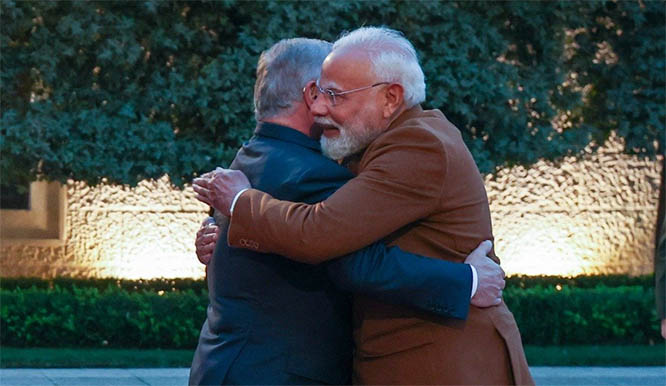
Prime Minister Narendra Modi on Monday held talks with Jordan’s King Abdullah II in Amman, during which the two leaders discussed ways to further strengthen bilateral relations, with the Prime Minister outlining an eight-point vision covering key areas of cooperation.

Describing the meeting as “productive”, PM Modi said he shared a roadmap focused on trade and economy, fertilisers and agriculture, information technology, healthcare, infrastructure, critical and strategic minerals, civil nuclear cooperation, and people-to-people ties.

In a post on social media platform X, the Prime Minister praised King Abdullah II’s personal commitment to advancing India–Jordan relations, particularly as both countries mark the 75th anniversary of the establishment of diplomatic ties this year.

“Held productive discussions with His Majesty King Abdullah II in Amman. His personal commitment towards vibrant India-Jordan relations is noteworthy. This year, we are celebrating the 75th anniversary of our bilateral diplomatic relations,” PM Modi said.

The meeting took place at the Al Husseiniya Palace, where the two leaders also exchanged views on regional and global issues of mutual interest. According to the Ministry of External Affairs (MEA), both sides agreed to further deepen cooperation in areas including trade and investment, defence and security, counter-terrorism and de-radicalisation, fertilisers and agriculture, infrastructure, renewable energy, tourism, and heritage.

The MEA said both leaders reaffirmed their united stand against terrorism.

PM Modi arrived in Amman earlier on Monday and was received by Jordanian Prime Minister Jafar Hassan, who accorded him a formal welcome. Following the talks, King Abdullah II hosted a banquet dinner in honour of the Prime Minister, reflecting the warmth of bilateral ties.

Jordan is the first leg of PM Modi’s three-nation tour. From Amman, the Prime Minister will travel to Ethiopia at the invitation of Prime Minister Abiy Ahmed Ali, marking his first official visit to the African nation. The tour will conclude with a visit to Oman.

Comments

Add new comment

  • Coastaldigest.com reserves the right to delete or block any comments.
  • Coastaldigset.com is not responsible for its readers’ comments.
  • Comments that are abusive, incendiary or irrelevant are strictly prohibited.
  • Please use a genuine email ID and provide your name to avoid reject.