15 Asia-Pacific nations including China sign world's biggest trade agreement without India

News Network
November 15, 2020

Singapore, Nov 15: Fifteen Asia-Pacific nations, including China, on Sunday signed the world's biggest trade agreement, the Regional Comprehensive Economic Partnership (RCEP), sans India with hopes that it will help recover from the shocks of the COVID-19 pandemic.

The RCEP was signed after eight years of negotiations at the conclusion of annual summit of Southeast Asian leaders and their regional partners, held virtually this year due to the COVID-19 pandemic.

The agreement, which covers almost a third of the world economy, will progressively lower tariffs across many areas in the coming years, reported Channel News Asia.

After the signing, all countries would have to ratify the RCEP within two years before it becomes effective.

India, one of the leading consumer-driven market in the region, pulled out of talks last year, concerned that the elimination of tariffs would open its markets to a flood of imports that could harm local producers.

But other nations have said in the past that the door remains open for India's participation in the RCEP, influenced by China.

The RCEP was first proposed in 2012 and loops in 10 ASEAN economies- Indonesia, Malaysia, the Philippines, Singapore, Thailand, Brunei, Vietnam, Laos, Myanmar and Cambodia- along with China, Japan, South Korea, New Zealand and Australia.

Host country Vietnam's Prime Minister Nguyen Xuan Phuc said the COVID-19 pandemic has harmed global and regional trade and investment flows, including the countries participating in the RCEP talks.

The global and regional economies are facing huge obstacles and challenges caused by not only COVID-19 but also decreased global trade, he was quoted as saying by the Vietnam News Agency (VNA).

“The conclusion of the negotiations of the RCEP, the largest free trade agreement in the world, will send a strong message of ASEAN's leading role in supporting the multilateral trade system, helping to create a new trading structure in the region,” VNA quoted Phuc as saying.

Singapore Prime Minister Lee Hsien Loong said he joins fellow RCEP countries "in hoping that India too, will be able to come on board at some point so that the participation in the RCEP will fully reflect the emerging patterns of integration and regional cooperation in Asia."

They make up nearly a third of the world's population and account for 29 per cent of global gross domestic product, he said.

Lee, who led Singapore's delegation, hailed the signing of the RCEP as a "major milestone" and congratulated the 15 participating countries.

"We have reached a major milestone of signing this agreement today. It has taken us eight years, 46 negotiating meetings and 19 ministerial meetings to get here. I am very grateful for the tireless efforts of ministers and negotiators from all participating countries who have worked so hard during the process.

"The RCEP is a major step forward for the world, at a time when multilateralism is losing ground and global growth is slowing," said the Singapore premier.

Now, "the hard work of implementing the agreement and encouraging our businesses to take full advantage of it begins," he added.

"We have all made difficult trade-offs to advance the negotiations. And we will have to work hard to persuade our citizens that the RCEP will benefit them," the Channel quoted Lee as saying.

"But I have no doubt that the RCEP is a plus for all of us, and will help stem the tide against globalisation and economic integration.

"Singapore looks forward to working with participating countries on the timely implementation of this momentous agreement," Lee assured.

Malaysia's trade minister Mohamed Azmin Ali, ahead of the summit, had said, "after eight years of negotiating with blood, sweat and tears, we have finally come to the moment where we will seal the RCEP Agreement this Sunday."

The four-day ASEAN summit included meetings between Southeast Asian leaders and their counterparts from China, Japan and South Korea in the ASEAN Plus Three Summit, as well as the East Asia Summit and RCEP Summit.

The 15 RCEP countries agreed on the terms of the deal last year, setting up the path for it to be signed during the summit.

The ASEAN is considered as one of the most influential groupings in the region, and India and several other countries including the US, China, Japan and Australia are its dialogue partners.

The virtual ASEAN summit, which kicked-off on Thursday, is taking place amid China's aggressive behaviour in the disputed South China Sea. A number of ASEAN countries have territorial disputes with China in the South China Sea.

Beijing claims almost all of the 1.3 million square-mile South China Sea as its sovereign territory. China has been building military bases on artificial islands in the region which, in parts, is claimed by Brunei, Malaysia, the Philippines, Taiwan and Vietnam.

Beijing has impeded commercial activity like fishing and mineral exploration by neighbouring nations in recent years, saying the ownership of the resource-rich maritime territory belongs to China for hundreds of years. 

Comments

Add new comment

  • Coastaldigest.com reserves the right to delete or block any comments.
  • Coastaldigset.com is not responsible for its readers’ comments.
  • Comments that are abusive, incendiary or irrelevant are strictly prohibited.
  • Please use a genuine email ID and provide your name to avoid reject.
News Network
November 30,2025

The United Nations Committee against Torture (CAT) has condemned the Israeli regime for enforcing a policy of “organized torture” against Palestinians.

In a report published on Friday, CAT stated that the occupying regime enforces a deliberate policy of “organized and widespread torture and ill-treatment” against Palestinian abductees, particularly since October 7, 2023, when Israel launched its genocidal war on Gaza.

The committee expressed “deep concern over repeated severe beatings, dog attacks, electrocution, water-boarding, use of prolonged stress positions [and] sexual violence” inflicted on Palestinians.

Palestinian prisoners were degraded by “being made to act like animals or being urinated on,” systematically denied medical care, and subjected to excessive restraints, “in some cases resulting in amputation,” the report added.

CAT also condemned the routine application of “unlawful combatants law” to justify the prolonged detention without trial of thousands of Palestinian men, women, and children.

More than 10,000 Palestinians, including women and children, are currently held in Israeli prisons, according to Palestinian and international human rights groups, with 3,474 Palestinians in “administrative detention,” meaning they are imprisoned without trial for indefinite periods.

The report highlighted the “high proportion of children who are currently detained without charge or on remand,” noting that while Israel sets the age of criminal responsibility at 12, even younger children have been abducted.

Children designated as security prisoners face severe restrictions on family contact, may be subjected to solitary confinement, and are denied access to education, in clear violation of international law.

The committee further suggested that Israel’s policies across the Occupied Territories constitute collective torture against the Palestinian population.

“A range of policies adopted by Israel in the course of its continued unlawful presence in the Occupied Palestinian Territory amounts to cruel, inhuman or degrading living conditions for the Palestinian population,” the report said.

On Thursday, the Palestinian resistance movement Hamas condemned the systematic killing and torture of Palestinian abductees in Israeli prisons, urging international action to halt these abuses.

Citing human rights data, Hamas stated that 94 Palestinians have been killed in Israeli prisons since the start of Tel Aviv’s genocidal war on Gaza.

“This reflects an organized criminal approach that has turned these prisons into direct killing grounds to eliminate our people,” the resistance movement said.

Hamas called on the international community, the UN, and human rights organizations to immediately pressure Israel to end crimes against prisoners and uphold their rights as guaranteed by all international conventions and norms.

Comments

Add new comment

  • Coastaldigest.com reserves the right to delete or block any comments.
  • Coastaldigset.com is not responsible for its readers’ comments.
  • Comments that are abusive, incendiary or irrelevant are strictly prohibited.
  • Please use a genuine email ID and provide your name to avoid reject.
News Network
November 22,2025

The Karnataka government has announced a 50% rebate on pending traffic and transport fines. The discount is available from November 21 to December 12.

The rebate applies to all traffic e-challans and violation cases booked by the RTO between 1991–92 and 2019–20. Officials clarified that the offer is not applicable to pending tax dues and is restricted only to traffic-violation fines.

Across Karnataka, more than 4 lakh RTO cases remain pending, including those involving transport vehicles. While thousands of vehicle owners have already cleared their dues, the department expects to generate substantial revenue through this limited-period rebate.

How to Pay and Avail the Discount

There are three ways to check and pay your pending fines:

1. Through Mobile Apps
Available on both Play Store and App Store:
•    Karnataka State Police (KSP) app
•    KarnatakaOne app
•    ASTraM app

Steps:
•    Enter your vehicle number in any of the above apps
•    Verify the photo/details of your vehicle
•    Pay the fine with the 50% discount applied

2. Visit a Traffic Police Station

You can pay your pending fine at any nearby traffic police station.

3. Visit the Traffic Management Centre (TMC)

•    Location: First Floor, Infantry Road, near Indian Express, Bengaluru

Transport Commissioner Yogeesh A M said, “We don't issue e-challans, so there's no online payment system.”

The department estimates ₹52 crore in pending RTO fines up to March 2020. “With the 50% rebate, we expect to collect around ₹25 crore if all dues are cleared,” he added.

Comments

Add new comment

  • Coastaldigest.com reserves the right to delete or block any comments.
  • Coastaldigset.com is not responsible for its readers’ comments.
  • Comments that are abusive, incendiary or irrelevant are strictly prohibited.
  • Please use a genuine email ID and provide your name to avoid reject.
News Network
November 24,2025

israelsyra.jpg

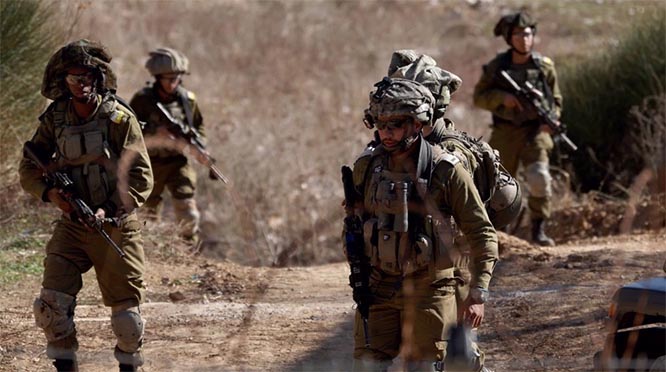
Israeli forces have pushed over the Syrian frontier, erecting a checkpoint and stopping vehicles in the southwestern city of Quneitra, in yet another breach of the Arab country’s sovereignty.

The violation took place on Sunday, when the troops made their way across the border, setting up the outpost near the Ain al-Bayda junction in northern Quneitra, Syrian outlets reported.

According to the al-Ikhbariya paper, an Israeli detachment positioned itself at the junction, halting cars and conducting searches.

The Syrian Arab News Agency (SANA) reported that three Israeli military vehicles then moved further into the northern countryside, deploying between the town of Jubata al-Khashab and the villages of Ofaniya and Ain al-Bayda. The agency added that a separate Israeli unit mounted a new incursion in the central region, approaching the villages of Umm Batina and al-Ajraf.

Residents said such activities have surged in recent months, pointing to Israeli advances onto farmland, leveling of extensive forested areas, arrests, and spread of mobile checkpoints.

The Israeli regime began markedly increasing its military aggression against Syria last year.

The escalation coincided with increasingly ferocious onslaughts throughout the country by the so-called Hay'at Tahrir al-Sham (HTS) Takfiri terrorist group, which the government of President Bashar al-Assad had confined to northwestern Syria. The HTS, however, managed to overthrow the government as the Israeli attacks would pummel the country’s civilian and defensive infrastructure.

Various reports have shown that, during the escalation, the regime conducted more than 1,000 airstrikes on the Syrian territory and over 400 ground raids into the south.

Following the collapse of the Assad government, Tel Aviv also widened its grip over the occupied Golan Heights by taking control of a demilitarized buffer zone, in defiance of a 1974 Disengagement Agreement. Earlier this month, senior Israeli officials, including Prime Minister Benjamin Netanyahu, visited the buffer zone, prompting expressions of alarm on the part of the United Nations.

The United States, the regime’s biggest ally, has, meanwhile, been fraternizing the HTS head Abu Mohammed al-Jolani amid the widely reported prospect of rapprochement with Tel Aviv.

Comments

Add new comment

  • Coastaldigest.com reserves the right to delete or block any comments.
  • Coastaldigset.com is not responsible for its readers’ comments.
  • Comments that are abusive, incendiary or irrelevant are strictly prohibited.
  • Please use a genuine email ID and provide your name to avoid reject.